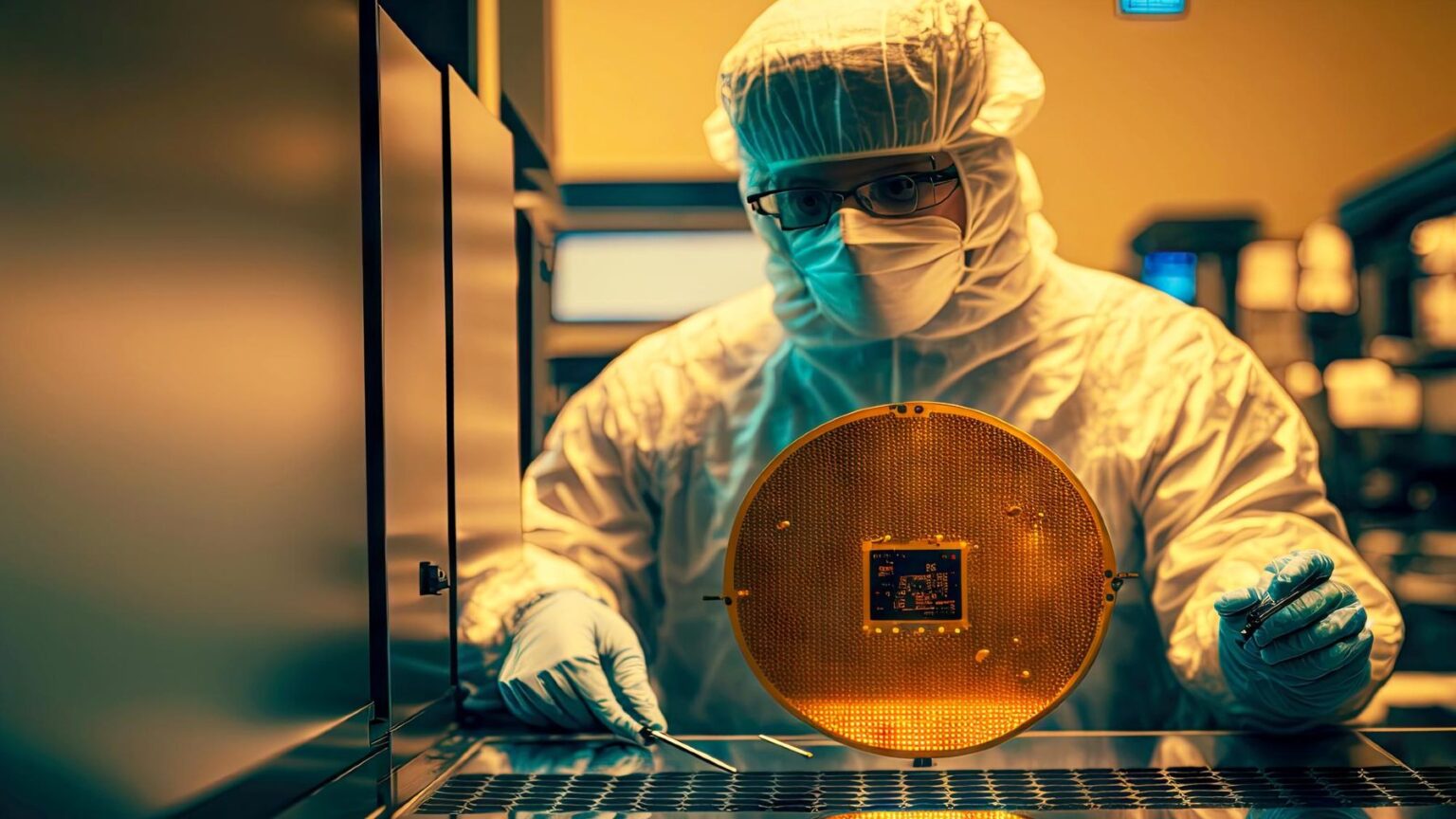
Pioneering Breakthrough: Precise Atom Positioning Advances Quantum Computing

A groundbreaking study published in Advanced Materials marks a significant milestone in quantum computing, achieving the first reliable positioning of single atoms in an array—a goal envisioned over 25 years ago. This remarkable precision, nearing 100%, offers promising scalability and opens avenues for quantum computers to tackle humanity’s most intricate challenges. However, considerable engineering hurdles must still be surmounted to realize this transformative potential fully.

Quantum computing harbors the theoretical capacity to solve problems beyond the reach of classical binary computers. Key to this capability are qubits, the fundamental units of a universal quantum computer, created from single atoms embedded in silicon and meticulously cooled to maintain their quantum properties. Manipulating these atoms with electrical and magnetic signals enables quantum information processing, leveraging the profound principles of quantum mechanics.

Continue reading… “Pioneering Breakthrough: Precise Atom Positioning Advances Quantum Computing”

Unveiling a Potential Shield: Adult Vaccinations and Alzheimer’s Risk Reduction

With over 6 million Americans diagnosed with Alzheimer’s disease and an aging population, the quest to uncover factors influencing Alzheimer’s development intensifies. In a groundbreaking study led by the team from the McGovern Medical School at UTHealth Houston, a compelling link between adult vaccinations and decreased Alzheimer’s risk has emerged.

Recently unveiled in the Journal of Alzheimer’s Disease, this study, spearheaded by co-first authors Kristofer Harris, Yaobin Ling, and Avram Bukhbinder, along with senior author Paul E. Schulz, unveils a significant correlation between adult vaccinations and reduced Alzheimer’s risk.

Continue reading… “Unveiling a Potential Shield: Adult Vaccinations and Alzheimer’s Risk Reduction”

Embracing Change: The Rise of Phased Retirement in America

As work dynamics evolve with the rise of hybrid and remote roles, discussions surrounding a four-day workweek, and the potential impact of AI on industries, retirement in America is also undergoing significant transformations in the 2020s. Some employees and employers alike believe it’s time to reconsider how and when people retire, paving the way for the concept of phased retirement.

Alicia Garcia, Chief Culture Officer at MasterControl, a life sciences software company, advocates for phased retirement as a mutually beneficial arrangement for near-retirees and businesses. This approach allows individuals to gradually reduce their workload and stress while continuing to earn income and maintain workplace connections, while companies can still leverage their valuable experience.

Continue reading… “Embracing Change: The Rise of Phased Retirement in America”

Icon Unveils Phoenix: A Robotic Breakthrough in 3D Construction

Icon, a leading provider of large-scale 3D printing technologies, has introduced its latest innovation in construction: Phoenix. This groundbreaking robotic technology has the capability to construct multi-story buildings, revolutionizing the way structures are built.

The inaugural engineering prototype of Phoenix recently completed an impressive architectural demonstration project, standing at an impressive height of 27 feet. Located in Austin, Texas, this demonstration showcases the potential of Phoenix to redefine construction methodologies.

Continue reading… “Icon Unveils Phoenix: A Robotic Breakthrough in 3D Construction”

Rethinking Work Dynamics: Gen Z Entrepreneurs Challenge Corporate Norms

Sleep experts and productivity researchers have long emphasized the importance of aligning work schedules with natural body rhythms, yet traditional corporate structures often disregard this vital aspect. Similarly, attention spans have dwindled over the years, posing challenges for sustained focus in the workplace. These insights have prompted a reevaluation of conventional work models, particularly among Gen Z entrepreneurs who advocate for flexibility, well-being, and purpose-driven productivity.

Gloria Mark, a professor at the University of California, highlights the diminishing attention spans, indicating a shift from a two-and-a-half-minute focus on screens in 2004 to just 47 seconds today. This decline underscores the need for adaptable work practices that accommodate fluctuating attention capacities. Surveys reveal that a significant portion of the workforce spends only half of their designated eight-hour workday productively, with the remainder consumed by internet browsing and other distractions.

Continue reading… “Rethinking Work Dynamics: Gen Z Entrepreneurs Challenge Corporate Norms”

The Dawn of the Reverse Microwave: Revolutionizing Kitchen Cooling

Home automation and smart robots have transformed our kitchens, but a crucial element was missing until now: a reverse microwave to cool food instead of heating it. This groundbreaking invention, operational without electricity and emission-free, promises to revolutionize kitchen dynamics.

The absence of a reverse microwave until now can be attributed to the fundamental principles of thermal dynamics. Unlike heat, which can be readily added to objects through various methods, achieving “coolness” requires the removal of heat, dissipating it into the surroundings. The lack of a viable, electricity-free technique for rapid household cooling posed a significant challenge, with existing solutions being either small-scale projects or energy-intensive.

Continue reading… “The Dawn of the Reverse Microwave: Revolutionizing Kitchen Cooling”

Pioneering Innovation: Battery-less Wireless Light Switch Revolutionizes Home Energy Efficiency

In a groundbreaking development at the University of Alberta in Edmonton, Canada, Kambiz Moez, Director of Electrical Engineering in the Department of Electrical and Computer Engineering, may have unlocked a feature set to transform homes worldwide. Moez has engineered a wireless light switch that defies convention by eliminating the need for batteries, instead drawing power from ambient sources like radio frequency signals.

Unlike traditional wireless light switches, Moez’s invention operates by harnessing energy from radio frequency power transmitters strategically placed on each floor of a home. This innovative approach not only simplifies installation but also significantly reduces labor and material requirements for electrical systems in new constructions. By cutting down on the consumption of raw materials and the energy-intensive manufacturing processes associated with conventional electrical components, Moez’s invention offers a trifecta of benefits: affordability, energy efficiency, and sustainability.

Continue reading… “Pioneering Innovation: Battery-less Wireless Light Switch Revolutionizes Home Energy Efficiency”

Unlocking New Frontiers: Space Manufacturing of Pharmaceutical Drugs

On 21 February, a meter-wide space capsule gracefully landed in the Utah desert, marking the culmination of an eight-month journey through orbit. Nestled within this capsule was a payload of Ritonavir, a vital antiviral medication used in combating HIV and COVID-19.

Conducted by the pioneering Californian start-up, Varda Space Industries, this landmark mission sought to showcase the potential of automated pharmaceutical manufacturing in space. It represents a significant step forward in exploring novel and more efficient approaches to drug development. The W-1 mission of Varda was launched aboard a SpaceX Falcon 9 rocket back in June 2023. Weighing approximately 90kg, the capsule harbors the capability to produce nearly 100kg of pharmaceutical products during its prolonged stay in orbit.

Continue reading… “Unlocking New Frontiers: Space Manufacturing of Pharmaceutical Drugs”

The Future of Fitness: Exploring the Potential of Workout Pills

Exercise is undeniably crucial for our overall health, yet our hectic lifestyles often make it challenging to prioritize physical activity. However, researchers may soon offer a solution to this dilemma with the development of a groundbreaking “workout pill” that could revolutionize weight loss and muscle health.

Previous attempts at exercise pills focused on mimicking certain brain signals associated with physical activity. While beneficial for some individuals, these pills fell short of replicating the actual physiological effects of exercise.

Continue reading… “The Future of Fitness: Exploring the Potential of Workout Pills”

Peering Through Walls: Advancements in RF-based Human Activity Monitoring

Machine vision, propelled by artificial intelligence (AI), has revolutionized our ability to interpret images, facilitating tasks ranging from autonomous driving to medical diagnostics. Now, researchers are pushing the boundaries of perception further by harnessing machine learning to observe human activity through walls using low-power radio frequency (RF) signals.

This innovative approach, spearheaded by scientists at institutions like Massachusetts Institute of Technology (MIT) and Washington University in St. Louis, offers a glimpse into unseen realms, enabling insights into daily activities without invasive monitoring devices or cameras.

Continue reading… “Peering Through Walls: Advancements in RF-based Human Activity Monitoring”

Navigating Greetings: Insights into American Social Norms

First impressions are often shaped by the way we say hello, but the preferred method of greeting can vary widely across different regions and generations. A recent survey conducted by language-learning platform Preply sheds light on Americans’ diverse perspectives on greetings, revealing intriguing insights:

  • Preference for Distance: The majority of respondents (60%) express a preference for maintaining a certain level of physical distance when greeting strangers, with handshakes being the most favored gesture. Additionally, 47% of participants indicated that they prefer to greet with a smile, highlighting the significance of non-verbal cues in initial interactions. Notably, 20% of Americans admitted to feeling uncomfortable with physical contact when meeting someone for the first time.
  • Regional Contrasts: The survey identified notable regional differences in greeting customs. States such as Vermont, Maine, Hawaii, New Mexico, and Louisiana were deemed the most welcoming, while Kansas, New York, Pennsylvania, Illinois, Massachusetts, and Missouri ranked lower on the friendliness scale. Interestingly, South Dakotans tend to prefer avoiding interaction with strangers altogether, whereas Delaware residents resort to simulating a phone call to sidestep greetings.
  • Generational Variances: Greetings preferences also diverge across generations, with distinct comfort levels regarding physical contact. Baby boomers, for instance, exhibit a higher propensity for hugging as their preferred greeting, while Gen X individuals express the least comfort with physical touch. Surprisingly, nearly 30% of Gen Z respondents find physical contact awkward, opting to feign a phone call to evade greetings. Millennials, on the other hand, typically opt for handshakes in greeting scenarios.
  • COVID-19 Impact: The ongoing pandemic has influenced attitudes towards physical contact, with over a quarter of respondents from a Fast Company-Harris Poll expressing a willingness to forgo handshakes permanently.
Continue reading… “Navigating Greetings: Insights into American Social Norms”
Discover the Hidden Patterns of Tomorrow with Futurist Thomas Frey
Unlock Your Potential, Ignite Your Success.

By delving into the futuring techniques of Futurist Thomas Frey, you’ll embark on an enlightening journey.

Learn More about this exciting program.