

By Futurist Thomas Frey
IBM just demonstrated real-time quantum error correction running on standard AMD chips—performing 10× faster than required and finishing a year ahead of schedule. Tech journalists are calling it a breakthrough. Venture capitalists are recalculating investment timelines. But here’s the question nobody’s answering clearly: when will this actually matter to regular people?
The honest answer might surprise you: you’re probably already using quantum computing without knowing it. And within five years, quantum-enhanced services will be so embedded in everyday applications that asking “when will I use quantum computing?” will sound as strange as asking “when will I use cloud computing?” You already do. You just don’t think about it.
The Invisible Infrastructure Model
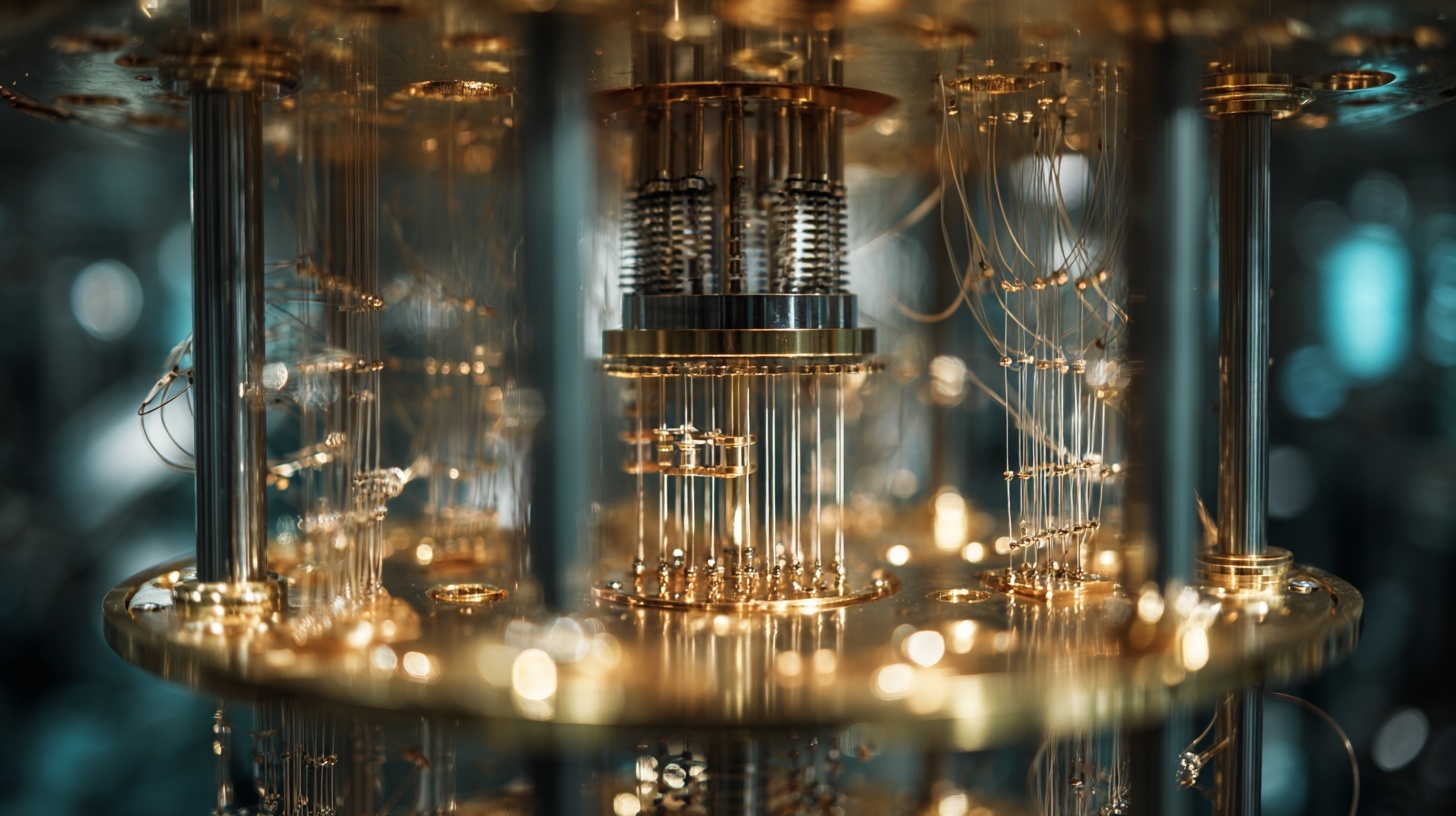
Let’s dispense with science fiction fantasies immediately: you will never own a quantum computer. Not in your home. Not in your office. Not in your pocket. Quantum computers require near-absolute-zero temperatures, electromagnetic shielding, and constant calibration. They’re not consumer devices—they’re specialized infrastructure, like power plants or cell towers. You don’t own those either, but you use them constantly.
The quantum computing revolution will follow the cloud computing playbook. Remember when “cloud computing” sounded futuristic? Now you use it dozens of times daily without thinking about it. Every Google search, Netflix stream, or Uber ride runs on distant servers you’ll never see. Quantum computing will work the same way: invisible infrastructure powering visible services.
IBM’s error correction breakthrough matters because it just shortened the timeline from “experimental” to “reliable enough for commercial services.” And that’s when quantum computing stops being a laboratory curiosity and starts affecting your daily life.
The First Wave: Services You Already Use Get Better
The earliest quantum computing impact will be invisible improvements to existing services, probably within 2-3 years. Your experience improves, but you won’t know why.
Financial services get faster and smarter. Your credit card fraud detection becomes dramatically more accurate as quantum-enhanced algorithms spot suspicious patterns classical computers miss. Your investment portfolio optimization improves as quantum computers solve complex allocation problems in seconds instead of hours. You won’t see “quantum-powered” labels—you’ll just notice your fraud alerts are eerily accurate and your retirement account performs slightly better.
Drug discovery accelerates. Pharmaceutical companies will use quantum simulation to model molecular interactions, dramatically reducing the trial-and-error phase of drug development. You won’t know the medicine your doctor prescribed was discovered using quantum computing—you’ll just benefit from treatments that arrived years earlier than they otherwise would have.
AI assistants get noticeably smarter. Certain machine learning operations benefit enormously from quantum processing. Within five years, the AI in your phone, car, or home will be quantum-enhanced—not running on quantum hardware directly, but trained using quantum-classical hybrid systems. The improvement will feel incremental but significant: voice assistants that actually understand context, recommendation systems that seem genuinely intuitive, autonomous vehicles that handle edge cases more gracefully.
Logistics and delivery improve. Companies like FedEx, Amazon, and UPS will use quantum optimization for routing and scheduling. Your package arrives faster because quantum computers solved the traveling salesman problem across millions of delivery routes simultaneously. You’ll just think the shipping company got more efficient.
The Second Wave: New Services Emerge (5-7 Years)
As quantum computing reliability improves and costs decline, entirely new consumer-facing services become possible—though still running on remote quantum infrastructure you access through regular devices.
Personalized medicine goes mainstream. Upload your genetic profile, and quantum-powered analysis identifies your specific cancer risk, optimal medications, and customized treatment protocols within minutes. Classical computers can do this too, but quantum systems will make it affordable enough for routine care rather than boutique medicine. Your doctor’s office subscribes to quantum-enhanced diagnostic services the same way they currently subscribe to lab testing.
Materials science transforms consumer products. Companies will design new materials using quantum simulation—batteries that charge faster and last longer, fabrics with properties that seem almost magical, construction materials that are stronger and lighter. You won’t buy “quantum-designed products”—you’ll just notice your phone battery finally lasts all day and your winter jacket is somehow warmer while being thinner.
Climate modeling gets personal. Instead of generalized forecasts, you’ll receive hyper-localized predictions: “flooding risk for your specific address has increased 15% over the next decade” or “optimal crops for your garden based on quantum-modeled microclimate shifts.” Insurance companies, real estate platforms, and agricultural services will all incorporate quantum-enhanced modeling into consumer-facing tools.
Financial products become more sophisticated. Banks will offer quantum-optimized mortgage products that balance thousands of variables to find genuinely optimal loan structures for your situation. Investment platforms will provide quantum-enhanced portfolio management at costs previously only available to institutional investors. You’ll interact through normal apps and websites—the quantum processing happens invisibly on the backend.
The Third Wave: Quantum-Native Experiences (7-10 Years)
Eventually, services emerge that simply couldn’t exist without quantum computing—experiences built from the ground up around quantum capabilities.
Virtual reality gets indistinguishable from reality. Quantum computers excel at simulating physical systems. Future VR experiences will use quantum processing to generate environments with genuinely realistic physics—lighting, acoustics, material behavior, fluid dynamics all computed in real-time with quantum assistance. You’ll wear a standard VR headset, but the simulation quality will be transformative because the heavy computational lifting happens on quantum servers.
Personalized education adapts in real-time. Learning platforms will use quantum optimization to continuously adjust content, pacing, and teaching methods based on how your specific brain processes information. Not crude “you got this wrong, try again” adaptation, but sophisticated modeling of your cognitive patterns to find the exact explanation, example, or exercise that clicks for you personally.
Autonomous systems become genuinely autonomous. Self-driving cars, delivery drones, and robotic assistants will make decisions using quantum-enhanced AI that handles uncertainty and edge cases with human-like intuition. You’ll trust them in situations where current autonomous systems still seem nervous and hesitant.
Scientific research becomes participatory. Citizen science platforms will let anyone contribute to quantum-powered research—uploading observations, running experiments, testing hypotheses—with quantum computing providing the analytical power to actually extract meaningful insights from millions of amateur contributions. You could genuinely help discover new materials, optimize renewable energy systems, or map ecological changes through quantum-enhanced collective research.
The Security Transition: Painful but Necessary
There’s one area where you’ll definitely notice quantum computing, and you won’t like it: security updates. Quantum computers will eventually break current encryption standards. The good news is we’re already developing quantum-resistant cryptography. The bad news is transitioning will be disruptive.
Over the next 3-5 years, expect cascading mandatory security updates across every device and service you use. Your bank will require new authentication methods. Your phone will push updates that seem more urgent than usual. Websites will display notices about upgraded security certificates. Government services will require new identity verification procedures.
This will be annoying—multiple password resets, authentication changes, device upgrades. But it’s necessary. Organizations delaying these updates risk catastrophic breaches once quantum computers become powerful enough to crack old encryption. You’ll know quantum computing matters when your entire digital life requires security upgrades within a compressed timeframe.
What You Won’t Do
Let’s be explicitly clear about quantum computing experiences you should not expect:
You won’t “run quantum apps” on your devices. Quantum processing will happen remotely, just like current cloud computing. Your phone, laptop, and smart home devices will remain classical computers that send requests to quantum servers when needed.
You won’t solve sudoku puzzles faster with quantum computing. Quantum computers aren’t general-purpose faster computers—they’re specialized processors that excel at specific problem types. For most everyday computing, classical processors are perfectly adequate and will remain so.
You won’t mine cryptocurrency with quantum computers. Despite recurring hype, quantum computers offer no meaningful advantage for most blockchain operations. The cryptocurrency angle is vastly overblown.
You won’t personally feel smarter because quantum computers exist. This isn’t cognitive enhancement technology. It’s infrastructure that makes certain services more powerful, but you’ll still be regular human you, just with better tools available.
The Real Timeline
So when will quantum computing matter to you personally? Here’s my prediction:
2025-2027: First invisible improvements. Services you already use get incrementally better. You won’t notice quantum computing specifically, just general improvement in fraud detection, AI assistance, and delivery efficiency.
2027-2030: New quantum-enhanced services launch. Personalized medicine, optimized financial products, and dramatically better materials start appearing in consumer markets. You’ll start seeing “quantum-enhanced” marketing, though the technology remains invisible infrastructure.
2030-2035: Quantum-native experiences emerge. VR, education, autonomous systems, and scientific tools that simply wouldn’t exist without quantum computing become mainstream consumer offerings.
2035+: Quantum computing is so embedded in infrastructure that asking “when will I use it?” sounds quaint. It’s just… computing. Some of it happens on classical processors, some on quantum processors, and you no longer think about the distinction any more than you currently think about which specific server runs your email.
Final Thoughts
IBM’s error correction breakthrough matters not because quantum computers are coming to your home, but because reliable quantum computing infrastructure is coming years sooner than expected. And that invisible infrastructure will power visible services that improve your life in ways both subtle and profound.
The question isn’t “when will you use quantum computing?” but rather “when will quantum computing start improving things you already use?” And the answer is: very soon, probably within the next 2-3 years, in ways you won’t directly notice until you look back and realize how much better various services have become.
The quantum revolution won’t announce itself with fanfare. It will arrive quietly, embedded in the services and products you use daily, making them faster, smarter, and more capable without requiring you to understand or even think about the underlying technology.
Just like cloud computing. Just like GPS. Just like every other infrastructure technology that transformed daily life by becoming invisible.
Get ready. But don’t hold your breath waiting for a quantum computer on your desk. That’s not how this revolution works.
Related Links:
IBM Quantum Error Correction Breakthrough
How Quantum Computing Will Change Everyday Services
The Timeline for Quantum-Enhanced Consumer Products
