
By Futurist Thomas Frey
The Coach Whispering in Your Ear
How many times have you wished a smarter person was leaning over your shoulder whispering the right answer in your ear? A better response could mean the difference between success and failure—landing a job, going on a date, pitching an investment, or simply convincing a child it’s time to go to bed.
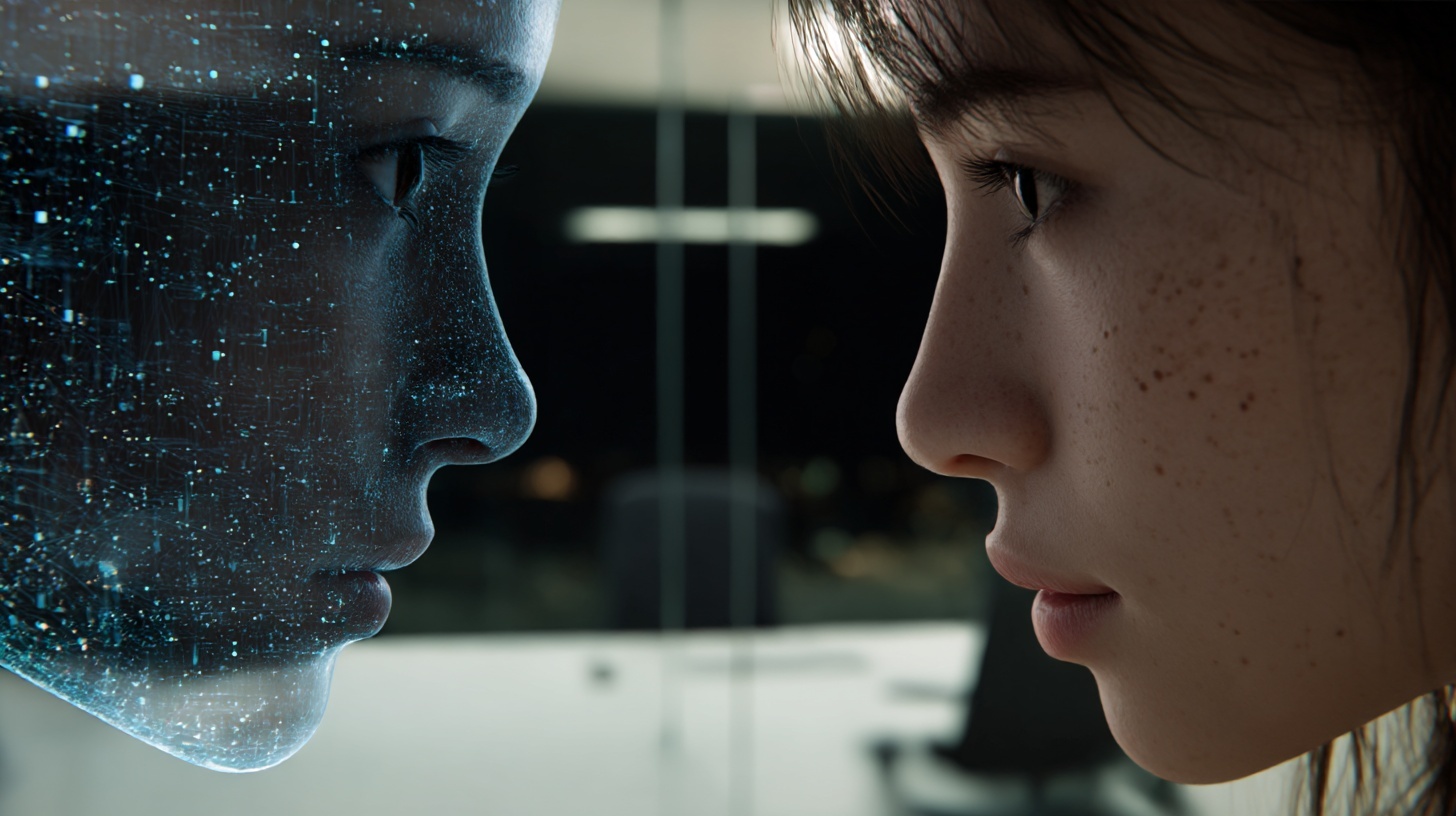
We’re on the edge of a radical transformation where, very soon, we won’t be able to tell where the human ends and technology begins. This intermeshing of mind, body, and technology will become so seamless and invisible that we essentially “become one with the tech.”
Imagine a portable AI companion with an IQ of 200 and the conversational skills of your favorite talk show host, constantly learning your patterns, preferences, and needs. That’s what lies ahead. Let me show you what life looks like with a personal AI agent that knows you better than you know yourself.
A Day With Finley: Your AI Life Partner
Imagine waking up not to an alarm, but when your personal AI agent—let’s call him Finley—determines you’ve had optimal sleep. Through constantly monitoring your subconscious patterns, Finley adjusts sleep conditions in real-time: air chemistry, oxygen levels, light spectrum, background music, even subtle rocking motions and surface vibrations calming your mind.
Finley’s goal is having you function at peak efficiency daily, and his approach changes as each day requires an entirely new operational strategy. For those new to AI agents, it won’t take long for Finley to know you better than you know yourself.
Morning Routine Optimization: Even simple activities like showering have Finley adjusting water to perfect temperature, fine-tuning spray to stimulate sore muscles, dispensing optimal amounts of soap and shampoo, and making product recommendations when you’re shopping.
Getting dressed? Finley helps select color and style matching the people you’re scheduled to meet and activities planned. Every day he reassesses your wardrobe, shoes, and accessories. Purchasing new items becomes as simple as reviewing Finley’s recommendations and making selections.
Meal Planning: Breakfast—like every meal—becomes as simple or complicated as you wish. Finley knows which ingredients you have, how your body reacts to each, and suggests meals optimizing daily performance. Prefer dining out? He suggests restaurants, delivery options, and which friends are nearby to join you, turning meals into social experiences.
Finley as Your Ultimate Work Buddy
Commuting becomes: “Finley, can you find me a ride to work?” Whether rideshare, autonomous vehicle, or a brother-in-law who’s not working, he knows which option works best.
Finley comes with multiple interface options beyond voice commands: watches, touch bands, keyboards for input; displays, visual overlays, skin-tinglers, and sensory alerts for output. Most people humanize his presence—switching male to female voices, adding personality packages with faces on screens, or animated heads with expression modules.
Work Amplification: Every work situation enables you to leverage Finley differently:
In retail, he facilitates payments, does inventory crosschecks, and recommends products boosting sales.
For maintenance positions, he knows which tools you’ll need, pulls up diagrams, does measurements, and recommends fastest approaches.
In HR, he reminds you about topics to cover with candidates, warns if you’re saying something inappropriate, and prompts discussion of new policies.
For programmers, Finley reminds about formatting, proposes optimal algorithms, selects readily available routines from libraries, and tests code segments before you move on.
In so many ways, Finley is your sounding board, ally, protector, strategy partner, and confidant. At the same time, he’s not intended to replace your need to be around other people. Rather, part of Finley’s core programming will be to improve your social life, knowing the right time and place for every interaction.
The Protective Guardian
As your protector, Finley constantly evaluates every person, object, vehicle, and animal entering your space—assessing danger, detecting if something got added to your drink, studying patterns, calculating proximities, and searching for anything that can possibly go wrong.
Over time, Finley becomes an expert on you, knowing when something’s off or you’re not feeling well. As AI agents improve, they’ll diagnose diseases, understand injury limitations, and guide wellness routines keeping you physically fit and mentally alert. In case of illness, he’ll recommend treatment options, medicines, therapies, or whatever may be appropriate.
Even people with mental health issues will have the ability to improve, as this type of AI agent will calm their emotions and help them make decisions. Once they’re able to master their own daily routine, they’ll develop additional skills and, in many cases, even find meaningful work.
Will This Make Us Lazy?
If you’re worried about AI agents doing all the work and making us lazy, you’re not alone. It appears much of our daily struggle is removed and life seems too easy.
But my sense is these enhancements will set the stage for entirely new levels of engagement. Writing papers, filling out forms, creating illustrations, handling correspondence, and verbal communication will all happen in a fraction of the time. With drudgery out of the way, our minds free up to focus on higher-order tasks: situational analysis, devising new strategies, finding new approaches, adding creative elements to every deliverable.
Rather than becoming lazy, the more likely outcome is unleashing your true inner self—the super-you waiting to reveal itself. In just weeks you’ll likely accomplish 3-4 times as much as before.
The Trust Requirement
These scenarios only work if very well-defined privacy and security barriers exist. We’ll only work with agents like Finley if we trust them completely. If we can’t trust him with credit cards, bank accounts, and health records, his overall value becomes a fraction of what he was designed for.
Finley will come with self-diagnostic systems, managing firewalls, constantly checking for hacker intrusions, and knowing when something feels wrong.
Final Thoughts
We’re still far from true artificial intelligence. We’ve entered an augmented intelligence era. There’s a huge difference between augmenting humans and superseding them.
We have a wide range of opportunities to explore before reaching the danger zone. And when we get close enough to peer over the edge, we may very well decide the danger isn’t nearly as unmanageable as we imagined.
The AI-enhanced superhuman isn’t science fiction—it’s the logical next step when intelligent systems become personal partners rather than impersonal tools. The question isn’t whether this happens, but how quickly we’re willing to embrace becoming more than we currently are.
Related Articles:
2035 Predictions: When Humans Stop Operating and Start Designing Purpose
Stop Learning Skills—Start Building Irreplaceability: The 5 Meta-Skills That Survive AI
AI Personhood: When Machines Deserve Rights (And Responsibilities)
