
By Futurist Thomas Frey
The Commute That Became the Office
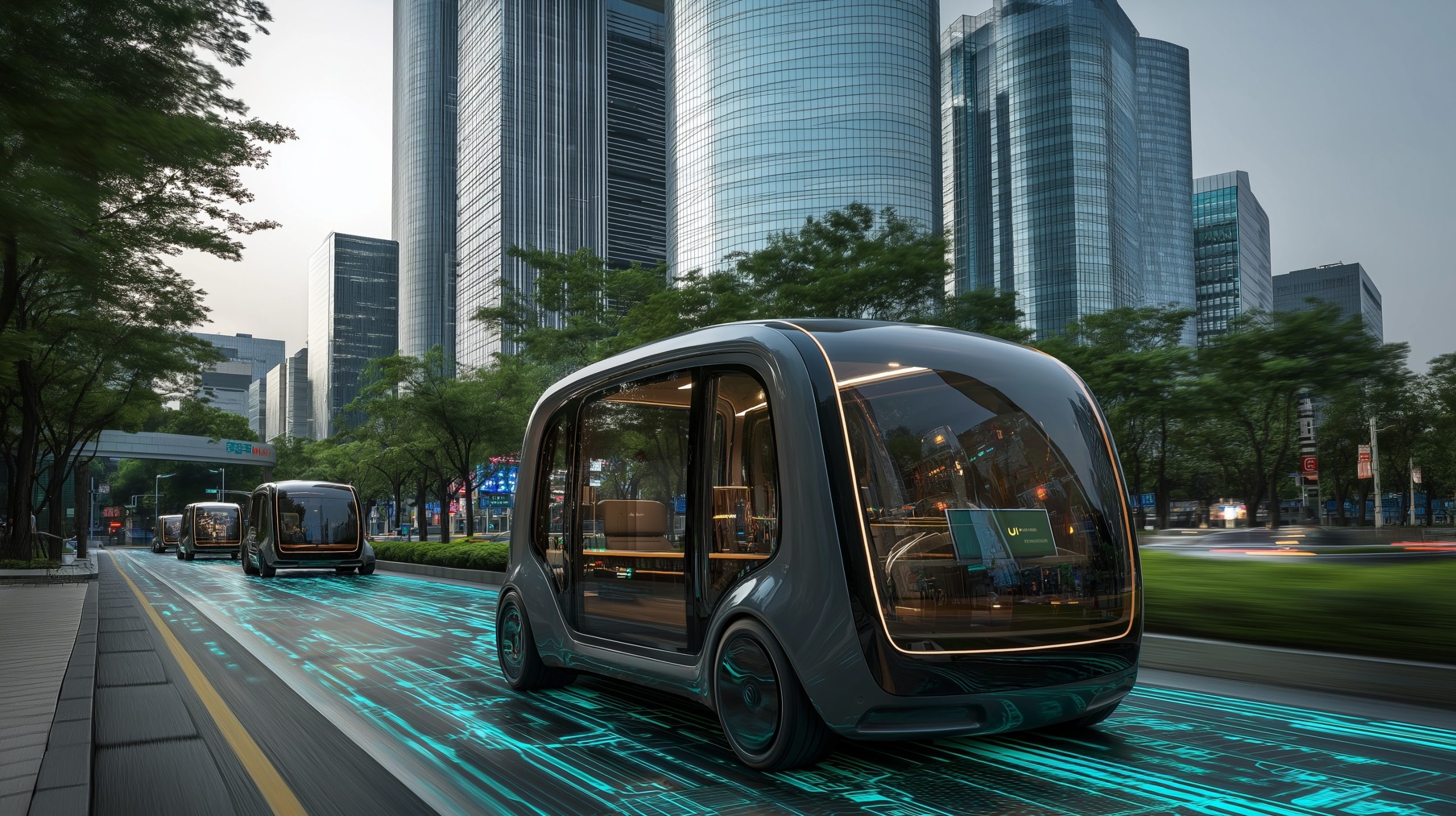
Here’s a thought experiment: What if your morning commute wasn’t wasted time but productive work time? Not checking emails on your phone while stuck in traffic, but actual, focused work in a space designed for productivity. A conference room that picks you up, lets you work while moving through changing scenery, drops you at a client meeting, then continues to your next appointment. Your office, but mobile. Your commute, but productive.
This isn’t a distant fantasy. It’s the inevitable result of autonomous vehicles maturing from transportation tools into mobile workspaces. And it’s going to fundamentally reshape how we think about offices, commutes, real estate, and the entire geography of work.
The moment someone unveils a properly designed driverless mobile office, the traditional office lease starts looking like an expensive anachronism. Why pay for a fixed location when your workspace can follow your schedule, adapt to your needs, and turn dead commute time into your most productive hours?
We’re not just talking about working from your autonomous car. We’re talking about purpose-built mobile offices, consulting suites, medical clinics, training centers, and collaborative workspaces that happen to have wheels. The office isn’t going remote—it’s going mobile. And the implications are far more profound than most people realize.
What a Real Mobile Office Looks Like
Let’s start by imagining what this actually means, because it’s not just “a van with a desk.”
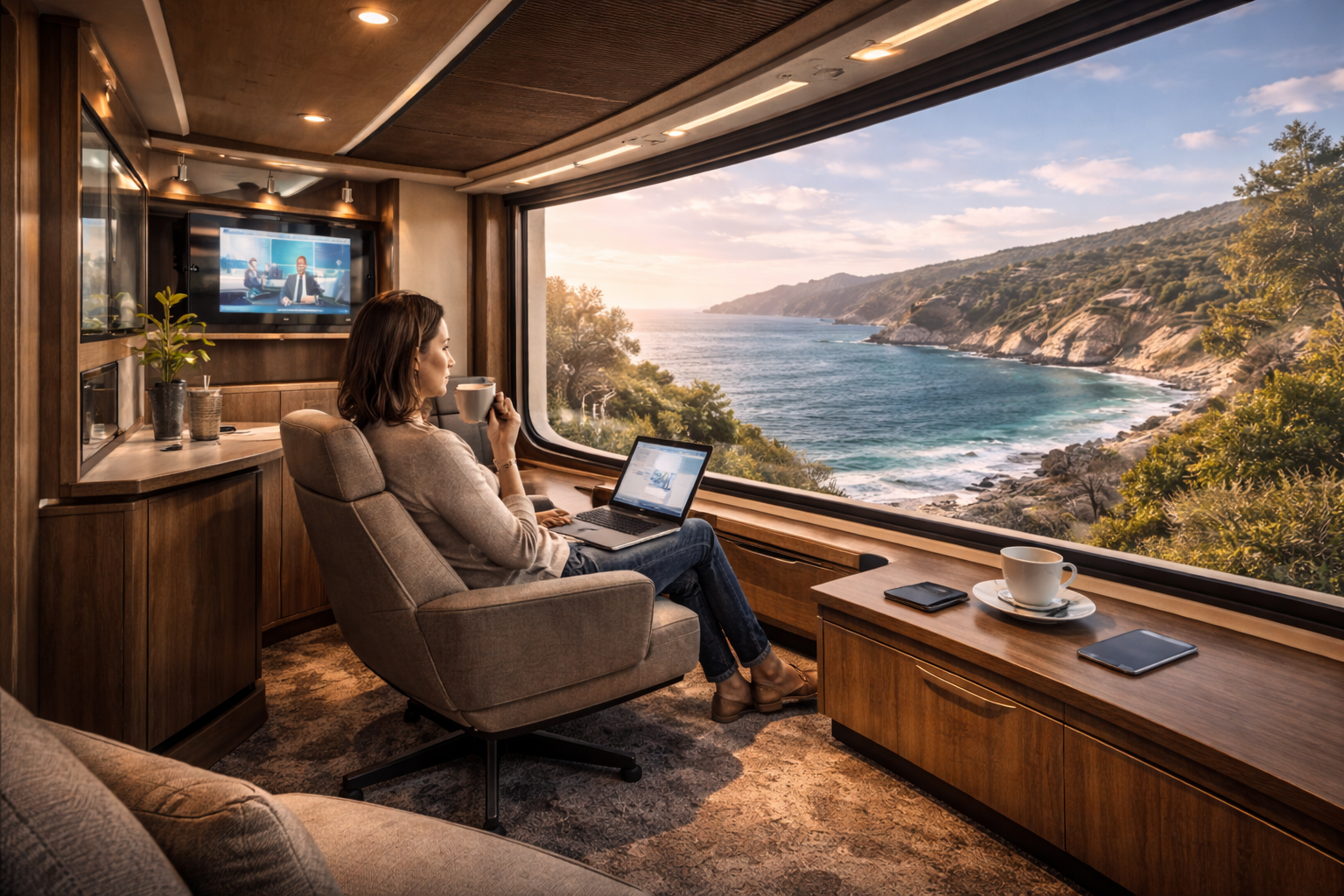
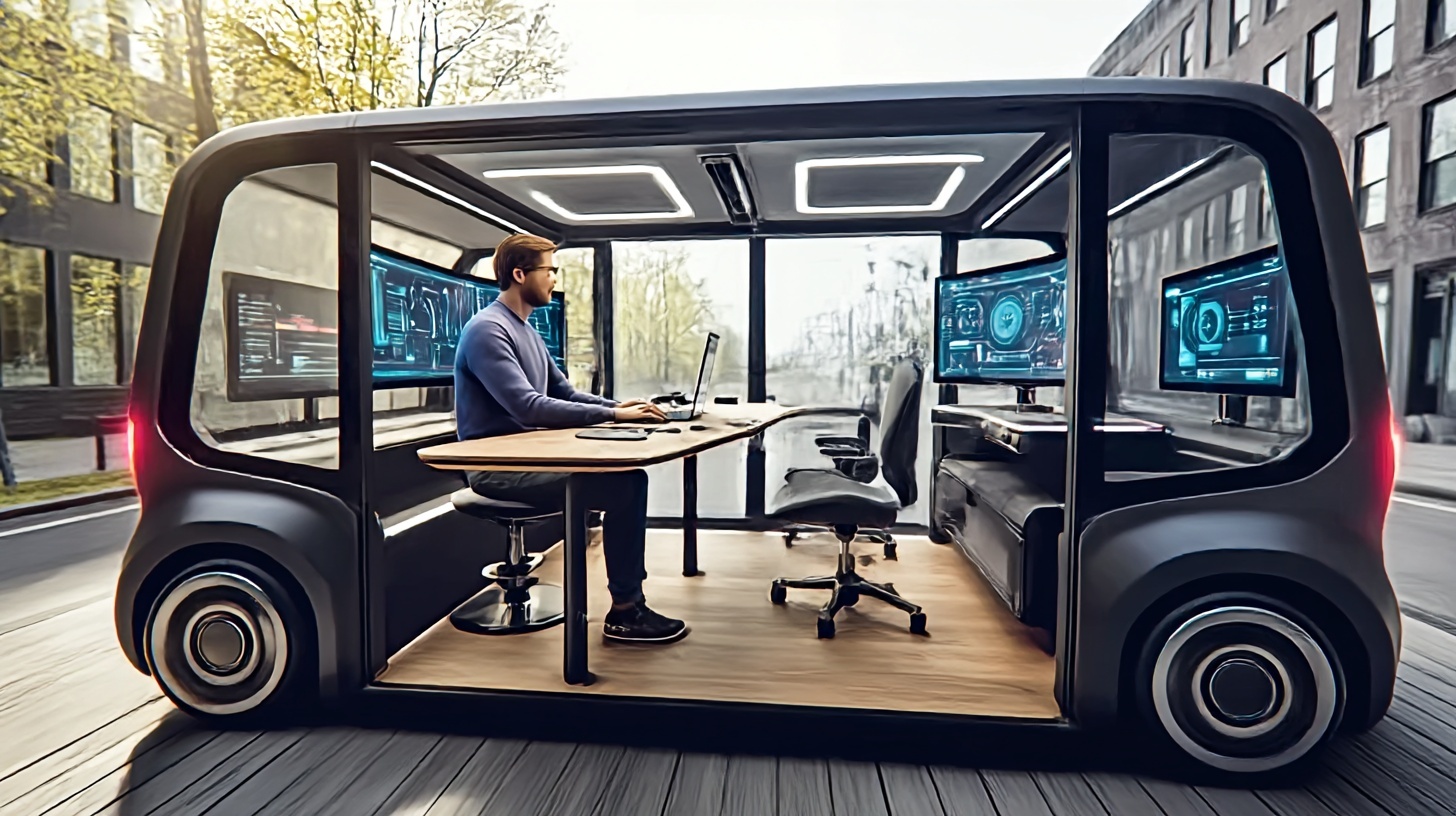
The solo professional mobile office is a self-contained productivity pod. Standing-height desk that converts to sitting. Multiple large screens for focused work or video calls. Soundproofing that makes video conferences crystal clear. Climate control independent of outside conditions. Natural lighting augmented by adjustable LED systems. Coffee maker, small fridge, comfortable seating for breaks. Everything ergonomically optimized for extended work sessions.
You start work at 6:30 AM when the vehicle picks you up. By 8:00 AM, you’ve completed two hours of focused work while traversing the city. At 8:15, you arrive at a client location for a 90-minute meeting. At 10:00, the vehicle picks you up and you resume work while heading to lunch with a colleague. The vehicle parks near the restaurant. After lunch, you work another two hours while being driven through scenic routes—coastline, parks, wherever you’ve programmed as your preferred afternoon environment. By 3:00 PM, you’ve completed six hours of productive work and attended two in-person meetings, but you never sat in traffic and never entered a traditional office.
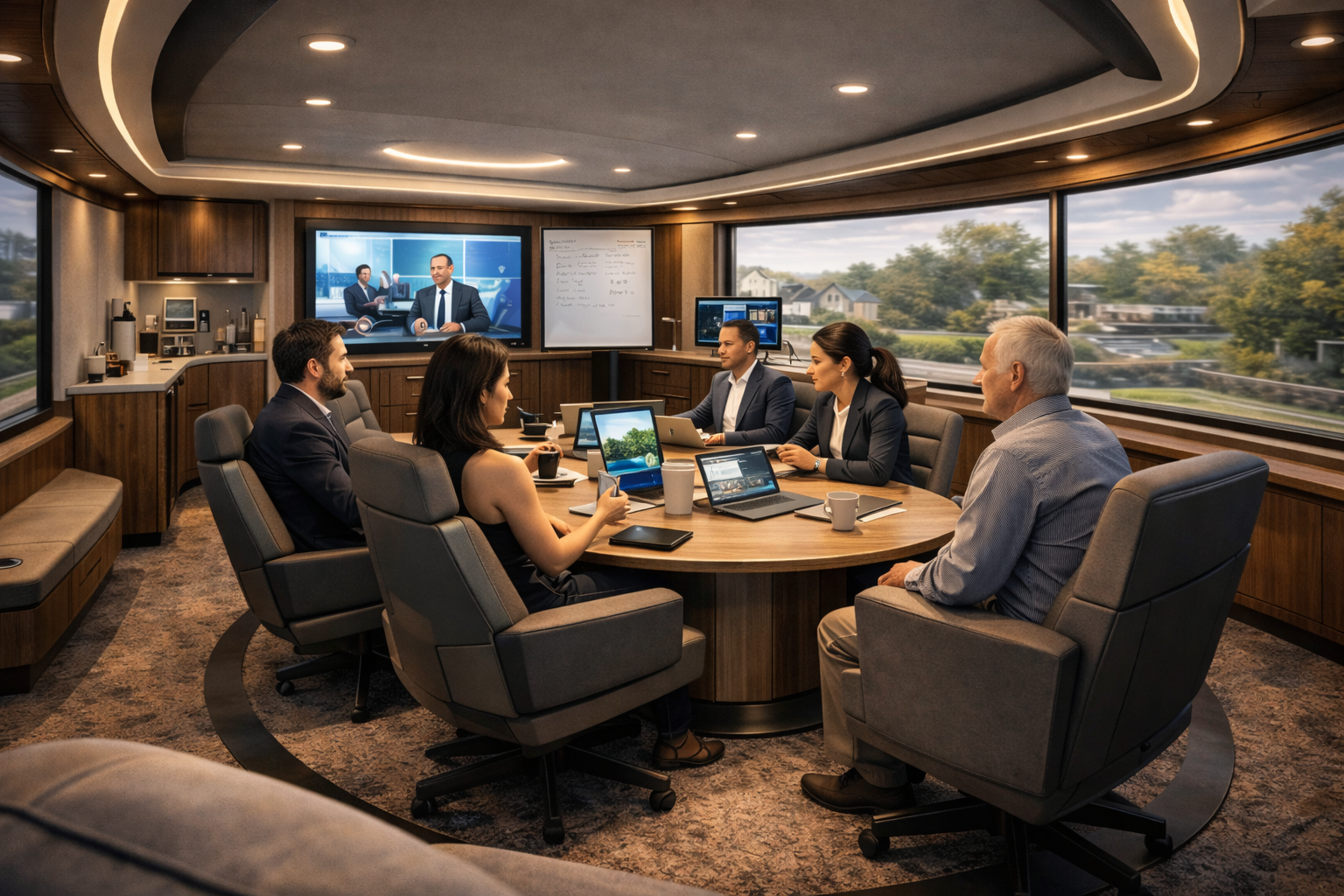
The collaborative mobile office is a conference room on wheels. Circular seating arrangement for 4-6 people. Central table with integrated screens. Whiteboard surfaces on the walls. High-quality audio system for presentations. The vehicle picks up team members sequentially—10 minutes per pickup, everyone’s working during transit. By the time everyone’s aboard, the meeting is underway. Two hours later, the vehicle drops people off sequentially. What used to be “commute to the office, meet for two hours, commute home” is now just the two-hour meeting with no wasted transit time.
The mobile consulting suite takes it further. Think: a high-end professional office that comes to clients rather than expecting them to come to you. Financial planners, attorneys, therapists, business consultants—professionals who charge premium rates for their expertise and personalized attention.
The mobile suite arrives at the client’s location. Interior is professional, comfortable, private. Equipment is sophisticated—multiple screens, document management systems, secure communication channels. The professional works with the client for 60-90 minutes, then the suite departs for the next appointment. The client never commutes. The professional is productive between appointments. The expensive downtown office lease? Unnecessary.
The Business Models That Emerge
Once mobile offices become technically feasible, entirely new business structures become possible:
The mobile cooking school is a fully equipped teaching kitchen on wheels. Picks up 6-8 students at scheduled times. Drives to a scenic location while the instructor teaches preparation techniques. Parks at a destination with outdoor seating. Students plate and serve their creations. After the meal, the vehicle returns everyone home. The cooking school has no fixed rent, can offer classes in multiple neighborhoods each week, and provides an experience traditional cooking schools can’t match.
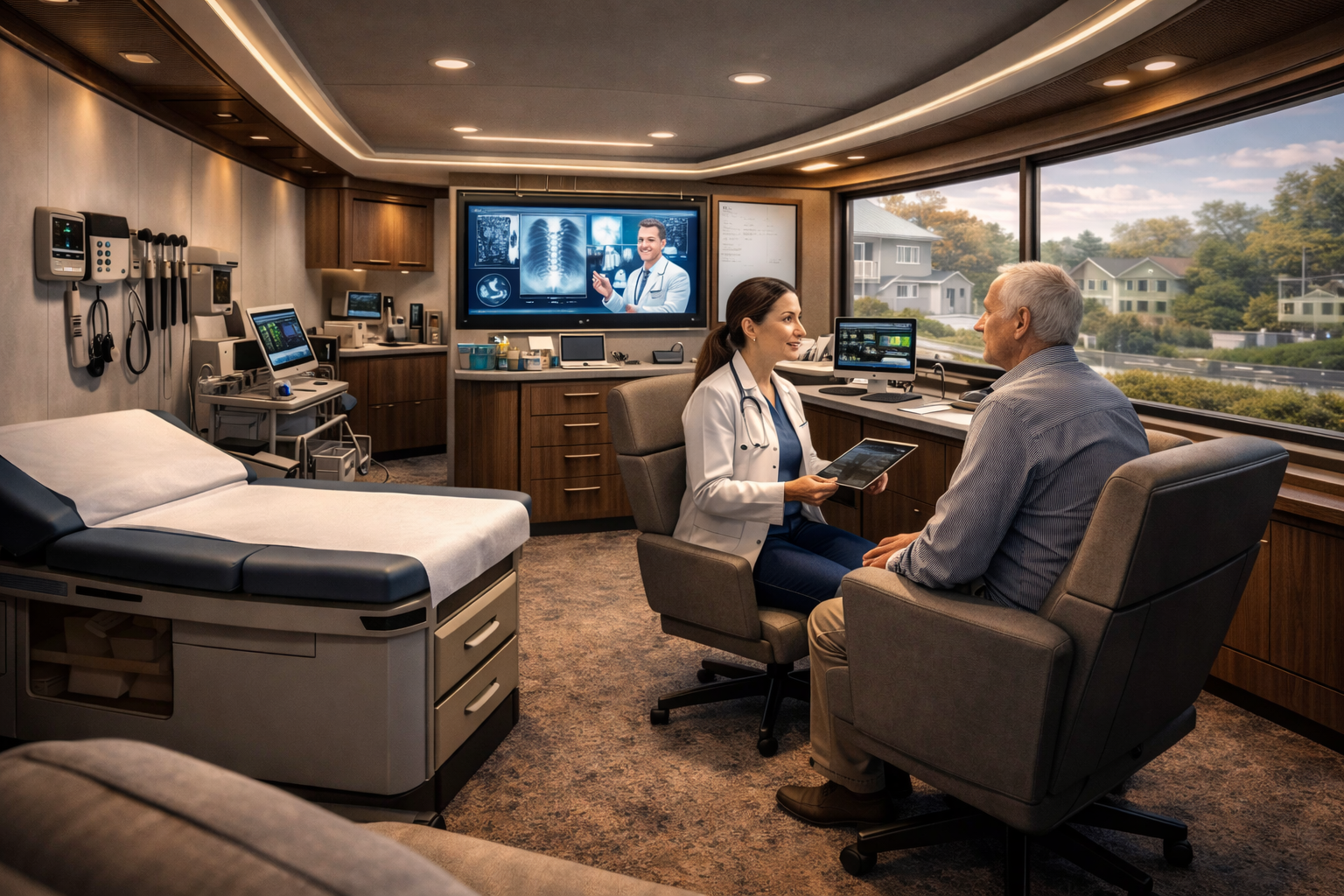
The mobile medical clinic brings specialized consultations to patients instead of requiring them to navigate to medical complexes. Telemedicine proved people want healthcare delivered to them. Mobile clinics are the physical extension. The vehicle is equipped for examinations, basic diagnostics, consultation with specialists via integrated telehealth systems. A geriatric specialist visits elderly patients at their homes. A physical therapist conducts sessions in the mobile clinic, then moves to the next patient. Each specialist serves more patients per day because transit time is also work time.
The mobile repair business finally solves the “I have to take a day off work for the repair person to maybe show up” problem. The business has tools, parts inventory, diagnostic equipment built into the vehicle. Appointment scheduling is optimized by AI routing. The vehicle arrives on time because it controls its own schedule. The technician works on-site, has everything needed, completes the job. Then the mobile shop moves to the next appointment. No fixed location overhead. Maximum technician productivity. Superior customer experience.
The mobile property management office serves multiple apartment complexes. The property manager conducts walk-throughs, meets with tenants, coordinates with contractors, inspects maintenance issues—all while their mobile office moves between properties. Paperwork, video calls with owners, scheduling, accounting—all completed in transit. What used to require a central office and hours of driving between properties becomes a mobile office that’s always at the right property at the right time.
The mobile training center for corporate clients. A company wants to provide professional development but can’t justify a dedicated training facility. The mobile training center arrives on-site with all necessary equipment—large screens, seating for 12-15, high-quality audio/visual, whiteboards, breakout spaces. Delivers the training. Departs. Next week, it’s at a different company. The training business serves dozens of clients monthly with no fixed overhead. Companies get professional training without sending employees off-site.
Why This Changes Everything About Work Geography
The mobile office doesn’t just change offices—it changes where people can live and how cities function.
The return of scenic work environments. When your office has wheels, you can work literally anywhere. Ocean views in the morning. Mountain drives in the afternoon. Forest paths in the evening. People will pay premium subscriptions for mobile offices that route through beautiful environments. Work becomes environmentally enriching rather than environmentally deadening.
The death of the expensive downtown office. If your clients never come to your office because your office comes to them, location prestige becomes irrelevant. Why pay $5,000/month for downtown Class A space when a mobile office provides better functionality, more flexibility, and saves your clients’ time?
The distributed workforce becomes hyper-mobile. Remote work meant people could live anywhere but still sat in one place all day. Mobile offices mean people can live anywhere and work from anywhere. Small towns become viable because professionals can serve metropolitan clients from their mobile office while living in low-cost areas.
Meeting patterns transform. Instead of “everyone commute to the central office for a 10 AM meeting,” it’s “the mobile conference room picks everyone up between 9:30 and 10:00 and we meet while moving.” The meeting time doesn’t expand—the commute time is eliminated.
Real estate demand shifts dramatically. Fewer traditional offices needed. More parking infrastructure for mobile offices. Designated pickup/drop-off zones. Specialized facilities for mobile office maintenance and servicing. The commercial real estate market undergoes the same disruption that autonomous vehicles bring to parking.
The Technical Requirements That Enable This
This vision requires more than just autonomous driving. It requires purpose-built mobile workspaces:
Stable working surfaces. Advanced suspension systems that eliminate road vibration. Gyroscopic stabilization that keeps desks level during turns and elevation changes. You can’t work effectively if your coffee is sloshing and your laptop is sliding.
Connectivity infrastructure. Seamless handoff between cell towers and satellite systems. Redundant internet connections. Quality sufficient for video conferences and cloud applications. The mobile office is as connected as any fixed office.
Power systems. All-day battery capacity for all office equipment. Climate control, computing, displays, coffee makers, refrigeration—the power demands are substantial. Likely requires purpose-built electric platforms with large battery packs and possibly solar augmentation.
Privacy and soundproofing. Insulation from road noise. Window treatments that provide privacy while allowing natural light. Acoustic design that makes video calls clear. Materials that create an “office” acoustic environment rather than a “vehicle” acoustic environment.
Ergonomic flexibility. Seating that adjusts for different body types and work styles. Surfaces at appropriate heights for different tasks. Lighting that adapts to time of day and work type. Storage for personal items, work materials, equipment.
Safety and comfort. Air filtration and climate control independent of external conditions. Emergency systems. Smooth acceleration and deceleration that doesn’t disrupt work. Ride quality that doesn’t induce motion sickness.
None of this is science fiction. The components exist. It’s integration, optimization, and market development.

The Industries This Disrupts
Mobile offices don’t just change office work—they disrupt multiple established industries:
Commercial real estate. If 30% of office workers shift to mobile offices, that’s massive downward pressure on office leasing. Prime downtown locations lose value. Suburban office parks become obsolete. The market contracts and restructures.
Coworking spaces. What’s the appeal of WeWork when your mobile office provides private, personalized space that comes to you? Coworking survives but loses the “office alternative” market.
Coffee shops as work spaces. Millions of people currently work from coffee shops because they can’t afford dedicated offices. Mobile offices at scale could undercut this entirely.
Transportation services. Traditional rideshare becomes less appealing when you can work during the ride in a proper mobile office rather than sitting in a back seat checking your phone.
Urban planning and parking. Cities need different infrastructure—more pickup/drop-off zones, less long-term parking, different traffic patterns as mobile offices optimize routes for productivity rather than speed.
Business models in general. Any business where “location, location, location” matters faces pressure. If your business can be mobile, someone will make it mobile. If your business requires customers to come to you, a mobile competitor will come to them instead.
The Downsides Nobody’s Discussing Yet
Before we get carried away with utopian visions, let’s acknowledge the problems:
Motion sickness. Not everyone can work effectively in a moving vehicle. For some percentage of people, this entire concept is a nonstarter. That creates a divide between people who can work mobile and people who can’t—with economic implications.
Social isolation. Working alone in a mobile office is even more isolating than working alone in a fixed office. The ambient social contact of an office environment—hallway conversations, lunch with colleagues, serendipitous interactions—disappears entirely.
Always on, always working. When your commute becomes work time, when does work end? The boundary between work and personal time, already eroding with remote work, potentially dissolves completely. Your entire waking life becomes potentially productive time.
Traffic and congestion. If mobile offices become popular, that’s more vehicles on roads, even if they’re autonomous. Unless public transit improves dramatically, we could trade parking problems for congestion problems.
Economic inequality. Mobile offices require expensive autonomous vehicles plus purpose-built interior spaces. That’s a significant capital investment. Will this create a two-tier system where high-earning professionals have mobile offices while lower-wage workers don’t? Does the productivity advantage of mobile offices widen income inequality?
Loss of place. There’s something to be said for having a fixed workplace—a known location, a consistent environment, a sense of stability. A mobile office is inherently transient. Some people will thrive on that. Others will find it destabilizing.
Environmental impact. Yes, electric autonomous vehicles are cleaner than traditional commuting. But is a mobile office sitting in traffic while you work actually more efficient than you walking to a local office? The environmental math is complicated and might not favor mobile offices in dense urban areas.
The Ten-Year Timeline
Here’s my prediction for how this unfolds:
2025-2027: Early Experiments. The first purpose-built mobile offices appear—expensive, limited availability, serving niche markets. High-end professionals, specialized consultants, wealthy individuals. They’re expensive curiosities, not mainstream solutions.
2027-2029: Market Development. Multiple companies offer mobile office services. Subscription models emerge—pay monthly, get access to mobile offices when needed. The technology improves. Costs come down. Use cases expand beyond early adopters. Businesses start calculating whether mobile offices are cheaper than traditional office leases.
2029-2032: Rapid Adoption. Mobile offices become common enough that they’re no longer novelties. Major corporations offer them as employee perks. Independent professionals see them as competitive necessities. Mobile office design becomes specialized—consulting suites, creative studios, medical clinics, training centers. The market segments and matures.
2032-2035: Infrastructure Adaptation. Cities redesign for mobile offices. Zoning changes. Parking transforms. Business districts reorganize around pickup/drop-off efficiency rather than long-term parking. Commercial real estate market completes its restructuring.
By 2035: Mobile offices are unremarkable. They’re simply one option among several for how professionals work. Some people have traditional offices. Some work from home. Some use mobile offices. Each works for different situations and preferences. The question isn’t whether mobile offices exist but what percentage of workers use them regularly.
The Deeper Question
The mobile office isn’t really about vehicles or technology. It’s about a fundamental question: What is work, and where does it need to happen?
For most of human history, work happened where the work was—the factory, the farm, the shop, the construction site. Knowledge work broke that connection—it could happen anywhere, but we still organized it around fixed offices because coordination, communication, and management were easier when everyone was in one place.
Remote work proved that’s not strictly necessary. Mobile offices are the next step—not just “work from anywhere” but “work while anywhere.” The office becomes a service that adapts to your schedule rather than a place you adapt your schedule to reach.
That’s powerful. It’s also strange. It changes assumptions about place, community, routine, and the separation between work and life. We’re going to discover that some of those changes are liberating and some are deeply uncomfortable.
The office with wheels is coming. Whether we’re ready for the society that creates is a different question entirely.
Related Articles:
The Future of Autonomous Vehicles: Beyond Transportation
How Remote Work Is Reshaping Urban Geography
The Economic Impact of Autonomous Vehicle Technology
