Alexia Tsotsis of Tech Crunch was doing research for a post on “The Enterprise Cool Kids” last year when she had the opportunity to interview Silicon veteran Marc Andreessen about where he thought the enterprise was headed.
Germany is seeing an increase in immigration from other European Union countries.
The population in Germany is growing despite a low birthrate. They are seeing an increase in immigration from other European Union countries. For a third straight year, more people came to the Germany than left it in 2012. This development balances out the natural population decline from deaths and fewer births of about 200,000 a year.
It is the dawn of a new age of personalized medicine. The interpretation of the human genome will transform medicine. We are moving into the data-driven medicine of tomorrow. Soon, diagnosis, prognosis, treatment, and most importantly, prevention will be tailored to individuals’ genetic and phenotypic information.
The question for the class of 2014 is what is your college plan and what is the likelihood that your college or university you attend will still be in business by the time you want to graduate.
A lot of High School kids ask whether or not they should go to college. The answer is yes. You find out about yourself when you go to college. You learn how to learn. You are exposed to new ideas. If you are into business that is where you learn the languages of business, accounting, finance, marketing and sales in college.
When you hear the name Bluetooth, it brings back bad memories of the wireless cell phone earpiece that was more personal statement than practical tool. But Bluetooth has come of age. It has become the muse of several start-ups and established companies that are finding new and creative ways to take advantage of Bluetooth’s drastic uptick in efficiency, from the Nike Fuelband to the Pebble Smartwatch, which we previously featured on “This Could Be Big.”
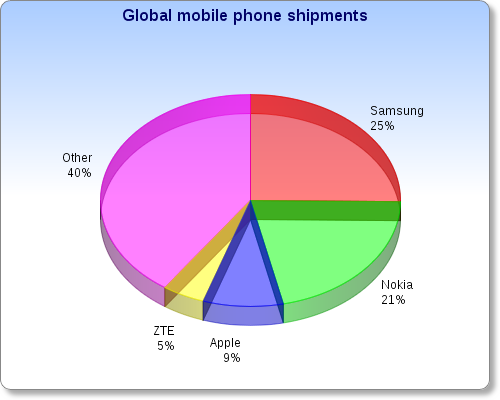
In 2012, global phone shipments hit 1.6 billion units, according to a new report from Strategy Analytics, with Samsung shipping a massive 396.5 million phones last year.
Viktor Frankl, a prominent Jewish psychiatrist and neurologist in Vienna, was arrested and transported to a Nazi concentration camp with his wife and parents in September 1942. When his camp was liberated three years later, most of his family, including his pregnant wife, had perished, but Frankl, prisoner number 119104, had lived. In Man’s Search for Meaning, Frankl’s bestselling 1946 book, he wrote in nine days about his experiences in the camps, he concluded that the difference between those who had lived and those who had died came down to one thing: Meaning, an insight he came to early in life. When he was a high school student, one of his science teachers declared to the class, “Life is nothing more than a combustion process, a process of oxidation.” Frankl jumped out of his chair and responded, “Sir, if this is so, then what can be the meaning of life?”
Mobile readership offers publishers a new circulation revenue sources.
Media businesses have already gone through a first wave of digital transition, and in the last few years, mobile has been the next frontier. Publishers have been tasked with deciding whether to offer their content on the smaller-screen devices—and how.
Graduates in China say no thank you to factory jobs.
Guangzhou, China, a city with a population of 15 million, is the hub of a manufacturing region where factories make everything from T-shirts and shoes to auto parts, tablet computers and solar panels. Despite the factories offering double-digit annual pay increases and better benefits, many are desperate for workers.