Mercedes-Benz Collaborates with Microsoft to Integrate ChatGPT into Cars

Mercedes-Benz, in collaboration with Microsoft, announced its plan to incorporate ChatGPT into its luxury vehicles in the United States, according to a press release by the automaker. Starting June 16, Mercedes-Benz will introduce a software upgrade that integrates ChatGPT into its cars, enhancing the voice command functionality for drivers.

Presently, Mercedes-Benz drivers can use the phrase “Hey, Mercedes” followed by a brief command to perform tasks like accessing the navigation system or making phone calls. By leveraging Microsoft’s ChatGPT, these voice instructions will become more natural and seamless, potentially unlocking additional functionalities. The new feature will be seamlessly integrated into the MBUX infotainment system of Mercedes-Benz vehicles.

Continue reading… “Mercedes-Benz Collaborates with Microsoft to Integrate ChatGPT into Cars”

Combating the Menace: Tackling Illegal, Unreported, and Unregulated Fishing

Illegal, Unreported, and Unregulated (IUU) fishing poses a significant threat to the world’s oceans, wreaking havoc on vulnerable marine populations and jeopardizing ecosystem health. Unfortunately, monitoring and preventing such activities have proven challenging due to the lack of ocean surveillance. However, a beacon of hope is emerging with recent developments that could lead to positive change.

Global Fishing Watch, an initiative founded in 2015 by Google, SkyTruth, and Oceana, has secured a remarkable $60 million in funding to harness technology in creating a revolutionary map. This map will enable experts to track over one million vessels on the ocean, marking a significant milestone in combatting IUU fishing. The funding comes from The Audacious Project, a financial support platform hosted by TED, dedicated to backing projects that present solutions to the world’s most pressing challenges.

Continue reading… “Combating the Menace: Tackling Illegal, Unreported, and Unregulated Fishing”

Paul McCartney Reveals AI was Used to Restore John Lennon’s Vocals for Upcoming Beatles Track

During an interview with the BBC, legendary Beatles singer-songwriter Paul McCartney disclosed that artificial intelligence (AI) was utilized to extract and enhance the vocals of his former bandmate, John Lennon, from an old recording. This breakthrough allowed Lennon’s voice to feature in an upcoming track.

McCartney, when asked about AI during the BBC’s “Today” program, expressed his fascination with the technology, stating, “It’s a very interesting thing, you know. It’s something we’re all sort of tackling at the moment and trying to deal with.”

According to McCartney, “Lord of the Rings” director Peter Jackson, who recently released the documentary “The Beatles: Get Back,” which showcased colorized and restored archival footage of the band, successfully extracted Lennon’s voice from a deteriorated cassette recording using AI. The technology distinguished Lennon’s vocals from instrumental and background interference.

Continue reading… “Paul McCartney Reveals AI was Used to Restore John Lennon’s Vocals for Upcoming Beatles Track”

AI Enhancement Software CEO Counters Concerns, Emphasizing Collaboration between AI and Human Creativity

The CEO of a leading artificial intelligence (AI) image and video enhancement software company has responded to concerns regarding AI’s impact on employment in the art and entertainment industries, asserting that recent advancements will actually benefit creators by alleviating technical challenges.

Eric Yang, CEO of Topaz Labs, dismissed the notion that AI would replace human creativity, stating, “There’s a common fear that AI will replace humans, but we believe that we’ll instead see an explosion of AI-assisted human creativity and productivity in the next few years. People create art to tell stories to other people, and AI can never replace that,” Yang told Fox News Digital.

A research report from Goldman Sachs in March indicated that AI has the potential to automate up to 26% of employment tasks in media, design, arts, entertainment, and sports. However, artists’ opinions on generative AI have been divided. Some view AI-generated art and photo generators as “anti-artist,” as they rely on existing human artwork for training data obtained without consent or compensation. Others worry that AI’s ability to swiftly create work similar to that of established artists could lead the public to perceive photography and painting as easily replicable. These concerns are primarily directed toward generative AI models like MidJourney and Dall-E, rather than image or art enhancement tools.

Continue reading… “AI Enhancement Software CEO Counters Concerns, Emphasizing Collaboration between AI and Human Creativity”

Google Cloud and Mayo Clinic Join Forces to Revolutionize Healthcare with Generative AI

Google Cloud and the Mayo Clinic have unveiled a transformative partnership aimed at revolutionizing traditional healthcare through the use of generative artificial intelligence (AI), as announced on Wednesday. The collaboration will initially focus on leveraging Google Cloud’s Enterprise Search in Generative AI App Builder to enhance the efficiency of clinical workflows, facilitating easier access to information for clinicians and researchers while improving patient outcomes.

Mayo Clinic, renowned for its expertise in utilizing AI for positive impact, is a critical partner in the responsible implementation of this groundbreaking technology in healthcare. Google Cloud recognizes Mayo Clinic’s leadership in this space and their pivotal role in bringing transformative AI solutions to the healthcare industry.

In addition to this partnership announcement, Google Cloud revealed on Wednesday that its app builder is fully equipped to support Health Insurance Portability and Accountability Act (HIPAA) compliance, ensuring the secure handling of patient data.

Continue reading… “Google Cloud and Mayo Clinic Join Forces to Revolutionize Healthcare with Generative AI”

Samsung Develops Ultra-Large AI System to Compete with Language Models

As AI gains popularity across industries, tech giants like Apple, Samsung, and Google are increasingly venturing into this field. Samsung has now revealed that its research division is working on an in-house “ultra-large AI system,” utilizing all available GPU resources. The company plans to release this AI system in July, positioning it as their take on large language models (LLMs), potentially rivaling the likes of Bard and ChatGPT.

While specific details about Samsung’s project are currently scarce, the company’s dedication to leveraging its GPU resources suggests promising developments. This move could also prompt Apple to deepen its AI involvement. Although Apple has been relatively quiet about artificial intelligence lately, competition in the market may spur the company to step up its efforts.

Continue reading… “Samsung Develops Ultra-Large AI System to Compete with Language Models”

Paragraphica: A Revolutionary Camera Powered by AI and Textual Prompts

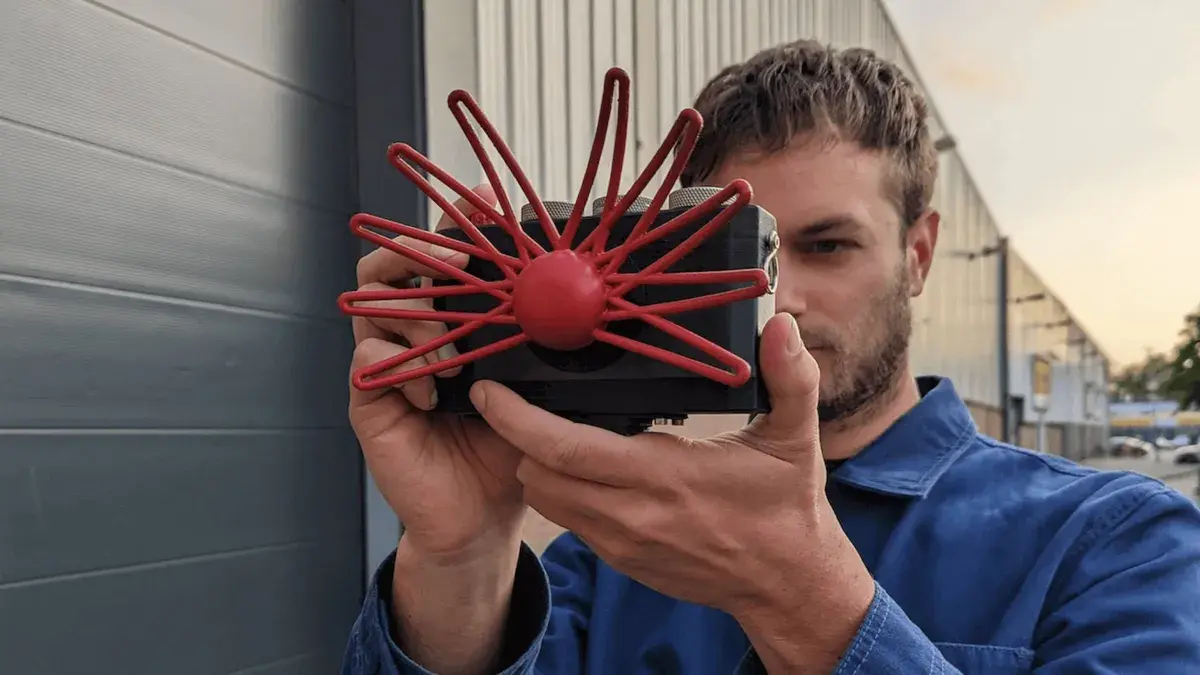
In a remarkable development, a new camera has emerged in the market that captures photos using only location data and textual prompts fed into its artificial intelligence (AI) system. This groundbreaking camera, known as “Paragraphica,” relies solely on information to generate AI-created images, without the need for a lens. Designer Bjørn Karmann from the Netherlands unveiled this passion art project through a tweet, revealing a fully functional prototype equipped with physical dials reminiscent of an analog camera.

Similar to traditional cameras, Paragraphica features three dials that control the data and AI parameters influencing the appearance of the resulting photo. The first dial allows users to set the radius within which the camera searches for surrounding places and data. The second dial adjusts the level of noise in the picture, while the third dial determines how closely the camera follows the user’s textual instructions and prompts.

Continue reading… “Paragraphica: A Revolutionary Camera Powered by AI and Textual Prompts”

AI-Powered System Revolutionizes Scientific Experimentation, Paving the Way for Rapid Discoveries

In a groundbreaking development reported in Nature Microbiology, a team led by a professor at the University of Michigan has harnessed the power of artificial intelligence (AI) to enable robots to conduct up to 10,000 autonomous scientific experiments per day. This cutting-edge technology, known as BacterAI, holds the potential to accelerate the pace of discovery in fields ranging from medicine and agriculture to environmental science.

The researchers, led by Professor Paul Jensen, aimed to understand the metabolism of two microbes associated with oral health, despite having no initial baseline information. Each bacterial species requires specific nutrients to thrive, but determining the precise combination of amino acids they need can be challenging. With 20 amino acids yielding over a million possible combinations, BacterAI stepped in to uncover the amino acid requirements for the growth of Streptococcus gordonii and Streptococcus sanguinis.

Continue reading… “AI-Powered System Revolutionizes Scientific Experimentation, Paving the Way for Rapid Discoveries”

NVIDIA Unveils Neuralangelo: An AI Model for Creating Realistic 3D Replicas from 2D Videos

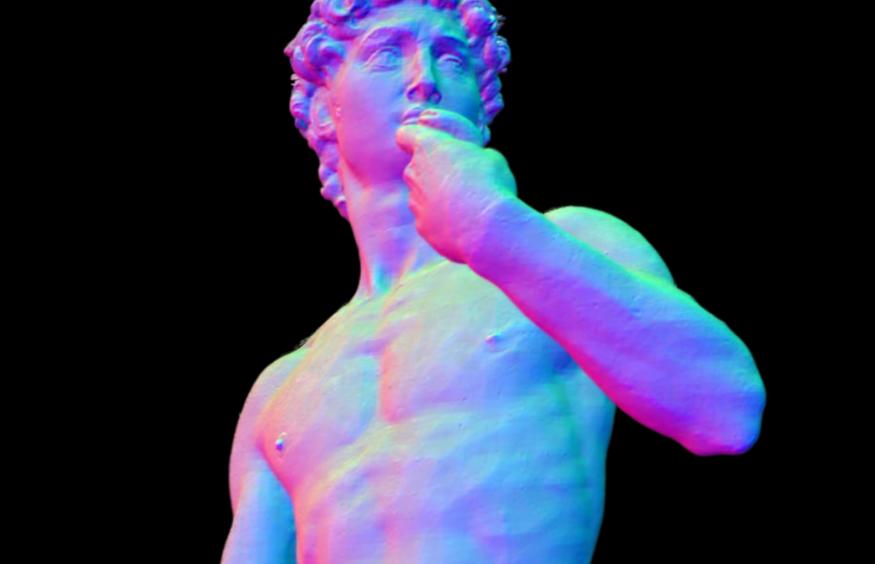
NVIDIA has introduced a groundbreaking AI model called Neuralangelo, capable of generating 3D replicas of objects from 2D videos. Whether the subject is a classical sculpture or a regular truck or building, Neuralangelo utilizes multiple frames from different angles to capture the depth, size, and shape of the object. It then creates an initial 3D representation, refining it to mimic the intricate details of the real-world counterpart.

By leveraging technology from its previous model, Instant NeRF, Neuralangelo achieves remarkable precision in capturing fine details, such as textures, patterns, and color variations. NVIDIA claims that Neuralangelo’s ability to handle challenging textures, like the roughness of roof shingles or the smoothness of marble, “significantly surpasses prior methods.” The model can even generate usable virtual objects from smartphone videos, providing creators with a simple way to produce 3D replicas for their projects. Moreover, NVIDIA Research states that Neuralangelo can generate complete 3D scenes within a remarkably short timeframe of two hours.

Continue reading… “NVIDIA Unveils Neuralangelo: An AI Model for Creating Realistic 3D Replicas from 2D Videos”

AI Accelerates Discovery of Critical Biomarkers for Chronic Myeloid Leukemia Treatment Response

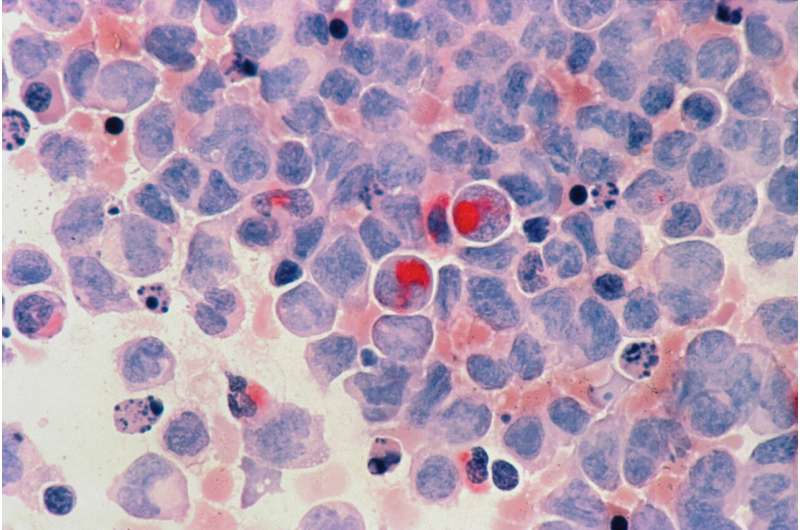
Scientists in Singapore, from Duke-NUS Medical School, A*STAR’s Genome Institute of Singapore (GIS), and Singapore General Hospital (SGH), alongside their colleagues, have harnessed the power of artificial intelligence (AI) to expedite the identification of crucial biomarkers that can predict the non-responsiveness of chronic myeloid leukemia (CML) patients to conventional treatments. This early prognosis enables patients to receive potentially life-saving bone marrow transplants during the initial stages of the disease.

CML is a form of blood cancer triggered by a genetic mutation that permanently activates an enzyme called tyrosine kinase. This mutation occurs in a blood stem cell within the bone marrow, causing it to transform into an aggressive leukemic cell that eventually supplants healthy blood production.

Continue reading… “AI Accelerates Discovery of Critical Biomarkers for Chronic Myeloid Leukemia Treatment Response”

Los Alamos Scientists Develop Promising Interface-Type Memristor for Neuromorphic Computing

The human brain, often referred to as the most complex entity in the universe, has long fascinated scientists seeking to replicate its unparalleled computing capabilities. In a significant breakthrough, researchers at Los Alamos National Laboratory have successfully created a new type of memristive device, demonstrating its potential for constructing artificial synapses in cutting-edge neuromorphic computing.

Memristors, or memristive devices, represent a highly sought-after circuit technology that possesses both memory and programming capabilities. Unlike conventional resistor technology, memristors possess the ability to retain their electrical state even when powered off, resembling the memory retention of the human brain. This unique characteristic opens up a realm of possibilities for computing and device development. Aiping Chen, a scientist at the Center for Integrated Nanotechnologies, explained the significance of data processing in today’s scientific advancements, encompassing fields such as machine learning, artificial intelligence, and artificial neural networks.

Continue reading… “Los Alamos Scientists Develop Promising Interface-Type Memristor for Neuromorphic Computing”

Reserve Bank of India Urges Banks to Embrace AI and Blockchain for Sustainable Growth

Deputy Governor of the Reserve Bank of India (RBI), Mahesh Kumar Jain, has emphasized the importance of Indian banks adopting innovative technologies such as artificial intelligence (AI) and blockchain to ensure sustainable growth and stability. Speaking at an RBI conference for bank directors, Jain discussed strategies to address risks associated with evolving customer expectations, technological disruptions, and cybersecurity threats.

Jain highlighted the significance of effective corporate governance and robust structures and processes in preparing for future risks. He emphasized that banks need to focus on technology adoption to overcome the challenges posed by these risks. Alongside digital transformation, enhancing customer experience, and investing in cybersecurity measures, Jain specifically recommended the adoption of AI and blockchain technologies by Indian banks.

Continue reading… “Reserve Bank of India Urges Banks to Embrace AI and Blockchain for Sustainable Growth”
Discover the Hidden Patterns of Tomorrow with Futurist Thomas Frey
Unlock Your Potential, Ignite Your Success.

By delving into the futuring techniques of Futurist Thomas Frey, you’ll embark on an enlightening journey.

Learn More about this exciting program.