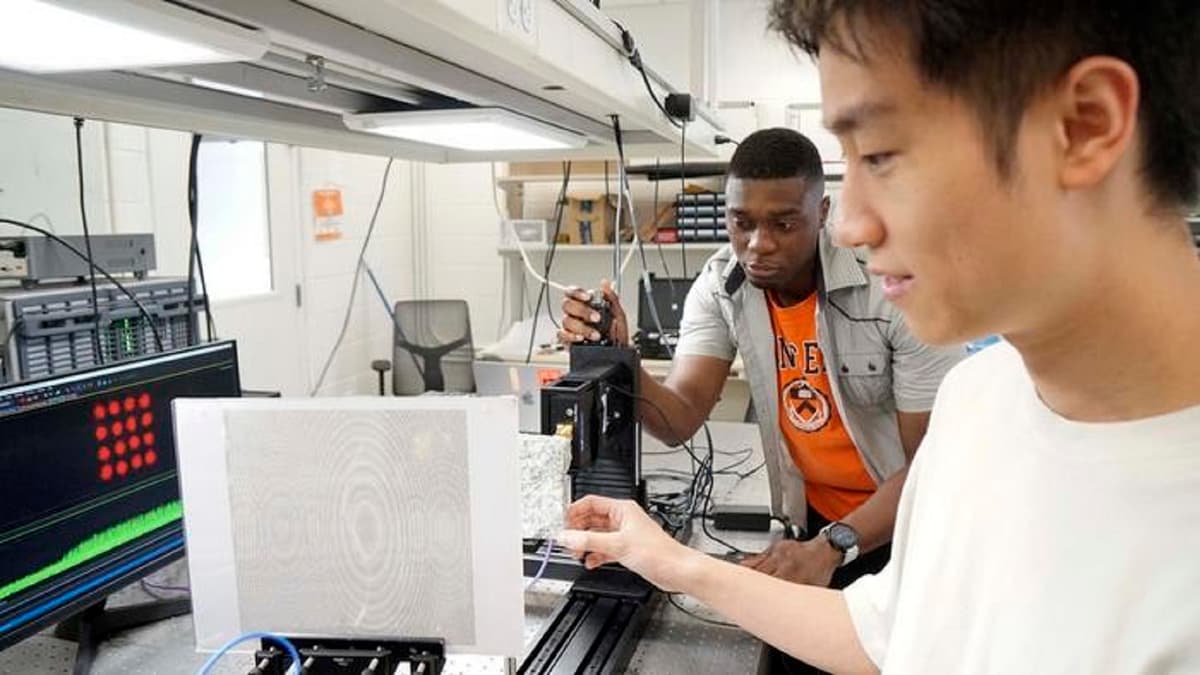
Curveball Internet: Princeton’s Airy Beams Promise Wireless That Dodges Walls

The dream of wireless networks fast enough to power fully immersive VR and fleets of autonomous vehicles has always run into one humiliating obstacle: walls. High-frequency signals—especially in the sub-terahertz spectrum—carry enormous bandwidth, but they collapse the moment a chair, a bookcase, or a human body gets in the way.

Princeton engineers just rewrote the rules. Their system doesn’t bounce signals around obstacles with clunky reflectors—it bends the signal itself. Think curveball physics applied to Wi-Fi.

Continue reading… “Curveball Internet: Princeton’s Airy Beams Promise Wireless That Dodges Walls”

95% of Corporate AI Pilots Are Failing—And the Divide Is Only Getting Wider

Generative AI is supposed to be the miracle engine of modern business—replacing expensive outsourcing, slashing inefficiencies, and accelerating growth. But a new MIT report reveals a brutal truth: 95% of AI pilots inside large companies are dead on arrival.

The report, The GenAI Divide: State of AI in Business 2025, based on hundreds of interviews and case studies, found that while a handful of startups are rocketing from zero to $20 million in revenue in a year, most corporate AI projects are stalling. The problem isn’t the models themselves—it’s the way enterprises are deploying them.

Continue reading… “95% of Corporate AI Pilots Are Failing—And the Divide Is Only Getting Wider”

Curiosity 2.0: How NASA’s 13-Year-Old Mars Rover Just Got a Brain Boost

Thirteen years into its mission, NASA’s Curiosity rover is proving that age doesn’t have to mean decline—it can mean evolution. This nuclear-powered veteran of the Martian surface just got a mental makeover, gaining the ability to multitask, manage its own naps, and stretch every watt of power like never before.

The rover’s new capabilities aren’t just engineering flexes—they’re survival tactics. Curiosity relies on a multi-mission radioisotope thermoelectric generator (MMRTG) powered by slowly decaying plutonium. As the years tick by, the available energy shrinks, making efficiency the currency of survival. The upgrades let Curiosity relay data to orbiters while still driving, maneuvering its robotic arm, or snapping pictures—compressing days of work into hours, and keeping heaters and instruments active for less time.

Continue reading… “Curiosity 2.0: How NASA’s 13-Year-Old Mars Rover Just Got a Brain Boost”

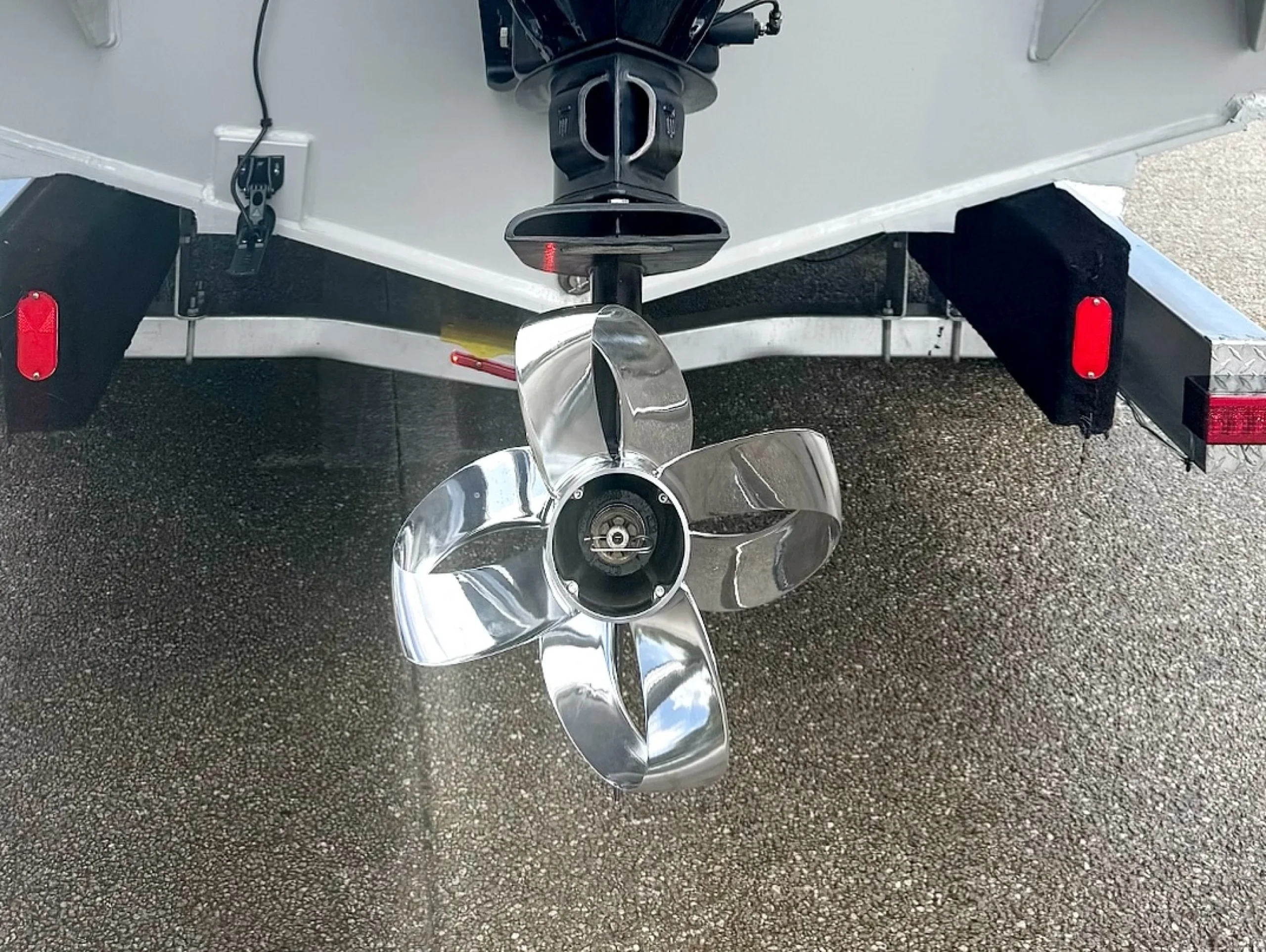
The Propeller Revolution Is Here—and It’s Loopy

Since the age of steamships, propellers haven’t changed much. Same basic shape. Same basic inefficiencies. Until now.

Enter Sharrow Engineering—a Detroit-based disruptor with a bold claim: they’ve reinvented the propeller. Not tweaked. Not optimized. Reinvented.

Their invention? A hypnotic, closed-loop design that looks more like modern art than marine hardware. But this loopy shape isn’t just for show—it eliminates the drag-inducing tip vortices that have plagued traditional propellers since the 1830s. The result? Up to 30% more fuel efficiency, drastically reduced noise and vibration, and handling so smooth it feels like piloting a completely different vessel.

Continue reading… “The Propeller Revolution Is Here—and It’s Loopy”

Can AI Read Between the Lines? A New Study Explores How Well Machines Detect Hidden Meanings in Text

When humans communicate through writing—whether by email, on social media, or in casual conversation—we often imply more than we say outright. Beneath the surface of our words lies latent meaning: subtext, emotion, intent, and even political bias. Traditionally, we rely on the reader to interpret this subtext. But what happens when the reader is not a person, but an artificial intelligence system?

As conversational AI becomes more advanced, researchers are beginning to explore whether these systems can grasp what’s left unsaid. The emerging field of latent content analysis focuses on uncovering deeper meanings and subtle cues in text, including emotional tone, sarcasm, and ideological leanings. This kind of analysis is important across many domains—from mental health and public safety to customer service and journalism.

Continue reading… “Can AI Read Between the Lines? A New Study Explores How Well Machines Detect Hidden Meanings in Text”

Versailles Brings Statues to Life with AI-Powered Conversations

Visitors to the Palace of Versailles can now engage in real-time conversations with its iconic garden statues, thanks to a new collaboration with artificial intelligence companies OpenAI and French startup Ask Mona. The initiative replaces traditional audio guides with interactive, multilingual AI experiences designed to deepen engagement with the historic site.

The experience is simple: visitors scan a QR code next to one of around 20 statues throughout the gardens. This launches an AI-powered conversation available in French, English, or Spanish, offering historical insights and stories tied to the statues and the palace’s rich heritage.

Continue reading… “Versailles Brings Statues to Life with AI-Powered Conversations”

Europe Achieves Quantum-Safe Data Breakthrough with Record-Breaking 1.2 Tbps Transfer Across 2,175 Miles

Breaking new ground in data transmission, Europe has achieved a record-setting 1.2 terabit-per-second quantum-safe data transfer over 2,175 miles (3,500 kilometers). This milestone was made possible through a collaborative effort by CSC – IT Center for Science (Finland), SURF (Netherlands), and Nokia, showcasing the future of secure, high-speed, cross-border research connectivity.

The successful trial connected Amsterdam and Kajaani using quantum-safe, high-capacity fibre-optic infrastructure. The data—both real and synthetic—was transferred directly disk-to-disk across five operational research and education networks: NORDUnet (Nordic backbone), Sunet (Sweden), SIKT (Norway), and Funet (CSC’s Finnish network). This trial not only tested the technical feasibility but also laid a foundation for operational deployment.

Continue reading… “Europe Achieves Quantum-Safe Data Breakthrough with Record-Breaking 1.2 Tbps Transfer Across 2,175 Miles”

ETRI Unveils Hyper-Realistic AI Avatars from a Single Photo to Power Next-Gen Human-Machine Interaction

South Korea’s Electronics and Telecommunications Research Institute (ETRI) has developed advanced AI technology capable of generating hyper-realistic avatars that can speak and interact naturally using only a single portrait photo. This breakthrough is positioned as a next-generation interface for intuitive communication between humans and machines, particularly in the context of fully autonomous vehicles.

Unlike conventional AI assistants, which typically follow scripted commands with minimal facial movement, ETRI’s avatars feature detailed facial expressions and precise mouth synchronization. This enables the avatars to engage in lifelike, conversational interactions, transforming the experience of in-vehicle communication. The avatars can simulate realistic communication not only with drivers but also with pedestrians, supporting more natural and human-centered dialogue.

Continue reading… “ETRI Unveils Hyper-Realistic AI Avatars from a Single Photo to Power Next-Gen Human-Machine Interaction”

E-MINDS Project Brings Efficient AI to Tiny IoT Devices

Artificial intelligence is often associated with heavy computing demands and high energy consumption—obstacles that limit its use in the Internet of Things (IoT), where sensors and devices typically run on minimal power and processing capabilities. However, researchers from the E-MINDS project have developed methods to make AI efficient enough to run on extremely limited hardware, paving the way for smarter, low-power applications in industry and beyond.

A joint initiative involving the COMET K1 center Pro2Future, Graz University of Technology (TU Graz), and the University of St. Gallen, the E-MINDS project has demonstrated how specialized AI models can operate locally on devices with just 4 kilobytes of memory. These models are able to perform tasks such as identifying sources of interference in ultra-wideband (UWB) localization systems, without relying on cloud computing or external processors.

Continue reading… “E-MINDS Project Brings Efficient AI to Tiny IoT Devices”

Drones with AI and Gas Sensors to Aid Forest Fire Detection in São Carlos

Forest fire prevention and control agencies in São Carlos, a city in the interior of São Paulo, Brazil, will soon benefit from advanced aerial technology to detect and combat fires more rapidly.

Researchers at the São Carlos Engineering School of the University of São Paulo (EESC-USP) are developing drones equipped with gas sensors and artificial intelligence to identify forest fires in their early stages. The project was introduced during the aeronautics session of FAPESP Week Toulouse, held from June 10 to 12 in Toulouse, southern France.

Continue reading… “Drones with AI and Gas Sensors to Aid Forest Fire Detection in São Carlos”

Uncovering How Diseases Cause Each Other Using AI and Medical Data

Researchers developed a new way to identify how diseases might cause or influence one another by analyzing scientific literature and validating the results using real-world patient data. They searched through PubMed articles for phrases suggesting that one disease leads to another, then standardized those disease names using ICD-10-CM medical codes to keep the data consistent.

To test whether these suggested relationships were credible, the team used a combination of five validation methods. They looked at how strongly diseases were statistically linked in the UK Biobank dataset, whether the timing of diagnoses followed the expected pattern (with the “cause” usually diagnosed before the “effect”), and how frequently the relationships appeared in the literature. They also tested how dependent the diseases were on each other and asked GPT-4, a powerful AI language model, to assess the plausibility of each connection. All of this information was combined into a confidence score for each relationship.

Continue reading… “Uncovering How Diseases Cause Each Other Using AI and Medical Data”

From Prompts to Proteins: How AI Is Revolutionizing Molecular Design

Chatbots like ChatGPT have made it easy for users to access complex information through simple questions. The same principle is now being applied to one of biology’s most complex challenges: protein design. Traditionally, creating custom proteins required deep technical expertise and reliance on naturally evolved templates. But scientists are now building AI models that can generate novel proteins from plain English prompts, much like asking ChatGPT for a summary or essay.

Enter Pinal, a new AI designed to act as a conversational protein engineer. Developed by an international team of researchers, Pinal allows scientists to describe the desired type, function, or structure of a protein in natural language. In response, the AI generates candidate proteins that can be tested in living cells. In one demonstration, Pinal successfully designed enzymes that broke down alcohol, some even functioning at high temperatures.

Continue reading… “From Prompts to Proteins: How AI Is Revolutionizing Molecular Design”
Discover the Hidden Patterns of Tomorrow with Futurist Thomas Frey
Unlock Your Potential, Ignite Your Success.

By delving into the futuring techniques of Futurist Thomas Frey, you’ll embark on an enlightening journey.

Learn More about this exciting program.