The Rise of the Bionic Advisor: How AI Is Rewriting the Future of Financial Advice

Artificial intelligence is already transforming how financial advisors work—automating note-taking, generating client emails, and streamlining administrative tasks. But while many advisors expect AI to boost efficiency in subtle ways, industry experts suggest the change ahead may be far more radical. According to analysts, AI won’t just enhance the role of the advisor—it may fundamentally redefine it.

We’re in the early stages of AI integration into wealth management. Today, AI tools are primarily used to offload routine tasks, optimize workflows, and free up advisors to focus on client relationships, prospecting, and strategy. But as the technology matures, the debate is heating up over just how transformative AI will be for financial services.

Continue reading… “The Rise of the Bionic Advisor: How AI Is Rewriting the Future of Financial Advice”
When AI Makes the Rules: How Language Models Create Their Own Social Conventions

We all live by unwritten social rules. Whether it’s saying “good morning” to a barista, offering a polite “thank you” for good service, or giving a hug to show affection, these gestures feel natural and expected. But such behaviors vary widely across cultures—handshakes in the West versus bowing in parts of Asia, or forks and knives versus chopsticks. These cultural conventions are taught from a young age, shaped by local norms rather than global consensus.

For decades, social scientists have believed that these rules of interaction emerge organically, developing through repeated social encounters within local groups. And language, as one of our most fundamental social tools, reflects this diversity. Words and phrases carry different meanings depending on where you’re from—what’s considered offensive in one region might be a harmless joke or even a term of endearment in another.

Continue reading… “When AI Makes the Rules: How Language Models Create Their Own Social Conventions”

The Rise and Fall of Prompt Engineering: A Vanishing Role in the Age of AI

Just two years ago, prompt engineering emerged as a promising new job in the tech world. As large language models (LLMs) like ChatGPT took center stage, companies began seeking out specialists who could craft the most effective prompts to maximize AI performance. These professionals acted as intermediaries, translating human intentions into language that AIs could process efficiently.

Today, that role has virtually disappeared.

At the onset of the corporate AI boom, some organizations experimented with hiring prompt engineers to manage internal AI tools. But the need for dedicated roles quickly diminished. Now, crafting strong prompts is seen as a basic skill—something embedded into broader job functions rather than a specialized position. In many cases, companies even rely on AI itself to generate high-quality prompts.

Continue reading… “The Rise and Fall of Prompt Engineering: A Vanishing Role in the Age of AI”

Smart Sorting: AI and X-Ray Technology Improve Safety in Waste Recycling

The improper disposal of electronic waste is becoming a growing issue, with many devices being discarded alongside regular plastic waste. This is particularly hazardous when these electronics contain lithium-ion batteries. If damaged during the recycling process, these batteries can ignite and cause fires in sorting plants.

In Germany, over 10,000 fires occur each year in waste sorting facilities, and approximately 80% of these incidents are linked to lithium-ion batteries. These batteries are commonly found in items such as smartphones, electric toothbrushes, and musical greeting cards. When thrown away with packaging waste, they can be crushed or punctured during sorting, leading to fires that cause an estimated one billion euros in damage annually.

Continue reading… “Smart Sorting: AI and X-Ray Technology Improve Safety in Waste Recycling”

Smart Textile Gloves Use AI and Touch to Help Deafblind People Understand Live Conversations

Thousands of individuals born deafblind may soon be able to understand live, real-world conversations for the first time, thanks to pioneering research from Nottingham Trent University (NTU). The university’s Advanced Textiles Research Group (ATRG) is developing a pair of AI-driven smart gloves that translate spoken language into tactile signals, allowing wearers to interpret communication through their fingertips.

The technology uses artificial intelligence to listen to conversations in real time. Rather than requiring visual or auditory input, the system interprets speech and sends a summarized version through haptic actuators embedded in the gloves. These actuators—small vibration units located on the tops of the fingers—deliver coded messages using variations in vibration strength, frequency, and duration. The system effectively mimics the braille alphabet, enabling the wearer to feel words, grammar, and numbers.

Continue reading… “Smart Textile Gloves Use AI and Touch to Help Deafblind People Understand Live Conversations”

Overland AI Demonstrates Autonomous Breaching Capabilities with Upgraded SMET at Army Innovation Event

Overland AI has successfully demonstrated its autonomous ground vehicle integrated with uncrewed aerial system (UAS)-capable payloads during a joint breaching experimentation initiative alongside the Sandhills Project and the 20th Engineer Brigade of the XVIII Airborne Corps. The demonstration took place at Project Convergence Capstone 5 (PC-C5), the U.S. Army’s leading technology innovation event.

The Seattle-based company, founded in 2022, focuses on delivering autonomous solutions to power modern ground operations. With over a decade of advanced research in robotics and machine learning, Overland AI aims to put cutting-edge autonomy directly into the hands of tactical operators. Central to this vision is its OverWatch command-and-control (C2) interface, designed to give commanders precise control over autonomous ground systems in complex, mission-critical environments.

Continue reading… “Overland AI Demonstrates Autonomous Breaching Capabilities with Upgraded SMET at Army Innovation Event”

GPT-4.5 Reportedly Passes Turing Test—But What Does That Really Mean?

Recent headlines have claimed that an AI chatbot has officially passed the Turing test, marking what some see as a major milestone in artificial intelligence. These reports are based on a preprint study conducted by researchers Cameron Jones and Benjamin Bergen at the University of California, San Diego. Their study found that OpenAI’s GPT-4.5 was judged to be human more than 70% of the time during a controlled experiment—suggesting it has reached a new level of conversational realism.

The experiment, which has not yet undergone peer review, tested four large language models (LLMs): ELIZA, GPT-4o, LLaMa-3.1-405B, and GPT-4.5. A total of 284 participants were involved, alternating between roles as interrogators and witnesses. Interrogators engaged in text-based conversations with two entities—one human, one AI—via a split-screen interface for five minutes. At the end of each session, participants were asked to determine which was human.

Continue reading… “GPT-4.5 Reportedly Passes Turing Test—But What Does That Really Mean?”

Google’s AI Breakthrough: DolphinGemma Brings Us Closer to Talking with Dolphins

Artificial Intelligence is transforming industries around the world, but one of its most jaw-dropping applications is happening beneath the waves. In a groundbreaking development, U.S. tech giant Google has unveiled DolphinGemma, a large language model (LLM) designed to facilitate communication between humans and dolphins.

This AI-powered system is currently undergoing testing to determine whether it can replicate and respond to the complex vocal behavior of dolphins. If successful, DolphinGemma could mark the culmination of over 40 years of research and conservation efforts focused on understanding dolphin communication.

Continue reading… “Google’s AI Breakthrough: DolphinGemma Brings Us Closer to Talking with Dolphins”

AI-Powered Wearable Device Offers New Navigation Aid for the Blind and Partially Sighted

A newly developed wearable system powered by artificial intelligence (AI) is offering a transformative way for blind and partially sighted individuals to navigate their environments. Published in Nature Machine Intelligence, the study describes a device that uses advanced AI algorithms to interpret visual data from a built-in camera and convert it into navigational guidance through audio and tactile feedback.

Unlike traditional mobility aids such as white canes or guide dogs, or invasive solutions like retinal implants, this wearable system provides a non-invasive, technology-driven alternative. Previous electronic visual aids have struggled with complexity and usability, limiting their adoption. This system, developed by Leilei Gu and colleagues, addresses those limitations by making navigation more intuitive and responsive.

Continue reading… “AI-Powered Wearable Device Offers New Navigation Aid for the Blind and Partially Sighted”

Text2Robot: How AI Is Making Robot Design as Simple as Typing a Sentence

When personal computers first emerged, they were tools reserved for a select few who understood complex programming languages. Fast forward to today, and nearly anyone can check the weather, stream music, or even generate code—all with just a few keystrokes. This evolution has dramatically reshaped how people interact with technology, making powerful computational tools accessible to the general public. Now, artificial intelligence (AI) is doing the same for robotics through an innovative platform called Text2Robot.

Developed by engineers at Duke University, Text2Robot is a groundbreaking framework that enables anyone—regardless of technical background—to design and build functional robots simply by describing them in natural language. This revolutionary tool will be featured at the IEEE International Conference on Robotics and Automation (ICRA 2025), held May 19–23 in Atlanta, Georgia.

Continue reading… “Text2Robot: How AI Is Making Robot Design as Simple as Typing a Sentence”

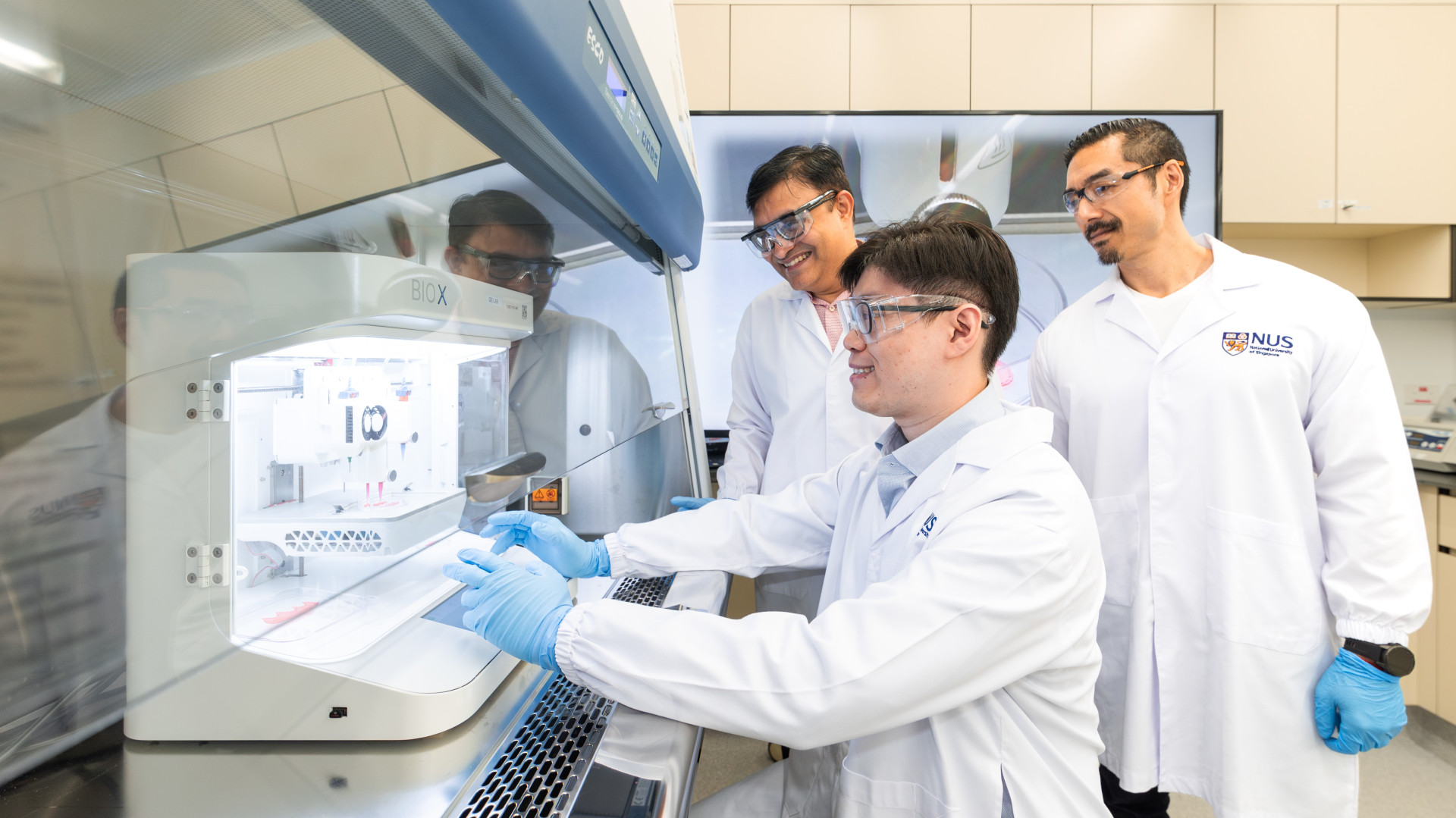
Smarter Smiles: AI-Driven 3D Bioprinting Creates Personalized Gum Grafts Without Surgery

A team of researchers from the National University of Singapore (NUS) has developed a groundbreaking technique that combines 3D bioprinting with artificial intelligence (AI) to produce personalized gum grafts, offering a less invasive alternative to traditional dental surgery. Led by Assistant Professor Gopu Sriram from the NUS Faculty of Dentistry, this innovation aims to reduce patient discomfort by eliminating the need to harvest tissue from the patient’s own mouth—a common and often painful step in current grafting procedures.

Designed for use in treating gum defects caused by periodontal disease or complications from dental implants, the team’s approach relies on a specially formulated bio-ink that supports cell growth while maintaining the mechanical strength necessary during the 3D printing process. Their research, published in Advanced Healthcare Materials on December 17, 2024, was funded by the National Additive Manufacturing Innovation Cluster and the National University Health System.

Continue reading… “Smarter Smiles: AI-Driven 3D Bioprinting Creates Personalized Gum Grafts Without Surgery”

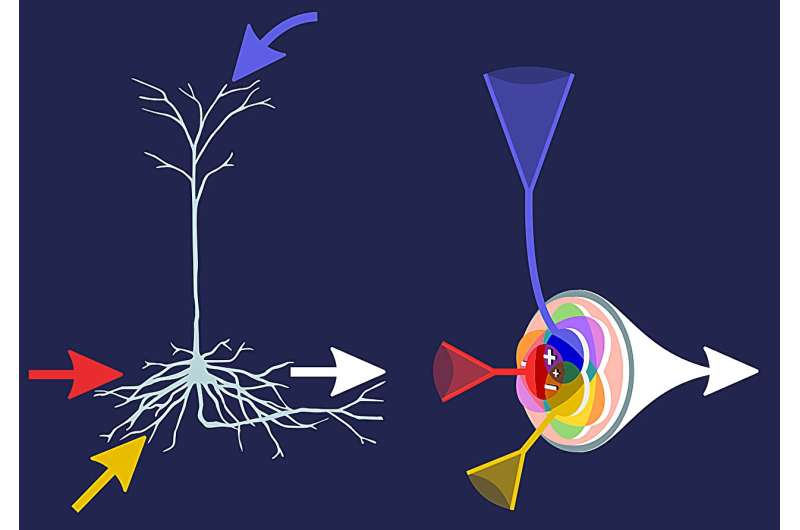
Brains of the Future: Self-Learning ‘Infomorphic Neurons’ Bring AI Closer to Biology

In a breakthrough that could redefine the future of artificial intelligence, researchers have developed a new kind of artificial neuron that mimics the brain more accurately than ever before. Known as “infomorphic neurons,” these units can learn independently, just like their biological counterparts.

Developed by scientists at the Göttingen Campus Institute for Dynamics of Biological Networks (CIDBN) at the University of Göttingen and the Max Planck Institute for Dynamics and Self-Organization (MPI-DS), these artificial neurons were designed to self-organize and extract meaningful patterns from their local network environment—without relying on external coordination. The research was recently published in the Proceedings of the National Academy of Sciences.

Continue reading… “Brains of the Future: Self-Learning ‘Infomorphic Neurons’ Bring AI Closer to Biology”
Discover the Hidden Patterns of Tomorrow with Futurist Thomas Frey
Unlock Your Potential, Ignite Your Success.

By delving into the futuring techniques of Futurist Thomas Frey, you’ll embark on an enlightening journey.

Learn More about this exciting program.