When Donald Trump won the election, many in Silicon Valley were flummoxed: “How could a bigoted billionaire with no government experience and a twitchy Twitter trigger finger win the U.S. presidential election?” they asked themselves.
Progress in artificial intelligence causes some people to worry that software will take jobs such as driving trucks away from humans. Now leading researchers are finding that they can make software that can learn to do one of the trickiest parts of their own jobs—the task of designing machine-learning software.
We’re at the halfway point of the epic 20-day, 150,000-hand “Brains Vs. Artificial Intelligence” Texas Hold’em Poker tournament, and a machine named Libratus is trouncing a quartet of professional human players. Should the machine maintain its substantial lead—currently at $701,242—it will be considered a major milestone in the history of AI. Here’s why.
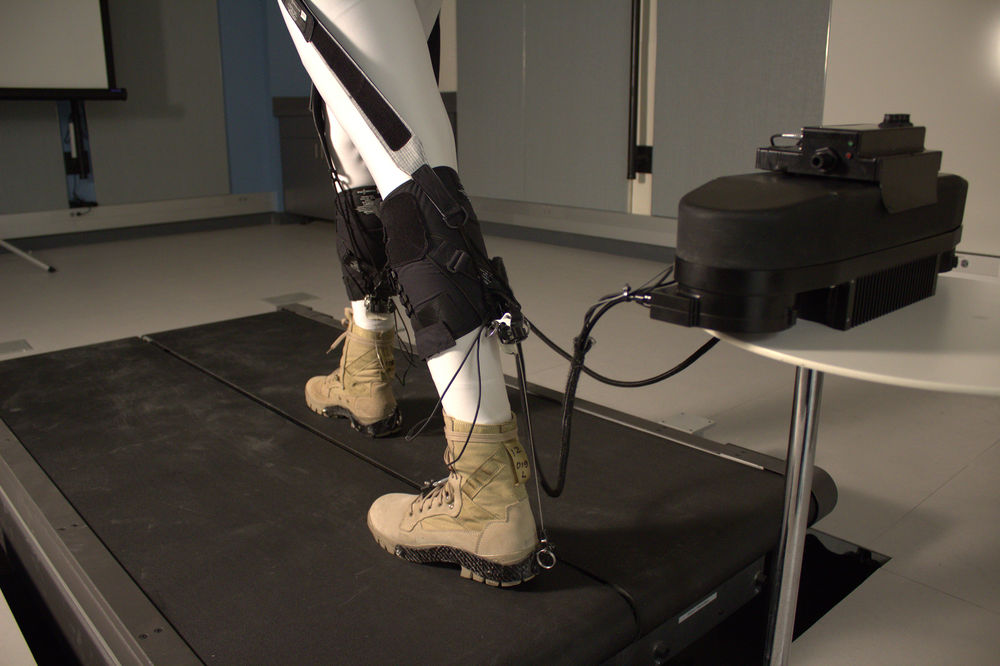
The word exosuit has become all but synonymous with a hard-shelled suit that imbues its wearer with superhuman abilities—leap tall buildings, lift multi-ton items, and make the paralyzed walk—thanks to some awesome looking robotics. But some exosuit researchers in a recent study published inScience Robotics, are taking a softer approach to exosuits. These rigs have more in common with high-tech workout gear than a robotic sci-fi suit, and they could help improve human mobility.
Thirty years ago, it was a big deal when schools got their first computers. Today, it’s a big deal when students get their own laptops. According to Futurist Thomas Frey, in 14 years it’ll be a big deal when students learn from robot teachers over the internet. It’s not just because the technology will be that sophisticated, Frey says, but because the company responsible for it will be the largest of its kind.
If you let your imagination run wild in the world of automatic speech recognition (ASR) and natural language understanding (NLU), and you throw in a little fear, uncertainty and doubt (FUD), you can come up with several illegal uses for systems such as Alexa Voice Service, Google Home, Siri, and Cortana that will give you pause. As I have previously written, Alexa is the “killer app” for the Internet of Things (IoT). It is not dangerous, at least not in its present form. But just for fun, let’s play pretend in our world of infinite possibilities.
The first day of the Brains vs. AI poker tournament is in the books, and the Libratus bot from Carnegie Mellon University emerged as the clear winner, collecting $81,716 to the humans $7,228. Both the players and Libratus’ creators cautioned that it was still too early to make a judgement call about who might win the 20-day tournament. But it’s clear that this year’s AI has made some major improvements on the 2015 system, Claudico, which ended up losing to humanity.
In a sound-proofed hangar on an RAF airbase just north of Cambridge, UK, Chris Mitchell and his colleagues are busy using sledgehammers to teach their computers a lesson. The team has gathered thousands of window panes and doors, all of different shapes and sizes, which they then smash, one by one, recording the distinctive shattering sound of each type of glass. Sometimes they swing sledgehammers or garden spades, sometimes they throw bricks. “We completely underestimated the mess it would make,” says Mitchell. “And how tiring it would be.”
The McDonald’s on the corner of Third Avenue and 58th Street in New York City doesn’t look all that different from any of the fast-food chain’s other locations across the country. Inside, however, hungry patrons are welcomed not by a cashier waiting to take their order, but by a “Create Your Taste” kiosk – an automated touch-screen system that allows customers to create their own burgers without interacting with another human being.
There’s a big temptation for businesses to use artificial intelligence to shave off time and money wherever they can. According to experts, that’s not the smartest use of the technology.
DaVinci Coders is excited to announce that the students in our upcoming JavaScript course will serve as the foundational team for competing in the recently announced IBM Watson AI X-Prize, a $5 million competition designed around using artificial intelligence to solve some of the world’s greatest problems.
“The IBM Watson AI X-Prize fits in perfectly with much of the research we’ve been doing, and we feel well positioned to compete on the world stage for this prestigious prize,” says Thomas Frey, Senior Futurist at the DaVinci Institute. “We’re already attracting some remarkably high caliber students and this seems like the perfect vehicle for leveraging their talents on a project that can benefit the entire world.”
2016 was a banner year for artificial intelligence. Alpha Go’s victory over Lee Sedol was perhaps one of the most important, but we saw advancements in self-driving cars, the continued embrace of bots and personal assistants for retail, adoption and competition around in-house assistants like Amazon Echo, along with frequent, sometimes weekly, breakthroughs on the academic side, mainly relating to machine learning. With the biggest tech companies in the world–Google, Facebook, Amazon, Microsoft, and others–devoting more and more resources to AI, the momentum is going to increase.