Airbus Jumps Into Electric Air Taxi Race

By Madhu Unnikrishnan

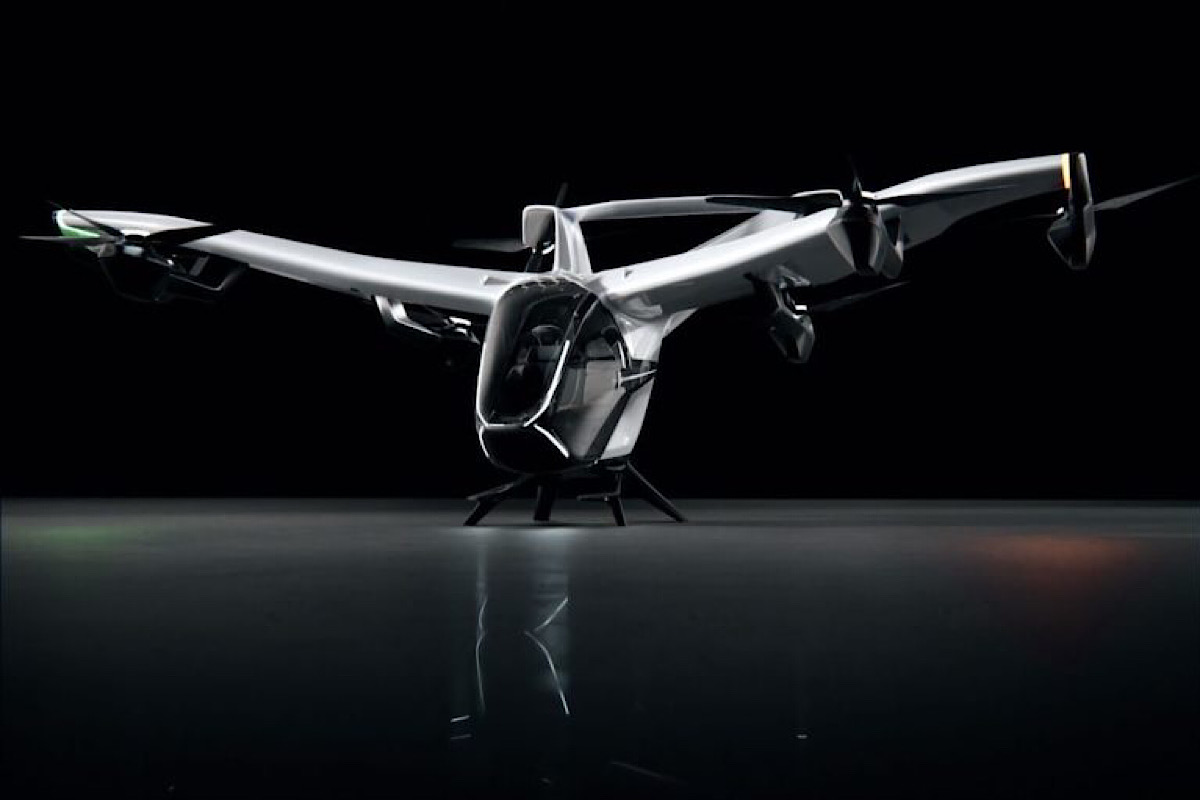
The electric aircraft market has gone from zero to 60 in just a matter of months, now that one of the world’s largest airframers has entered the race. Airbus said its Helicopters division is developing an electric take off and landing (eVTOL) air taxi that could take its first flight in 2023. 

This is in stark contrast to Airbus archrival Boeing, which just last week committed only to consider alternative propulsion technologies in the near- to medium-term. 

Meanwhile, Brazil’s Gol is committing to order up to 250 Vertical Aerospace eVTOLs through lessor Avolon and in partnership with Grupo Comparte to create an urban air taxi platform for country’s most congested cities. Gol’s proposed equity partner American Airlines also has a commitment for Vertical Aerospace’s VA-X4 aircraft.

Continue reading… “Airbus Jumps Into Electric Air Taxi Race”

Air travel’s future may include virtual cabin windows – take a look

The virtual airplane window also incorporates touchless technlogy.

by Francesca Street

Looking out the cabin window and seeing cities and oceans from above is, for many of us, one of the joys of flying.

But aviation innovators Rosen Aviation reckon this experience could be taken to the next level, rendering actual airplane windows obsolete.

The American aviation company is touting its Maverick Project airplane cabin design as the next frontier of inflight experience. A key part of the package? Virtual windows.

“The Maverick Project was born from trying to bring tomorrow’s technology into tomorrow’s plane,” says Lee Clark, Rosen’s senior VP for strategy.

Clark tells CNN Travel that while some of these features have become more common on the ground in recent years — think smart homes — airplane cabins haven’t really caught up.

“The Maverick Project originated because the industry at large is somewhat lagging behind the domestic, residential and automotive worlds,” he says.

Rosen, working in collaboration with KiPcreating and Sky-Style, wants to change this dynamic with the Maverick Project.

But while the visual renderings look flashy, Clark says the goal isn’t to go high tech simply for the sake of it.

“The critical piece is it’s about the passenger experience, it’s not about the technology,” says Clark.

Continue reading… “Air travel’s future may include virtual cabin windows – take a look”

Bell’s Plan To Finally Realize A Rotorcraft That Flies Like A Jet But Hovers Like A Helicopter

After 50 years of sporadic development, Bell thinks it can build a survivable, long-range, high-speed, VTOL aircraft adapted to tomorrow’s wars. 

Bell has provided The War Zone with exclusive details about its recently revealed concepts for future High-Speed Vertical Take-Off and Landing, or HSVTOL, aircraft, which we looked at initially in this previous article. While being able to takeoff and land vertically using rotors and fly at jet speeds in forward flight sounds far-fetched, it turns out that there is decades of elaborate risk reduction work and general research already done on this exact concept. As such, actually realizing such a capability set may be far less of a technological revolution than one would think at first glance. 

The War Zone sat down, virtually at least, with Jeff Nissen, Senior Manager Advanced Technology at Bell Flight, to talk about how the company has got to this point in its HSVTOL endeavors, as well as looking at some of the details of its latest concepts and how they could find a place in the U.S. military’s inventory.

Continue reading… “Bell’s Plan To Finally Realize A Rotorcraft That Flies Like A Jet But Hovers Like A Helicopter”

Radically New Hydrogen Fuel Cell Technology to Transform Aviation, Backed by USAF

by Otilia Drăgan

As exciting as green air mobility sounds, it’s largely dependent on the development of battery and hydrogen fuel cell technology. Without the continuous improvement of these technologies, innovative types of aircraft, such as vertical takeoff and landing vehicles (VTOLs), won’t be able to operate on a large scale. 6 photos

According to research cited by HyPoint, a company that’s developing hydrogen fuel cell systems for aeronautics, the global hydrogen aircraft market is estimated to grow rapidly within the next decades, getting from $27 billion in 2030 to $174 billion by 2040. On the other hand, studies also show that the eVTOL market is growing just as fast, so it makes sense to predict that developing hydrogen fuel cells for eVTOLs is becoming increasingly important.

HyPoint has just taken an important step in this direction, by partnering with Piasecki Aircraft Corporation, a rotorcraft and unmanned aircraft systems (UAS) platforms manufacturer, for the development of a certified hydrogen fuel cell system for eVTOLs. The $6.5 million agreement is focused on Piasecki’s PA-890 compound helicopter, which is set to become the world’s first hydrogen-powered manned helicopter.

Continue reading… “Radically New Hydrogen Fuel Cell Technology to Transform Aviation, Backed by USAF”

World’s Smallest Satellite Communications System Now Integrated on Autonomous eVTOLs

by Otilia Drăgan

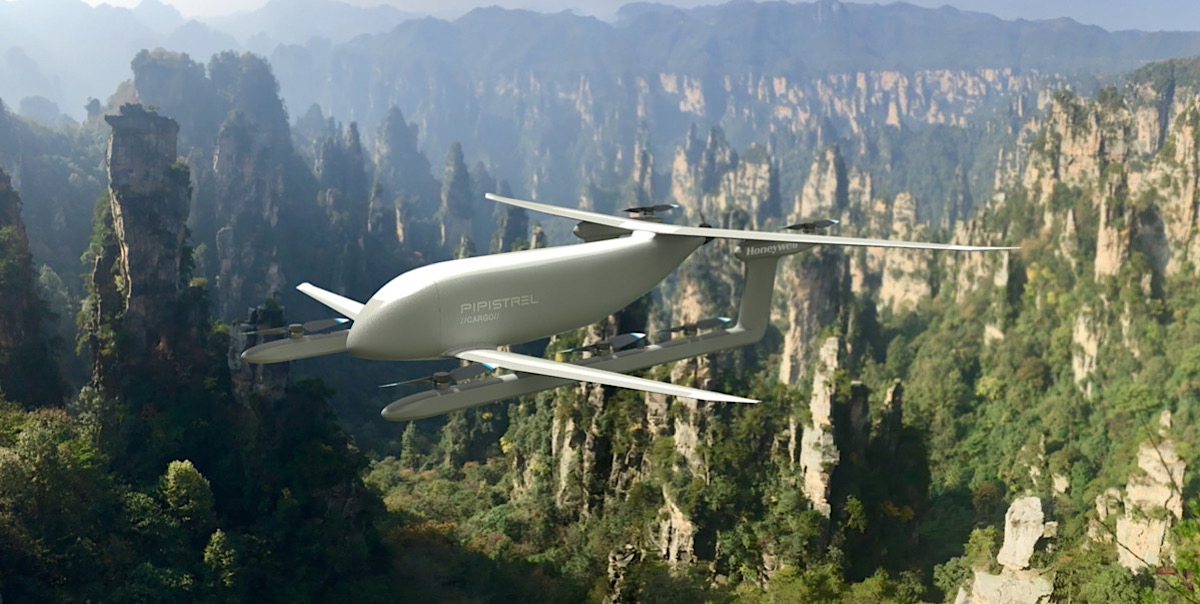
Electric vertical take-off and landing (eVTOL) aircraft are evolving fast and are already starting to change cargo operations. You may not be familiar with the funny-sounding name Pipistrel, but this Slovenian light aircraft manufacturer is at the forefront of electric and autonomous aviation. Most recently, it has equipped its autonomous cargo eVTOL, Nuuva V300, with revolutionary satellite communications technology. 

The Nuuva V300 is an autonomous eVTOL specifically developed for aerial cargo delivery. The 1,000 lbs (460 kg) payload, fully autonomous flight capacity and long range are just some of its main advantages. Another huge benefit is that it doesn’t require a runway, which means it can conduct air cargo operations even in areas where runways aren’t available. Plus, it’s supposed to have a ten times lower operating cost, compared to helicopters.

Continue reading… “World’s Smallest Satellite Communications System Now Integrated on Autonomous eVTOLs”

This Strange Electric Aircraft Is A VTOL You Can Fly Without A License

This electric-powered VTOL looks straight out of a movie.

By Mercedes Streeter

One of the weirdest aircraft to fly in EAA AirVenture this year is an electric VTOL. The Opener Blackfly is an aircraft that you can fly without a pilot license, but there’s a catch.

Every summer, thousands of aviation enthusiasts and Experimental Aircraft Association members descend on Wittman Regional Airport in Oshkosh, Wisconsin, to enjoy a festival of all things flight. You’ll see all sorts of machines at an EAA AirVenture from vintage military aircraft and one-off experiments to the latest concepts. One of the weirder vehicles to show up at AirVenture this year was the Opener Blackfly. 

We’ve covered this machine a couple of times before. It’s been described as a flying car by the New York Times, but I don’t think that’s an appropriate designation. This cannot drive on the ground and its flying characteristics seem closer to a helicopter or drone than a plane.

The pilot sits in the middle with fixed wings in front and rear. On those wings are four propellers that allow it to take off and land vertically with a takeoff run of only 36 inches. 

Continue reading… “This Strange Electric Aircraft Is A VTOL You Can Fly Without A License”

This New One-Person eVTOL Is Like an Electric Bike for the Skies

It’ll get you from New York City to the Hamptons—but without all the traffic. 

By RACHEL CORMACK

Tetra Aviation’s new electric aircraft is all about numero uno. The exclusive, single-seat eVTOL, dubbed the Mk-5, will allow just one traveler to fly up to 100 miles safely, silently and sans any emissions.

The aircraft, which has been roughly three and a half years in the making, was recently unveiled at the week-long EAA AirVenture event at the Wittman Regional Airport in Wisconsin. The futuristic design looks kind of like a pod racer from a sci-fi flick and has the innovative tech to match.

Forged from aluminum and carbon-fiber-reinforced polymers (CFRP), the Mk-5 measures roughly 28 feet wide by 20 feet long by 7 feet high and weighs just over 1,000 pounds when empty. It’s equipped with some 32 vertical rotors on four fixed-wing planes along with one horizontal thrust at the rear to help it soar through the skies.

Continue reading… “This New One-Person eVTOL Is Like an Electric Bike for the Skies”

USAF Pumps $60 Million in Quarterhorse, the Future 4,000 mph Autonomous Aircraft

· by Otilia Drăgan

Supersonic flight is old news, hypersonic is the future – we could be able to cross the Atlantic in 90 minutes sooner that we might think. Plus, the line between military and civilian applications is also getting blurred. Game-changing technology is not only available for top defense projects, but can serve a dual purpose and bring forth benefits that we can all enjoy. 

If you were impressed by Virgin Galactic’s Mach 3 speed, hear this – there’s another hypersonic aircraft on the block, that takes it up to 5. That’s more than 3,800 mph (6,100 km/h), meaning that it could get from New York to London almost 7 times faster than current commercial airlines. 

The small team at Hermeus Corporation, a Georgia-based aerospace start-up, wanted to develop a groundbreaking Mach 5 commercial aircraft, and they already scored partnerships with none other than NASA and the U.S. Air Force(USAF). After successfully demonstrating their Mach 5 engine last year, now it’s time for another milestone, flight testing this cutting-edge aircraft, under a $60 million contract with USAF.

Not too many details have been revealed about the Quarterhorse, other that it will become the world’s fastest aircraft (flying at Mach 5 hypersonic speeds), it will be fully reusable, and it will also be autonomous (with the option of being remotely piloted), with an outstanding 4,600-mile (7,403 km) range. 

Continue reading… “USAF Pumps $60 Million in Quarterhorse, the Future 4,000 mph Autonomous Aircraft”

All roads lead to flying cars by 2030

Cars could be taking to the air towards the end of this decade, according to Michael Cole, chief executive for European operations at world-leading South Korean automaker Hyundai.

Addressing a conference organised by the Society of Motor Manufacturers and Traders, a trade association for the UK motor industry, Cole said that Hyundai has made some “very significant investments” in urban air mobility.

However, it will take some time before these plans get off the ground, he said.

Continue reading… “All roads lead to flying cars by 2030”

The World’s First Flying Race Car Has Taken Off

Image: Airspeeder

By Lauren Rouse

We are officially living in the future because the world’s first flying race car has just taken off.

Airspeeder announced that its remotely piloted Alauda Mk3 models have taken their first successful flight. The eVTOLs are being tested in anticipation of electric flying car races that will be held later in the year.

Continue reading… “The World’s First Flying Race Car Has Taken Off”

Japan assembles superteam of aircraft component manufacturers to build supersonic passenger plane

Japan Supersonic Research wants to be in the air by 2030

By Laura Dobberstein

Japan has a assembled a supergroup of aviation, industrial, and space organisations to build a supersonic passenger jet.

The new organisation, Japan Supersonic Research (JSR), quietly signed itself into existence on March 31st. Yesterday, the Japanese Aerospace Exploration Agency (JAXA) announced that it is a member, alongside Japan Aircraft Development Association, Japan Aerospace Exploration Association, Mitsubishi Heavy Industries, Kawasaki Heavy Industries), IHI Corporation, and Subaru.

Japan’s aerospace industry currently focuses on manufacturing components for aircrafts and engines, including wings and fuselages. Mitsubishi recently hangared plans to build its own mid-size passenger jet. Another more successful exception is Subaru’s joint manufacturing deal for the Bell 412 helicopter, sold locally in modified versions called the Subaru Bell 412EPX and XUH-2.

JSR’s vision is to engage in international joint development of supersonic aircraft by 2030.

Continue reading… “Japan assembles superteam of aircraft component manufacturers to build supersonic passenger plane”

The US Navy’s new pilotless tanker plane just refueled an aircraft carrier fighter jet for the first time, and this is what it looked like

An MQ-25 refuels an F/A-18. 


By Ryan Pickrell

  • A drone has refueled a US Navy fighter jet for the first time, the Navy said Monday.
  • Boeing’s MQ-25 provided refueled an F/A-18 Super Hornet on Friday.
  • The drone will extend the reach of carrier-based fighters as the Navy changes the way it fights.

An unmanned tanker aircraft has successfully refueled a US Navy carrier-based fighter jet for the first time, the Navy announced Monday.

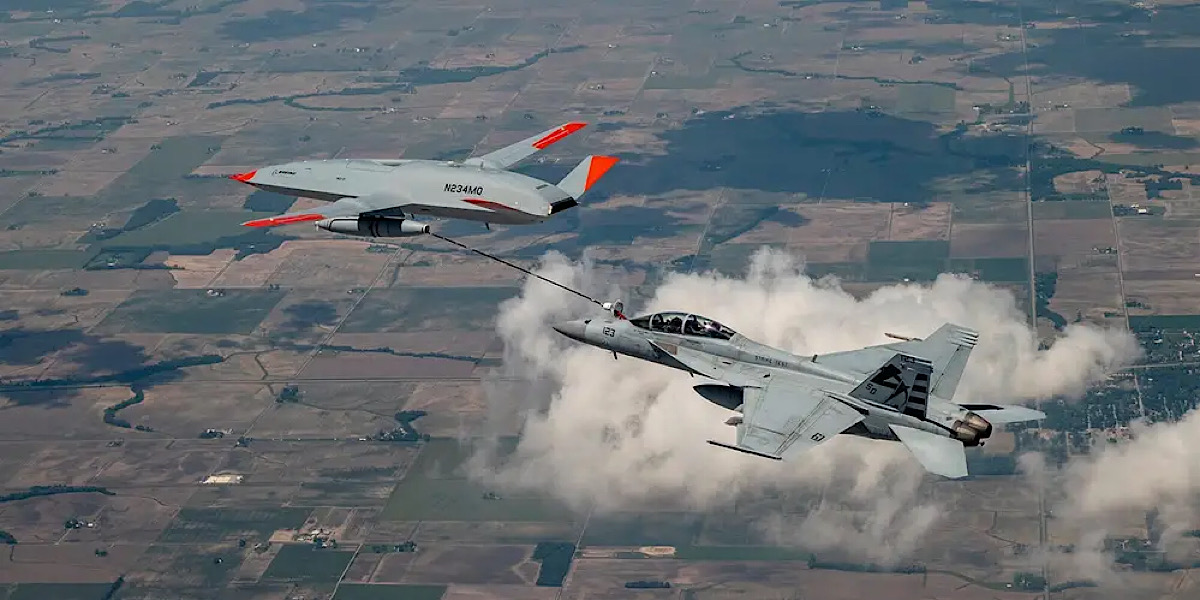
A Boeing MQ-25 Stingray test drone refueled an F/A-18 Super Hornet on Friday near MidAmerica Airport in Mascoutah, Illinois, demonstrating that the new unmanned aircraft “can fulfill its tanker mission,” the Navy said.

Continue reading… “The US Navy’s new pilotless tanker plane just refueled an aircraft carrier fighter jet for the first time, and this is what it looked like”
Discover the Hidden Patterns of Tomorrow with Futurist Thomas Frey
Unlock Your Potential, Ignite Your Success.

By delving into the futuring techniques of Futurist Thomas Frey, you’ll embark on an enlightening journey.

Learn More about this exciting program.