Dr. Julie Palais (left), NSF-OPP Glaciology Program Manager, and Anais Orsi (right) inside a back-lit snow pit at WAIS Divide
Because of global warming, ice sheets in Antarctica are melting and ancient creatures, which have been trapped there for hundreds of thousands of years, are being released into the world.
A well-worn premise for a sci-fi movie? No, actually – it’s happening for real…
Signs of the impact on the regional ecosystem are ominous: mutated shrimp, fish with oozing sores, underdeveloped blue crabs lacking claws, eyeless crabs and shrimp – and scientists and fishermen point fingers towards BP’s oil as being the cause.
Two years after BP’s Deepwater Horizon oil spill in the Gulf of Mexico, fishermen are finding deformed fish and mutant shrimp in their seafood catch…
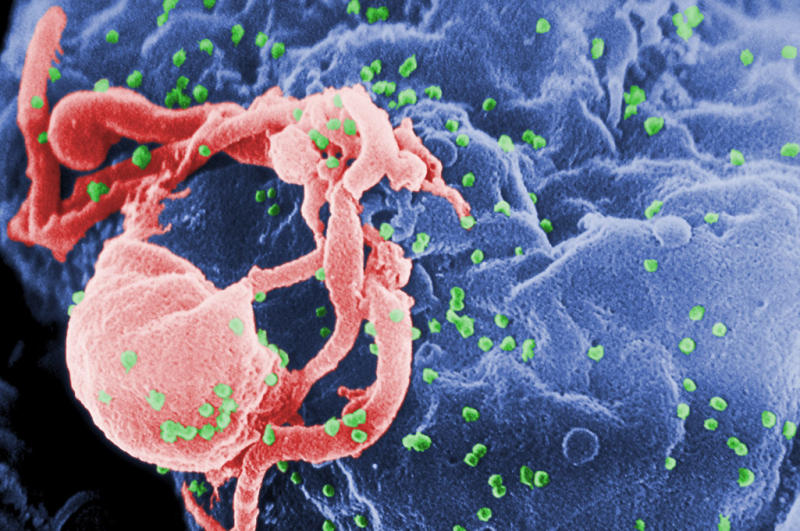
Expanding on previous research providing proof-of-principle that human stem cells can be genetically engineered into HIV-fighting cells, a team of UCLA researchers have now demonstrated that these cells can actually attack HIV-infected cells in a living organism. Continue reading… “Engineered stem cells seek out and kill HIV in living mice”
Fixing a hole in a road should be easy—but the fact that our nation’s highways are littered with potholes is testament to the fact that it’s not quite as straightforward as it sounds. But a new solution, inspired by silly putty, could make our streets much smoother in the future.
In fact, the idea—developed by students from Case Western Reserve University in Cleveland—has won an engineering contest, reports Science. But prize-winning or not, the idea of mending a road with something like silly putty sounds like madness, right?
Treating and caring for people with dementia currently costs the world more than US$ 604 billion per year.
Nearly 35.6 million people live with dementia worldwide. By 2030 this number is expected to double (65.7 million) and more than triple by 2050 (115.4 million). Dementia affects people in all countries, with more than half (58%) living in low- and middle-income countries. By 2050, this is likely to rise to more than 70%.
Did you know that Splenda was born as an insecticide? It’s true!
Splenda is not natural; it is a chlorinated artificial sweetener. There have been no long-term human studies on the safety of Splenda; however, issues have been raised about Splenda in a new study from Duke University.
According to the study, Splenda “suppresses beneficial bacteria and directly affects the expression of the transporter P-gp and cytochrome P-450 isozymes that are known to interfere with the bioavailability of drugs and nutrients….
At our current rate of consumption, we’re driving vanilla prices sky-high. The price for a kilo of the brown stuff has jumped from $25 to $40 in a single day, which means your summer ice creams might be an even more expensive treat than usual.
Virtually all of the world’s vanilla supplies are grown in Madagascar, Mexico and India. But in the last year, Mexico’s yield has dropped by a staggering 90 per cent, reports Management Today. In fact, India’s yields are struggling too, leaving Madagascar as pretty much the sole source…
Americans 60 and older still owe about $36 billion in student loans.
Senior citizens are an unexpected demographic that is still burdened with paying for college and the student loans are wreaking havoc on their finances.
In the last few days, news has been filtering out that Visa and MasterCard data was compromised by persons unknown. The card issuers have sent private alerts to banks indicating a data breach occurred between January 21, 2012 and February 25, 2012 and official announcements have since been made. After the news broke, payment processor Global Payments Inc. was identified as the compromised party, and we’re now learning that the data theft seems to be extensive.
At five years-old, it’s no fun getting interrupted while you’re focused on something. As a parent, I compensate for that by employing a series of intricately planned measures to guide my son from whatever he happens to be doing towards whatever it is that I want him to do instead.
The extremity of these measures depends entirely what’s being interrupted. If he’s playing outside with his sister, the steps I take are fairly mundane. I give him a few, gentle time checks (“five minutes until dinner” … “3 minutes until dinner” …), and then offer something enticing enough to make putting down the ball seem like less of an intrusion (“Tonight’s chicken has both teri and yaki on it!”).
If I need to transition my son from building a cardboard village with grandma to going to bed for the night, I need to combine my time checks with some subtle threats and an Obi Wan Kenobi-like response to his three hundred or so repetitions of some variation of, “No. I don’t want to. But you said. Why are you doing this to me?”
The techniques are all pretty simple and effective. Until it’s time to get him to put down the iPad.
C.J. Coomer got good grades and played football back in high school in Houston, Texas. He was dark-haired and handsome, popular with his friends and doted on by his family.