Chinese driverless car firm WeRide launches ‘Robovan’ for autonomous deliveries

WeRide’s Robovan, an autonomous vehicle designed for urban logistics. WeRide has partnered with automaker Jiangling Motors and delivery firm ZTO Express, for the Robovan project.


By Arjun Kharpa
l

KEY POINTS

  • Chinese autonomous driving start-up WeRide has partnered with Jiangling Motors and delivery firm ZTO Express to launch a self-driving cargo van for logistics.
  • WeRide CEO Tony Han said he expects “tens of thousands” of the Robovan to be deployed in the future.
  • WeRide is one of China’s autonomous driving start-ups, valued at around $3.3 billion, and has been testing robotaxis since 2019. 

GUANGZHOU, China — Chinese autonomous driving start-up WeRide has partnered with a top carmaker and delivery company to launch a self-driving cargo van.

The strategic partnership between WeRide, automaker Jiangling Motors (JMC) and delivery firm ZTO Express, aims to commercialize and mass produce the “Robovan” for urban logistics.

Nissan-backed WeRide makes autonomous driving systems for various vehicles. Since 2019, it has been testing robotaxis, or autonomous cabs, on the streets of Guangzhou, China where it is headquartered. The company opened the service to members of the public last year in limited areas of the city.

Continue reading… “Chinese driverless car firm WeRide launches ‘Robovan’ for autonomous deliveries”

Audi’s Grandsphere concept EV is a self-driving living room on wheels

The less you drive this luxury sedan, the more you’ll enjoy it.

By J. Fingas

If Audi’s Skysphere concept is a driver’s car with an autonomous option, the company’s follow-up is the polar opposite. The automaker has introduced a Grandsphere concept electric sedan that uses Level 4 self-driving (full autonomy in limited conditions) to help you avoid driving “whenever possible” — this is a luxurious living room that just happens to let you take the wheel.

Invoke the driverless mode and the Grandsphere will ‘reduce’ the wheel and pedals to make it clear you’re supposed to relax. The displays are really projections on wooden surfaces that adapt based on whether or not you’re driving — you can watch media or participate in video conferences. While Audi’s familiar MMI controls are available in an upright seating position, you can use eye tracking and gestures to navigate the infotainment system while you’re reclining. VR glasses in the armrests help you immerse yourself in entertainment during your commute.

Continue reading… “Audi’s Grandsphere concept EV is a self-driving living room on wheels”

World’s first autonomous, 7MWh electric cargo ship to make voyage with zero crew onboard

By Scooter Doll

A Norwegian company called Yara International claims to have created the world’s first zero-emission shipthat can also transport cargo autonomously. The Yara Birkeland electric cargo ship was first conceptualized in 2017 but now looks to make its first voyage with no crew members onboard later this year in Norway.

Yara International is a Norwegian company that was founded in 1905 to combat the rising famine in Europe at the time. The company created the world’s first nitrogen fertilizer, which remains its largest business focus today. 

In addition to its perpetual battle against hunger, Yara focuses on emissions abatement and sustainable agricultural practices. While the company wants to continue finding success in feeding the planet, it believes it can also do so sustainably. 

To combat toxic Sulfur Oxides (SOx) and Nitrogen Oxides (NOx) emissions from diesel engines on ships, the Norwegian company created Yara Marine Technologies. In 2017, the company began conceptualizing the possibility of an autonomous, fully electric ship to rid of toxic emissions altogether. 

Today, the Yara Birkeland is afloat in Norway, named after the Norwegian researcher who discovered the ability to add nitrogen to fertilizer. Now, the electric cargo ship looks to complete its first journey without a single crew member onboard.

Continue reading… “World’s first autonomous, 7MWh electric cargo ship to make voyage with zero crew onboard”

Waymo building autonomous trucking hub in Dallas-Fort Worth

The new Texas facility will help expand Waymo Via’s presence in the region and advance development of its transfer hub shipping model.

By Antuan Goodwin

Ryder will help Waymo Via to manage and service its fleet of autonomous trucks and help to develop the transfer hub facilities.Waymo

Waymo is building a new dedicated trucking hub in Texas’ Dallas-Fort Worth area. The facility will serve as the base of Waymo Via, its trucking and local delivery unit, and its operations throughout the southeast United States. The news is coupled with the announcement of a new partnership with Ryder trucking and fleet management to support Waymo’s fleet of autonomous trucks nationwide.

Bolstered by its previously announced partnership with Daimler Trucks to develop an SAE Level 4 autonomous truck platform, Waymo Via has since expanded testing to bring the fifth-generation Waymo Driver AV tech from its passenger vehicles to large Class 8 trucks for commercial shipping. It even landed itself a contract with J.B. Hunt to haul customers’ freight between Fort Worth and Houston.

The new nine-acre South Dallas hub is yet another big investment in autonomous trucking in Texas and will serve as Waymo Via’s primary operations center in the state. Built from the ground up to accommodate today’s commercial autonomous operations and testing, as well as Waymo’s future plans to build a network of autonomous trucking transfer hubs, the facility will help connect with Waymo Via’s Phoenix, Arizona operations center to expand the brand’s presence in the southeastern region.

Continue reading… “Waymo building autonomous trucking hub in Dallas-Fort Worth”

Baidu Apollo unveils autonomous vehicle with no steering wheel or pedals

Human drivers may become a thing of the past.

by Mengyuan Ge 

Baidu’s autonomous driving unit, Apollo, has developed a new vehicle capable of Level 5 vehicle autonomy, meaning the car requires no human intervention during operation. Notably, it has no steering wheel, gas pedal, or brake pedal, signifying that drivers are completely unnecessary.

The “robocar,” as Baidu founder and CEO Robin Li called it, was showcased during a livestream event on Wednesday. It is equipped with two passenger seats, a large curved screen, an intelligent console, and electrochromic glass with varying tints based on natural brightness. This follows Apollo’s showcase of its Moon model in June.

During the event, Apollo indicated that the new vehicle will incorporate machine learning to analyze passengers’ needs and respond to verbal commands. In some scenarios, the system may even anticipate demands made by people in the vehicle.

Continue reading… “Baidu Apollo unveils autonomous vehicle with no steering wheel or pedals”

Ecopia AI creates HD map of Toronto for Autonomous Vehicles

Ecopia AI (Ecopia) has announced that it is creating a high-definition (HD) map for the City of Toronto that will be leveraged to accelerate the deployment of Autonomous Vehicles (AVs). This initiative strives to lay the foundation for a digital twin of the city of Toronto and is being made possible with the support of Ontario’s Autonomous Vehicle Innovation Network (AVIN). This HD Map of Canada’s largest city will serve as a test-bed for AV applications and puts Ontario at the forefront of next-generation transportation systems.

There is a need for the creation of new underlying digital infrastructure. To serve this need, Ecopia is commercializing a centralized hub for the HD Map data needed in the enablement of AV and smart city applications.

Continue reading… “Ecopia AI creates HD map of Toronto for Autonomous Vehicles”

Cleveron conducts ‘world’s first’ driving exams with a driverless semi-autonomous last-mile delivery vehicle

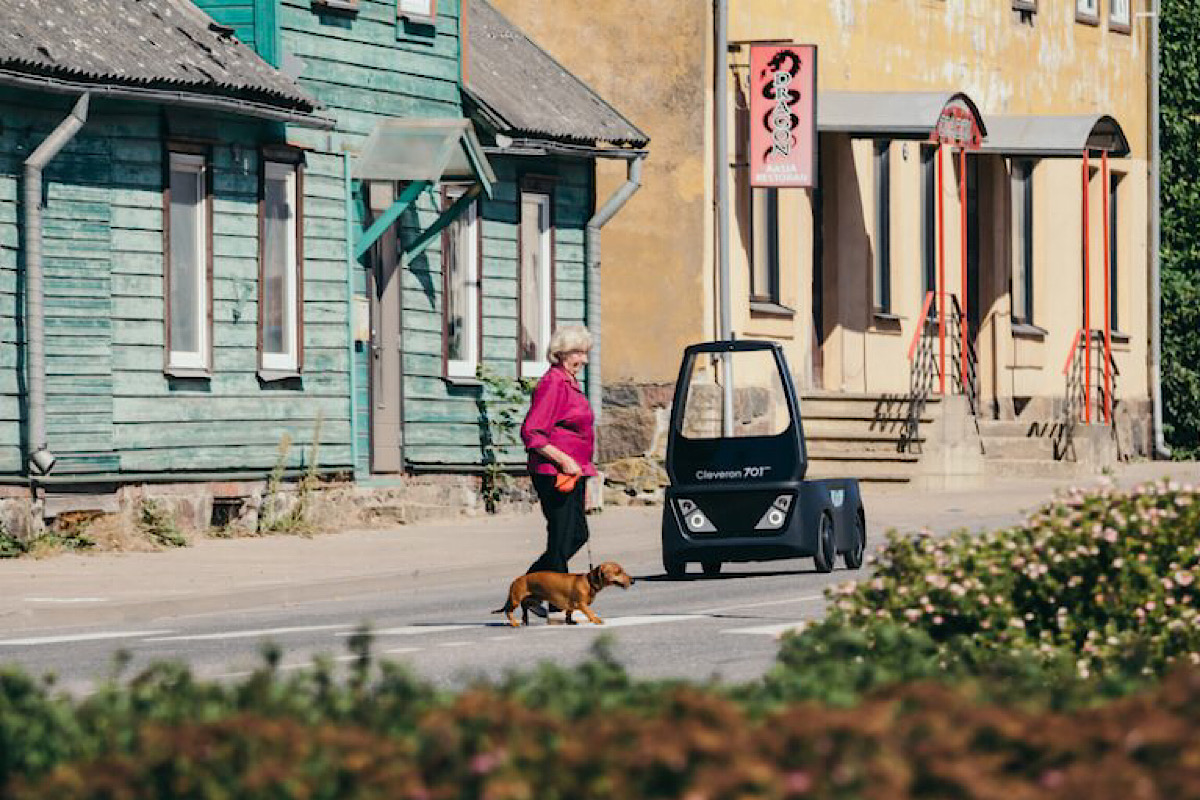
Cleveron, an Estonian-based technology company, partnered with LRK Driving School to conduct what they say are “the world’s first driving exams with an unmanned semi-autonomous car”.

The exams were carried out with Cleveron’s last-mile delivery vehicle Cleveron 701. All four Cleveron specialists passed the exam and received the world’s first tele-operated vehicle certificates.

Continue reading… “Cleveron conducts ‘world’s first’ driving exams with a driverless semi-autonomous last-mile delivery vehicle”

Sea Machines to develop autonomous supply platforms

Rendering of an autonomous replenishment platform. (Photo: Sea Machines.)The Department of Defense (DoD) contract aims to produce autonomous full-scale ocean-going vertical take-off landing replenishment platforms

By The Shephard News Team in London

.

The US DoD’s Defense Innovation Unit (DIU) has awarded Sea Machines a $3million contract to develop an autonomous full-scale ocean-going replenishment platform. 

The contract builds on earlier work by Sea Machines at the behest of the DoD to engineer, build and demonstrate system kits capable of transforming commercial barges into platforms that can land and replenish military aircraft. 

That work is now transitioning from proof of concept to a design and trial stage.

Sea Machines founder and CEO Michael Johnson said: ‘The extension of our contract represents the intersection of traditional sectors, such as government, and the capabilities of autonomous technology.’

The prototype kit will include the company’s SM300 autonomous command and control system.

Continue reading… “Sea Machines to develop autonomous supply platforms”

Cleveron Rolls Out Semi-Autonomous Last-Mile Delivery Vehicle


Concept:
 Estonia-based parcel delivery robotics company Cleveron has launched a new unmanned semi-autonomous robotic last-mile delivery vehicle, the Cleveron 701. It is designed for retailers and logistics companies that intend to boost last-mile delivery efficiencies. The company aims to allow businesses to meet the mounting demand for same-day delivery or same-hour delivery cost-effectively.

Nature of Disruption: Cleveron  701 is a lightweight electric vehicle with an option to use different rechargeable batteries. The maximum speed of the vehicle is 30 miles per hour and it can carry a load of a maximum of 500 pounds. It can drive in low traffic areas like suburbs to deliver within a 15 to 30 minutes drive radius of a retailer, fulfillment center or a dark store. It can deliver goods from a warehouse or a store to customers staying nearby within an hour when administered remotely. It reduces labor costs as only one teleoperator can supervise 10 vehicles simultaneously.  Moreover, vehicle operators can customize the Cleveron  701’s adaptable, semi-autonomous platform as per diverse delivery needs. For instance, Cleveron 701 can be customized to function as a grocery delivery robot with temperature-controlled sections, a parcel delivery vehicle, an ice cream truck or even a high-tech coffee robot.

Continue reading… “Cleveron Rolls Out Semi-Autonomous Last-Mile Delivery Vehicle”

Plus demos level 4 autonomous truck

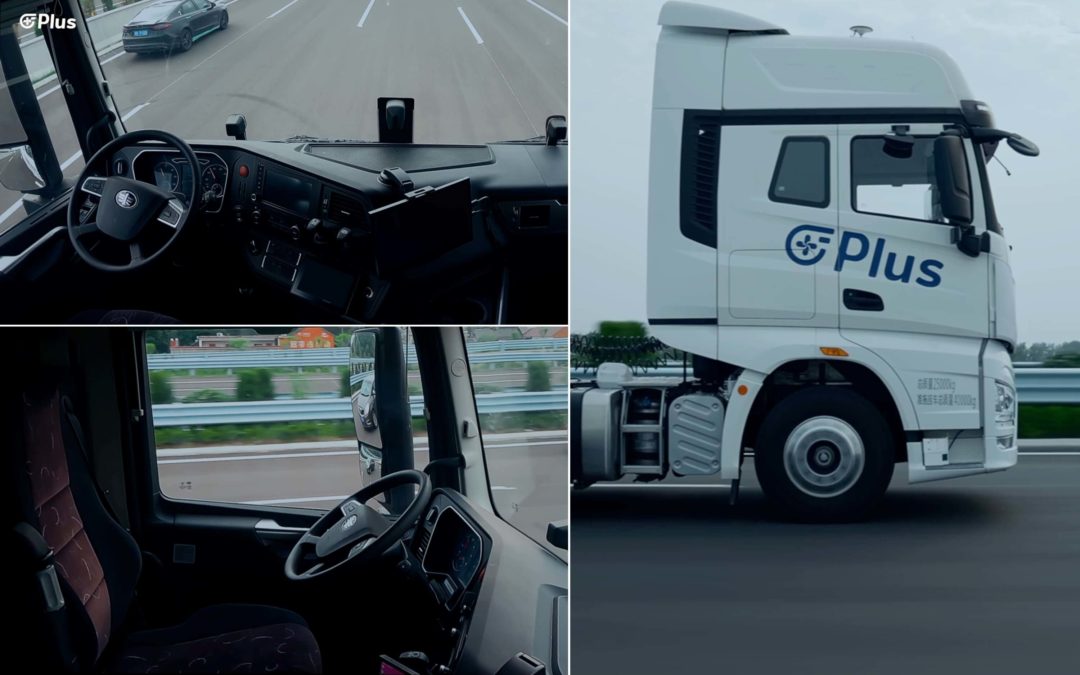
Plus_driverless_demo_image_for_press_release-3.jpg
DRIVERLESS SEMI TRUCK COMPLETES RUN ON CHINA HIGHWAY, WITHOUT A SAFETY DRIVER OR OTHER HUMAN INTERVENTION.

California-based self-driving truck technology provider Plus reached a milestone this week with the successful completion of a driverless Level 4 truck demonstration on a China highway, the company said Thursday. 

The demo was run completely autonomously, without a safety driver, teleoperator, or any other form of human intervention, according to company leaders.The demonstration took place on the Wufengshan highway in China’s Yangtze Delta region.

It was conducted with a special permit on the newly built highway, company leaders said, adding that Plus was the first company to be granted such a permit in China. During the demonstration, the driverless truck drove safely and smoothly in typical highway traffic, the company also said.“The driverless demo highlights the ability of our Level 4 autonomous driving technology to enable driverless highway operations in a semi truck.

Continue reading… “Plus demos level 4 autonomous truck”

The measure of: Trombia Free autonomous electric street sweeper

The world’s first autonomous electric street sweeper promises efficient and silent operation in all weathers.

Developed by Finnish road maintenance equipment manufacturer Trombia Technologies, Trombia Free is an autonomous electric street-cleaner that uses less than 15 per cent of the power needed by current sweeping technologies and 95 per cent less water, while still being capable of heavy-duty operation, effectively removing both debris and fine PM2.5 dust.

Built to operate in all weather conditions, the Trombia Free has the look of an oversized robotic vacuum cleaner or lawnmower. It makes use of lidar and machine vision technology to trundle around cleaning up city streets and pathways. The company equipped the sweeper with a safety margin zone so it can register obstacles in front and stop if needed.

Continue reading… “The measure of: Trombia Free autonomous electric street sweeper”

World’s Most Advanced Autonomous Research Vehicle Completes Ocean Crossing from San Francisco to Hawaii

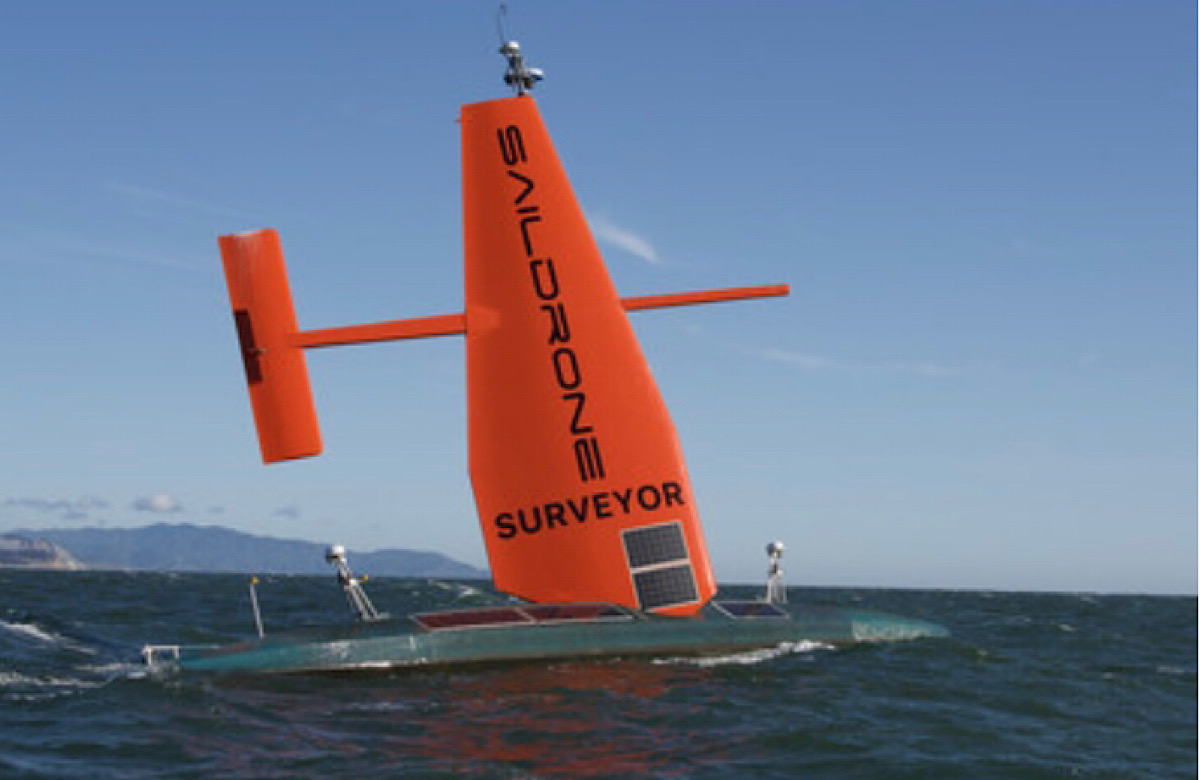
The uncrewed, autonomous, Saildrone Surveyor will arrive in Hawaii today after a groundbreaking maiden voyage from San Francisco to Honolulu. 

Over 80% of Earth’s oceans remain unmapped. Saildrone intends to map the world’s oceans in the next 10 years.

While ocean crossings are nothing new for Saildrone’s autonomous surface vehicles, the Saildrone Surveyor is a new, much larger class of vehicle optimized for deep-ocean mapping. During the 28-day voyage, the Saildrone Surveyor sailed 2,250 nautical miles and mapped 6,400 square nautical miles of seafloor.

Using renewable wind and solar energy for its primary power source, the Saildrone Surveyor is the only vehicle in the world capable of long-endurance, uncrewed ocean mapping operations. The valuable data it collects will help address issues impacting our world including climate change, offshore renewable energy, natural resource management, and maritime safety.

Measuring 72 feet long (22 m) and weighing 14 tons, the Saildrone Surveyor carries a sophisticated array of acoustic instruments, normally carried by large, manned survey ships. The Surveyor’s sensors interrogate the water column looking at underwater ecosystems and map the seafloor in high resolution to a depth of 23,000 feet (7,000 m).

Continue reading… “World’s Most Advanced Autonomous Research Vehicle Completes Ocean Crossing from San Francisco to Hawaii”
Discover the Hidden Patterns of Tomorrow with Futurist Thomas Frey
Unlock Your Potential, Ignite Your Success.

By delving into the futuring techniques of Futurist Thomas Frey, you’ll embark on an enlightening journey.

Learn More about this exciting program.