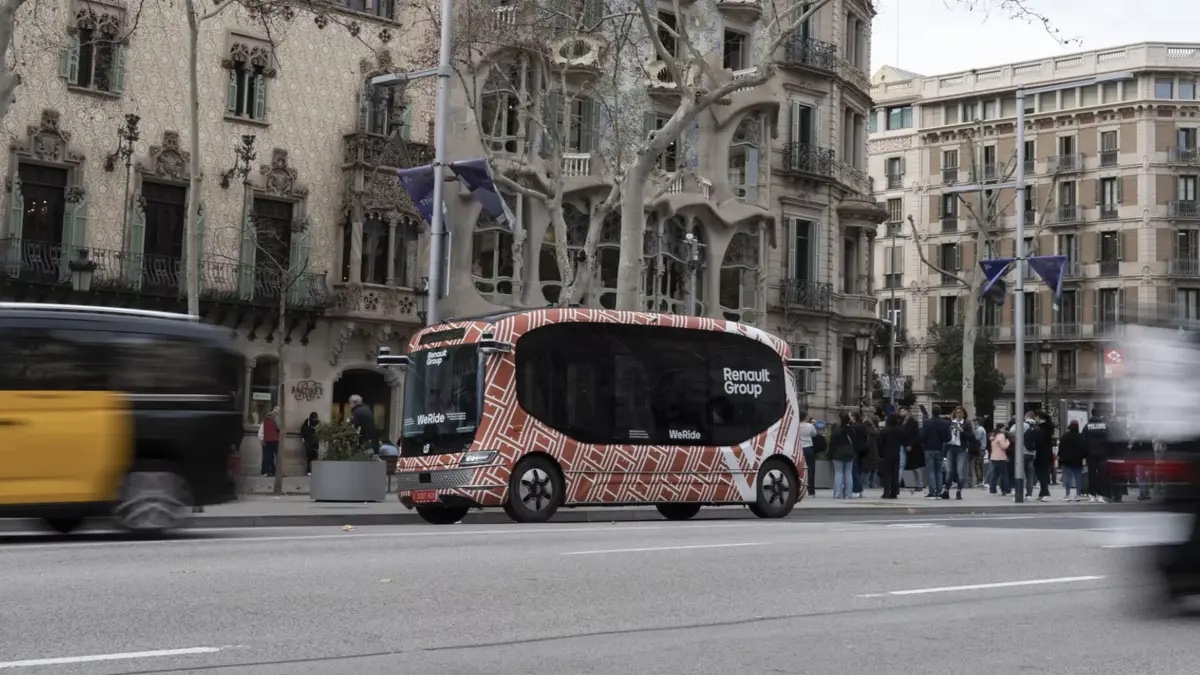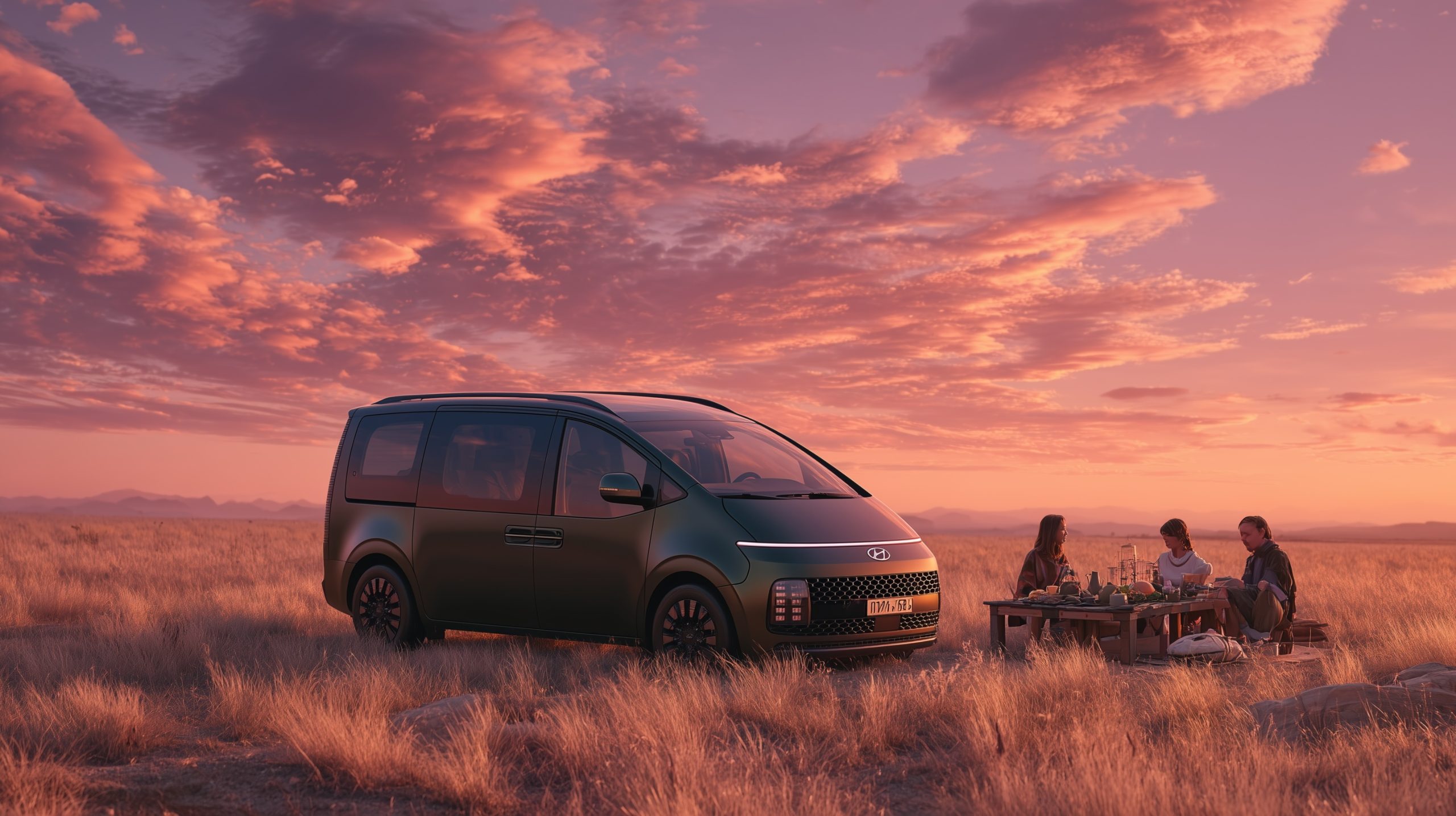
The Driverless Revolution Series Part 6: The Daily Life Revolution—How AVs Change Where We Live, Work, and Spend Time

By Futurist Thomas Frey

The Commute That Isn’t

It’s 2042. James lives in Boulder, Colorado. He works in downtown Denver—35 miles away.

Every morning at 6:30 AM, an autonomous vehicle arrives at his house. He gets in with his coffee, opens his laptop, and starts working. By the time he arrives at his office at 7:45 AM, he’s already answered emails, reviewed documents, and attended a virtual meeting.

His evening commute? Same thing. He leaves the office at 5:00 PM, works in the AV until 6:15 PM, then walks in his front door having completed a full workday plus 90 minutes of commute-time productivity.

His wife Sarah does something different. She sleeps during her morning commute—the AV picks her up at 7:00 AM, she naps for 45 minutes, and wakes up refreshed when the car announces arrival at her office at 7:45 AM. Evening commute? She reads novels. Watches shows. Catches up with friends via video chat. Her commute time is leisure time.

Their teenage daughter Emma takes an AV to high school. She does homework during the 20-minute ride.

Here’s what changed: The family moved from a small apartment near Denver to a large house in Boulder. Why? Because commute time stopped being wasted time. When you can work or sleep or read during your commute, distance matters less.

This is what autonomous vehicles do to daily life. They don’t just change transportation—they change where we live, how we work, when we travel, and what we do with our time.

Continue reading… “The Driverless Revolution Series Part 6: The Daily Life Revolution—How AVs Change Where We Live, Work, and Spend Time”
The Driverless Revolution Series Part 5: The End of Car Accident Deaths—When 40,000 Annual Fatalities Drop to Zero

By Futurist Thomas Frey

The Call That Never Comes

It’s 11:47 PM on a Friday night. Your 17-year-old son is out with friends. Your phone rings. Unknown number. Your heart stops.

Every parent knows this fear. The late-night call. The police officer on the other end. “There’s been an accident.”

In 2023, over 40,000 Americans died in traffic accidents. That’s 110 people every single day. It’s the leading cause of death for Americans aged 5-29. More than drugs. More than suicide. More than disease.

Every one of those deaths destroyed a family. Parents. Siblings. Children. Friends. Entire communities shattered by one moment of inattention, one patch of ice, one drunk driver, one mechanical failure.

By 2045, that fear largely disappears. The late-night call doesn’t come anymore. Your teenager drives—or rather, rides—in a vehicle that’s statistically safer than your living room.

Traffic deaths won’t drop to zero. There will still be occasional technical failures, edge cases the AI didn’t anticipate, residual human-driven vehicles causing crashes. But 95% of the carnage ends.

40,000 deaths become 2,000. 110 people dying daily becomes 5-6. A leading cause of death becomes a statistical rarity.

This is the most unambiguously good thing autonomous vehicles do. They save lives on a scale we can barely comprehend.

Continue reading… “The Driverless Revolution Series Part 5: The End of Car Accident Deaths—When 40,000 Annual Fatalities Drop to Zero”

The Driverless Revolution Series Part 1: The Infrastructure Apocalypse—What Happens to Parking Lots, Drive-Thrus, and Gas Stations

By Futurist Thomas Frey

The Most Valuable Land Nobody Wants

There’s a parking lot across from where my office used to be in downtown Denver. It’s an ugly scar of asphalt covering half a city block. On a good day, it generates maybe $30,000 a year in parking fees.

The land it sits on? Worth about $15 million.

That’s a 0.2% return on asset value. Possibly the worst-performing real estate investment in the entire city. And there are thousands just like it across America.

By 2040, that parking lot will be gone. So will virtually every parking lot in downtown Denver. And Seattle. And Austin. And every other American city.

They’ll be replaced by apartment buildings, offices, parks, restaurants—anything that actually generates value from expensive urban land.

This isn’t speculation. It’s inevitable math. Driverless cars don’t need to park near their destination. They drop you off and leave—returning home, picking up another passenger, or repositioning for the next ride. Parking becomes obsolete.

And parking is just the beginning. When autonomous vehicles arrive in the late 2020s and early 2030s, they’ll trigger the largest infrastructure transformation in American history. Everything designed around human drivers—parking lots, drive-thrus, gas stations, even traffic lights—becomes instantly obsolete.

The physical landscape of America is about to change more in 20 years than it has in the previous 70.

Continue reading… “The Driverless Revolution Series Part 1: The Infrastructure Apocalypse—What Happens to Parking Lots, Drive-Thrus, and Gas Stations”

Europe’s First Free-Roaming Driverless Train Is Rolling Through the Countryside—And Watching for Sheep

In a quiet corner of the Czech Republic, a sleek train named Edita is rewriting the rules of rail travel. It’s not running on a closed-off metro line or shuttling between airport terminals. This one glides through open countryside, across level crossings, past farm fields—and it’s doing it without a human at the controls.

Built by Prague-based transport tech firm AZD, Edita is Europe’s first driverless train to operate in an open environment where anything can happen—wandering livestock, unpredictable cars at crossings, even the occasional hare making a dash for the tracks. Unlike autonomous systems confined to sealed infrastructure, this is rail autonomy in the wild.

Continue reading… “Europe’s First Free-Roaming Driverless Train Is Rolling Through the Countryside—And Watching for Sheep”

Torc Robotics Teams Up with NVIDIA and Flex to Power the Future of Autonomous Long-Haul Trucks

Torc Robotics Inc. has announced a major collaboration with NVIDIA Corp. and Flextronics International Ltd. to create a scalable, high-performance physical artificial intelligence (AI) compute system designed specifically for autonomous trucks. The announcement was made during Torc’s debut at NVIDIA’s GTC event in San Jose, California, where the company showcased its latest advancements in autonomous driving technology.

“This was a thrilling week for us,” said CJ King, chief technology officer at Torc, during the event. “Partnering with NVIDIA and Flex is a key milestone as we edge closer to the commercialization of our autonomous trucking solution. GTC gave us the opportunity to showcase our technology and introduce our engineering talent to the broader tech and automotive communities.”

Continue reading… “Torc Robotics Teams Up with NVIDIA and Flex to Power the Future of Autonomous Long-Haul Trucks”

Barcelona’s Driverless Minibus Revolution: A Glimpse into the Future of Urban Mobility

Commuters in Barcelona are getting a sneak peek into the future of public transportation, with free rides on a new driverless electric minibus. Launched by Renault as part of an experimental trial, this initiative aims to explore the possibilities of urban mobility in an increasingly automated world.

Two autonomous electric minibuses now travel a 2.2-kilometer (1.36-mile) route through the busy streets of Barcelona, as part of a collaboration between Renault and WeRide. The goal? To test how well driverless shuttles can operate in a dense, complex urban environment. According to Renault, the trial underscores the maturity of autonomous vehicle technology, showing it’s ready to be considered for widespread public transport.

Continue reading… “Barcelona’s Driverless Minibus Revolution: A Glimpse into the Future of Urban Mobility”

Leap into the Future: UK Takes the Lead with Autonomous Bus Network

The United Kingdom is set to make history as it unveils its first driverless bus network in Scotland, marking a significant milestone in the advancement of autonomous transportation. The groundbreaking service, which will commence operations next week, will feature drivers ready to take control in case of emergencies, ensuring passenger safety.

Operated by Stagecoach, the service aims to transport approximately 10,000 passengers per week along a 14-mile (22.5-kilometer) route using five single-deck buses. This innovative initiative will become the world’s first automated local bus service, revolutionizing public transportation as we know it.

According to Peter Stevens, the policy director of Stagecoach bus service, the autonomous technology powering these buses has undergone extensive testing. However, this marks the first time it has been integrated into a registered local bus service. The demonstration near Edinburgh showcased the remarkable progress made in autonomous bus technology.

Continue reading… “Leap into the Future: UK Takes the Lead with Autonomous Bus Network”

Autonomous Trucks Will Be Cruising Down Highways Next Year, Startup Says

A startup named AVTech claims that it will be launching autonomous trucks next year, which will be cruising down highways without a human driver. According to the CEO of AVTech, Jane Smith, “We have been working tirelessly for the past five years to perfect the technology and now we are confident that we can deliver a safe and reliable autonomous truck.”

The technology is based on artificial intelligence and machine learning algorithms, which allow the trucks to make decisions on their own. The trucks will be equipped with sensors, cameras, and other technologies that will help them navigate through the roads and avoid obstacles.

The CEO of AVTech claims that the autonomous trucks will be more efficient than traditional trucks, as they will be able to drive for longer hours without taking breaks. This will result in faster and more cost-effective deliveries for companies that use them.

Continue reading… “Autonomous Trucks Will Be Cruising Down Highways Next Year, Startup Says”

Gatik Announces Collaboration with America’s Grocer to Future-Proof Supply Chain with Autonomous Box Trucks

Kroger will deploy Gatik’s autonomous box trucks to serve customers with increased delivery frequency, reliability and responsiveness

Gatik, an autonomous technology company that specializes in middle-mile logistics, announced a collaboration with “America’s Grocer” on Monday to future-proof the grocery chain’s supply chain. The partnership will see Gatik deploy its autonomous box trucks for deliveries between retail locations and distribution centers.

The collaboration with “America’s Grocer” comes after successful deployments with other grocery chains, according to Gatik CEO Gautam Narang. “We are thrilled to expand our autonomous technology to ‘America’s Grocer’ and offer a safe, reliable, and cost-effective solution for their middle-mile transportation needs,” Narang said in a statement.

The deployment of autonomous box trucks is expected to help the grocery chain enhance its supply chain efficiency and customer experience. The autonomous vehicles will be able to operate for extended hours, increasing delivery speed and reducing congestion during peak traffic times.

Continue reading…Gatik Announces Collaboration with America’s Grocer to Future-Proof Supply Chain with Autonomous Box Trucks

Honda reveals third-gen Autonomous Work Vehicle

Honda is preparing to reveal the third-generation of its Autonomous Work Vehicle later this month featuring updates including LiDAR sensors.

Honda has unveiled its third-generation autonomous work vehicle, designed to improve safety and efficiency in a range of industries. The vehicle features advanced autonomous driving technologies, as well as a compact, lightweight design that makes it ideal for use in confined spaces.

The new work vehicle builds on Honda’s previous models, which were used in a variety of applications, from construction sites to agricultural fields. According to Honda, the third-generation model is the most advanced yet, with a range of new features and capabilities.

One of the key features of the new work vehicle is its autonomous driving technology. The vehicle is equipped with advanced sensors and cameras that allow it to navigate its surroundings and avoid obstacles. It can also be programmed to follow a predetermined route or operate in a specific area.

Continue reading… “Honda reveals third-gen Autonomous Work Vehicle”

Secretive new startup focuses on off-road autonomous vehicles, led by UW robotics experts

An autonomous Polaris vehicle equipped with sensors and computers developed by researchers at the University of Washington.

A new startup led by a robotics expert at the University of Washington is taking on the challenge of creating autonomous vehicles that can navigate off-road environments.

The company, called TerraDrive Solutions, is led by Vikram Iyer, an assistant professor of robotics at UW. Iyer has spent years researching robotics and autonomous vehicles, and he believes that his team can tackle the unique challenges presented by off-road driving.

“Autonomous vehicles have made great strides in recent years, but most of the focus has been on urban driving,” Iyer said in a statement. “Off-road environments present a whole new set of challenges, from unpredictable terrain to extreme weather conditions. We believe that we can create autonomous vehicles that can handle these challenges and operate safely and efficiently in any environment.”

Continue reading… “Secretive new startup focuses on off-road autonomous vehicles, led by UW robotics experts”

Ford files patent to allow self-driving cars to drive away from owners who don’t keep up with payments

Repossessions are about to get a whole lot more impersonal.

Ford has filed a patent application that describes a technology that would allow self-driving cars to move themselves away from their owners. The patent, titled “Autonomous Vehicle with Reversible Wheel and Pedal Layout for Compact Parking,” was filed in January 2017 and was published by the US Patent and Trademark Office in August 2018.

According to the patent application, the technology would allow a self-driving car to move itself to a location where parking is easier or more convenient, without the need for a human driver to operate the vehicle. This could include parking in a garage or moving to a more suitable spot on the street.

Ford’s patent application notes that the technology could be useful in situations where a human driver is unable to park the vehicle, such as when the driver is unfamiliar with the area or when parking is limited. Additionally, the technology could be used to avoid parking fees or fines.

Continue reading… “Ford files patent to allow self-driving cars to drive away from owners who don’t keep up with payments”
Discover the Hidden Patterns of Tomorrow with Futurist Thomas Frey
Unlock Your Potential, Ignite Your Success.

By delving into the futuring techniques of Futurist Thomas Frey, you’ll embark on an enlightening journey.

Learn More about this exciting program.