The Great Recession and the weak recovery darkened the retirement picture for significant numbers of Americans.
A majority of Americans are headed toward a retirement in which they will be financially worse off than their parents for the first time since the New Deal. This jeopardizes a long era of improved living standards for the nation’s elderly, according to a growing consensus of new research.
Today’s North Dakota, flush in its energy frenzy, has been characterized “the luckiest place on earth” by Chip Brown. His New York Times Magazine article showed chief executives and miners both giddy about their topographical luck and only slightly nervous that this boom would end as the last ones have ended in a bust.
Bitcoins are completely digital, so you can’t spend actual ones like these (non-digital ones) at a digital casino.
As various tech companies report their fourth-quarter 2012 earnings numbers this week, so are two gray-market, Bitcoin-based casinos—and one is turning profits in the hundreds of thousands of dollars after only six months of being in business
Recently, both SatoshiDice and bitZino released their financials. If these self-reported earnings are to be trusted (and the companies say they are, given that a Bitcoin block chain can be read by anyone), then running a Bitcoin-based casino yields a tidy profit.
“These tiny startups are hitting some major online casino pain points, they’re crushing it on those fronts and as an entrepreneur, I think that’s rad—they are leveraging a disruptive technology to try and kick a large-scale industry in the balls,” said Peter Vessenes, the CEO of CoinLab, a Bitcoin-based business, which got $500,000 of venture capital last year.
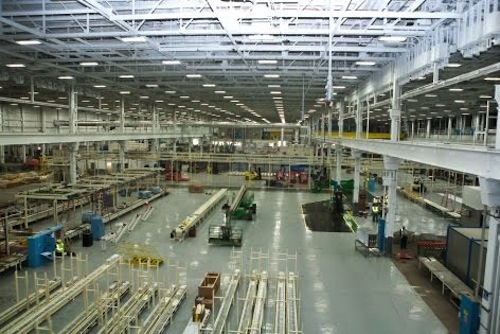
American factories are hiring again, but they’re not hiring union members.
Factory workers had a good month in July in Anderson, Ind., where a Honda parts supplier announced plans to build a new plant and create up to 325 jobs. But in the Cleveland suburbs it was a grim month, where an industrial plastics firm told the state of Ohio it was closing a plant and laying off 150 people.
The Avis acquisition of Zipcar suggests that the sharing economy has come of age.
Revolution made their first bet on the concept of sharing nearly 10 years ago with their investments in Exclusive Resorts (2003) and Flexcar (2005). The “sharing economy” now extends across multiple verticals – we’re sharing cars, movies, extra rooms in our homes, online lectures, and even our time. Yesterday Avis Budget Group announced that they will acquire Zipcar which marks a significant milestone for the concept of collaborative consumption.
Globally, there are 380 million entrepreneurs today. For every 19 people you meet – one will be an entrepreneur. What are the other 18 doing? What are they doing that makes money without them creating/inventing opportunities? One might think they all have jobs, but they don’t – only 61% of world’s population have any sort of a job.
American families can expect to spend about $250,000 to raise a child for the next 17 years.
With Laura Sowa’s husband working strictly on sales commission in a down economy, money has been tight for several years now. Laura lives in Nashville and she works hard to keep things as normal as possible for her two daughters. But “normal” these days is being redefined. This hit home for her recently as she listened to the girls playing “shopping trip” in the next room.
General Electric’s storied Appliance Park, in Louisville, Kentucky, for much of the past 10 years, appeared less like a monument to American manufacturing prowess than a memorial to it.
But after years of offshore production, General Electric is moving much of its far-flung appliance-manufacturing operations back home. It is not alone. An exploration of the startling, sustainable, just-getting-started return of industry to the United States.
William Sahlman, professor of entrepreneurship at the Harvard Business School
The U.S. economy is in a tough state, with mile-high deficits and slow growth in jobs. There are other countries that are pulling ahead, but some cling to the hope that startups and the spirit of entrepreneurship embodied in Silicon Valley could save the country. That’s one of the conclusions reached by a team of Harvard Business School professors who toured the valley this fall.
There have always been part-time workers, especially at restaurants and retailers but employers today rely on them far more than before.
The Fresh & Easy grocery store chain has opened up 150 stores in California since it was founded five years ago. It has positioned itself as a hip and socially responsible company.
Airbnb is a social website that connects people who have space to spare with those who are looking for a place to stay.
We have gotten pretty used to the disruption that the rise of the social web has created in the media industry, where it has upended traditional business models and allowed creators of content to connect directly with their audience. But that same wave of socially-driven disruption is now moving through the rest of the economy too — particularly in services that can be easily socialized, such as the hotel business, the taxi industry or the education market. As that wave progresses, we’re seeing companies like Airbnb and Uber and Coursera run into more and more regulatory hurdles, but the writing is already on the wall: service businesses that don’t use social features to lower barriers and increase efficiency will likely not survive long.
The point of a “capitalist” economy is to minimize the trade-off between meaning and money.
Why is an average investment banker worth much more than an average teacher? And why does a top hedge fund manager “earn” enough to pay for thousands of teachers? Is there a trade-off between meaning and money? And if there is, how does one master — and perhaps — resolve it? Can it be resolved?