The First Global Election: When 500 Million People Vote Across 50 Countries

By Futurist Thomas Frey

When will we see the first global election with over 500 million people voting from over 50 different countries? Will they be voting for a person, or voting on an issue? If it’s a person, what position will that person be running for? And if it’s an issue, what issue will be so compelling that everyone wants to vote on it?

Will it ever happen?

The idea of global elections is not new. In fact, people have dabbled with the concept for centuries. However, the Internet has opened up an entirely new toolbox of possibilities, making what once seemed impossible now merely very difficult.

We already have a template: Eurovision. Every year, over 200 million people across 40+ countries participate in voting for a singing competition. It’s not politics, but it proves that massive cross-border coordinated voting works. People care enough to participate. The technology handles the volume. Results are accepted as legitimate.

If we can do it for music, why not for issues that actually matter?

Continue reading… “The First Global Election: When 500 Million People Vote Across 50 Countries”
The Whole Earth Law Project: Why We Need a Global Repository of Every Law

By Futurist Thomas Frey

Very few countries have their laws posted in a central repository. In the U.S., the laws, rules, and regulations are so numerous and obscure that few people know what laws are governing them at any given moment.

Right now, you’re violating laws you don’t know exist. Not because you’re a criminal, but because the legal systems we live under have become so complex, so fragmented, and so inaccessible that comprehensive compliance is literally impossible.

Federal laws, state laws, county ordinances, city codes, HOA rules, professional regulations, industry standards—they overlap, contradict, and multiply faster than anyone can track. The average American unknowingly commits three felonies a day according to some legal scholars. Not intentionally. Just by living normal life in a system where nobody—not even lawyers—knows all the rules.

If a central “law repository” were created—and all laws should be public knowledge anyway—our global legal systems could move into a new era of transparency. Business people would be able to make conscious decisions about whether they want to do business in a certain country based on the number of laws they may have to contend with.

This isn’t a small problem. It’s undermining the entire concept of rule of law.

Continue reading… “The Whole Earth Law Project: Why We Need a Global Repository of Every Law”

The Ownership Matrix: Why We Need a Global Registry for Everything We Own

By Futurist Thomas Frey

Every person owns tons of stuff. When we buy something new, we take ownership of it. But when exactly does ownership actually begin and end? And who’s keeping track?

Our houses are filled with books, tools, ornaments, utensils, furniture, fixtures, gifts, clothing, shoes, and accessories. When we loan something out, it’s hard to keep track. Did I lend that drill to Mike or Jason? Where did that serving platter go? Who has my camping gear?

Few people have any sort of inventory of what they own. Most start to lose track after a few hundred items, and the passage of time obscures even the best memories. You vaguely remember buying that expensive knife set, but was it five years ago or eight? Did you donate those winter coats or are they still in the basement somewhere?

Somewhere in this quandary lies a golden opportunity: Is it possible to create an ownership graph showing the value of items, their locations, and an aging matrix tracking depreciation and condition? More importantly, can this be automated?

Continue reading… “The Ownership Matrix: Why We Need a Global Registry for Everything We Own”

The Digger-Bot Tunnels: How Homes Will Expand Downward by 2040

By Futurist Thomas Frey

By 2040, the most advanced homes won’t expand outward—they’ll expand downward. As robotic businesses become a normal part of residential life, the surface-level home becomes a sanctuary for people, while an entire network of underground tunnels becomes the circulation system for the machines that work nonstop beneath our feet.

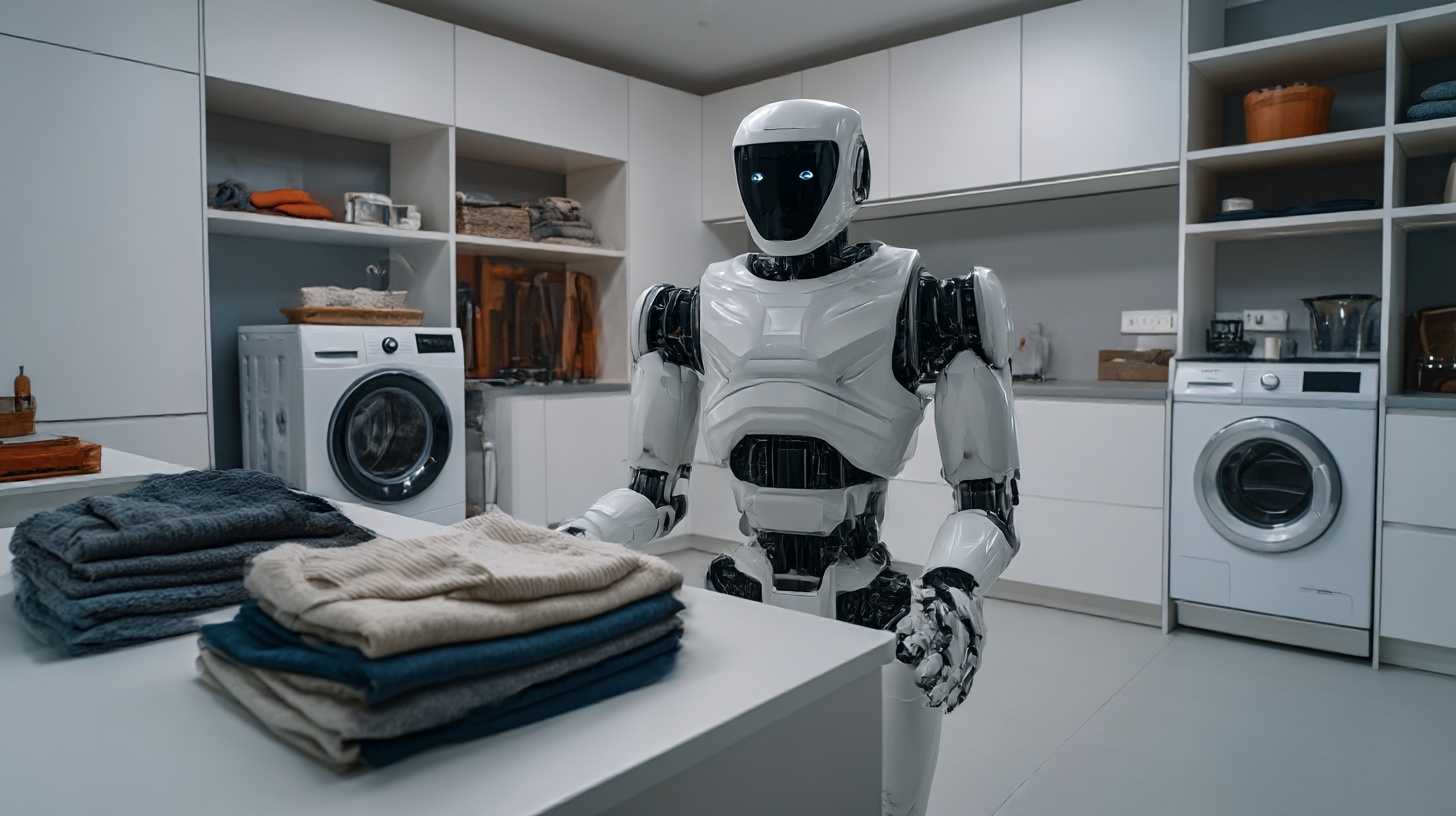
This isn’t science fiction. It’s the logical solution to a problem that becomes unavoidable once homes run multiple robot businesses: you don’t want delivery drones buzzing past windows, laundry robots rolling across living rooms, or 3D-printing carriers moving parts through the kitchen while you’re trying to live.

So architects solve the problem the same way cities solved traffic congestion a century earlier: by separating flows. The human world stays above ground—quiet, open, calm. The mechanical world moves underground—efficient, invisible, continuous.

Continue reading… “The Digger-Bot Tunnels: How Homes Will Expand Downward by 2040”

The Robot-Ready Home: Why Your House Needs to Get Bigger by 2040

By Futurist Thomas Frey

In the coming decade, robots won’t just live in our homes—they’ll work in them. And that changes everything about how we design residential space.

As houses become micro-factories, micro-farms, fulfillment hubs, drone ports, tailoring studios, and automated kitchens, the physical footprint of the home will need to grow substantially. The 2040 household won’t resemble the compact, human-only residences we’ve known for generations.

Instead, families will increasingly require homes with built-in robotics zones: rooms for articulated-arm kitchens, basements full of 3D printers, garage-based laundry stations, charging alcoves for mobile service bots, drone landing pads, indoor hydroponic grow bays, and small workshops where maintenance robots repair each other.

This shift means the future of housing is not just about shelter—it’s about workspace. If robots are to operate efficiently, homes must evolve into hybrid living-working ecosystems.

Continue reading… “The Robot-Ready Home: Why Your House Needs to Get Bigger by 2040”

The House That Never Sleeps: A Day in 2040 When Your Home Works For You

By Futurist Thomas Frey

By 2040, the quiet cul-de-sac on Alder Ridge Lane looks like any other suburban street—maple trees, tidy lawns, the distant hum of autonomous shuttles gliding by. But House 17 is different. It doesn’t just shelter a family. It runs a portfolio.

House 17 is owned by Sarah Mitchell, a 38-year-old former accountant who discovered something far more lucrative than office work: letting her robots work instead.

Her day begins at 5:45 a.m., though she doesn’t wake up. The house does.

Continue reading… “The House That Never Sleeps: A Day in 2040 When Your Home Works For You”

The Robot Entrepreneur: How AI Will Run Businesses From Your Home by 2040

By Futurist Thomas Frey

By 2040, your home won’t just be where you live—it’ll be where robots work for you, running profitable businesses while you sleep.

This isn’t science fiction. It’s the inevitable convergence of three trends already underway: robots gaining human-level object manipulation, AI systems capable of autonomous business operations, and homes transforming into micro-factories, micro-farms, and micro-studios.

The result: dozens of legitimate businesses that robots can operate from residential properties, generating steady income with minimal human involvement. You provide the space and initial setup. The robots handle everything else.

Continue reading… “The Robot Entrepreneur: How AI Will Run Businesses From Your Home by 2040”

Why Utopias Are Impossible: Three Simple Proofs

By Futurist Thomas Frey

I’ve often said there is no such thing as utopia. Even though millions of people believe in perfect societies where everyone is happy, needs are met, and conflicts don’t exist—they simply can’t happen. Not because we haven’t tried hard enough, but because utopias violate basic logic.

This isn’t pessimism or cynicism. It’s reality. And here’s why.

Continue reading… “Why Utopias Are Impossible: Three Simple Proofs”

The End of Ownership: When AI Makes Possessions Obsolete by 2040

By Futurist Thomas Frey

By 2040, you’ll stop owning most of your stuff. Not because you can’t afford it—because owning things will make no sense.

This isn’t about subscription services or sharing economy 2.0. This is something more fundamental: the convergence of personalization, robotics, and micro-manufacturing making on-demand production so efficient that ownership becomes economically irrational and logistically unnecessary.

Your AI won’t help you shop. It’ll simply have things made and delivered when you need them, then recycled when you’re done. Possessions become temporary—summoned when useful, disappeared when not.

Continue reading… “The End of Ownership: When AI Makes Possessions Obsolete by 2040”

Mining Our Garbage: How Robotic Earthworms Will Turn Landfills Into Gold Mines

By Futurist Thomas Frey

I’ve always thought that our most valuable land in the future will be our landfills—because that’s where we’re burying our most valuable resources.

Think about what we throw away: rare earth metals in electronics, copper in wiring, aluminum in cans, plastics that could be reprocessed, organic matter that could generate energy. We’re essentially creating underground treasure vaults and then forgetting about them, piling more garbage on top year after year.

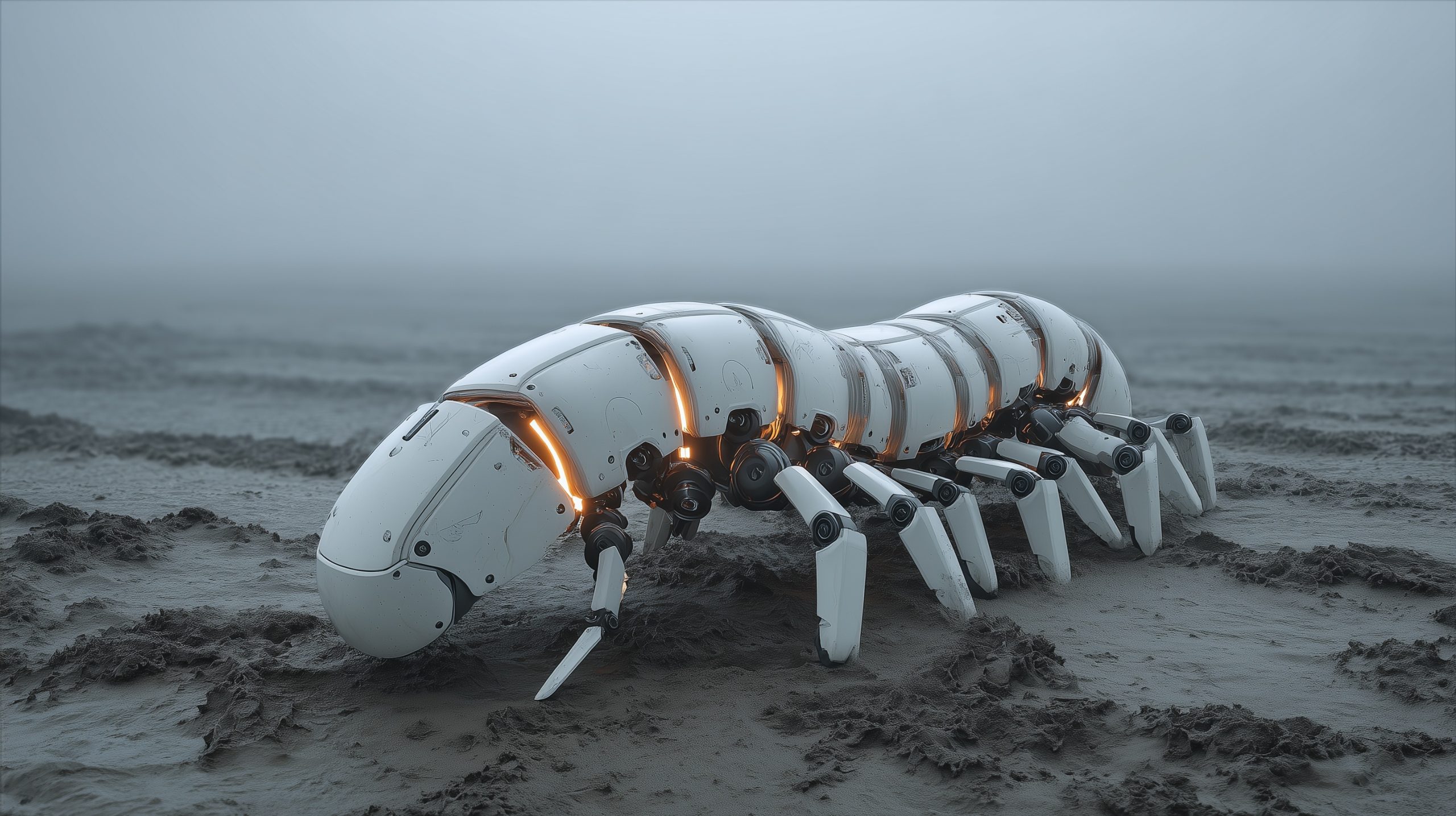
By 2040, someone will invent what I call robotic earthworms—autonomous mining systems capable of tunneling through landfills, extracting valuable materials, and replacing extracted waste with clean soil. And when that happens, the economics of waste management will invert completely.

Landfills won’t be environmental liabilities we pay to maintain. They’ll be mineral deposits we pay to access.

Continue reading… “Mining Our Garbage: How Robotic Earthworms Will Turn Landfills Into Gold Mines”

Your Personal Risk Map: When AI Predicts Danger Before It Happens

By Futurist Thomas Frey

By 2040, you’ll wake up to something nobody in history has ever had: a personalized risk map for your entire day.

Not a weather forecast or traffic report—a comprehensive assessment of every danger you’ll face in the next 24 hours, from catastrophic to trivial, calibrated specifically to your vulnerabilities. And more importantly, your day will be dynamically rerouted to avoid those dangers before they materialize.

This is one of the most counterintuitive transformations coming: for the first time in human existence, we’ll live with a “future risk lens” built into ordinary life, constantly showing us dangers we can’t see and guiding us away from harm we’d never anticipate.

Continue reading… “Your Personal Risk Map: When AI Predicts Danger Before It Happens”

The Era of Separation: How AI Fractures Society Into Dozens of Distinct Tribes

By Futurist Thomas Frey

We’re entering what I call the Era of Separation—a period where AI, robotics, and automation don’t just change society but fracture it into dozens of distinct populations living fundamentally different lives.

This isn’t the traditional divide between rich and poor, educated and uneducated, or even digital natives versus digital immigrants. This is something more complex and more profound: an entire architecture of new social separations emerging simultaneously, each creating populations with incompatible experiences, capabilities, and worldviews.

By 2040, the question “How do you live?” will have dozens of valid answers that describe completely different realities.

Continue reading… “The Era of Separation: How AI Fractures Society Into Dozens of Distinct Tribes”
Discover the Hidden Patterns of Tomorrow with Futurist Thomas Frey
Unlock Your Potential, Ignite Your Success.

By delving into the futuring techniques of Futurist Thomas Frey, you’ll embark on an enlightening journey.

Learn More about this exciting program.