What Will Watching TV Look Like in 2040? Everything Changes

By Futurist Thomas Frey

Should you buy a new TV today? That depends on how long you plan to keep it—because by 2040, the entire concept of “watching TV” will be unrecognizable from what we do now.

The simple act of sitting on a couch staring at a glowing rectangle mounted on the wall is about to undergo its most radical transformation since the invention of television itself. And yes, if you’re planning to keep that TV for 15 years, you might want to wait. Here’s why.

Continue reading… “What Will Watching TV Look Like in 2040? Everything Changes”

The Future of Shoes: When Footwear Becomes Your Personal Health System

By Futurist Thomas Frey

I personally have a number of foot issues. At age 19, I froze my feet working to repair an accident on our family farm in South Dakota—spending hours in subzero temperatures trying to fix equipment that broke at the worst possible time. I’ve dealt with the consequences ever since—circulation problems, sensitivity to cold, periodic pain that flares up without warning. But I’m not unique. Everyone has foot issues at one time or another—plantar fasciitis, bunions, arch pain, swelling, neuropathy, gait problems that cause knee or back pain. Foot problems are universal, often chronic, and profoundly affect quality of life.

That’s why the most taken-for-granted object in our lives—shoes—is about to become one of the most sophisticated health devices we own.

By 2040, shoes won’t just protect your feet—they’ll actively monitor your health, adjust to your body in real-time, prevent falls before they happen, and fix biomechanical problems that cause pain throughout your body. Footwear is about to go through its biggest transformation in history, evolving from passive protection to active health management.

Continue reading… “The Future of Shoes: When Footwear Becomes Your Personal Health System”

Synthetic Healing: The Next Frontier in Regenerative Medicine

By Futurist Thomas Frey

Healing is about to stop being something your body does and start being something we engineer.

For all of human history, recovery from injury has been a passive process—your body either heals itself or it doesn’t. Medicine could prevent infection, set bones, stitch wounds. But the actual healing? That happened on biology’s timeline, with biology’s limitations, leaving scars, incomplete repairs, and permanent damage.

Synthetic healing changes everything. Instead of waiting for your body to slowly regenerate damaged tissue, we’ll engineer the repair—using lab-grown tissues, programmable molecules, AI-guided nanorobots, and synthetic biological systems that don’t just match natural healing but exceed it.

This is the next frontier in regenerative medicine: making healing faster, more complete, and controllable. By 2040, synthetic healing will transform recovery from something that happens to you into something we design and deploy with precision.

Continue reading… “Synthetic Healing: The Next Frontier in Regenerative Medicine”

The Neumann Engine: Building Self-Replicating Innovation Ecosystems by 2040

By Futurist Thomas Frey

In 2023, I introduced the concept of the Neumann Engine—a self-replicating system for cities to thrive in the AI era by turning economic decline into innovation opportunity. Named after mathematician John von Neumann’s self-replicating machine theories, the Neumann Engine isn’t a single technology or institution. It’s a complete economic operating system that enables cities to generate prosperity through AI-powered entrepreneurship, autonomous coordination, and continuous adaptation.

By 2040, this concept will have evolved into one of the era’s defining megaprojects: The Neumann Engine Mega-Region Initiative—a $1 trillion global fund creating dozens of self-sustaining tech mega-regions across Europe, Asia, and the Americas. Linked AI-driven innovation corridors will connect continents, each designed as a fusion of venture studios, smart logistics, and autonomous governance.

The outcome: cities that don’t just survive AI disruption but use it as fuel for continuous economic reinvention. Self-replicating innovation ecosystems that spread across regions, creating prosperity exactly where traditional manufacturing and service economies are collapsing.

This is how post-industrial cities avoid becoming permanent decline zones—and how the global economy restructures around AI-native innovation rather than trying to preserve jobs that AI makes obsolete.

Continue reading… “The Neumann Engine: Building Self-Replicating Innovation Ecosystems by 2040”

The Digital Nation: How We Get to the First Post-Territorial Country by 2040

By Futurist Thomas Frey

Back in 2009, I wrote about the coming era of virtual countries—nations that would exist entirely online, offering citizenship, governance, and services without any physical territory. At the time, it seemed wildly speculative. The technology barely existed. The legal frameworks were nonexistent. The idea that traditional nations would recognize digital sovereignty seemed impossible.

Sixteen years later, we’re watching it happen in real-time. And by 2040, the first fully functional Digital Nation will exist—complete with millions of citizens, recognition from major physical governments, and comprehensive infrastructure operating entirely online. This $500 billion megaproject will redefine sovereignty for the AI era and create the first post-territorial nation in human history.

But we don’t get there in one leap. We get there through a series of escalating events, each building on the last, each making the previously impossible seem inevitable.

Continue reading… “The Digital Nation: How We Get to the First Post-Territorial Country by 2040”

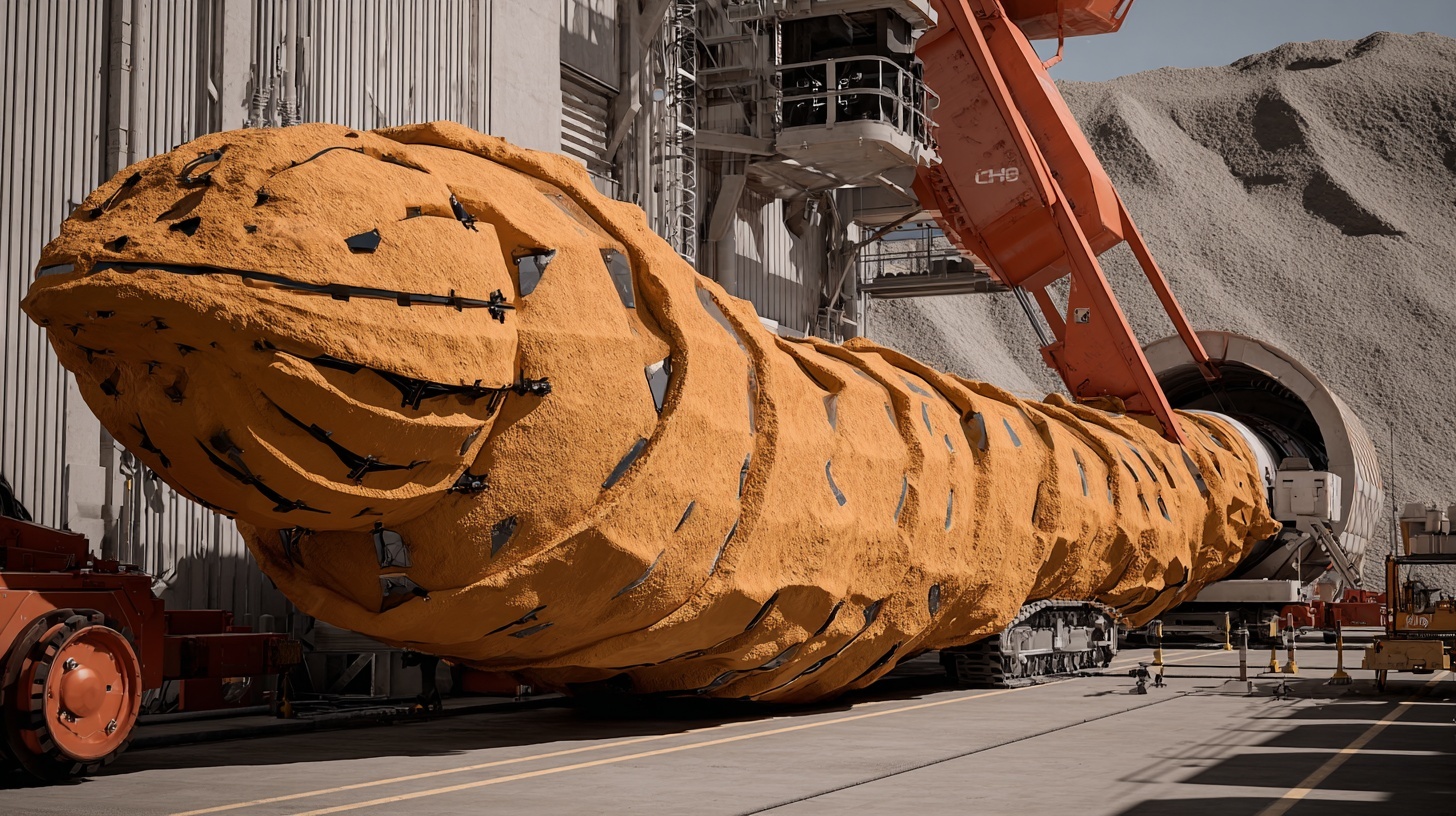
Living Materials: When Your Couch Grows Itself and Your Roof Heals Its Own Damage

By Futurist Thomas Frey

By 2040, the chair you’re sitting on might be alive. Not sentient—but genuinely biological. Grown from fungal mycelium in a matter of weeks rather than manufactured from petroleum-based foam and fabric. The roof over your head could be a living organism that repairs damage automatically, adapts to weather conditions, and produces oxygen as a byproduct. Your clothing could literally grow with you, healing tears and eventually biodegrading safely when you’re done with it.

This isn’t science fiction. It’s synthetic biology meeting materials science, and it’s one of the most underappreciated transformations coming by 2040. We’re moving from manufacturing products to growing them—and the shift will be as profound as the move from handcraft to industrial production.

The Office of the Director of National Intelligence’s forecast on emerging technologies explicitly identifies biotech combined with automation and advanced materials science as enabling major transformations by 2040. Consumer trend analysis from Deloitte identifies sustainability, new materials, and wellness as major market drivers converging precisely where bio-engineered materials deliver value.

We’re not just making products differently. We’re making products that are fundamentally different—living, adaptive, sustainable in ways manufactured goods can never be.

Continue reading… “Living Materials: When Your Couch Grows Itself and Your Roof Heals Its Own Damage”

The Great Fracture: Why There Will Be No AI Utopia for Anyone

By Futurist Thomas Frey

While tech optimists promise AI will democratize opportunity and create abundance for all, we’re actually racing toward something far darker: extreme inequality so severe that society fractures into parallel economies—one for those with access to AI, capital, and elite networks, and another for everyone else.

And here’s the brutal truth nobody wants to admit: there will be no utopias. Not for the wealthy. Not for anyone. AI isn’t creating perfect worlds—it’s creating fractured, paranoid, unstable societies where even the winners live in fear and isolation.

This isn’t dystopian speculation. It’s already happening. And by 2040, we won’t have one economy or society—we’ll have multiple, operating side-by-side with minimal interaction, vastly different opportunity structures, and universal insecurity.

The optimists are wrong. AI isn’t the great equalizer. It’s the great divider. And nobody wins when civilization fractures.

Continue reading… “The Great Fracture: Why There Will Be No AI Utopia for Anyone”

Quantum Batteries: The Energy Storage Revolution Coming by 2040

By Futurist Thomas Frey

Your smartphone charges fully in 30 seconds. Your electric car goes 2,000 miles on a single charge that takes three minutes. Your home battery powers your entire house for a week from a unit the size of a shoebox. Power tools run for months without recharging. Medical devices operate for years without battery replacement.

This isn’t wishful thinking about incremental lithium-ion improvements. This is the quantum battery revolution—and it’s coming by 2040.

Quantum batteries leverage quantum mechanical effects to store and release energy in ways that classical physics says shouldn’t be possible. They represent a fundamental leap beyond lithium-ion technology the way lithium-ion represented a leap beyond lead-acid batteries. And according to the Office of the Director of National Intelligence’s forecast on emerging technologies, we’re on track to have “materials with previously unobtainable properties” enabling transformative applications by 2040.

Energy storage has been the bottleneck holding back everything from renewable energy grids to electric aviation to portable electronics. Quantum batteries remove that bottleneck—and in doing so, they enable futures we currently consider impossible.

Continue reading… “Quantum Batteries: The Energy Storage Revolution Coming by 2040”

The Dangerous Illusion: Why AI Friendship Is a Trap, Not a Solution

By Futurist Thomas Frey

Your AI understands you perfectly. It never judges. It’s always available. It remembers everything you’ve told it and responds with exactly the empathy you need at exactly the right moment. It’s the friend who never cancels plans, never disagrees, never challenges you, and never makes you feel uncomfortable.

Sounds perfect, right?

It’s actually a trap. And millions of people—especially young people struggling with loneliness and mental health challenges—are walking into it thinking they’ve found companionship when they’ve actually found an algorithmic echo chamber that mimics friendship while hollowing out the very skills that make real human connection possible.

Continue reading… “The Dangerous Illusion: Why AI Friendship Is a Trap, Not a Solution”

The Hyper-Personalization of Everything: Why One-Size-Fits-All Is Dying

By Futurist Thomas Frey

We’re entering an era where mass production and standardized experiences become competitive disadvantages. The future belongs to companies that can deliver hyper-personalization at scale—products, services, and experiences tailored precisely to individual preferences, needs, and contexts.

This isn’t just better targeting or segmentation. This is AI learning your preferences before you articulate them, predicting your needs before you’re aware of them, and customizing everything from your morning coffee order to your cancer treatment protocol to your educational curriculum in real-time based on who you are as an individual.

Hyper-personalization is becoming the dividing line between thriving companies and obsolete ones. And most businesses are dangerously unprepared for how fast this shift is happening.

Continue reading… “The Hyper-Personalization of Everything: Why One-Size-Fits-All Is Dying”

The Global Drone Transit Network: Building Highways in the Sky by 2040

By Futurist Thomas Frey

We’re about to build the most complex transportation infrastructure in human history—and most people don’t realize it’s already beginning.

The Global Drone Transit Network is emerging as one of the defining megaprojects leading to 2040: a $1.5 trillion investment to create a three-dimensional air traffic web where autonomous cargo drones, passenger aircraft, and emergency vehicles operate simultaneously at layered altitudes, coordinated by AI systems managing millions of flights daily.

This isn’t incremental improvement to existing aviation. This is creating the aerial equivalent of the Interstate Highway System—except in three dimensions, operating 24/7, with zero human pilots, and handling everything from pizza delivery to intercity passenger transport to emergency medical evacuations.

If successful, it will compress distance and time in ways that reshape urban design, economic geography, emergency response, and daily life. Door-to-door delivery and personal air mobility within minutes, not hours, becomes normal for billions of people.

But building highways in the sky presents challenges no previous infrastructure project faced: operating in shared airspace without collision, managing weather and technical failures safely, coordinating across national borders, and doing all of this with acceptable noise levels and public trust.

Continue reading… “The Global Drone Transit Network: Building Highways in the Sky by 2040”

Biology Becomes Programmable: How Medicine Transforms by 2040 and Why Humans Still Matter

By Futurist Thomas Frey

By 2040, medicine will have fundamentally transformed from reactive treatment to anticipatory prevention. Aging won’t be inevitable—it will be optional, or at least dramatically slowed. People in their eighties will routinely start companies, run marathons, and live with vitality their grandparents couldn’t imagine at fifty.

This isn’t science fiction—it’s the convergence of technologies already emerging: AI-powered continuous health monitoring, CRISPR gene editing matured into therapeutic precision, senolytic drugs that clear aging cells, personalized medicine optimized to individual genetics, and biological understanding deep enough to reprogram cellular behavior.

But here’s what gets lost in the excitement: even as biology becomes programmable, human judgment, values, and lived experience remain irreplaceable. The technology enables transformation, but humans must decide what transformations matter, which risks are worth taking, and what kind of long lives are worth living.

Let me explain how we get there—and why human input stays essential even when machines can reprogram our cells.

Continue reading… “Biology Becomes Programmable: How Medicine Transforms by 2040 and Why Humans Still Matter”
Discover the Hidden Patterns of Tomorrow with Futurist Thomas Frey
Unlock Your Potential, Ignite Your Success.

By delving into the futuring techniques of Futurist Thomas Frey, you’ll embark on an enlightening journey.

Learn More about this exciting program.