The Road That Powers Your Car: Why Florida’s Charging Highway Is Just the Beginning

By Futurist Thomas Frey

The Question Nobody Expected Florida to Answer First

A 4.4-mile stretch of highway in Central Florida will do something no American road has ever done: charge electric vehicles while they drive. State Road 516, connecting Lake and Orange counties, will embed inductive charging coils beneath the pavement, wirelessly transferring up to 200 kilowatts to compatible vehicles at highway speeds. Construction begins this spring. Partial opening expected by 2027. Full operation by 2029.

This isn’t a gimmick. It’s the opening move in infrastructure’s biggest transformation since the Interstate Highway System. And it forces an uncomfortable question: once roads become energy delivery systems, what else changes? How quickly does this spread? And what happens when autonomous vehicles that never stop driving meet highways that never stop charging?

Let me walk you through the forces driving this shift, where it leads in an autonomous era, and why this becomes national infrastructure faster than anyone expects.

Continue reading… “The Road That Powers Your Car: Why Florida’s Charging Highway Is Just the Beginning”

Space Court: The Orbital Tribunal That Prevents Data Wars

By Futurist Thomas Frey

The Question Space Data Centers Force Us to Answer

When your data lives in orbit under flags of convenience, AI makes autonomous decisions affecting millions, and multinational facilities create jurisdictional nightmares—who adjudicates? National courts can’t summon orbital infrastructure. The International Court of Justice has no enforcement mechanism beyond Earth. And diplomatic channels move at glacial speed while data disputes happen at digital velocity.

This forces an urgent question: do we need a dedicated Space Court to resolve conflicts arising from orbital commerce before they escalate into actual wars? Not a theoretical body for someday—a functioning tribunal operational within 3-5 years, with real authority, binding decisions, and enforcement mechanisms that work 200 miles above Earth.

Let me walk you through what Space Court actually looks like, how it operates, and why we might need it faster than anyone’s comfortable admitting.

Continue reading… “Space Court: The Orbital Tribunal That Prevents Data Wars”

Your Price Is Not My Price: The Algorithmic Exploitation Economy Is Already Here

By Futurist Thomas Frey

The Question Amazon Forces Us to Ask

You search for a product. Your neighbor searches for the same product. You see $47.99. They see $32.50. Same item, same seller, same moment—radically different prices. This isn’t a glitch. It’s surveillance pricing, and it’s transforming commerce from transparent marketplace into personalized extraction machine.

This forces an uncomfortable question: are we already living in an economy where prices have become weapons? Not someday with advanced AI—now, with existing tracking technology, behavioral profiling systems, and algorithmic optimization. What does fully personalized pricing look like at scale? How long before it dominates all commerce? And most importantly: is this better or worse for humanity?

Let me walk you through what algorithmic price discrimination actually looks like and why we might be deeper into it than anyone’s comfortable admitting.

Continue reading… “Your Price Is Not My Price: The Algorithmic Exploitation Economy Is Already Here”

The Soldierless War: The Armies of the Future

By Futurist Thomas Frey

The Question Ukraine Forces Us to Ask

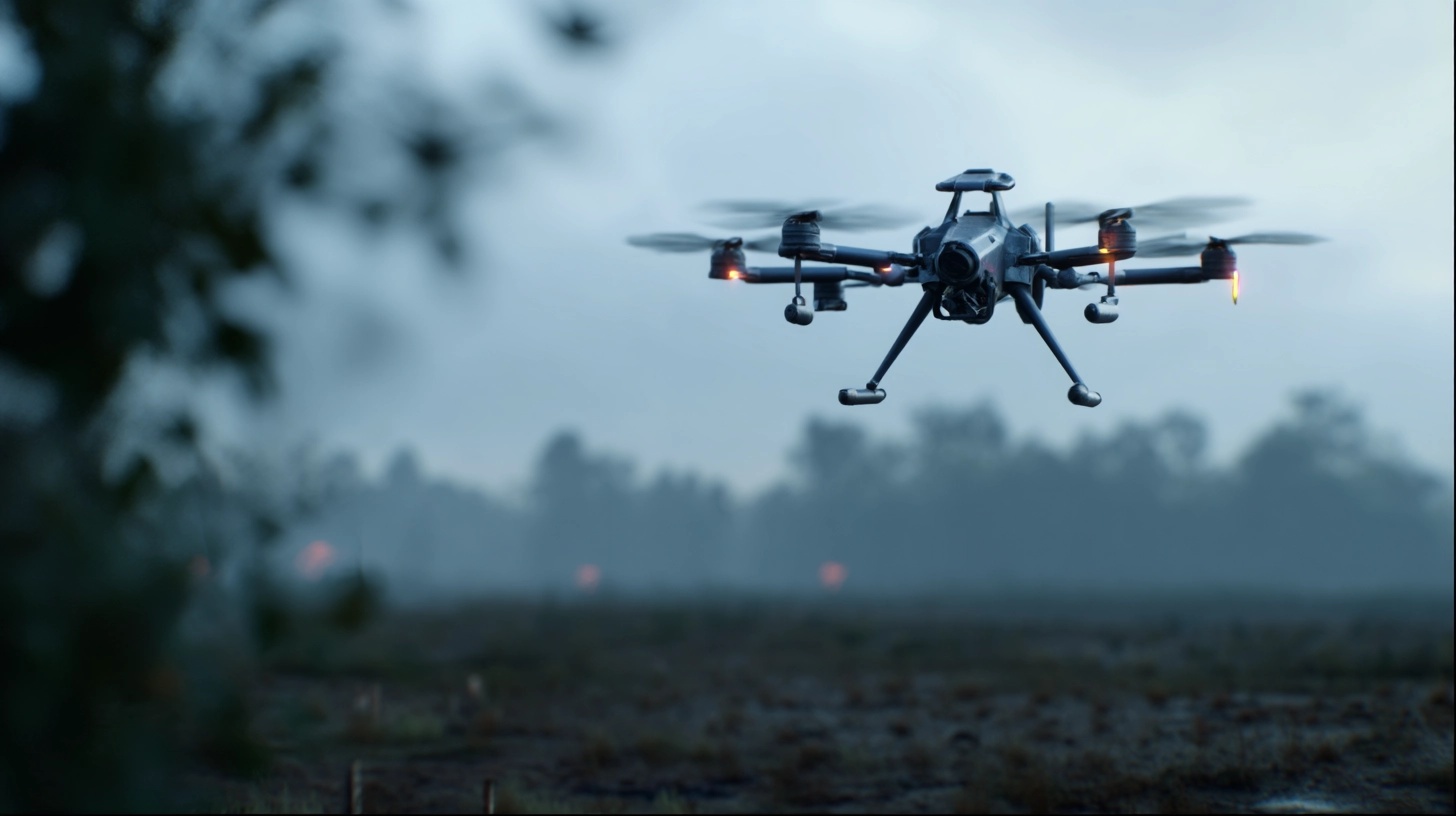
Ukraine is running out of soldiers. After nearly three years of brutal attrition warfare, mobilization becomes increasingly difficult, casualties mount, and the demographic crisis deepens. Meanwhile, both sides deploy thousands of drones daily—kamikaze FPV drones, reconnaissance quadcopters, loitering munitions, autonomous swarms.

This forces an uncomfortable question: could you fight a war today with zero soldiers? Not someday with advanced AI—now, with existing drone technology, autonomous systems, and remote operation. What would an all-drone army look like? How long to gear up? How would battlefields change? And most importantly: is this better or worse for humanity in the long run?

Let me walk you through what soldierless warfare actually looks like and why we might be closer to it than anyone’s comfortable admitting.

Continue reading… “The Soldierless War: The Armies of the Future”

12 Provocative Predictions for 2026: The Year Reality Becomes Science Fiction

By Futurist Thomas Frey

When the Unthinkable Becomes Inevitable

2026 won’t be another year of incremental progress. It will be the year technology crosses thresholds we’ve been nervously approaching for decades—some exhilarating, some terrifying, all transformative. These aren’t safe, comfortable predictions. They’re the uncomfortable breakthroughs that force us to confront what we’re actually building.

Let me walk you through twelve predictions for 2026 that sound impossible until you realize the technology already exists and we’re just waiting for someone bold—or reckless—enough to deploy it.

Continue reading… “12 Provocative Predictions for 2026: The Year Reality Becomes Science Fiction”

Assessing the Moonshots 2026 Predictions: Bold Calls or Overreach?

By Futurist Thomas Frey

When Futurists Make Specific Near-Term Predictions

The Moonshots podcast crew—Peter Diamandis, Salim Ismail, Alex Wissner-Gross, Dave Blundin, and Emad Mostaque—just made specific predictions for 2026. These aren’t vague trends or decade-long forecasts. They’re concrete, falsifiable claims about what happens in the next 12 months.

Let me assess each prediction’s credibility, examine what’s realistic versus optimistic, and identify which forecasts matter most if they prove accurate.

Continue reading… “Assessing the Moonshots 2026 Predictions: Bold Calls or Overreach?”

Reality Drift Auditors: The Profession That Keeps You Connected to Shared Reality

By Futurist Thomas Frey – Future Startup Models for 2030

When Everyone Lives in Their Own Universe

By 2030, we face a crisis nobody anticipated: reality fragmentation so severe that people occupying the same physical space live in fundamentally incompatible information universes. Not mild political disagreement—complete divergence in basic facts, causal relationships, and what events actually occurred.

AI-powered content personalization, algorithmic echo chambers, synthetic media, and hyper-targeted narratives create billions of individualized reality bubbles. Each person receives information streams so customized that consensus reality—shared understanding of basic facts—collapses.

Families can’t communicate because they literally perceive different worlds. Businesses fail because partners operate from incompatible factual frameworks. Relationships dissolve because couples experience divergent realities making mutual understanding impossible.

Enter Reality Drift Auditors: a new profession ensuring people remain anchored to shared reality in a world of hyper-personalized AI narratives. Let me show you why this becomes essential and what these businesses actually do.

Continue reading… “Reality Drift Auditors: The Profession That Keeps You Connected to Shared Reality”

Earth’s Invisible Shield: The Magnetosphere Opportunity Nobody Sees Coming

By Futurist Thomas Frey

The Force Field Nobody Thinks About

Earth has an invisible force field extending tens of thousands of miles into space, deflecting deadly solar radiation and cosmic particles that would otherwise strip away our atmosphere and sterilize the planet. It’s called the magnetosphere, and it’s one of the most critical—yet least understood—features making Earth habitable.

Most people have never heard of it. Those who have rarely grasp its significance. But by 2035, the magnetosphere will become central to space industry, planetary defense, climate technology, and even human enhancement. Let me explain what it is, why it makes Earth unique, and what opportunities stem from understanding it.

Continue reading… “Earth’s Invisible Shield: The Magnetosphere Opportunity Nobody Sees Coming”

Synthetic Reputation Architects: When Your AI Twin Negotiates Trust Before You Arrive

By Futurist Thomas Frey – Future Startup Models for 2030

The Problem: Your Reputation Precedes You (Badly)

By 2030, everyone has a digital reputation—but most people don’t control it. Search results, social media fragments, outdated professional profiles, third-party reviews, algorithmic assessments, and AI-generated summaries create a patchwork reputation that’s often inaccurate, incomplete, or manipulated.

Worse, in a world where AI agents pre-screen opportunities, evaluate candidates, and make trust decisions in milliseconds, your passive digital footprint determines which opportunities you even see. Jobs, investments, partnerships, social connections—all filtered by AI systems evaluating your reputation before you’re aware opportunities exist.

Enter Synthetic Reputation Architects: businesses that design, train, and protect your reputation twin—a living AI model that interacts with the world ahead of you, negotiating trust before you arrive, filtering opportunities, and defending against misinformation autonomously.

This isn’t reputation management. This is deploying an AI representative that actively shapes how the world perceives you. Let me show you what this looks like.

Continue reading… “Synthetic Reputation Architects: When Your AI Twin Negotiates Trust Before You Arrive”

January 1, 2026: The New Year Unlike Any Other

By Futurist Thomas Frey

When Everything Changes at Once

January 1, 2026 won’t feel like a typical New Year. There won’t be the usual hopeful optimism, fresh-start energy, or sense that this year will be incrementally better than the last. Instead, 2026 arrives carrying the weight of recognition: we’re entering a year of disruption so profound that the world on December 31, 2026 will be unrecognizable from the one we’re leaving behind.

This isn’t hyperbole. Multiple exponential curves—AI capability, automation deployment, job displacement, economic restructuring—are converging simultaneously in 2026, creating compound effects that individually they could never achieve. Let me show you what makes January 1, 2026 fundamentally different from every New Year before it.

Continue reading… “January 1, 2026: The New Year Unlike Any Other”

Digital Afterlife Executors: Managing Your AI Legacy When You Die

By Futurist Thomas Frey – Future Startup Models for 2030

The Question Nobody’s Asking Yet

What happens to your AI agent when you die? Not your social media accounts or email—those are handled by existing digital estate services. I’m talking about your autonomous AI agent managing your finances, your AI assistant making daily decisions, your digital twin negotiating contracts, and your personalized AI models trained on decades of your data, preferences, and decision-making patterns.

By 2030, people don’t just have digital accounts—they have persistent AI representations operating with real authority. And when the human dies, those AI systems don’t automatically shut down. Someone needs to manage the transition, prevent misuse, and ensure your digital legacy doesn’t become a liability or get exploited.

Enter Digital Afterlife Executors: a new class of professionals who manage what happens when a person “dies” digitally. Let me show you why this becomes essential and what these businesses actually do.

Continue reading… “Digital Afterlife Executors: Managing Your AI Legacy When You Die”

Synthetic Scarcity Designers: The Startup Model That Sells Limitations in a World of Abundance

By Futurist Thomas Frey – Future Startup Models for 2030

When Abundance Becomes the Problem

By 2030, we face a paradox nobody anticipated: unlimited access to everything makes nothing feel valuable. AI generates infinite content. 3D printers produce unlimited objects. Digital goods replicate endlessly at zero marginal cost. Information is ubiquitous. Entertainment is inexhaustible.

And people are miserable.

The problem isn’t scarcity—it’s abundance so overwhelming that choice becomes paralyzing, achievement feels meaningless, and experiences lose significance because they’re infinitely replicable. When everything is available instantly, nothing matters.

Enter the most counterintuitive startup model of 2030: Synthetic Scarcity Designers—entrepreneurs who intentionally create scarcity in a world of abundance to preserve motivation, value, and meaning. They design artificial limits, time-gated access, and voluntary constraints that make experiences matter again.

Scarcity becomes a product, not a condition. Let me show you what this looks like.

Continue reading… “Synthetic Scarcity Designers: The Startup Model That Sells Limitations in a World of Abundance”
Discover the Hidden Patterns of Tomorrow with Futurist Thomas Frey
Unlock Your Potential, Ignite Your Success.

By delving into the futuring techniques of Futurist Thomas Frey, you’ll embark on an enlightening journey.

Learn More about this exciting program.