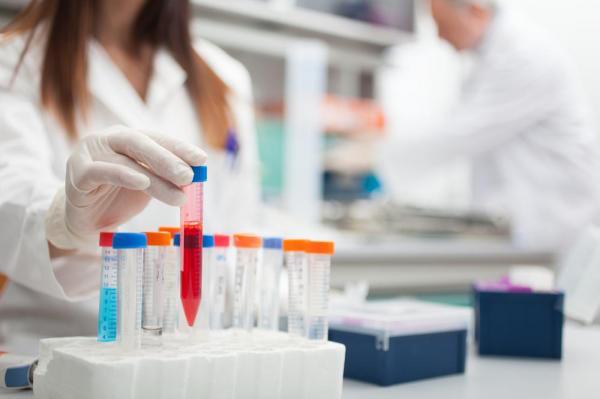
All 3D printed innovations have something in common: they are only producing inorganic, plastic-based material. What about organic materials, such as human organs? Wouldn’t it be great if new organs could be printed out and used in surgical operations to save people’s lives? (Video)
It’s no easy task to learn to walk again after a traumatic accident. One of the hardest things for motor-impaired patients is to generate the correct brain signals to help them recover efficiently.
There are some 320,000 unique mammalian viruses, according to estimates by virologists, and likely exponentially more existing on the planet today. Determining an accurate number would require billions more dollars and a great deal more manpower than is currently given to the study of viruses. Though a handful of viruses live in and on our bodies at all times—known as the virome—not all of them make us ill; just as often, they lie dormant. Many virus functions remain mysterious to scientists, such as how they enter a cell or replicate, though existing test advances, like the VirScan blood test, can tell you any infection you’ve ever had.
A paralyzed man is able to move using his brainpower thanks to a ‘neural-bypass procedure’ that has been heralded a world first. Neurosurgeons achieved the world first by transmitting signals from the 26-year-old American’s brain to electrodes placed around both knees.
At a Drexel University lab in Philadelphia, a desktop 3-D printer is printing miniature samples of bones. In Toronto, another researcher is using the same printer to make living tumors for drug testing. It looks like an ordinary 3-D printer, but instead of plastic, it squirts out living cells.
New research has found that the brain is directly connected to the immune system by vessels previously thought not to exist. The finding means the textbooks will have to be rewritten.
Researchers at Ben-Gurion University of the Negev (BGU) in Israel and the University of Colorado have developed a dynamic anti-inflammatory “smart” drug that can target specific sites in the body and could enhance the body’s natural ability to fight infection while reducing side effects.
Israel’s ReWalk Robotics unveiled the ReWalk Personal 6.0 this month as Robert Woo, a paraplegic, demonstrated the new exoskeleton by walking down the streets of New York City.
Oregon State University researchers have discovered a new link between cognitive functioning and gut bacteria. In recent years the science involving bacteria in the gut and its link to health and cognitive functioning has boomed. Parkinson’s disease has even been linked to changes in gut bacteria. Published in the journal Neuroscience, a new study shows that diets high in fat and sugar are probably impacting cognitive functioning, because of their impact on the type of bacteria that thrive on high-fat and high-sugar diets. Continue reading… “Amazing connection between gut bacteria and cognitive functioning”