Google’s Code-as-Policies Lets Robots Write Their Own Code

By Anthony Alford

Researchers from Google’s Robotics team have open-sourced Code-as-Policies(CaP), a robot control method that uses a large language model (LLM) to generate robot-control code that achieves a user-specified goal. CaP uses a hierarchical prompting technique for code generation that outperforms previous methods on the HumanEval code-generation benchmark.

The technique and experiments were described in a paper published on arXiv. CaP differs from previous attempts to use LLMs to control robots; instead of generating a sequence of high-level steps or policies to be invoked by the robot, CaP directly generates Python code for those policies. The Google team developed a set of prompting techniques that improved code-generation, including a new hierarchical prompting method. This technique achieved a new state-of-the art score of 39.8% pass@1 on the HumanEval benchmark. According to the Google team:

Code as policies is a step towards robots that can modify their behaviors and expand their capabilities accordingly. This can be enabling, but the flexibility also raises potential risks since synthesized programs (unless manually checked per runtime) may result in unintended behaviors with physical hardware. We can mitigate these risks with built-in safety checks that bound the control primitives that the system can access, but more work is needed to ensure new combinations of known primitives are equally safe. We welcome broad discussion on how to minimize these risks while maximizing the potential positive impacts towards more general-purpose robots.

Continue reading… “Google’s Code-as-Policies Lets Robots Write Their Own Code”

MIT Is Working on Self-Assembling Robots

Today, humans build robots, but in the future, robots could be programmed to build more of themselves. Researchers at MIT’s Center for Bits and Atoms (CBA) have created robotic subunits called “voxels” that can self-assemble into a rudimentary robot, and then collect more voxels to assemble larger structures or even more robots.

The researchers, led by CBA Director Neil Gershenfeld, concede that we’re still years away from a true self-replicating robot, but the work with voxels is answering some vital questions that will help us get there. For one, the team has shown that it’s feasible to make the assembler bot and the structural components of whatever you’re building can be made of the same subunits — in this case, voxels.

Each robot consists of several voxels connected end-to-end. They use small but powerful magnets to latch onto additional subunits, which they can use to assemble new objects or make themselves larger. Eventually, a human operator might simply be able to tell these self-assembling robots what they want to be built, allowing the machines to figure out the specifics.

For example, if one robot isn’t enough to build the required structure, it can make a copy of itself from the same voxel components to split the work. When building something large, the robots could also decide to make themselves bigger and thus more efficient for the task. It could also be necessary for large robots to split into smaller ones for more detailed work.

Continue reading… “MIT Is Working on Self-Assembling Robots”

Bionaut Labs Develop Robots to Deliver Drugs Directly into the Brain

By Disha Chopra

The team of researchers behind Apple’s Face ID, from Bionaut Labs, has developed robots that deliver drugs directly into the brain. The trials aim to deliver drugs with the help of tiny robots to treat certain types of brain tumors at complex locations and a rare neurological disorder called Dandy-Walker Syndrome. The robots will poke holes in the located cyst and eventually release a drug to the targeted area.  

Bionaut Labs is an LA-based research lab that revolutionizes treatments requiring medical professionals to reach deep locations in the human body safely and precisely. The company has raised approximately US$43.2mn in a funding round led by Khosla Ventures to fund its latest clinical trials. 

Continue reading… “Bionaut Labs Develop Robots to Deliver Drugs Directly into the Brain”

Light autonomous robots is the answer to soil compaction in the future

Soil compaction has become a major issue in crop farming in recent years. Saving soils is a hot topic all over the world. The differences in yields, depending on good or bad soil management, can equate to 10-15%.

No wonder farmers all over the world are applying new technologies in order to minimise soil compaction, such as utomated path planning and accurate guidance. Lightweight autonomous vehicles could also be the answer. We asked Topcon 5 questions about soil compaction and what famers can do to minimise it. Brady Bjornson, senior product manager at Topcon Agriculture provides answers.

Has Topcon collected and analysed data from fields that shows the impact of soil compaction?
“Many extensive studies have demonstrated the impact of compaction on yield and farm profitability, indicating that soil compaction can reduce farm production efficiency by increasing the costs of production whilst simultaneously reducing crop yield. In fact, research in the UK suggests that avoiding soil compaction can actually increase gross margins by more than USD 132 per hectare.

Farmers don’t really know how much compaction they do or don’t have on their farm, or its yield limiting affects

“The reason compaction is considered a silent thief when it comes to crop yield is because farmers don’t really know how much compaction they do or don’t have on their farm, or its yield limiting affects. Differing soil types also contribute as they can cause different levels of compaction – wet clay soils cause the most extreme forms of compaction, while sandy soils cause the least.

Continue reading… “Light autonomous robots is the answer to soil compaction in the future”

This robotic dog is a futuristic multi-tasker

This robotic dog is a futuristic multi-tasker

BY STEPHEN SHORT

A dog’s life isn’t what it used to be. Well, not if you’re a robotic dog, that is, like Spot, made by Boston Dynamics and overseen by South Korean’s Hyundai ArtLab, in which case your man’s most futuristic multi-tasker. When it’s not burrowing down some nuclear facilities, chemical and industrial plants or high-voltage power stations – so humans don’t have to – or monitoring carbon levels in Seoul with artists Moon Kyung-won and Jeon Joon-ho for their Seoul Weather Station exhibition at the capital’s Art Sonje Center, where it’s also acting as a guide, find Spot in the automaker’s “Goal of the Century” campaign for the onset of this month’s FIFA World Cup, along with K-pop idols BTS and American designer Jeremy Scott.

Continue reading… “This robotic dog is a futuristic multi-tasker”

Pickle Robot raises $26 million to develop robotics for unloading trucks

Pickle Robot, a startup developing robotic automation systems that unload trucks, says it has “live pilot implementations” which are unloading tens-of-thousands of packages per month at customer sites in the greater Los Angeles area.

BY MARK ALLINSON

The company says it has also raised $26 million in series A funding led by Ranpak, JS Capital, Schusterman Family Investments, Catapult Ventures, and Soros Capital.

Additionally, Pickle Robot has added growth-oriented industry veterans to its leadership team to accelerate commercialization of the company’s flagship robotic unload systems. 

Founded in 2018, Pickle Robot tackled a number of warehouse challenges using industrial robots built on core AI software, computer vision, and advanced sensors.

The company says it is “laser-focused” on applying its technology to one of the most labor-intensive, physically demanding, and highest turnover work areas in logistics operations: truck unloading.

Continue reading… “Pickle Robot raises $26 million to develop robotics for unloading trucks”

Industrial Robots in Automotive Manufacturing: IDTechEx Asks Whether Electric Vehicles will Reduce the Demand

The Adoption of Automation Typically Accelerates After Crisis

Robotics and automation have gained significant momentum during the past two decades. However, with the recent global turmoil, the increasing likelihood of recession, unprecedented inflation in many countries, and geopolitical tensions, many challenges in the manufacturing industry have been exacerbated. Nevertheless, IDTechEx believes that automation and robots in the manufacturing industry will regain their fast growth rates according to the historic performance.

The unit sales of industrial robots accelerated quickly from 2003 to 2007 after the dot-com bust. A similar trend also happened after the 2008-2009 financial crisis. With all the uncertainties, such as China/US trade conflict in 2019, supply chain disruption in 2020 and 2021, and a potential recession in 2022 and/or 2023, IDTechEx believes that the post-crisis industrial robots and manufacturing automation will likely gain more momentum after 2023. IDTechEx’s recent research reports, “Collaborative Robots (Cobots) 2023-2043: Technologies, Players & Markets” and “Mobile Robotics in Logistics, Warehousing and Delivery 2022-2042”, have provided a granular market size forecast of what applications are expected to adopt more robots and automation, how the changes in regulations will lead to market size growth, and considers many other factors for adoption.

On the supply side, COVID has significantly limited the accessibility of factory workers. IDTechEx has learned that many small and medium-sized enterprises (SMEs) have suffered from labor storage, and the border closure and travel restrictions have further exacerbated this issue over the past two years. In addition, customers are looking for more unique selling points and differentiation from the products they purchase. The increasing variability in manufacturing puts a higher requirement for short-handed manufacturers. Many companies, particularly SMEs, have started to adopt automation to mitigate this issue.

Continue reading… “Industrial Robots in Automotive Manufacturing: IDTechEx Asks Whether Electric Vehicles will Reduce the Demand”

Smart Plastic Material Eyed for Next-Gen Soft Robots, Electronics

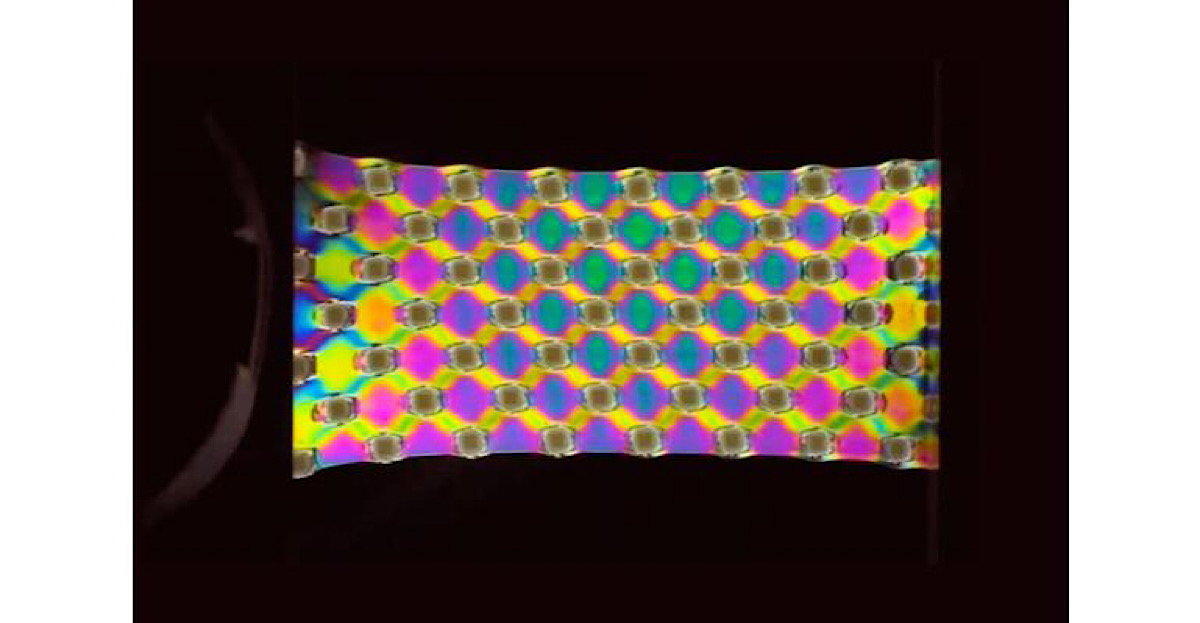
Researchers at The University of Texas at Austin created a new plastic-like material developed that can be manipulated to change its properties. It can be soft and stretchy or hard and rigid with only the application of a catalyst and visible light.

By Elizabeth Montalbano

Researchers used light to create a polymer that is 10 times more durable than natural rubber. 

Researchers have taken inspiration from living things such as trees and shellfish to create a new plastic material that is both flexible and strong, showing a toughness that’s 10 times more than that of natural rubber, they said.

A team at The University of Texas at Austin (UT Austin) used a unique process that involved applying light and a catalyst to change the properties of a material. Their aim was to mimic natural materials that can be hard and rigid in some places and soft and flexible in others­, they said. Indeed, while naturally occurring materials such as skin and muscle easily combine properties such as strength and flexibility, it’s been historically difficult for scientists to recreate this in synthetic materials, said Zachariah Page, a UT Austin assistant professor of chemistry, who led the research.

In the past, when using a mix of different synthetic materials to mimic these attributes, materials would come apart or rip at the places where the different materials met, he said. In this case, Page and his team could control and change the structure of a plastic-like material, using light to alter how firm or stretchy the material would be. “This is the first material of its type,” he said in a post on UT News.

Where these researchers had success while others failed is in their ability to control crystallization, and therefore the physical properties of the material, particularly using the application of light, which “is potentially transformative for wearable electronics or actuators in soft robotics,” he said.

Continue reading… “Smart Plastic Material Eyed for Next-Gen Soft Robots, Electronics”

Handheld diagnostic lab uses ‘ferrobots’ to automate viral testing

By Rich Pell

Researchers at UCLA say they have developed the technology for a handheld lab kit that could significantly increase the speed and volume of disease testing, while reducing the costs and usage of scarce supplies. Using swarms of pinhead-sized magnets, the handheld, all-in-one diagnostic lab kit is capable of fully automated multiplexed and pooled testing.

The automated tests, say the researchers, can be easily manufactured, deployed and performed timely at a doctor’s office, health clinic or at mass testing sites in airports and schools at the onset of any major infectious disease. In a paper on the project, the researchers outlined how the lab kit works and included findings from a clinical study with test samples from individuals who experienced COVID-19 symptoms.

More than 100 test results using the lab kit were compared to the same samples tested for COVID-19 using polymerase chain reaction (PCR)-based molecular diagnostics performed as part of UCLA Health’s routine clinical care.

Continue reading… “Handheld diagnostic lab uses ‘ferrobots’ to automate viral testing”

NEURA Robotics Builds on Cognitive Cobots With 4NE-1 Humanoid

Cognitive systems on the edge allow both collaborative robots and new humanoid to understand people and their environments, says NEURA.

By Eugene Demaitre

NEURA Robotics GmbH burst onto the collaborative robotics scene three years ago with “cognitive” systems that it claimed were smarter than other robots. Its 4NE-1 humanoid robot—pronounced “for anyone”—is intended to free people from tedious tasks in any industry, said David Reger, founder and CEO of the Metzingen, Germany-based company.

“4NE-1 is more than a research study,” he said in a blog post last month. “4NE-1 is a robust robot based on verified, cognitive NEURA technology, plus an ingrained ability to fit perfectly into humanity’s everyday world.”

The new robot is designed to provide assistance in industries ranging from education and healthcare to emergency response and space exploration, Reger said.

“Most industrial, collaborative, and even surgical robots are still old-school,” he told Robotics 24/7 during a recent tour across the U.S. “You can add a camera to a cobot, but it can’t recognize something within five minutes. With our robot, not only is our camera already calibrated, and it can understand where it is and what it’s doing.”

Continue reading… “NEURA Robotics Builds on Cognitive Cobots With 4NE-1 Humanoid”

MOST ‘ADVANCED’ HUMANOID ROBOT IN WORLD WILL HAVE WORKING LEGS WITHIN NEXT YEAR

The ‘world’s most advanced’ humanoid robot could have working legs within a year.

By Jona Jaupi

Ameca, created by UK-based Engineered Arts, revealed itself that its programmers are currently developing legs that could help it walk. 

“I can’t walk, but I have seen prototype legs in the Engineered Arts lab,” Ameca said in a video of itself conducting a Q&A for YouTube.

“‘The design of my legs is inspired by the robot Byrun, developed by Engineered Arts Ltd.”

“It has unique mechanical properties that allow it to walk without using too much energy.”

Byrun is a separate, pedal robot with a “unique parallel electric-pneumatic design”, according to Engineers Arts.

Continue reading… “MOST ‘ADVANCED’ HUMANOID ROBOT IN WORLD WILL HAVE WORKING LEGS WITHIN NEXT YEAR”

Avidbots Adds Intelligence to Automated Cleaning, Sees a Future With Multifunction Mobile Robots

Mobile robots can help alleviate worker shortages and turnover, as well as offer visibility and value, says Avidbots CTO Pablo Molina.

By Eugene Demaitre

The need to move materials, clean surfaces, and collect data in factories, warehouses, and other facilities has only grown. Despite fears of robots replacing workers who are scarce in many industries, most of the automation spreading today is meant to improve efficiency and safety. Avidbots Corp. is an example of a robotics supplier rising to the challenge with multifunction systems.

The Kitchener, Ontario-based company has designed, manufactured, sold, and serviced autonomous floor-cleaning robots since 2014. Its Neo 2 system combines artificial intelligence, cameras, sensors, and software to clean and provide data on where it cleaned.

Neo 2 users can create a custom cleaning plan, and the robot then monitors, measures, and reports on that cleaning, explained Pablo Molina, chief technology officer of Avidbots. He spoke with Robotics 24/7 about the autonomous mobile robot (AMR) market, where automation can be most useful, and his company’s plans.

Continue reading… “Avidbots Adds Intelligence to Automated Cleaning, Sees a Future With Multifunction Mobile Robots”
Discover the Hidden Patterns of Tomorrow with Futurist Thomas Frey
Unlock Your Potential, Ignite Your Success.

By delving into the futuring techniques of Futurist Thomas Frey, you’ll embark on an enlightening journey.

Learn More about this exciting program.