
For the first time ever, a group of scientists from the Italian Institute of Technology has created a new class of highly effective artificial muscles that can stretch and contract like human muscles. More importantly, it can lift 1000 times its own weight!
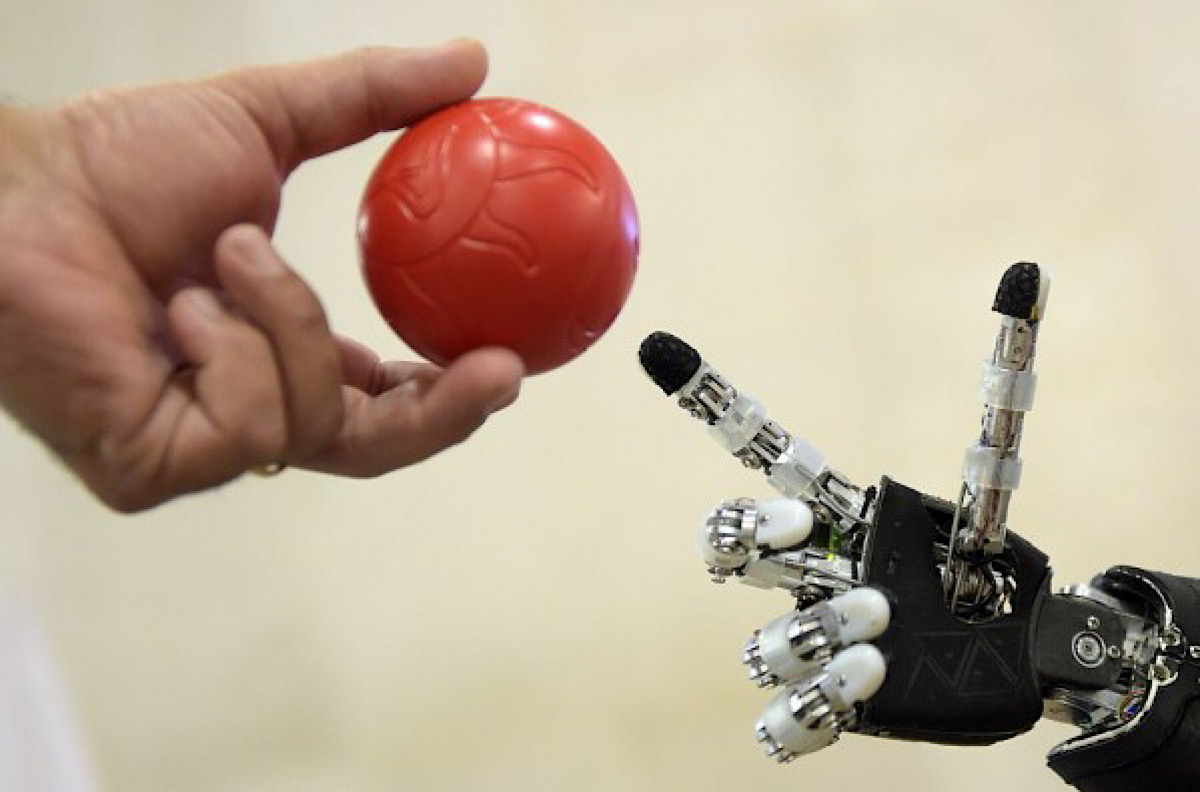
A man approaches a plastic ball toward the finger of humanoid robot iCub during the 2014 IEEE-RAS International Conference on Humanoid Robots in Madrid on November 18, 2014. The iCub is the humanoid robot developed at IIT (Instituto Italiano di Tecnologia) as part of the EU project RobotCub and subsequently adopted by more than 20 laboratories worldwide. It has 53 motors that move the head, arms & hands, waist, and legs.
Ottonomy.IO raises $3.3 million to expand network of autonomous robots for deliveries
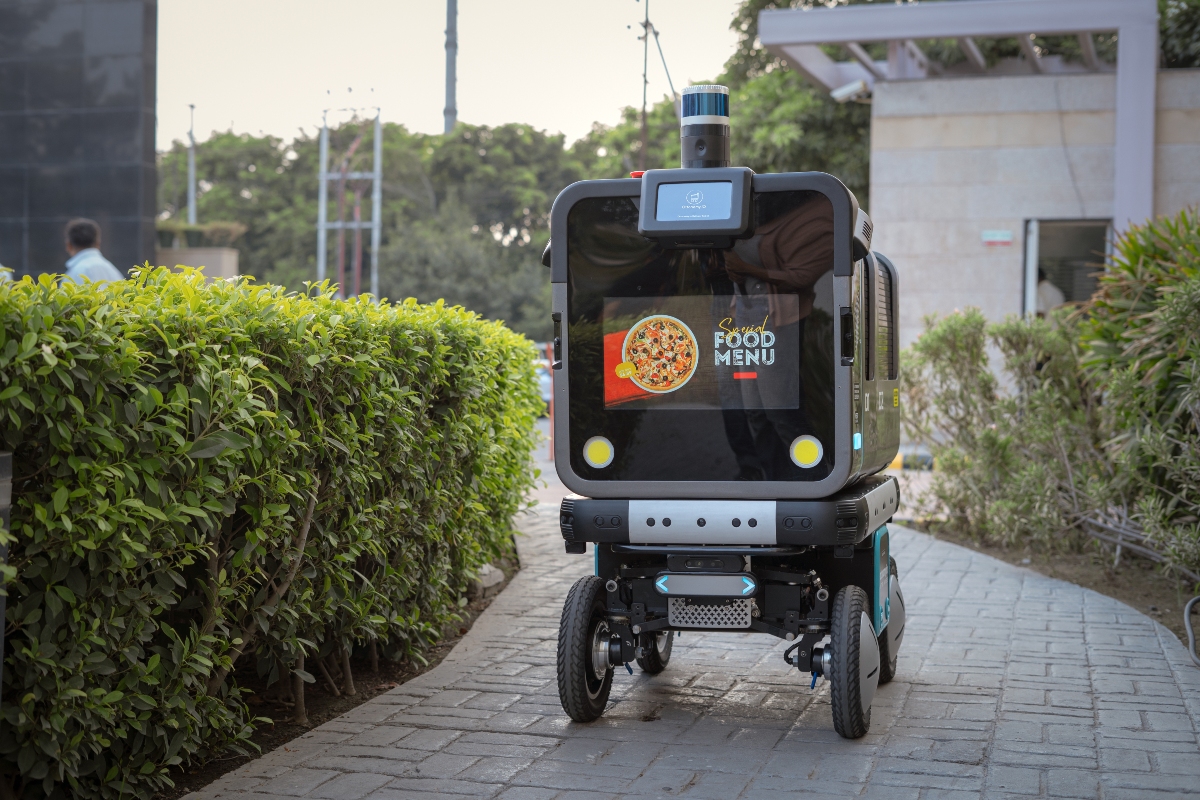
Ottonomy.IO, a startup working on solving delivery problems using autonomous robots, has raised $3.3 million in a seed funding round as it looks to expand its market and deploy robots to existing customers.
Led by Bengaluru-based Pi Ventures, the latest funding round included participation from Connetic Ventures and Branded Hospitality Ventures. Sangeet Kumar, founder and chief executive of Uttar Pradesh-based Addverb Technologies, also joined the round.
Founded in late 2020 by Ritukar Vijay along with Pradyot Korupolu, Ashish Gupta and Hardik Sharma, New York-headquartered Ottonomy.IO develops robots that feature sensors, including 3D lidar sensors and cameras. The company, which employs about 25 people in the U.S. and India, also writes software and AI algorithms to power the sensors.https://jac.yahoosandbox.com/1.2.0/safeframe.html
“One of the most important problems which we are trying to solve with these autonomous delivery robots is around labor shortages,” said Vijay, who serves as the chief executive of Ottonomy.IO, in an interaction with TechCrunch. He added that due to the labor shortages, there is a substantial increase in the hourly wages of laborers — to $18 to $45 per hour from $9 to $12 — in the U.S.
“So, that’s almost a 100% hike in hourly wages, making it very difficult for enterprise customers to provide the same services to the customers they were given earlier. And what happens at the end is that customers start paying more for deliveries.”
Continue reading… “Ottonomy.IO raises $3.3 million to expand network of autonomous robots for deliveries”Surgical robot developed by Nebraska company to be put to the test in space
By Chris Dunker
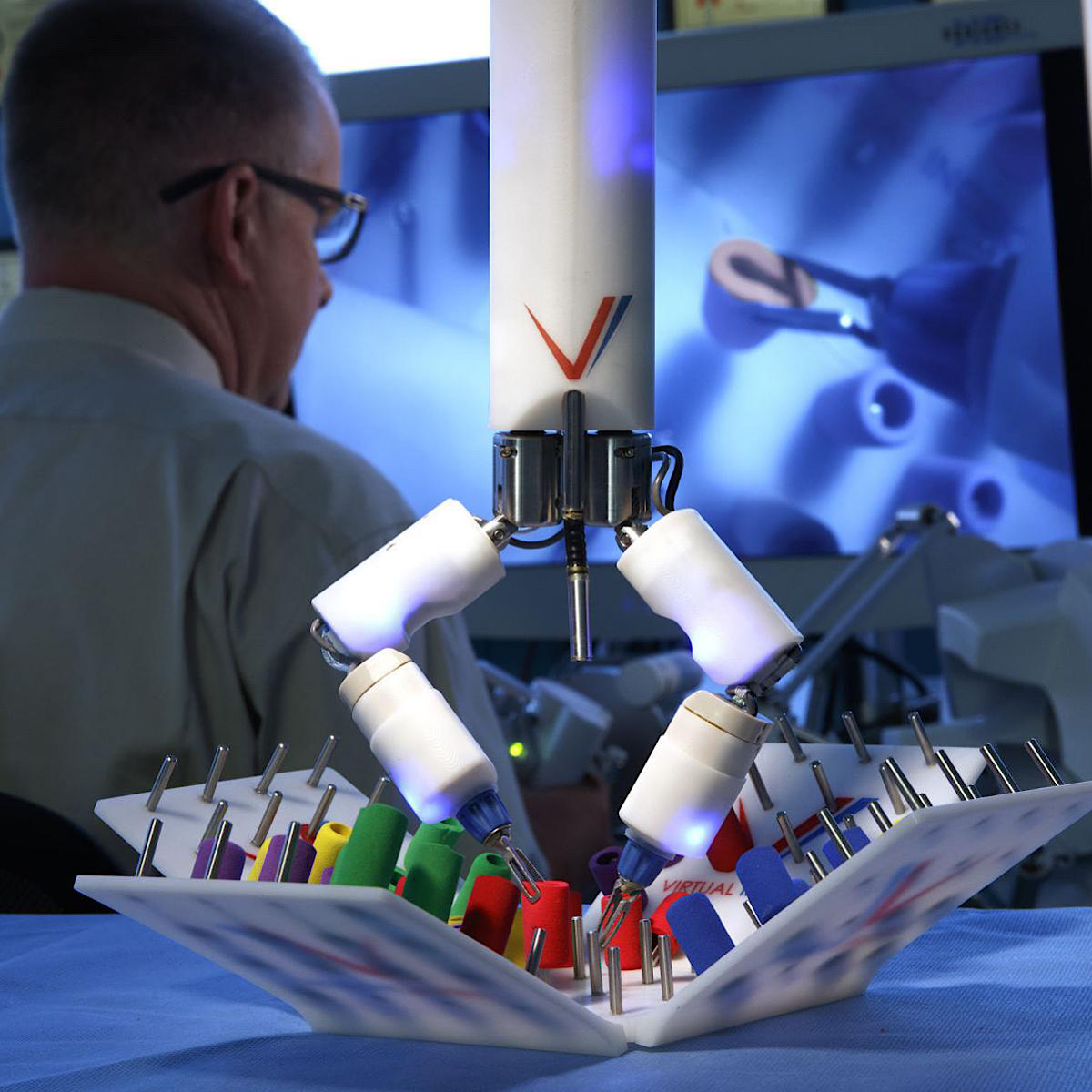
MIRA (“miniaturized in vivo robotic assistant”) is an investigational robot that will enable surgeons to perform minimally invasive surgeries in any hospital or surgery center, without the need for a dedicated space or for the infrastructure typically required for other “mainframe” robotic systems. Weighing only two pounds, the miniature single incision platform has full robotic capabilities, and can easily be moved from room to room.
A robot capable of autonomously operating on an ailing astronaut thousands, if not millions, of miles away from a modern surgical suite sounds like science fiction.
The surgical device — let’s call it the “miniaturized in vivo robotic assistant,” or MIRA for short — would simply be retrieved from a small locker, set up and turned on.
Continue reading… “Surgical robot developed by Nebraska company to be put to the test in space”How a Humanoid Robot Is Helping Scientists Explore Shipwrecks
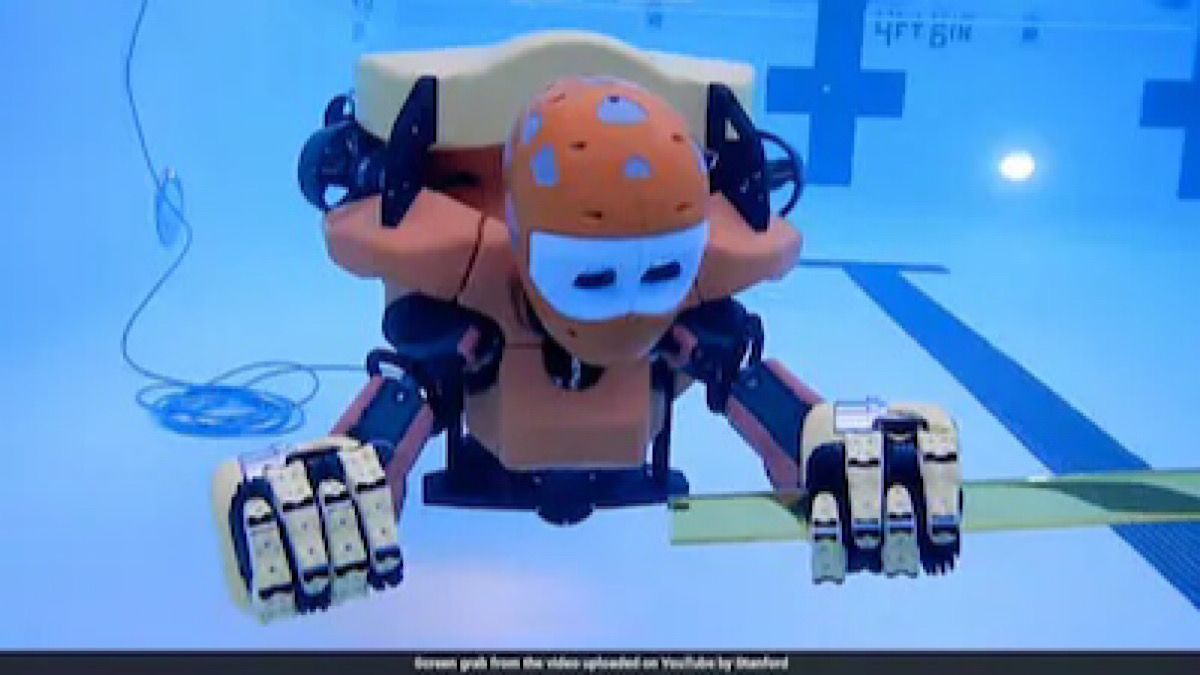
The robot resembles a human diver from the front, with arms, hands and eyes that have a 3D vision, capturing the underwater world in full colour.
By Bhavya Sukheja
OceanOne made its debut in 2016.
A robot created at Standford University in the United States is diving down to shipwrecks and sunken planes and allowing its operators to feel like they’re underwater explorers too.
The robot known as OceanOneK has humanoid top half, with eyes that have a 3D vision, capturing the underwater world in full colour. It resembles a human diver from the front, with arms and hands, and its back has computers and eight multidirectional thrusters that help it carefully manoeuvre the sites of fragile sunken ships.
Continue reading… “How a Humanoid Robot Is Helping Scientists Explore Shipwrecks”Robots from DNA? Researchers Developed a New Machine for Membrane Proteins

Researchers achieved a new development in their studies in this new publication focusing on nano-sized robots that came from a DNA’s design, now concentrate on doing wonders for biological advancements. The innovation will help bodily functions to improve and give the world more information regarding the diseases that occur in the body.
According to SciTechDaily, researchers from Inserm, CNRS, and the University of Montpellier focused on developing new nanobots that came from a DNA for studying bodily functions and processes. The research took place at the Structural Biology Center in Montpellier, and its paper is now published in Nature Communication.
The research entitled “A Modular Spring-Loaded Actuator for Mechanical Activation of Membrane Proteins” focus on conducting biological processes with these mechanical objects inside the body.
It may sound like it came from a science fiction show or content, but it is already a reality from the researchers that devised a way patterned from DNA.
Continue reading… “Robots from DNA? Researchers Developed a New Machine for Membrane Proteins”Astrobee Space-Bots Mark a New Milestone in Human-Robot Teamwork
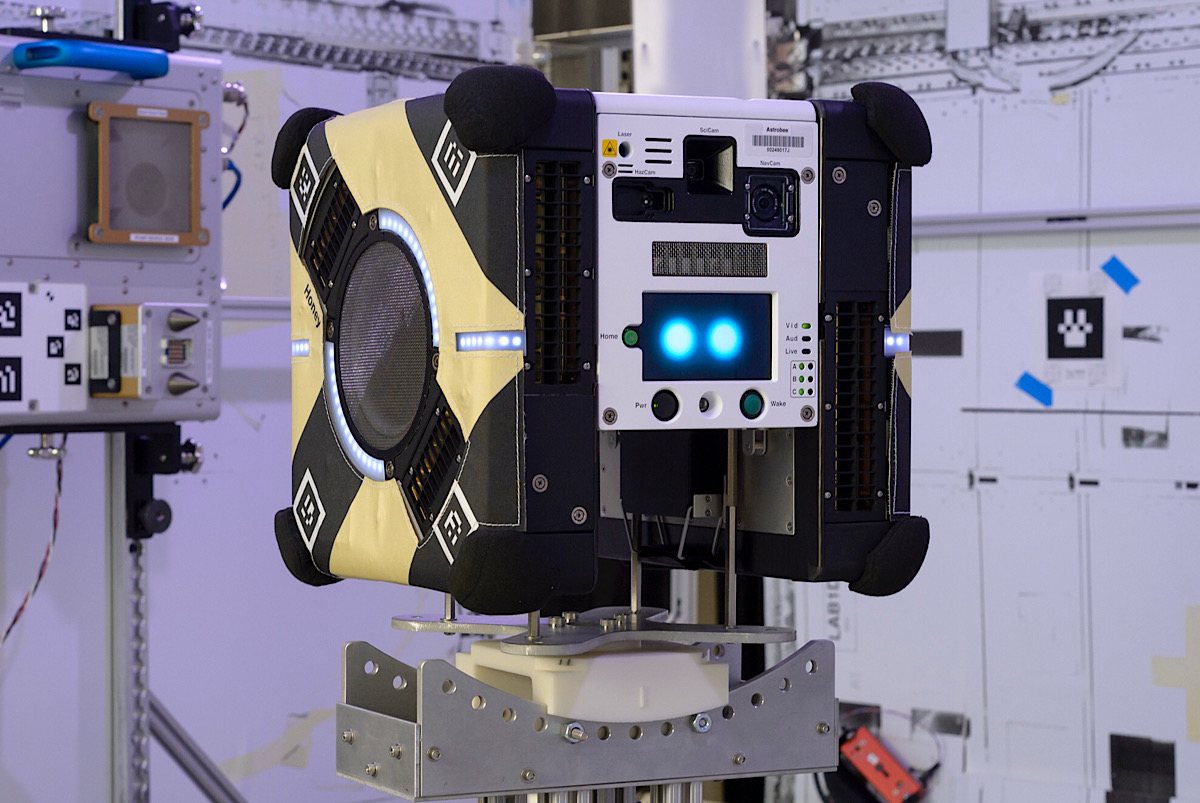
Astrobee Space-Bot NASA
By Keith Cowing
Humans won’t trek alone in future crewed missions to deep space. Robots are a central part of NASA’s plan for operating and maintaining spacecraft as humans return to the Moon, explore Mars, and venture beyond.
In past experiments, the robots have operated one at a time or have needed more hands-on support from their human colleagues. This video shows the first time that two Astrobees worked independently, side by side with humans, in separate modules of the station. Bumble tested its navigation ability in the Harmony module and gathered new station mapping data, while Queen captured its first 360-degree panoramic image of the interior of the orbital laboratory.
The mapping and imaging experiments are part of the Integrated System for Autonomous and Adaptive Caretaking (ISAAC) project, managed at NASA’s Ames Research Center in California’s Silicon Valley. The project uses the Astrobee system, a set of three cube-shaped robots plus a docking station designed and built at Ames. The Astrobees, which first launched to the space station in 2018, can operate fully autonomously or under remote control by astronauts or ground operators.
Continue reading… “Astrobee Space-Bots Mark a New Milestone in Human-Robot Teamwork”The Omnid Mocobots: New mobile robots for safe and effective collaboration

Three Omnid mocobots working collaboratively with a human on a pipe assembly task. The 16kg pipes feel weightless to the human and can be easily and intuitively manipulated due to the assistance of the Omnids.
By Ingrid Fadelli
Teams of mobile robots could be highly effective in helping humans to complete straining manual tasks, such as manufacturing processes or the transportation of heavy objects. In recent years, some of these robots have already been tested and introduced in real-world settings, attaining very promising results.
Researchers at Northwestern University’s Center for Robotics and Biosystems have recently developed new collaborative mobile robots, dubbed Omnid Mocobots. These robots, introduced in a paper pre-published on arXiv, are designed to cooperate with each other and with humans to safely pick up, handle, and transport delicate and flexible payloads.
“The Center for Robotics and Biosystems has a long history building robots that collaborate physically with humans,” Matthew Elwin, one of the researchers who carried out the study, told TechXplore. “In fact, the term ‘cobots’ was coined here. The inspiration for the current work was manufacturing, warehouse, and construction tasks involving manipulating large, articulated, or flexible objects, where it is helpful to have several robots supporting the object.”
Continue reading… “The Omnid Mocobots: New mobile robots for safe and effective collaboration”ForSight sees a world without cataracts with its surgery robot

Worldwide, more than a billion people suffer from vision impairment and entirely avoidable blindness. Cataracts — and the surgery to correct them — is one of the most common surgical procedures in the world, with more than 28 million performed worldwide, every year. The problem is, even though the surgery is relatively simple, there aren’t enough surgeons, and not enough money to pay those surgeons, especially in developing countries. ForSight Robotics wants to address that issue and just raised a $55 million Series A to continue develop its surgery robots. The round comes around 18 months after its seed round.
The surgery robot platform is called Oryom, which means “daylight” in Hebrew. It leverages cutting-edge technologies (pun intended) in microsurgical robotics, computer vision and machine learning. The platform aims to automate ophthalmic surgeries that treat diseases underlying preventable blindness. With the power of robotics on its side, the company claims to be 10 times more accurate than the human hand.
Continue reading… “ForSight sees a world without cataracts with its surgery robot”Florida county rolls out BeBot, a beach-cleaning robot with a message for humans
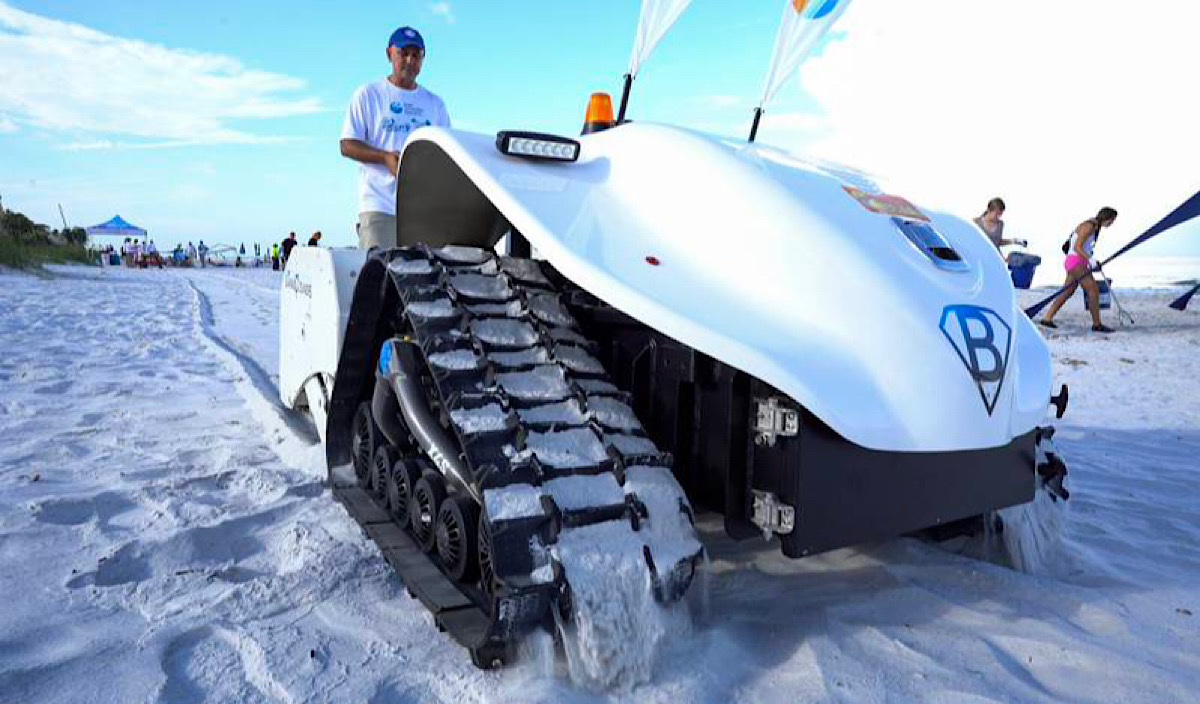
A remote-controlled robot named BeBot rolls over a patch of sand in Indian Shores during a cleanup demonstration on Thursday, July 14, 2022. BeBot is part of a campaign by Keep Pinellas Beautiful to raise awareness about debris left by humans that lurks under the beach surface and eventually winds up in the Gulf of Mexico. (Aya Diab/TNS)
By Chris Kuo, Tampa Bay TimesTribune News Service
A new solar-powered, beach-cleaning robot has arrived in Pinellas County, drawing attention to all the debris lurking just beneath the beach surface.
Overseen by Keep Pinellas Beautiful, BeBot will visit 14 locations this month, from Clearwater to St. Pete Beach. The remote-controlled robot collects small pieces of litter — cigarette butts, plastic straws, bottle caps, food wrappers and more.
“You wouldn’t believe the amount of trash that we found. It’s astonishing,” said Patricia DePlasco, executive director of Keep Pinellas Beautiful, a nonprofit that focuses on environmental cleanup. “We look across the beach and we think we have a nice clean beach and we don’t realize what’s under that top layer of sand.”
DePlasco and a team of about 30 volunteers gathered Thursday at an Indian Shores beach to watch a BeBot demonstration.
Continue reading… “Florida county rolls out BeBot, a beach-cleaning robot with a message for humans”Robots could ‘see’ using new electronic skin tech

Researchers believe mechanical arms in light-sensitive manufacturing environments could become capable of detecting when conditions change, thanks to the new technology
A new form of flexible photodetector could provide future robots with an electronic skin capable of ‘seeing’ light beyond the range of human vision.
Engineers at Glasgow University announced their breakthrough development, involving a new method of printing microscale semiconductors made from gallium arsenide onto a flexible plastic surface.
According to the team, their material provides performance equivalent to the best conventional photodetectors on the market, and is capable of withstanding hundreds of cycles of bending and flexing.
In a paper published in Advanced Materials Technology, researchers outlined how they developed the technology, which allows the skin to detect light from a broad range of the electromagnetic spectrum.
Continue reading… “Robots could ‘see’ using new electronic skin tech”Researchers use lasers to turn white blood cells into medicinal microrobots

Medicinal microrobots could help physicians better treat and prevent diseases. But most of these devices are made with synthetic materials that trigger immune responses in vivo. Now, for the first time, researchers reporting in ACS Central Science have used lasers to precisely control neutrophils -; a type of white blood cell -; as a natural, biocompatible microrobot in living fish.
The “neutrobots” performed multiple tasks, showing they could someday deliver drugs to precise locations in the body.
Microrobots currently in development for medical applications would require injections or the consumption of capsules to get them inside an animal or person. But researchers have found that these microscopic objects often trigger immune reactions in small animals, resulting in the removal of microrobots from the body before they can perform their jobs.
Using cells already present in the body, such as neutrophils, could be a less invasive alternative for drug delivery that wouldn’t set off the immune system. These white blood cells already naturally pick up nanoparticles and dead red blood cells and can migrate through blood vessels into adjacent tissues, so they are good candidates for becoming microrobots.
Continue reading… “Researchers use lasers to turn white blood cells into medicinal microrobots”Multi-Fingered Robot Hand Developed to Perform Multiple Human Tasks
By Marie Morales
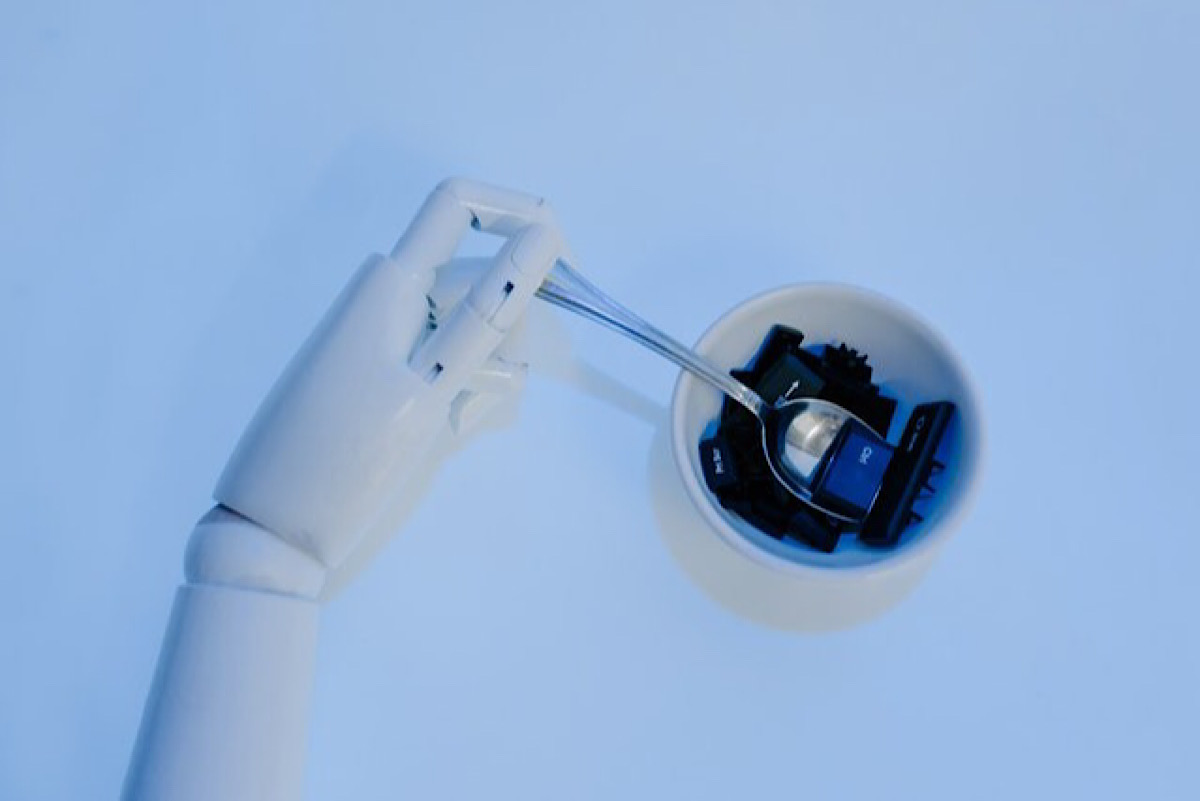
(Photo : Pexels/Tara Winstead) Researchers developed a new technique to teach robots to grasp objects and manipulate them through the use of the multi-fingered robotic hand.
Researchers at Universität Hamburg have recently developed a new technique to teach robots to grasp objects and manipulate them using the multi-fingered robotic hand.
In recent years, as specified in a Tech Xplore report, robotics has developed growingly advanced robotic systems, many of which have artificial hands or robot hands that have multiple fingers.
To complete daily tasks in both public settings and homes, there is a need for robots to be able to use their hands to grasp and maneuver objects effectively.
Enabling dexterous manipulation that involves multiple fingers in robots, though, has thus far proven challenging. This is mainly because it is an advanced skill that encompasses adjusting objects’ shape, configuration, and shape.
Continue reading… “Multi-Fingered Robot Hand Developed to Perform Multiple Human Tasks”