Tiny robotic crabs: Engineers invent the world’s smallest remote-controlled walking robots

Engineers at Northwestern University in Evanston, Illinois, invented the world’s smallest remote-controlled walking robot. The robotic crab can balance on the side of a penny. (Northwestern University) 

By Megan Marples

EVANSTON, Ill. — For these tiny robotic crabs, being small is a virtue.

Engineers at Northwestern University in Evanston, Illinois, invented the world’s smallest remote-controlled walking robot, according to research published in the journal Science Robotics.

Each one is about half a millimeter wide, which is smaller than the thickness of a United States penny.

It took a year and a half to create the miniscule metal creatures, said coauthor John A. Rogers, the Louis Simpson and Kimberly Querrey Professor of Materials Science and Engineering at Northwestern University.

His team was comprised of students across varying academic levels who combined critical- and creative-thinking skills to design robots that looked like crabs as well as other animals like inchworms and crickets, he said.

Some students found the sideways motion of crabs to be amusing, which was the inspiration behind the crab robot, Rogers said. The tiny robot can also twist, turn and jump, he added.

Continue reading… “Tiny robotic crabs: Engineers invent the world’s smallest remote-controlled walking robots”
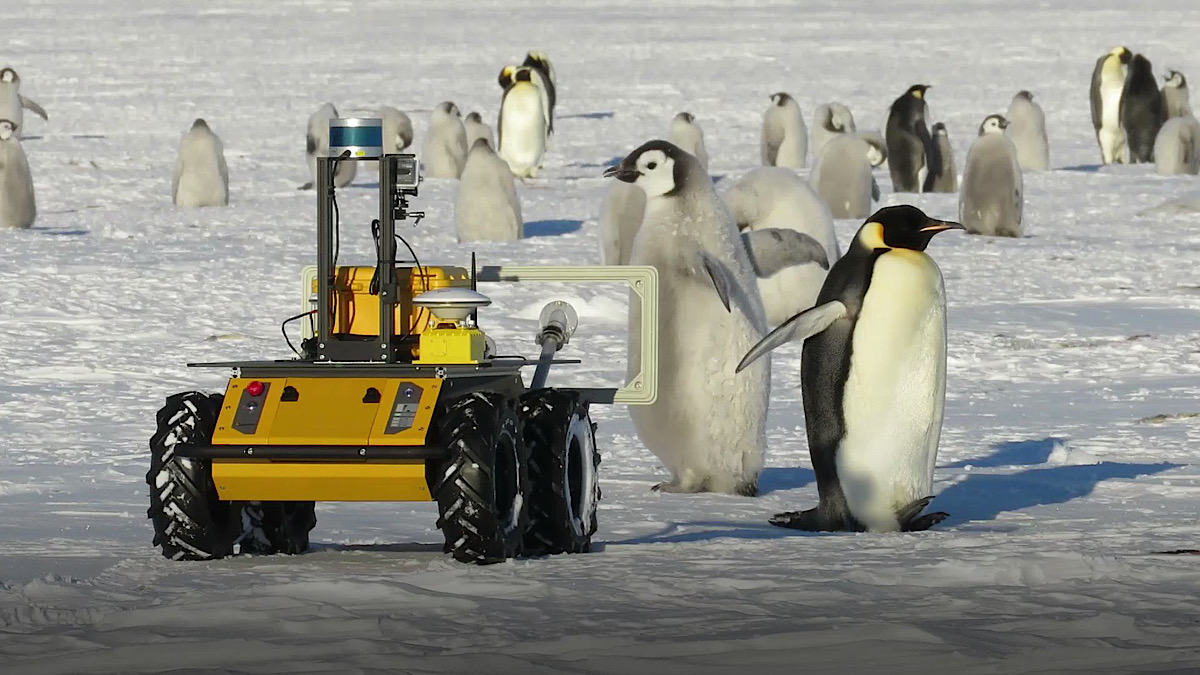
In Antarctica, a clunky robot has befriended a colony of penguins

ECHO is part of a scientific project studying climate change’s impact on emperor penguins.

By Teodosia Dobriyanova  

ECHO is a small yellow robot currently living with a colony of emperor penguins in Antarctica. The robot is part of a project by Woods Hole Oceanographic Institution studying climate change’s impact on the South Pole’s most iconic inhabitants. Physicist Daniel Zitterbart, who has been working alongside ecologist Céline Le Bohec, tells us about how ECHO works, what the project is trying to achieve, and his hopes for the future.

Continue reading… “In Antarctica, a clunky robot has befriended a colony of penguins”

A CELLO-PLAYING ROBOT MAKES MUSIC WITH ITS HUMAN PROGRAMMER

by Melissa T. Miller

Swedish composer Fredrik Gran programs robotic arms to play bowed instruments like the cello and double bass. He also plays duets with the robots, blurring the lines between the musician and the music itself. The robot arms do make some mechanical noise as they move, but it blends into the sound of the instruments. The robots’ intended purpose is for automated assembly lines in the automotive, healthcare, or food industries, instead, here, they make music. 

All the movements the robots use to make music come from the same abilities they need for their day jobs. But it’s still remarkable to see it applied in this way. It’s automated, but the listener still feels a swell of emotions, and the robots seem to come alive as they play their instruments. We found out about these unique performances thanks to Laughing Squid.

Based on his social media feeds, Gran has experimented with many uses of robotic arms in music. He also uses them to create feedback effects, moving a microphone around other equipment. For a more intense performance of robot music, check out the Instagram video below.

Continue reading… “A CELLO-PLAYING ROBOT MAKES MUSIC WITH ITS HUMAN PROGRAMMER”

Asteroid-mining may be possible with Scar-e robot

By Beatriz Valero de Urquía

Advancements in robotics technology might enable scientists to drill asteroids for precious metals such as iron, nickel and platinum.

The Space Capable Asteroid Robotic Explorer known as Scar-e is a six-legged robot capable of mining precious metals from asteroids. 

Designed by the Asteroid Mining Corporation (AMC) in partnership with Tohoku University in Japan, Scar-e could be the key to opening up the exploration of the solar system, in line with current trends in the launch services market, with a low-cost, highly functional, walking and climbing robot. 

Currently, the world is facing a shortage of precious metals, particularly those vital for the making of consumer electronics such as phones, laptops and cars, as well as battery and hydrogen technology, causing  chaos in supply chains. With only a finite supply of them on Earth, people are increasingly looking to space to meet this increased demand.

Enter Scar-e, a robot capable of gripping onto an asteroid in space to stop it from floating away and drilling it to obtain iron, nickel and platinum.

Continue reading… “Asteroid-mining may be possible with Scar-e robot”

Autonomous robots can pick up to 25,000 raspberries per day

University of Plymouth spinoff Fieldwork Robotics has commercially deployed its raspberry picking robots in two locations in Portugal.

The autonomous robots feature four arms for picking, using sensor technology and grippers to curb harvesting times and reduce slippage. 

Fieldwork is now working to accelerate the robots’ picking speed, aiming for each robot to collect 4 pounds of fruit per hour or more than 25,000 raspberries a day. The average human picking rate of 15,000 in a standard eight-hour working day. The team is also working to cut costs on the design by adapting the materials used for the robots, according to www.iotworldtoday.com

Continue reading… “Autonomous robots can pick up to 25,000 raspberries per day”

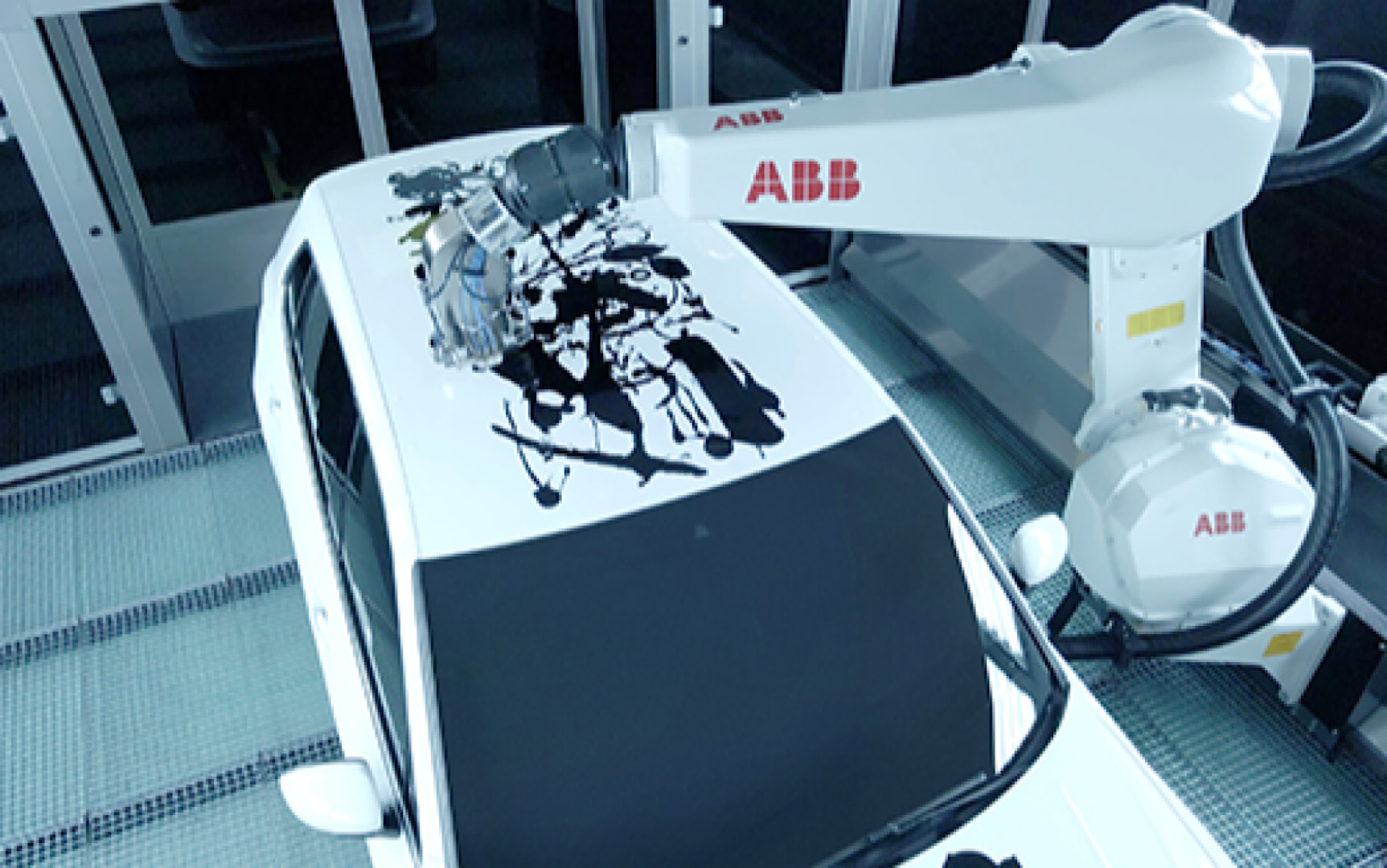
ABB Robotics Unveils World’s First Robot-painted Art Car

ABB Robotics Unveils World’s First Robot-painted Art Car 

ABB Robotics has collaborated with two world-renowned artists, eight year old Indian child prodigy Advait Kolarkar and Dubai-based digital design collective Illusorr, to create the world’s first robot-painted art car. ABB’s award-winning PixelPaint technology has, without human intervention, perfectly recreated Advait’s swirling, monochromatic design as well as Illusorr’s tri-color geometrical patterns.

Equipped with 1,000 nozzles in the printer head, ABB’s IRB 5500 paint robots were able to complete the highly complex artworks in less than 30 minutes. The PixelPaint technology demonstrates unprecedented precision and speed, capturing intricate, elaborate detail that would be impossible to achieve by hand. A film highlighting this world-first achievement can be seen here.

Sami Atiya, president of ABB’s Robotics & Discrete Automation business area, commented, “ABB’s PixelPaint technology is more than an evolution–it is a revolution. It’s a shining example of how robotic automation and our RobotStudio software can not only pave the way for more sustainable manufacturing but can also perfectly replicate delicate pieces of art that celebrate the originality and beauty of the human spirit. At a time when consumers want more customized products, PixelPaint is a game changer and allows any design to be replicated in a manner that is both sustainable and affordable.”

ABB’s ground-breaking PixelPaint technology reimagines the paint application process and reflects the growing demand for sustainable personalization in the automotive industry, particularly in exterior paint. Multi-colored car painting has traditionally been a laborious and costly process involving multiple stages of masking and unmasking, but ABB’s technology allows for a detailed, colorful, and exact replication of any design.
Carefully controlled, the paint can be quickly applied in a single application. This breakthrough in the automation of the paint process opens the door to specialized and personalized designs to the automotive market.

Continue reading… “ABB Robotics Unveils World’s First Robot-painted Art Car”

Would you trust a robot chef? This innovative one can ‘taste’ food to prepare it exactly as you like it!

CAMBRIDGE, England — A robotic chef is learning how to “taste” food as it cooks it — just like humans do to see if their meal has enough seasoning. The new machine can even change the taste of food depending on individual tastes!

Researchers at Cambridge University say this could one day lead to automated robots in food preparation that know exactly what tastes good to most customers. Aiming to nail down the science of the art of cookery has already led to the robot chef being able to make an omelet based on a human taster’s feedback.

The team found by creating a “taste as you go” approach improved the robot’s ability to quickly and accurately assess the saltiness of a dish. To imitate the human process of chewing and tasting in their robot chef, the researchers attached a conductance probe, which acts as a salinity sensor, to a robot arm.

They prepared scrambled eggs and tomatoes, varying the number of tomatoes and the amount of salt in each dish. Using the probe, the robot “tasted” the dishes in a grid-like fashion, returning a reading in just a few seconds.

To imitate the change in texture caused by chewing, the team then put the egg mixture in a blender and had the robot test the dish again. The different readings at different points of “chewing” produced taste maps of each dish.

Continue reading… “Would you trust a robot chef? This innovative one can ‘taste’ food to prepare it exactly as you like it!”

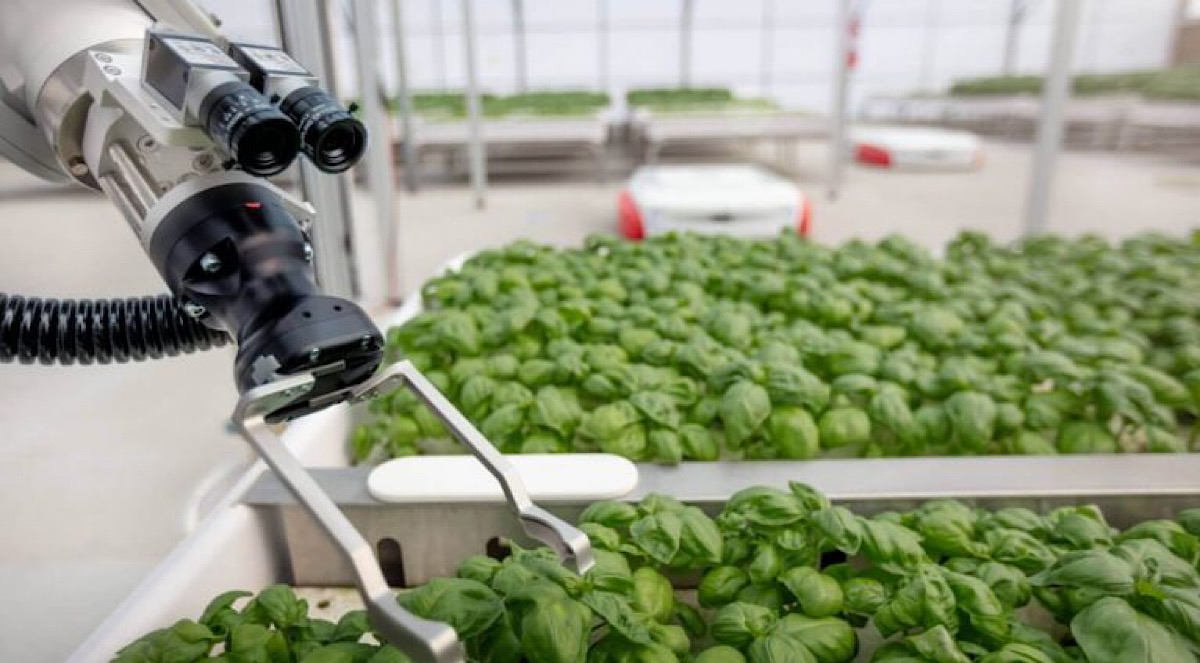
This California Greenhouse is Run by Robots

(Photo: Iron Ox)A farm technology startup is using robots and artificial intelligence to tackle sustainability concerns in agriculture.  

By Adrianna Nine

Northern California-based Iron Ox was born from the realization that conventional American agriculture negatively impacts the environment in a multitude of ways. The type of farming most of us are familiar with uses as much as 70 percent of the world’s fresh water supply and produces up to 1.19 gigatons of greenhouse gasses every year. There’s also the issue of wasted produce, with up to 40 percent of fruits and veggies ending up in a landfill before ever reaching a consumer. While companies like Imperfect Foods, Uglies, and Misfits Market aim to offset this by proudly selling produce your typical grocery store won’t, these businesses don’t address the root of the problem: how the produce is grown.   

Iron Ox uses two house-designed, AI-supported robots to perform most repetitive farming tasks and ensure resources are used efficiently. The first of these, called Grover, makes up the brawn of Iron Ox’s robotic crew. Able to lift more than 1,000 pounds, Grover helps move plant “modules” (i.e. planter boxes) around the greenhouse. Grover also helps water and harvest crops in tandem with Phil, the company’s brainier robot farmer. Phil monitors and delivers each module’s water, nutrient mix, and pH levels to maximize crop yield and quality while making sure resources aren’t overused. 

Continue reading… “This California Greenhouse is Run by Robots”

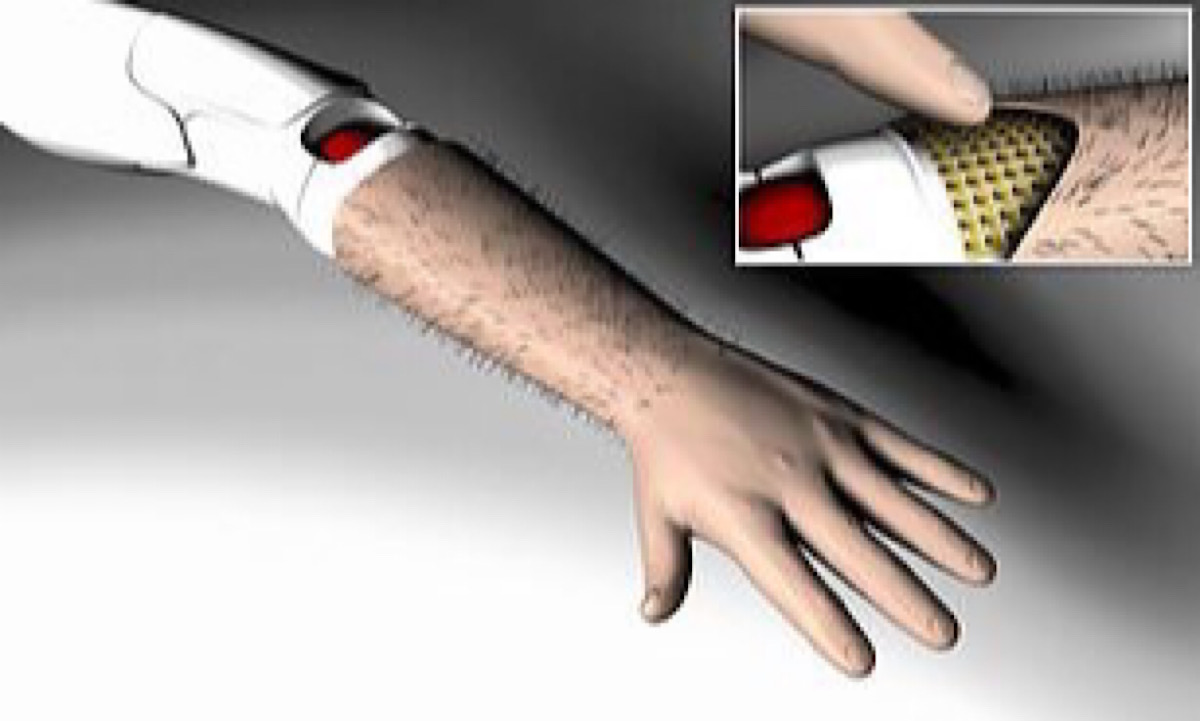
A hair-raising invention! Scientists are developing a robot with electronic HAIRS that mimic the natural touch of human skin

By SHIVALI BEST

  • The system uses an anisotropic magnetoresistance (AMR) sensor system
  • This system can precisely determine changes in magnetic fields
  • Hairs on the surface are linked to the sensors, which can detect touch
  • The e-skin could be used to make more realistic humanoid robots 

The idea of a robot with hairy arms may sound like a concept from the latest science fiction blockbuster.

But the bizarre invention could soon become a reality, as scientists have taken a major step forward in the development of electronic skin with integrated artificial hairs.

Hairs allow for ‘natural touch’ and let us detect different sensations such as rough and smooth, as well as the direction the touch is coming from.

Researchers from Chemnitz University of Technology say the ‘e-skin’ could have a range of uses in the future, including skin replacement for humans and artificial skin for humanoid robots.

Continue reading… “A hair-raising invention! Scientists are developing a robot with electronic HAIRS that mimic the natural touch of human skin”

Japan To Deploy VR-Controlled Giant Robot For Repairs On Railway Tracks

The video showcases the robot lifting and putting into position several large components

by Raag Mathur Ramdev

What’s incredibly unique about this robot is that the human who is controlling it, is doing so through VR goggles. While holding on to a pair of handles, the operator is able to move the robot’s arms and hands, thereby performing repairs remotely. 

The West Japan Rail Company has unveiled a giant worker robot that can carry out repairs and other tasks deemed too dangerous for human beings. According to publication New Atlas, the objectives are “to improve productivity and safety”, and allow workers to move around different forms of heavy equipment. When working on repairs or improvements, many railway workers are at risk of electric shocks as well as falling. The robot is controlled by a human being using Virtual Reality.

A video showcasing the robot’s functionality has been posted on the railways’ official Twitter handle.

Continue reading… “Japan To Deploy VR-Controlled Giant Robot For Repairs On Railway Tracks”

JACK IN THE BOX IS PILOTING MISO’S HAMBURGER-COOKING ROBOT

By Brian Heater

You’ve got to hand it to Miso — the company knows how to sell the sizzle, as they say in the meat-cooking business. The robotics firm has been striking high-profile deals with some of the U.S.’s biggest fast food chains, from White Castle to Panera Bread. Today it adds Jack in the Box to that list.

The king of the late-night hamburger/taco combo is set to pilot a pair of Miso robots. That includes the newish drink machine, Sippy and the company’s old standby, Flippy 2, which helps augment line cook roles by flipping burgers. It’s still an extremely limited pilot, at one of the chain’s San Diego locations, but if things go well, there will be a further rollout in “the months ahead.”

“This collaboration with Miso Robotics is a steppingstone for our back-of-house restaurant operations. We are confident that this technology will be a good fit to support our growing business needs with intentions of having a positive impact on our operations while promoting safety and comfort to our team members,” said Jack in the Box COO Tony Darden.

Continue reading… “JACK IN THE BOX IS PILOTING MISO’S HAMBURGER-COOKING ROBOT”

ZIPPEDI IS USING ROBOTS TO DIGITIZE INVENTORY FOR LAST-MILE DELIVERY

By Brian Heater

Luis Vera believes the third time is the charm. The self-proclaimed serial entrepreneur admits that his vision for digitizing retail was a decade or two early when he started his journey in the 90s. Through a pair of startups — Prospect and SCOPIX — he tried a variety of methods to help capture store inventory, including placings cameras on shelves and a ceiling-based system where one ran on tracks.

He was, effectively, attempting to compete with Amazon well before Amazon was, well, Amazon — at least in any meaningful sense. Computer vision, machine learning and the like have caught up a lot since then, of course. The notion of competing directly against Amazon is a seemingly impossible order, but Zippedi’s vision utilizes the geographical benefit of brick and mortal locations to help facilitate last-mile deliveries.

The company utilizes an inventory robot to keep tabs of what’s on shelves, creating a “digital twin” online. When someone orders something for, say, DoorDash, a shopper knows not only what is on the shelf, but where to find it. The system can both offer direction to items and provide a prioritized shopping list, so they can be in and out as quickly as possible. It’s easy to see how the company could incorporate AR in the future (and that’s on the roadmap), but we’re getting ahead of ourselves a bit here.

Continue reading… “ZIPPEDI IS USING ROBOTS TO DIGITIZE INVENTORY FOR LAST-MILE DELIVERY”
Discover the Hidden Patterns of Tomorrow with Futurist Thomas Frey
Unlock Your Potential, Ignite Your Success.

By delving into the futuring techniques of Futurist Thomas Frey, you’ll embark on an enlightening journey.

Learn More about this exciting program.