Rise of the robots: How restaurants can automate without losing the human touch

Instead of adopting tech to replace humans, employers should use digital tools that make jobs more satisfying.

By Raju Malhotra

The following is a guest post by Raju Malhotra, chief product and technology officer at PAR Technology Corporation.

Greetings, fellow human!

Robots seem to be everywhere these days, at least in the restaurant business. A week doesn’t go by without industry trades and mainstream press bringing us headlines like “Robots take over major casual dining chains.”

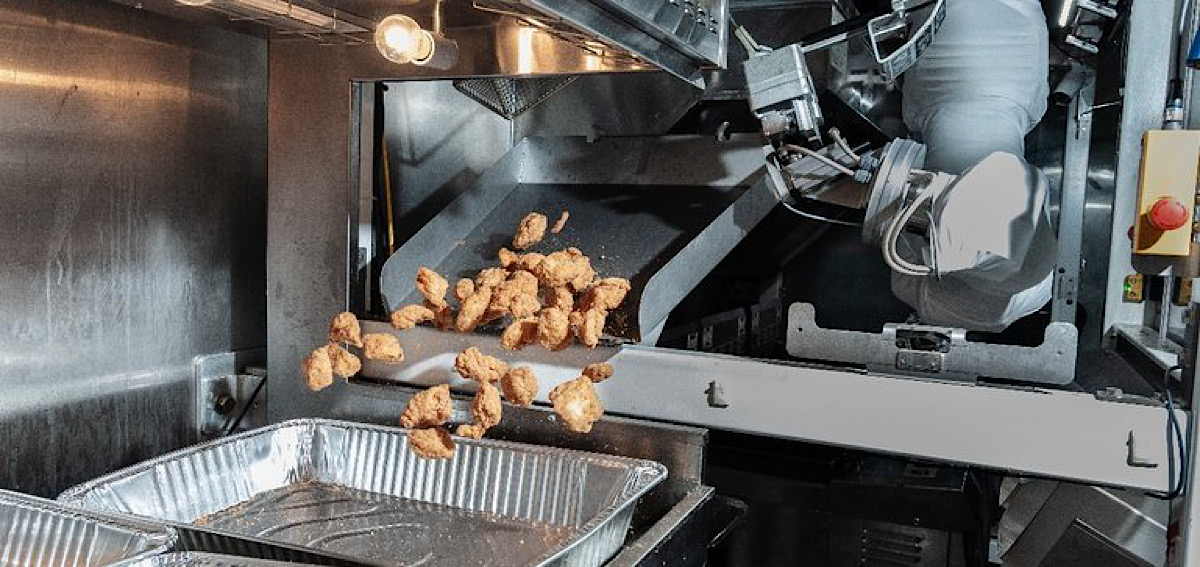
Robots are flipping burgers and frying chicken wings, and driverless bots and drones are delivering meals to hungry customers. No wonder those headlines include words like “take over” — at this rate, it’s starting to feel as if androids will replace all of us pretty soon.

Continue reading… “Rise of the robots: How restaurants can automate without losing the human touch”

Beijing Olympics Will Have Robot Waiters Delivering Dishes from the Ceiling

It’s just one of the measures organizers of the 2022 Winter Games have done to limit contact amid the coronavirus pandemic

By Dave Quinn

Heads up — organizers of the 2022 Beijing Olympics are using some cutting edge technology to ensure everyone’s safety while delivering food to its attendees. 

According to a video from Chinese media, in an aim to contain the spread of COVID-19, automated cooks and servers have been installed at the canteen in the Beijing Winter Olympics’ main media center to prepared and serve food to athletes, officials and media workers.

One robot makes and assembles hamburgers, while another works as a bartender, shaking up and neatly pouring cocktails in 90 seconds. There’s a robot to make rice, noodles, and even a robot that grinds coffee beans and brews cups in less than 4 minutes. 

Hungry diners, sitting at tables with Plexiglas barriers surrounding them, can scan a code on their phones to place their orders. 

In addition to some pickup stations, food will be served robotically from above, lowed to the tables from the ceiling via an electronic platform. 

Continue reading… “Beijing Olympics Will Have Robot Waiters Delivering Dishes from the Ceiling”

Aigen’s swarm of agtech robots want to make agriculture carbon negative

By Haje Jan Kamps

Even though the only thing the robot can do right now is pull weeds, Aigen is adamant it isn’t building a weed-whacking robot. It claims to be on a mission to terraform the earth, and says it has a path toward making agriculture carbon negative. It must have made a compelling argument, because it just announced a $4 million seed round led by NEA, with participation from AgFunder, Global Founders Capital and ReGen Ventures.

The company is building solar-powered, autonomous robots that can zoom around in fields, using computer vision to tell friend from foe and plant from weed. In its first incarnation, the robot — in a fine “hot dog / not hot dog” impersonation — simply bumbles about, covering up to three acres of farmland per day.

“My relatives are farmers in Minnesota, and I’ve been talking with them for quite some time. They’re really experiencing some trouble with traditional agriculture approaches. Even the diehard people that love chemicals, that love tilling the earth and other practices that have been releasing carbon in the atmosphere for thousands of years are starting to realize, hey, maybe we should be open to other ways to do this,” reflects Richard Wurden, CEO at Aigen. He is particularly passionate about throwing agriculture’s carbon output in reverse. “Right now, agriculture is about 16% of carbon emissions. In the future, it has the potential to go negative, by reducing diesel emissions, soil compaction, chemical usage and reducing tilling.”

Continue reading… “Aigen’s swarm of agtech robots want to make agriculture carbon negative”

Robot cutter set to revolutionise paving jobs for Eurovia

A robotic paving slab cutting process developed by Eurovia UK is nearly ready to be used on site.

By Grant Prior

The Distributed Automated Cutting System (DACS) project is being led by the contractor in partnership with Loop Technology and The University of Sheffield Advanced Manufacturing Research Centre.

The current practice of cutting paving in town centers and other public places to fit within set boundaries or around street furniture is normally performed manually on site and is noisy, messy and disruptive.

The DACS process will automate the manufacture of bespoke paving units which are tailor-made to fit unique ground conditions.

The cutting robot can be housed in a factory or a compact container which can travel between sites.

Continue reading… “Robot cutter set to revolutionise paving jobs for Eurovia”

Researchers develop bone growth inspired ‘microrobots’ that can create their own bone

Inspired by the growth of bones in the skeleton, researchers at the universities of Linkoping in Sweden and Okayama in Japan have developed a combination of materials that can morph into various shapes before hardening.

Inspired by the growth of bones in the skeleton, researchers at the universities of Linkoping in Sweden and Okayama in Japan have developed a combination of materials that can morph into various shapes before hardening. The material is initially soft but later hardens through a bone development process that uses the same materials found in the skeleton.

When we are born, we have gaps in our skulls that are covered by pieces of soft connective tissue called fontanelles. It is thanks to fontanelles that our skulls can be deformed during birth and pass successfully through the birth canal. Post-birth, the fontanelle tissue gradually changes to hard bone. Now, researchers have combined materials that together resemble this natural process. “We want to use this for applications where materials need to have different properties at different points in time. Firstly, the material is soft and flexible, and it is then locked into place when it hardens. This material could be used in, for example, complicated bone fractures. It could also be used in microrobots – these soft microrobots could be injected into the body through a thin syringe, and then they would unfold and develop their own rigid bones”, says Edwin Jager, associate professor at the Department of Physics, Chemistry and Biology (IFM) at Linkoping University.

The idea was hatched during a research visit in Japan when materials scientist Edwin Jager met Hiroshi Kamioka and Emilio Hara, who conduct research into bones. The Japanese researchers had discovered a kind of biomolecule that could stimulate bone growth under a short period of time. Would it be possible to combine this biomolecule with Jager’s materials research, to develop new materials with variable stiffness? In the study that followed, published in Advanced Materials, the researchers constructed a kind of simple “microrobot”, one which can assume different shapes and change stiffness. The researchers began with a gel material called alginate. On one side of the gel, a polymer material is grown. This material is electroactive, and it changes its volume when a low voltage is applied, causing the microrobot to bend in a specified direction.

Continue reading… “Researchers develop bone growth inspired ‘microrobots’ that can create their own bone”

Kawasaki demonstrates unmanned cargo transport system which combines an aircraft and a mobile wheeled robot

 BY MAI TAO 

Kawasaki Heavy Industries says it has successfully completed proof-of-concept (PoC) testing for an unmanned cargo transport system. Watch video below.

The system combines Kawasaki’s K-Racer-X1 prototype unmanned vertical take-off and landing (VTOL) aircraft and what is commonly described in the industry as an autonomous mobile robot, and which the company describes as a “delivery robot”.

Kawasaki says the PoC testing was conducted with the aim of helping to solve societal issues such as labor shortages in the logistics industry. 

In its Group Vision 2030, which describes the company’s future vision for 2030, Kawasaki specified three areas where it will focus its efforts:

  • A Safe and Secure Remotely-Connected Society
  • Near-Future Mobility
  • Energy and Environmental Solutions
Continue reading… “Kawasaki demonstrates unmanned cargo transport system which combines an aircraft and a mobile wheeled robot”

Hyundai’s robot vision of the future is unexpectedly realistic

By Shane McGlaun

Typically we think of automotive manufacturer Hyundai, its cars and SUVs that come to mind. Hyundai is on hand at CES 2022, and it has revealed something that isn’t automotive-related but is aimed at ushering in a new type of mobility. The product is called the Plug & Drive (PnD) Robotic Module, and Hyundai says it’s designed to enable the Mobility of Things (MoT) concept. Via Hyundai

Hyundai says PnD is a modular platform that adds mobility to traditionally inanimate objects. The platform can be used to mobilize large and small objects and build robots. Hyundai has a stated goal of creating robots using the new platform that would allow personal mobility, connected communication, and the ability for the devices to operate atomically.

Continue reading… “Hyundai’s robot vision of the future is unexpectedly realistic”

Tech Startup Reveals Fully Autonomous Delivery Robot at CES: Meet the Ottobot

By Florina Spînu

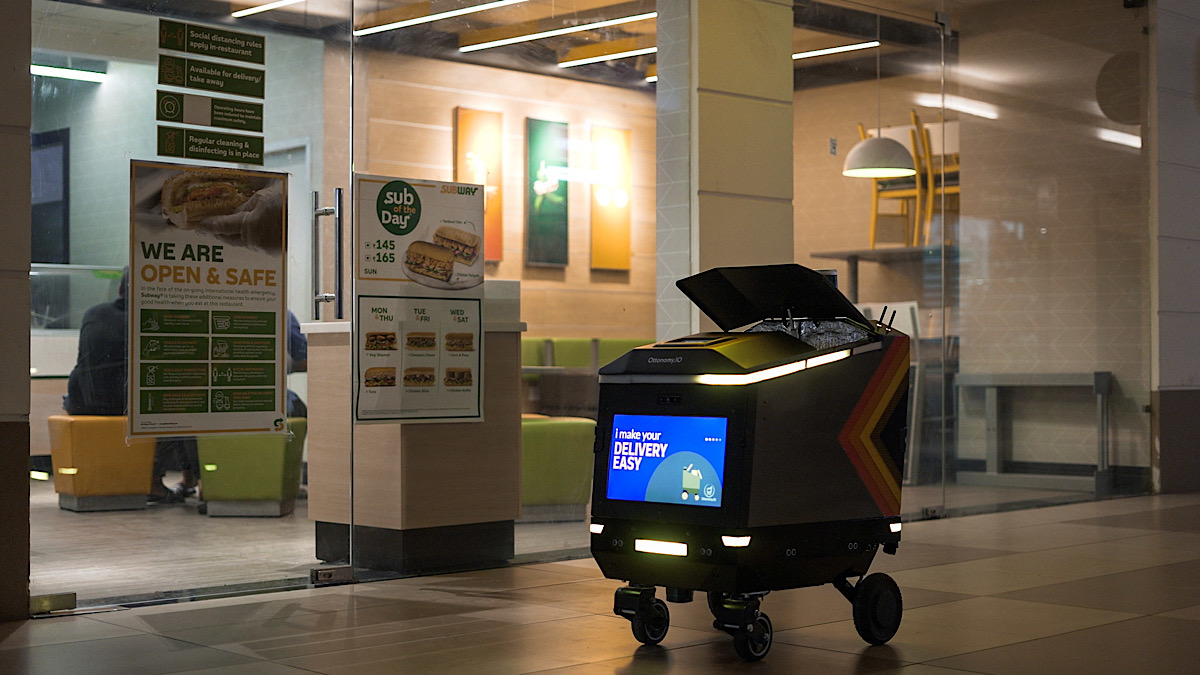
The world’s biggest tech show is back. Today, January 5th, the Consumer Electronics Show (CES) opened its gates to all sorts of innovative and crazy machines. On-site made its apparition a fleet of autonomous robots as well. Called the Ottobots, these small robots are designed to deliver goods both indoors and outdoors. 6 photos

The ongoing health crisis continues to affect the consumers’ shopping behavior, changing how companies deliver goods. The result is that contactless deliveries have surged in popularity, with robots popping out to supply the demand.  

The Ottobot is the creation of tech startup Ottonomy. The company started pilot tests in 2020 and has since perfected its product into what rolled today at CES: a machine ready to take retail and restaurant industries by storm.

Continue reading… “Tech Startup Reveals Fully Autonomous Delivery Robot at CES: Meet the Ottobot”

THIS AUTOMATED WALL-CLIMBING ROBOT WAS DESIGNED BY HAUSBOTS TO STREAMLINE HOME-CONSTRUCTION PROJECTS

BY SHAWN MCNULTY-KOWAL  

HB1 is an automated wall-climbing robot that was designed to streamline home construction projects.

No matter the size, location, style, or chosen building material–when it comes to constructing houses, it can be a dangerous job. Even with bulky construction vehicles, building homes requires a lot of finesse and attention. As our technological worlds evolve, so do our tools and that includes those used for home construction. Home-building robotics company Hausbots developed an automated, climbing construction robot called HB1 to help get home projects done.

Continue reading… “THIS AUTOMATED WALL-CLIMBING ROBOT WAS DESIGNED BY HAUSBOTS TO STREAMLINE HOME-CONSTRUCTION PROJECTS”

Autonomous delivery robots: ‘In the next 2-3 years you’re going to see them in every major city in the country,’ Serve Robotics CEO

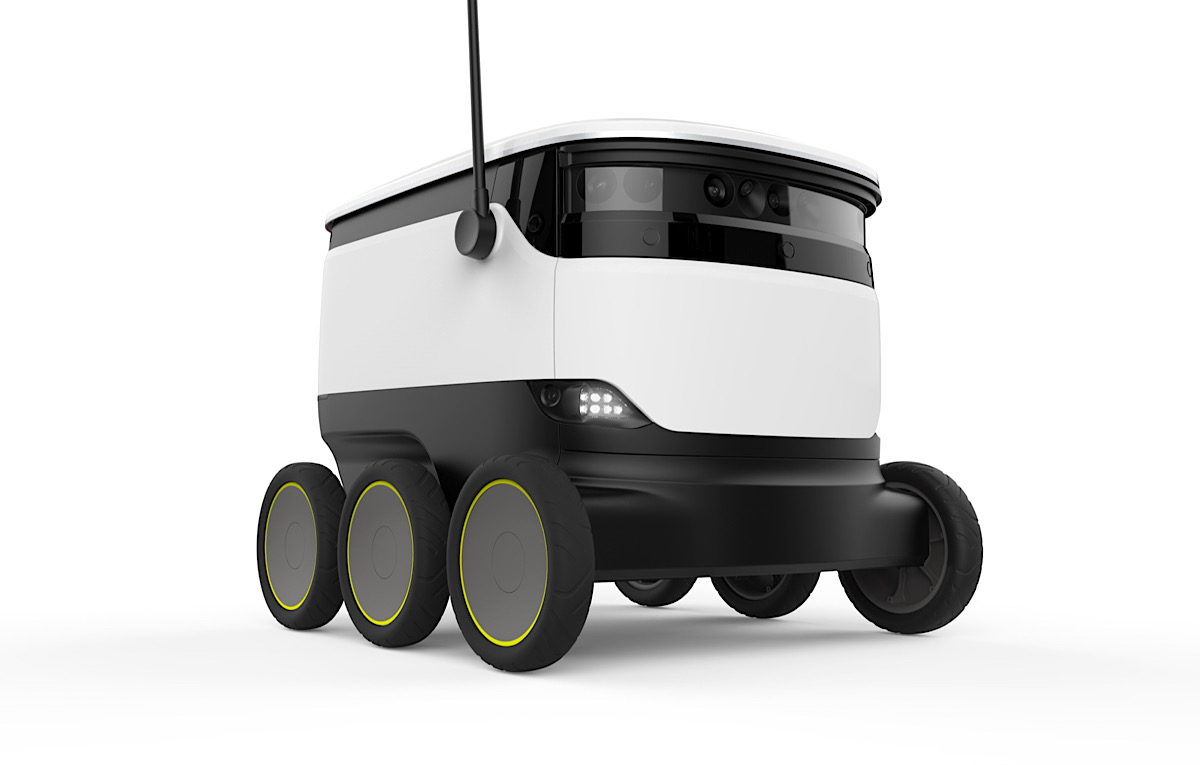
CEO of Serve Robotics, Ali Kashani, joins Yahoo Finance to talk about the goal of replacing 5% of food delivery with robots.

– So one thing we’ve learned during the pandemic is that not only have traditional businesses had to adapt, but the whole concept of delivery, whether it be food, retail delivery, it is adapting, and technology is leading the way. We want to bring back into the stream, Ali Kashani, Serve Robotics CEO and former head of Postmates X at Uber, it’s good to have you back. In fact, the last time we talked about this issue, the goal was to replace I think it was 5% of food delivery with the robots. And let’s just face the facts, your robots are so darn cute, those little bots that you’re testing. When is this really going to take place? Because many of us in New York City are tired of dodging the bicyclists who are going to run us over when they run the red lights.

– Thanks for having me. Yes, I think next year is going to be a big year for this effort. We are going to see our economy commercialized for the first time. With these robots rolling out in a few major cities, I think in the next two or three years you are going to see them in every major city in the country, actually.

Continue reading… “Autonomous delivery robots: ‘In the next 2-3 years you’re going to see them in every major city in the country,’ Serve Robotics CEO”

Moving toward the first flying humanoid robot

The iRonCub robot. Credit: Istituto Italiano di Tecnologia.

by Ingrid Fadelli

Researchers at the Italian Institute of Technology (IIT) have recently been exploring a fascinating idea, that of creating humanoid robots that can fly. To efficiently control the movements of flying robots, objects or vehicles, however, researchers require systems that can reliably estimate the intensity of the thrust produced by propellers, which allow them to move through the air.

As thrust forces are difficult to measure directly, they are usually estimated based on data collected by onboard sensors. The team at IIT recently introduced a new framework that can estimate thrust intensities of flying multibody systems that are not equipped with thrust-measuring sensors. This framework, presented in a paper published in IEEE Robotics and Automation Letters, could ultimately help them to realize their envisioned flying humanoid robot.

“Our early ideas of making a flying humanoid robot came up around 2016,” Daniele Pucci, head of the Artificial and Mechanical Intelligence lab that carried out the study, told TechXplore. “The main purpose was to conceive robots that could operate in disaster-like scenarios, where there are survivors to rescue inside partially destroyed buildings, and these buildings are difficult to reach because of potential floods and fire around them.”

The key objective of the recent work by Pucci and his colleagues was to devise a robot that can manipulate objects, walk on the ground and fly. As many humanoid robots can both manipulate objects and move on the ground, the team decided to extend the capabilities of a humanoid robot to include flight; rather than developing an entirely new robotic structure.

“Once provided with flight abilities, humanoid robots could fly from one building to another avoiding debris, fire and floods,” Pucci said. “After landing, they could manipulate objects to open doors and close gas valves, or walk inside buildings for indoor inspection, for instance looking for survivors of a fire or natural disaster.” 

Continue reading… “Moving toward the first flying humanoid robot”

A new micro aerial robot based on dielectric elastomer actuators

A 0.16 g microscale robot that is powered by a muscle-like soft actuator.

by Ingrid Fadelli

Micro-sized robots could have countless valuable applications, for instance, assisting humans during search-and-rescue missions, conducting precise surgical procedures, and agricultural interventions. Researchers at Massachusetts Institute of Technology (MIT) have recently created a tiny, flying robot based on a class of artificial muscles known as dielectric elastomer actuators (DEAs).

This new robot, presented in a paper published in Wiley’s Advanced Materials journal, significantly outperformed many DEA-based micro-systems developed in the past. Most notably, the robot can operate at low voltages and has high endurance despite its miniature size.

“Our group has a long-term vision of creating a swarm of insect-like robots that can perform complex tasks such as assisted pollination and collective search-and-rescue,” Kevin Chen, one of the researchers who carried out the study, told Tech Xplore. “Since three years ago, we have been working on developing aerial robots that are driven by muscle-like soft actuators.”

In their previous research, Chen and his colleagues presented several micro robots that could fly remarkably well, performing acrobatic movements in the air and quickly recovering after colliding with other objects. Despite these promising results, the soft actuators underpinning these systems required a high driving voltage of 2 kV, which prevented the robots from operating without an external power supply.

“To fly without wires, the soft actuator needs to operate at a lower voltage,” Chen explained. “Therefore, the main goal of our recent study was to reduce the operating voltage of muscle-like DEAs.”

Continue reading… “A new micro aerial robot based on dielectric elastomer actuators”
Discover the Hidden Patterns of Tomorrow with Futurist Thomas Frey
Unlock Your Potential, Ignite Your Success.

By delving into the futuring techniques of Futurist Thomas Frey, you’ll embark on an enlightening journey.

Learn More about this exciting program.