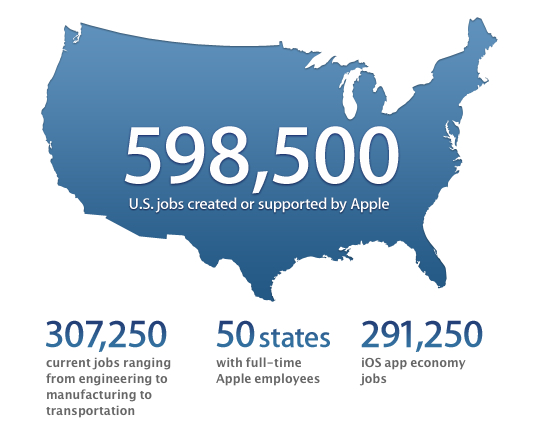
Apple’s iOS App Store has seen incredible growth and has doubled its payouts to developers (now totaling over $8 billion) and sparked the creation of over 80,000 new jobs directly related to building software for Apple’s mobile platform within the last year.
Silicon-based transistors must be powered all the time.
Experts predict that in less than 20 years we will reach the physical limit of how much processing capability can be squeezed out of silicon-based processors in the heart of our computing devices. But a recent scientific finding that could completely change the way we build computing devices may simply allow engineers to sidestep any obstacles.
Despite the meaning of the name, library (derived from liber, which is literally a Latin word for “tree bark”), libraries insist that they are actually a hotbed of innovation. And surprisingly they are, to some extent, it’s true.
YouTube was unthinkable ten years ago, social media didn’t exist, we got our movies on tapes at video stores, cell phones did not have cameras, and so on.
Forty-nine percent of adults surveyed said they text and drive.
Hyper-connected teens have been the target of many of the campaigns to stop texting and driving, but a new survey from AT&T shows adults are more likely to be driving distracted.
Grain harvesters have been called combines since the 1930’s. They were called combines because they combined the harvesting machines, the binder and the stationary threshing machine. The Tribine takes it one step further as it combines the two historic harvest functions with a third – the grain cart, according to Ben Dillon, the developer of the machine.
Several brick-and-mortar businesses across the US have started accepting the virtual currency.
Bitcoin is a cryptographic digital currency that is not underwritten by any government. Bitcoin is designed to be secure and can’t be counterfeited and can be used with anonymity because the software underlying the currency operates on decentralized peer-to-peer network. What started out in 2010 as an underground currency for grey-market activities, has since grown to a $400 million worldwide market for buying everything from pizza to domain names. In an attempt to prevent inflation, the number of Bitcoins in circulation will continue to grow automatically at an ever-decreasing rate, according to the laws of its software, until reaching maximum of 21 million coins shortly after 2030. There are just over 10 million today.
If you want more retweets, just ask your followers.
Engaging followers on social media is no easy task. But brands that want to succeed on social media know the number of followers they have isn’t as important as how engaged those followers are.
Recently, there has been a lot of talk about the new online infographic, “Out of Sight, Out of Mind,” which shows a chilling visualization of all estimated deaths in Pakistan caused by U.S. drone strikes, including children and civilians, based on estimates from the Bureau of Investigative Journalism and New America Foundation. Whether you agree with the numbers, or the politics, behind this particular project (put together by the data visualization firm Pitch Interactive), at least it’s sparking debate. And that’s got to be a good thing — there’s still so much we don’t know about this highly controversial issue.
The BionicOpter was created by German automation company Festo. It was designed to mimic the look and flying dynamics of a dragonfly. The 1.5-foot-long ultra-light flying robot operates via remote control from a smartphone and can maneuver and hover in place just like a real dragonfly. Each of the robot’s four wings operate independently using servo motors, allowing each wing to be twisted by up to 90 degrees. (Video)
It looks like news delivery is another job being obviated by robots. In Auvergne, France, residents get their daily news the old-fashioned way: through newspapers. But the delivery of said newspapers, apparently, will soon be executed with the help of high tech — because it’ll be done with the help of drones.
Small business is an American cultural icon. Companies with fewer than 500 employees account for almost two-thirds of net new jobs and generate 13 times more new patents per employee than large ones do. But optimism among these enterprises is at its lowest levels in almost 20 years. If the US economy had generated as many start-ups in the Great Recession’s aftermath as it did in 2007, the country would have almost 2.5 million more jobs.