
Chinese astronauts, or taikonauts, completed their second extravehicular stint with the help of a giant robotic arm on August 20.
Continue reading… “Working in space: China’s space robotic arm in 60 seconds”The startup’s purpose is to provide cargo services for China’s space station
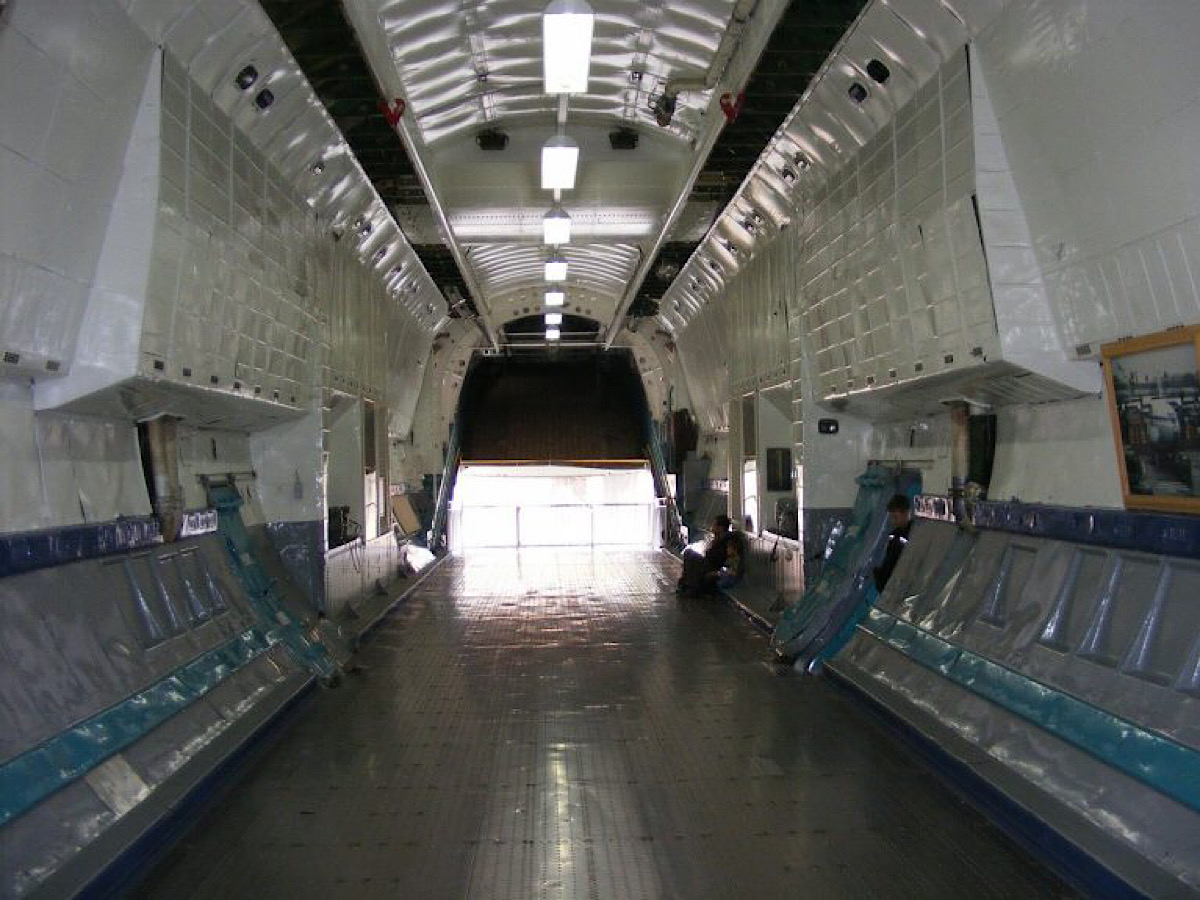
A Chinese business is working on a spacecraft that will be able to supply space station of China, with the small demo launch planned for 2022. InterSpace Explore, based in Beijing, struck a deal with Galactic Energy, a Chinese commercial launch company, on August 4 to launch the Zengzhang-1 demo returnable satellite on the Ceres-1 solid rocket in the year 2022.
Interspace Explore, formally known as Beijing Interstellar Development Technology Company Ltd., acquired millions of Chinese yuan (about ¥6.48 for every dollar) from Innoangel Fund, an investment firm the next day. According to Chinese media estimates, the Zenghang-1 (Growth-1) spacecraft will possess a launch mass of roughly 350 kgs and a payload of over 100 kilos.
At a media briefing, Fu Shiming, Interspace Explore founder and a former employee of state-owned spacecraft manufacturer China Academy of Space Technology (CAST) as well as a Tiangong-2 space lab project’s member, said that spacecraft are critical to human utilization of space resources and have significant commercial and military value.
Continue reading… “The startup’s purpose is to provide cargo services for China’s space station”As Commercial Space Travel Becomes Reality, Debris and Space Traffic Management Becomes More Important

By Adrian Moore and Rebecca van Burken
If the government works with private industry through strategic public-private partnerships, the U.S. can best address the threats posed by orbital debris and create sustainable policies for safe space exploration.
With Richard Branson and Jeff Bezos soaring into suborbital space, three U.S. flights to the International Space Station (ISS) in July, and SpaceX delivering 88 satellites to orbit in the last six weeks, space traffic is surging. And this is just the beginning of increased commercial and governmental activity in space.
August will see several more trips to the ISS and more launches of satellites. Additionally, the Biden administration signed an agreement with the European Space Agency to use more satellites to address climate change through earth science research. This increased space traffic serves a wide array of purposes and represents vast investments by the private space industry and government. But these investments are going to increasingly be jeopardized by the massive amount of space junk already circling Earth.
There’s plenty of room to fly up there, but, believe it or not, NASA estimates there are already 23,000 pieces of debris larger than 10 centimeters and over 500,000 pieces of smaller junk in orbit. This space junk, or orbital debris, travels at high speeds and even a small piece can cause serious damage or destruction if it hits a spacecraft or satellite.
Continue reading… “As Commercial Space Travel Becomes Reality, Debris and Space Traffic Management Becomes More Important”Lightweight Carbon-Fiber Tanks: The Future of Space Travel

By Ron Jefferson
One of the most prominent obstacles of space exploration is the weight of the rocket and the payload. Scientists must find a way to lighten the weight of the rockets so that there is more space for cargo that onboard personnel may need for scientific exploration.
Thankfully, because of ground-breaking research headed by the European Space Agency’s Future Launchers Preparatory Program, future rockets could be made using lightweight carbon-fiber tanks reinforced with plastic.
Continue reading… “Lightweight Carbon-Fiber Tanks: The Future of Space Travel”European Robotic Arm is launched into space

The European Robotic Arm (ERA) is on its way to the International Space Station after being launched on a Proton rocket from the Baikonur Cosmodrome, in Kazakhstan, at 16:58 CEST today.
The 11-m-long robot is travelling folded and attached to what will be its home base – the Multipurpose Laboratory Module, also called ‘Nauka’. The Proton-M booster placed Nauka and ERA into orbit around 10 minutes after liftoff, nearly 200 km above Earth.
Continue reading… “European Robotic Arm is launched into space”China Secretly Flew A Space Plane That Takes Off Vertically Like A Rocket
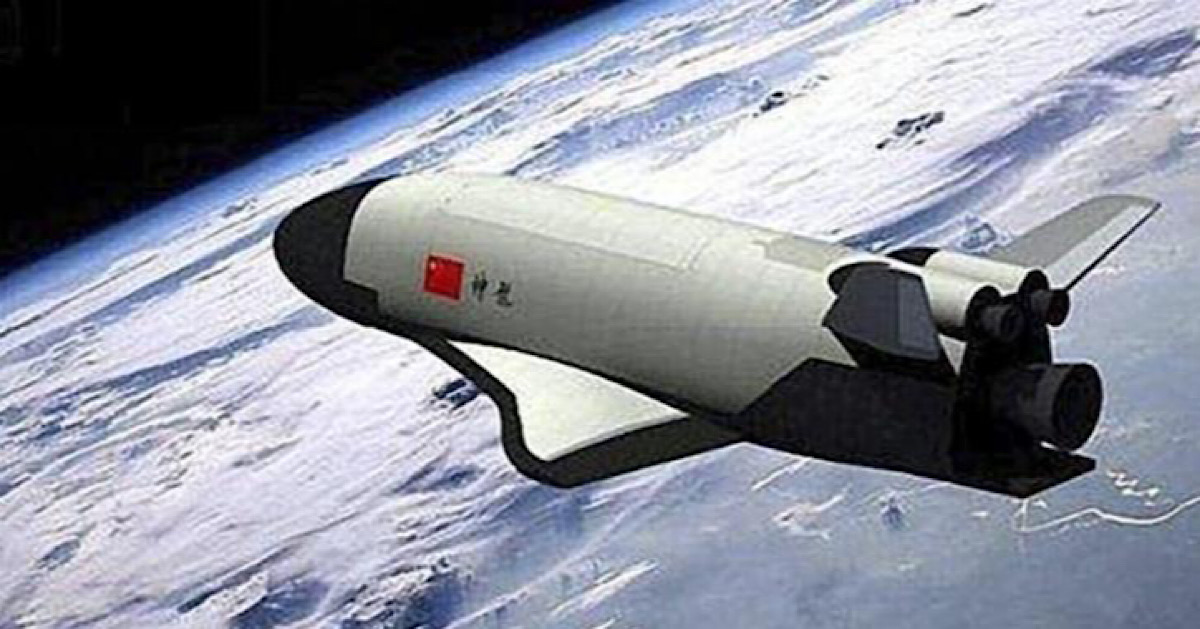
China secretly conducted the first test flight of a reusable suborbital vehicle last week on Friday, edging a step closer to the development of a reusable space transportation system, according to a report by SpaceNews.
The spacecraft took off from the Jiuquan Satellite Launch Centre on Friday and later landed at an airport just over 800 kilometres away at Alxa League in Inner Mongolia Autonomous Region. Not so surprisingly, no official images or footage of any kind was shared by the space agency.
Moreover, there was also no information on the flight duration, the kind of propulsion technology that was at play or even the altitude at which it flew and landed safely.
The press release did mention, however, that the spacecraft made use of integrated aviation and space technologies indicating a vertical take-off and horizontal landing profile.
Continue reading… “China Secretly Flew A Space Plane That Takes Off Vertically Like A Rocket”China launches secretive suborbital vehicle for reusable space transportation system
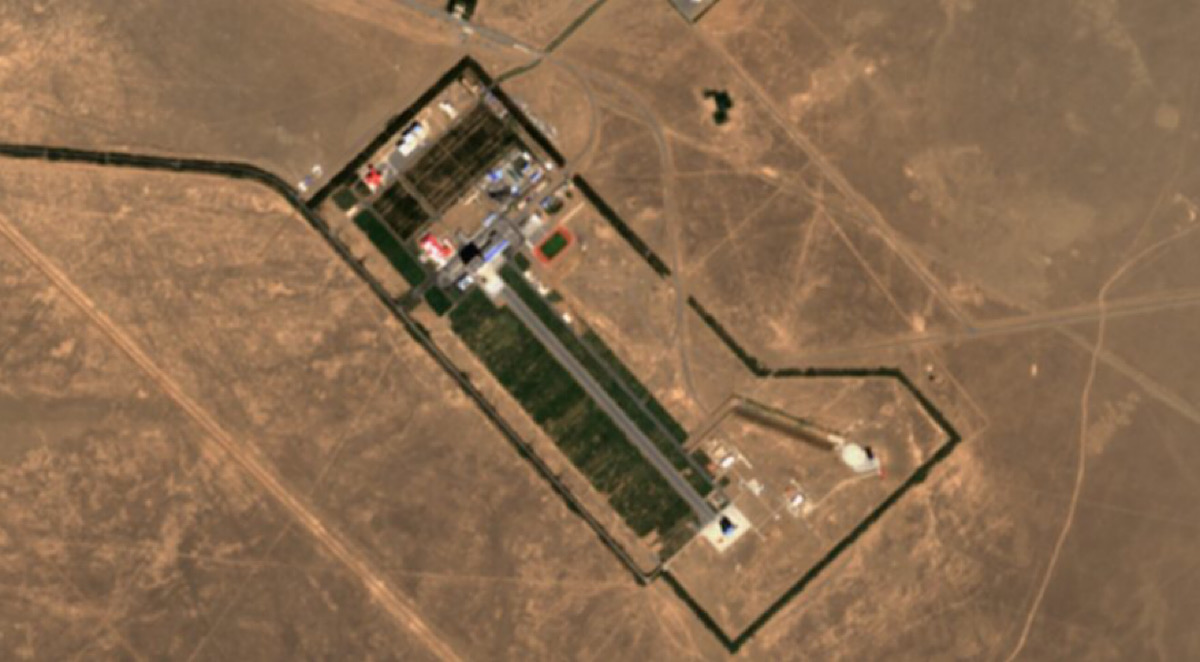
The Chinese suborbital vehicle for a reusable space transportation system launched from the Jiuquan Satellite Launch Center in the Gobi Desert, northwest China.
by Andrew Jones
HELSINKI — China conducted a clandestine first test flight of a reusable suborbital vehicle Friday as a part of development of a reusable space transportation system.
The vehicle launched from the Jiuquan Satellite Launch Center Friday and later landed at an airport just over 800 kilometers away at Alxa League in Inner Mongolia Autonomous Region, the China Aerospace Science and Technology Corp. (CASC) announced.
No images nor footage nor further information, such as altitude, flight duration or propulsion systems, were provided. The CASC release stated however that the vehicle uses integrated aviation and space technologies and indicates a vertical takeoff and horizontal landing (VTHL) profile.
The test follows a September 2020 test flight of a “reusable experimental spacecraft”. The spacecraft orbited for days, releasing a small transmitting payload and later deorbited and landed horizontally. The spacecraft is widely believed to be a reusable spaceplane concept, though no images have emerged.
Continue reading… “China launches secretive suborbital vehicle for reusable space transportation system”New Plasma Thruster Concept Could Make Space Missions 10x Faster

Space travel might take less time than ever with the new plasma thruster design developed at the US Department of Energy.
Fatima Ebrahimi, a physicist from the Princeton Plasma Physics Laboratory (PPPL) at the U.S. Department of Energy’s (DOE) has designed a plasma thruster that is likely to make space travel way faster than any other existing technology.
Fast and efficient space travel has the potential to push mankind towards a better future. There might be planets, resources, and even life forms located far away that can bring a drastic change in our knowledge, understanding, and lifestyle. There are strong chances that, if it turns out to be successful, the new plasma thruster design from Ebrahimi could change the dynamics of space travel.
Continue reading… “New Plasma Thruster Concept Could Make Space Missions 10x Faster”Dragonfly Titan Octocopter Mission Next in Line to Use a Nuclear Generator

Now that NASA has proven helicopter flight can be achieved in alien atmospheres, there are green lights across the board for the Dragonfly mission. That would be the octocopter the American space agency plans on sending to Saturn’s moon Titan in search of, well, life, of course.
The mission is set to depart in 2027, one year later than initially planned, and land on Titan in 2035. It will be tasked with spending its next three years hopping from place to place and collecting samples, from its initial landing spot in the Shangri-La dune fields to exotic places like the Selk impact crater, for a total distance of about 108 miles (175 km).
Continue reading… “Dragonfly Titan Octocopter Mission Next in Line to Use a Nuclear Generator”Virgin Galactic gets FAA’s OK to launch customers to space

This Saturday, May 22, 2021 image provided by Virgin Galactic shows the release of VSS Unity from VMS Eve and ignition of rocket motor over Spaceport America, N.M. Virgin Galactic finally has the federal government’s approval to start launching customers into space from New Mexico. Richard Branson’s rocketship company announced the Federal Aviation Administration’s updated license on Friday, June 25. It’s the final hurdle in Virgin Galactic’s years-long effort to send paying passengers on short space hops. Credit: Virgin Galactic via AP
by Marcia Dunn
Virgin Galactic finally has the federal government’s approval to start launching customers into space from New Mexico.
Richard Branson’s rocketship company announced the Federal Aviation Administration’s updated license on Friday.
It’s the final hurdle in Virgin Galactic’s yearslong effort to send paying passengers on short space hops.
The company is working toward three more space test flights this summer and early fall, before opening the rocketship’s doors to paying customers. The original plans called for company engineers to launch next to evaluate equipment, followed by a flight with Branson and then a science mission by Italian Air Force officers.
Continue reading… “Virgin Galactic gets FAA’s OK to launch customers to space”Dreams Come True: First-Ever Luxury Space Hotel Nears Launch

Illustration of the Voyager hotel
By Chris Young
The first prototype for an orbital hotel with artificial gravity may launch as soon as 2023.
The Orbital Assembly Corporation, a space construction firm run by NASA veterans, announced in a press statement today, June 24, that it has successfully demonstrated its technology for developing the world’s first space hotel.
The company carried out the demonstration during the official opening of its Fontana, California Facility, which will serve as its main headquarters as it aims to make luxury space holidays a reality before 2030.
Continue reading… “Dreams Come True: First-Ever Luxury Space Hotel Nears Launch”A Gigantic “Space Balloon” Just Completed Its First Flight
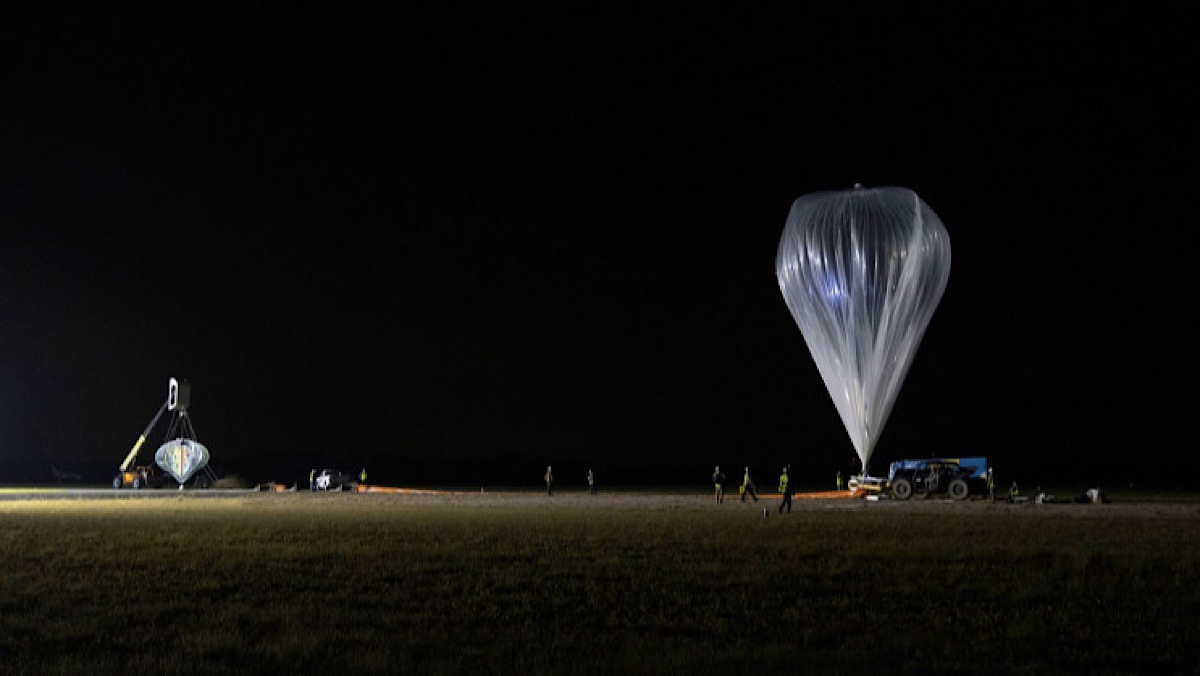
Would you be willing to ride to the edge of space in this balloon?
By Chris Young
Space tourism company Space Perspective successfully conducted the first flight test of its prototype stratospheric passenger balloon, reaching an altitude of 108,409 feeton Friday, June 18, the company announced in a press statement.
The balloon prototype, called Neptune One, lifted off at 5:23 a.m. EDT from the Space Coast Regional Airport near Kennedy Space Center, Florida, before splashing down 6 hours and 39 minutes later in the Gulf of Mexico.
The first test kicks off an extensive test campaign to assess Neptune One’s feasibility as a passenger balloon for space tourists.
“This test flight of Neptune One kicks off our extensive test flight campaign, which will be extremely robust because we can perform tests without a pilot, making Spaceship Neptune an extremely safe way to go
to space,” co-CEO and founder Taber MacCallum said in the press release.
Continue reading… “A Gigantic “Space Balloon” Just Completed Its First Flight”