Bitcoin, virtual currency, hits a new record high in value after the largest Bitcoin exchange, Mt. Gox, stirkes a deal with the startup CoinLab to handle its U.S. operations.
Futurist Thomas Frey: In 2003 the DaVinci Institute produced a landmark event called “The Future of Money Summit” which took place at the Omni Hotel in Broomfield, CO. One of the featured speakers was Bernard Lietaer, chief architect of the Euro.
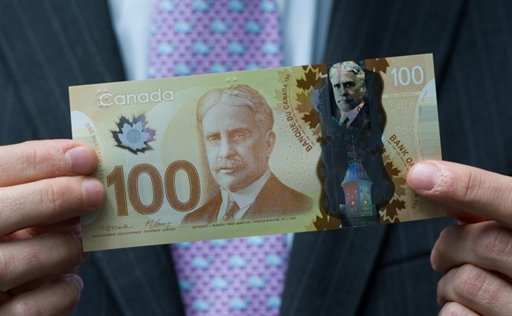
Many of us rely on plastic credit and debit cards to make the majority of our daily purchases but still the idea of saying goodbye to paper money seems ludicrous. The Bank of Canada is planning to do just that, and the first in an all-new line of plastic money will begin rolling out to consumers this month. The bills — made of a single piece of polymer — boast a longer life than paper notes, as well as some advanced security features to keep counterfeiters scratching their heads.
Are ones and zeros gonna pay for doobies and lines now?
I’m not gonna name names, but someone just mentioned paying for weed with a Square account. It’d be equally easy to use Paypal, Venmo, Bitcoin (RIP) or any of the myriad mobile payment systems that allow you to send money from your phone…
Visa-owned PlaySpan with research firm VGMarket have released a new study on how and what gamers are spending on virtual goods. Nearly one-third of the general gamer population has used real world money (as opposed to virtual currency) to purchase virtual goods, according to the study. Console games with online play account for the majority (51%) of virtual purchases using real world money, with social networking games (30%) coming in at second.
Bitcoin, the world’s fastest-gaining currency has tripled in price again. Last week, SmartMoney reported that the Bitcoin had exploded from an exchange rate near zero to more than $10 in about a year, making it one of the top-returning assets of any kind. On Wednesday the currency topped $30.
In the future, paper money may be displaced with digital points of a vendor.
Karl Dakin: The subject of how we will be paid and make payments in the future was presented at the DaVinci Institute’s Night with a Futurist on Monday night. The presentations covered potentially major changes in the way we conduct business and interact as a society as technological advances in mobile computing enable new ways of exchanging things of value.
Some time in 2010, the Chinese economy overtook that of the United States. In purchasing power parity (PPP) terms – that is, adjusting for the different costs of living in the two countries – the size of China’s economy was $14.8 trillion in 2010, compared to the US economy’s $14.6 trillion.