2013 will see countless technological advancements, some of these will happen in education. Here’s a look at some of Edudemic.com’s ideas of what may happen in education in the next year. (Infographic)
High school graduation rates have improved to their highest level in nearly 40 years, driven by a surge in the percentage of Hispanic students earning diplomas, a government study released on Tuesday showed.
There is a huge debate in western societies regarding what is called “The great male crisis”. The argument is simple: Men are quickly falling behind women, In the western societies that promote gender equality and free education, women are becoming better educated than men and are earning more. Boys aren’t faring as well as girls in school and college education, and this is being reflected in the job market.
Saudi students can receive up to a five year visa, with scholarships covering tuition, housing and health benefits.
Meshari Albishi considers the University of Mary Washington his “second home” even though he is not a student there. He has made “a lot of friends,” and has access to the library, workout rooms and other campus facilities. The University of Mary Washington has offered him admission, on one condition: Before he can enroll, he must complete a non-credit program, called English for Academic Purposes.
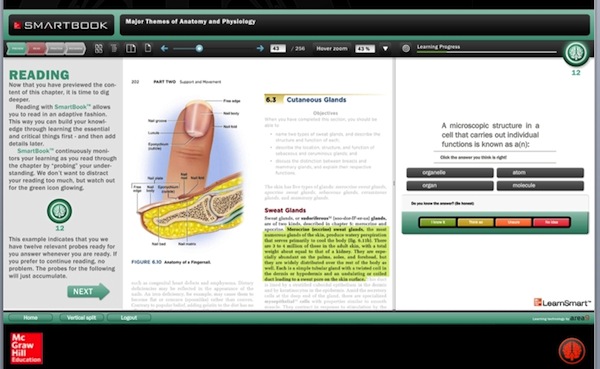
Publishing giants and tech companies try to remake the humble textbook in their own image. But on Tuesday, McGraw-Hill Education offered up its latest take on the learning platform of the future.
A vision for the future would be one where everyone will be able to learn at their own pace and where it would be competency based. Once you feel like you know something you can prove it, and the world respects that, and maybe you have to maintain that knowledge state, it’s not that you just have to prove it once and not have to worry about it.
87,900 people applied to ABA law schools in 2010. This number of people who applied was down 12.6% from the all-time high of 100,600 six years earlier. That trend ought to have served as an early warning signal to law schools. After all, in 2008 and 2009 the economy was in the deepest recession since the 1930s, which should have have driven applications to professional school in general and law school in particular to new highs.
The concept of the ‘flipped classroom’ in schools is when pupils complete course material ahead of lessons to free up time with their teachers and apply the knowledge they have just learned. Now a related philosophy is developing in higher education. Can we also flip academics – or even academia itself?
Could you be sitting on the app concept of the century, but you don’t know the programming basics to create it. Now, thanks to coding courses offered by companies such as DaVinci Coders and Codecademy, people are launching new businesses by taking coding matters into their own hands.
Ron Unz of the American Conservative posits that 375-year old Harvard University has grown so rich that it is now essentially a giant hedge fund with a little school attached.
Salman Khan, the founder of Khan Academy, believes college should look very different from the typical four-year institution. The Khan Academy is a popular site that offers free online video lectures about a variety of subjects, lays out his thoughts on the future of education in his book, The One World School House: Education Reimagined, released last month. Though most of the work describes Mr. Khan’s experiences with Khan Academy and his suggestions for changing elementary- and secondary-school systems, he does devote a few chapters to higher education.
The new PlayMaker school in Los Angeles is using gaming technology to teach curriculum.
Maybe play isn’t the opposite of work but synonymous with it. There is a growing body of scientific evidence, reviewed here by the University of Georgia, showing education is not the same as disinterested drudgery: For children and adults, “play is an important mediator for learning and socialization throughout life.”