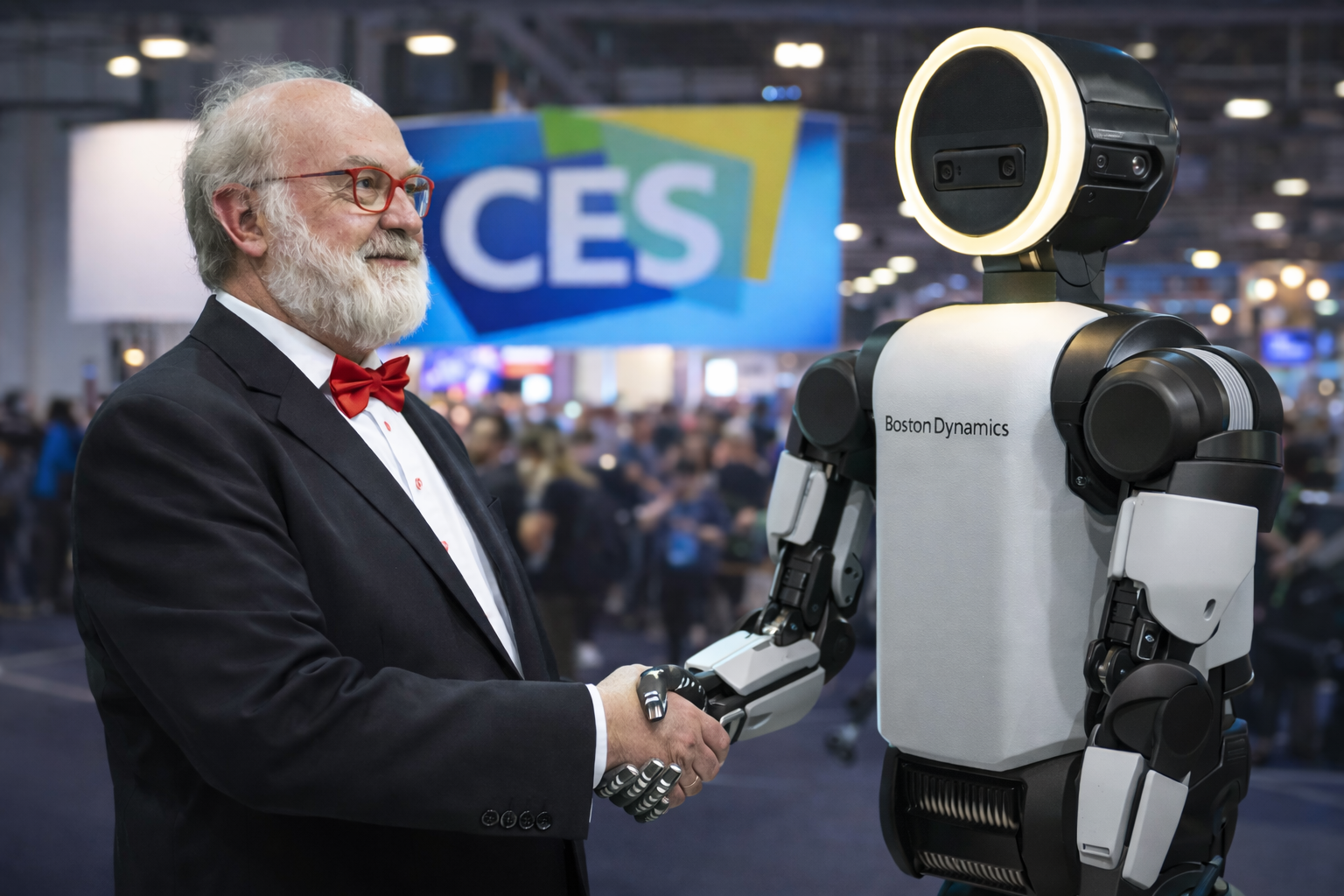
Atlas Stands Up: The Moment Humanoid Robots Stop Being Research and Start Being Real

By Futurist Thomas Frey

The Performance Nobody Expected to See

For the first time ever, a major robotics company did something unthinkable: they demonstrated a humanoid robot live, in public, without editing, without safety nets, where failure would be witnessed by hundreds of industry analysts and instantly amplified across global media.

“For the first time ever in public, please welcome Atlas to the stage,” said Boston Dynamics’ Zachary Jackowski at CES 2026 in Las Vegas. The life-sized robot picked itself up from the floor, walked fluidly across the stage for several minutes, waved to the crowd, and swiveled its head like an owl. No stumbles. No falls. No frantic engineers rushing to intervene.

The demonstration itself was modest—Atlas was remotely piloted for the showcase. But the symbolism was massive. Robotics companies almost never demonstrate humanoids live because fumbles attract catastrophic attention. Russia’s first humanoid face-planted in November. That’s why everyone releases carefully edited videos on social media—maximum control, zero risk.

Boston Dynamics just threw that playbook away. And by doing so, they signaled something fundamental: Atlas isn’t a research prototype anymore. It’s becoming a product. And Hyundai isn’t experimenting with humanoid labor—they’re committing to it at industrial scale.

Continue reading… “Atlas Stands Up: The Moment Humanoid Robots Stop Being Research and Start Being Real”
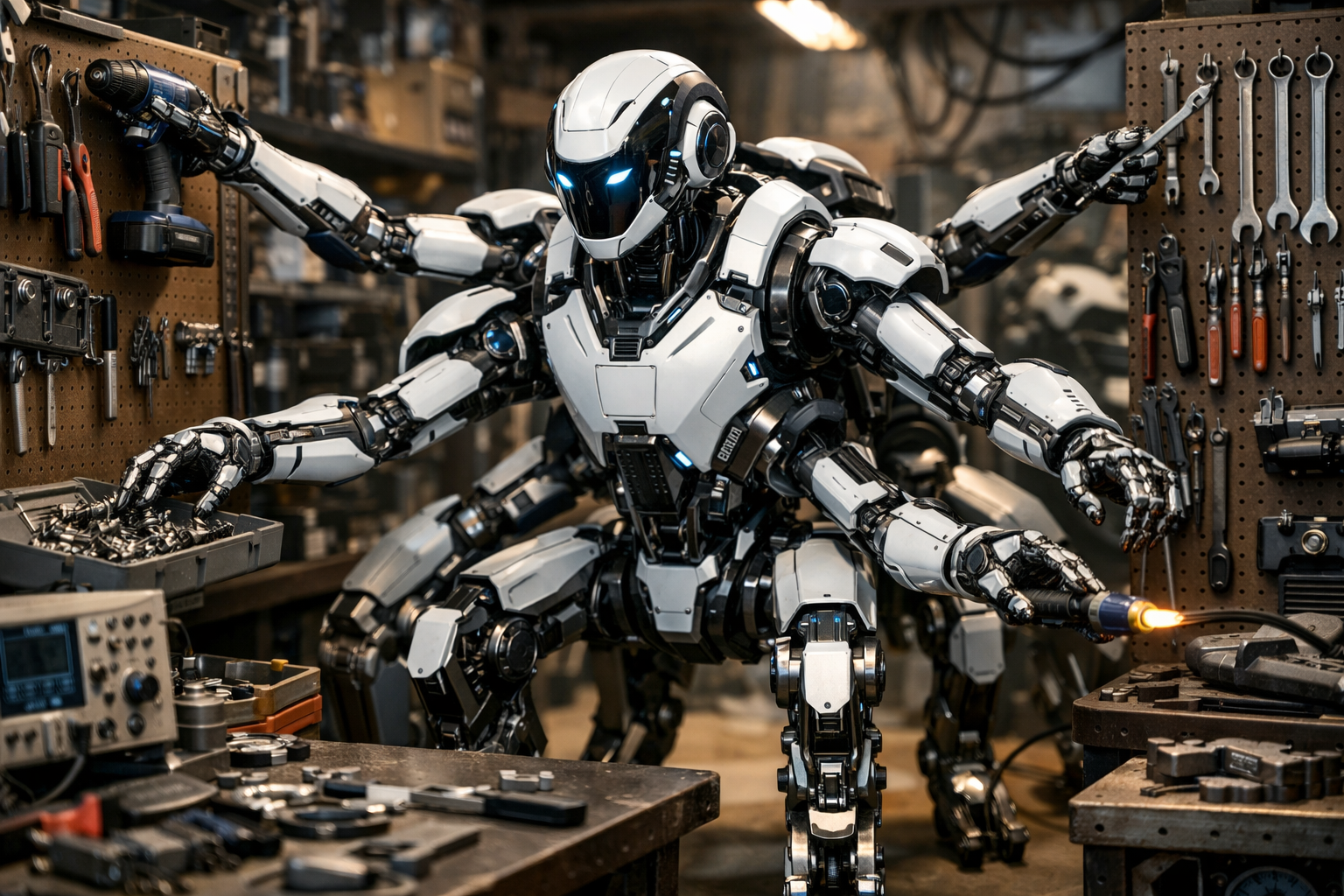
The Humanoid Robot Debate Misses the Point: There Is No Perfect Form Factor

By Futurist Thomas Frey

Why Everyone Arguing About Robot Shape Is Asking the Wrong Question

We’re seeing intense debate about whether humanoid robots are the optimal form factor. Critics argue two arms and two legs are inefficient—why not five arms, four legs, seven fingers, or spherical units that roll? Defenders claim humanoid shapes work in human-designed environments without infrastructure changes.

Both sides miss the fundamental point: there is no one-size-fits-all robot form that’s perfect for everyone and every application. The question isn’t “what’s the best robot shape?” It’s “what’s the best robot shape for this specific task in this specific environment?”

Let me show you why form factor diversity is the actual future, not humanoid domination or any single alternative.

Continue reading… “The Humanoid Robot Debate Misses the Point: There Is No Perfect Form Factor”

The Dangerous Illusion That Robots Will Just “Work With Us”

By Futurist Thomas Frey

Why Everything You’ve Been Told About Human-Robot Collaboration is Probably Wrong

We’ve been sold a comforting fantasy about our robotic future: humans and machines working together in perfect harmony, each doing what they do best, complementing rather than competing. It’s a lovely vision. It’s also dangerously incomplete.

The academic researchers diving into “human-centered AI and autonomy in robotics” have stumbled onto something most of us would rather ignore: there is no natural equilibrium between human control and machine autonomy. Every choice about how much freedom we give intelligent machines is simultaneously a choice about how much agency we’re willing to surrender—and we’re making these choices right now, mostly by accident, with almost no public debate about what we’re trading away.

By 2035, when humanoid robots staff retail stores and AI agents run businesses almost entirely on their own, the question won’t be whether humans and machines can collaborate. It will be whether humans still have any meaningful role in decisions that matter, or whether we’ve accidentally designed ourselves into comfortable irrelevance.

Continue reading… “The Dangerous Illusion That Robots Will Just “Work With Us””
Discover the Hidden Patterns of Tomorrow with Futurist Thomas Frey
Unlock Your Potential, Ignite Your Success.

By delving into the futuring techniques of Futurist Thomas Frey, you’ll embark on an enlightening journey.

Learn More about this exciting program.