
By Futurist Thomas Frey
What the World Humanoid Robot Games tell us about where AI is headed — and why the stumbles matter as much as the wins
The Scene Nobody Expected
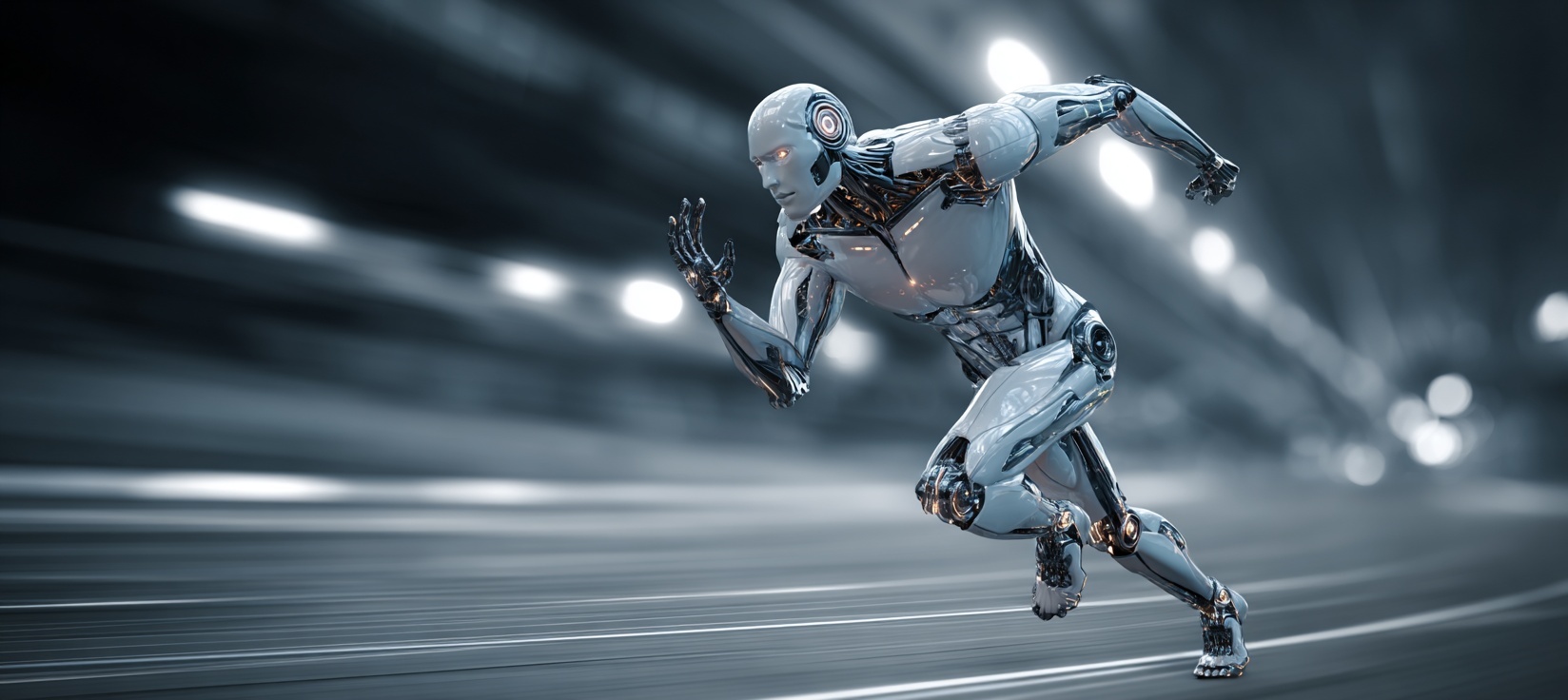
Picture this. It’s August 2025. You’re sitting in the National Speed Skating Oval in Beijing — the “Ice Ribbon,” built for the 2022 Winter Olympics — watching a 1,500-meter race. The competitors line up at the start. The gun fires. They begin to run.
One of them suddenly collapses mid-stride, drawing a collective gasp from 12,000 spectators. Another wobbles, recovers, and keeps going. The crowd erupts in applause — not for speed, but for the simple act of staying upright. The gold medalist crosses the finish line in 6 minutes and 34 seconds. A typical recreational human runner would finish in under seven. The stadium cheers like it’s a world record.
Every athlete in this race is a robot.
The inaugural World Humanoid Robot Games ran for three days in Beijing last August — 280 teams, 16 countries, over 500 bipedal robots competing in 26 events. The second edition returns to Beijing in August 2026, and the organizers have already declared their ambition: to build this into a permanent global institution they’re calling the “third Olympics,” standing alongside the Summer and Winter Games as one of the defining spectacles of civilizational progress.
Most Western media covered it as a curiosity — robots falling down, China showing off, slightly clunky machines doing things humans do better. That framing missed almost everything that matters about what actually happened and what it means for where we’re heading.
Continue reading… “The Robot Olympics Have Already Begun. And They’re More Important Than They Look.”