The AI-Enhanced Superhuman: When Your Personal Agent Knows You Better Than You Know Yourself

By Futurist Thomas Frey

The Coach Whispering in Your Ear

How many times have you wished a smarter person was leaning over your shoulder whispering the right answer in your ear? A better response could mean the difference between success and failure—landing a job, going on a date, pitching an investment, or simply convincing a child it’s time to go to bed.

We’re on the edge of a radical transformation where, very soon, we won’t be able to tell where the human ends and technology begins. This intermeshing of mind, body, and technology will become so seamless and invisible that we essentially “become one with the tech.”

Imagine a portable AI companion with an IQ of 200 and the conversational skills of your favorite talk show host, constantly learning your patterns, preferences, and needs. That’s what lies ahead. Let me show you what life looks like with a personal AI agent that knows you better than you know yourself.

Continue reading… “The AI-Enhanced Superhuman: When Your Personal Agent Knows You Better Than You Know Yourself”

AI Drones and Active Shooters: When Technology Becomes First Responder

By Futurist Thomas Frey

The Question We’re Afraid to Ask

In an age where active shooter incidents dominate headlines with disturbing frequency, communities worldwide grapple with anxiety about safety in public spaces. Schools, malls, offices, and retail outlets—once symbols of vibrant community life—now face the grim task of balancing public service with critical safety measures.

Traditional security mechanisms are stretched to their limits. Response times measured in minutes feel like eternities when shots are fired. By the time police arrive, the damage is often catastrophic. We need something faster, more proactive, more capable of intervention in the critical seconds when violence erupts.

The answer might come from an unlikely source: AI-powered drones capable of autonomous crisis response. Not someday—now, with technology that already exists. Let me show you what this looks like and why it might save thousands of lives.

Continue reading… “AI Drones and Active Shooters: When Technology Becomes First Responder”

Growing Up in the AI Age: A Gen Alpha Boy’s Journey from 2025 to 2040

By Futurist Thomas Frey

When Childhood Becomes Unrecognizable

Meet Ethan, born in 2020. He’s five years old in 2025, growing up during the most disruptive technological transition in human history. Let me walk you through his life in five-year increments, showing how radically different childhood becomes when AI, robotics, and automation reshape society faster than institutions can adapt.

Continue reading… “Growing Up in the AI Age: A Gen Alpha Boy’s Journey from 2025 to 2040”

The Humanoid Robot Debate Misses the Point: There Is No Perfect Form Factor

By Futurist Thomas Frey

Why Everyone Arguing About Robot Shape Is Asking the Wrong Question

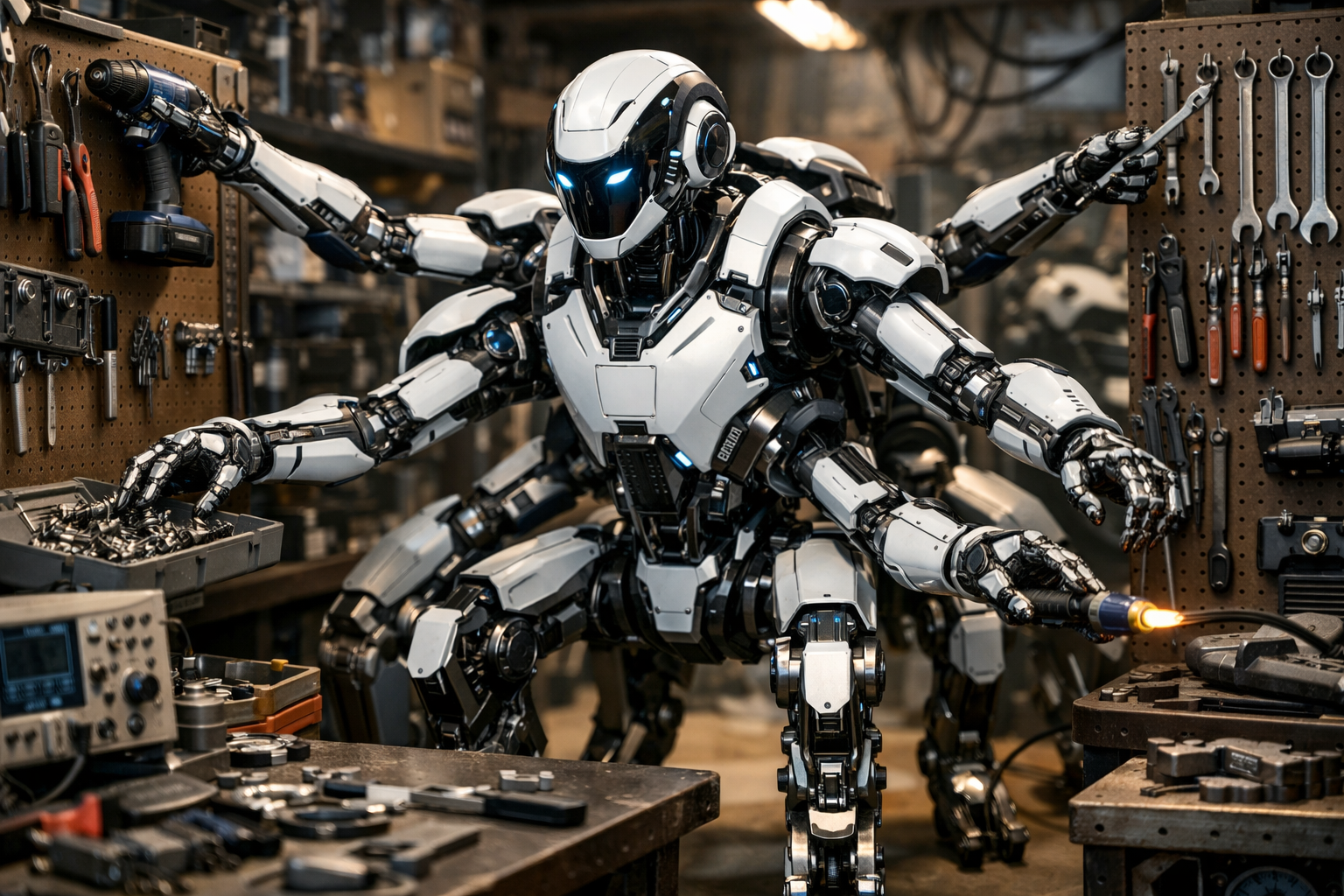
We’re seeing intense debate about whether humanoid robots are the optimal form factor. Critics argue two arms and two legs are inefficient—why not five arms, four legs, seven fingers, or spherical units that roll? Defenders claim humanoid shapes work in human-designed environments without infrastructure changes.

Both sides miss the fundamental point: there is no one-size-fits-all robot form that’s perfect for everyone and every application. The question isn’t “what’s the best robot shape?” It’s “what’s the best robot shape for this specific task in this specific environment?”

Let me show you why form factor diversity is the actual future, not humanoid domination or any single alternative.

Continue reading… “The Humanoid Robot Debate Misses the Point: There Is No Perfect Form Factor”

The Turbulent Middle: What 2026 Looks Like for People Caught Between Economies

By Futurist Thomas Frey

When the Ground Shifts Beneath Your Feet

2026 will be profoundly disruptive—jobs disappearing faster than expected, AI-native startups appearing overnight, income fluctuations nobody anticipated. The economic models we’ve relied on for decades are breaking simultaneously, and in the middle of all this chaos are millions of people struggling to find the new equilibrium.

Let me show you what that actually looks like on the ground, in real lives, during the most turbulent economic transition in a generation.

Continue reading… “The Turbulent Middle: What 2026 Looks Like for People Caught Between Economies”

Who Invented the Four-Year Degree? And Why It’s About to Become Obsolete

By Futurist Thomas Frey

The Question Nobody Can Answer

Who invented the four-year college degree? Try researching this. You’ll find it’s astonishingly difficult to identify a specific inventor, date, or rationale for why bachelor’s degrees require exactly four years.

The system emerged gradually from European medieval universities, evolved through American land-grant colleges in the 1800s, and was standardized somewhat arbitrarily around credit hours and Carnegie Units in the early 1900s. But there’s no founding document explaining why earning a degree requires four years rather than three, five, or competency-based completion.

The truth? The four-year degree is an administrative convenience that became entrenched—not an optimal learning design. And it’s about to be replaced by something fundamentally different.

Continue reading… “Who Invented the Four-Year Degree? And Why It’s About to Become Obsolete”

2026: The Year Corporate America Faces Its AI Reckoning (Maybe)

By Futurist Thomas Frey

The Bold Prediction That Might Be Half Right

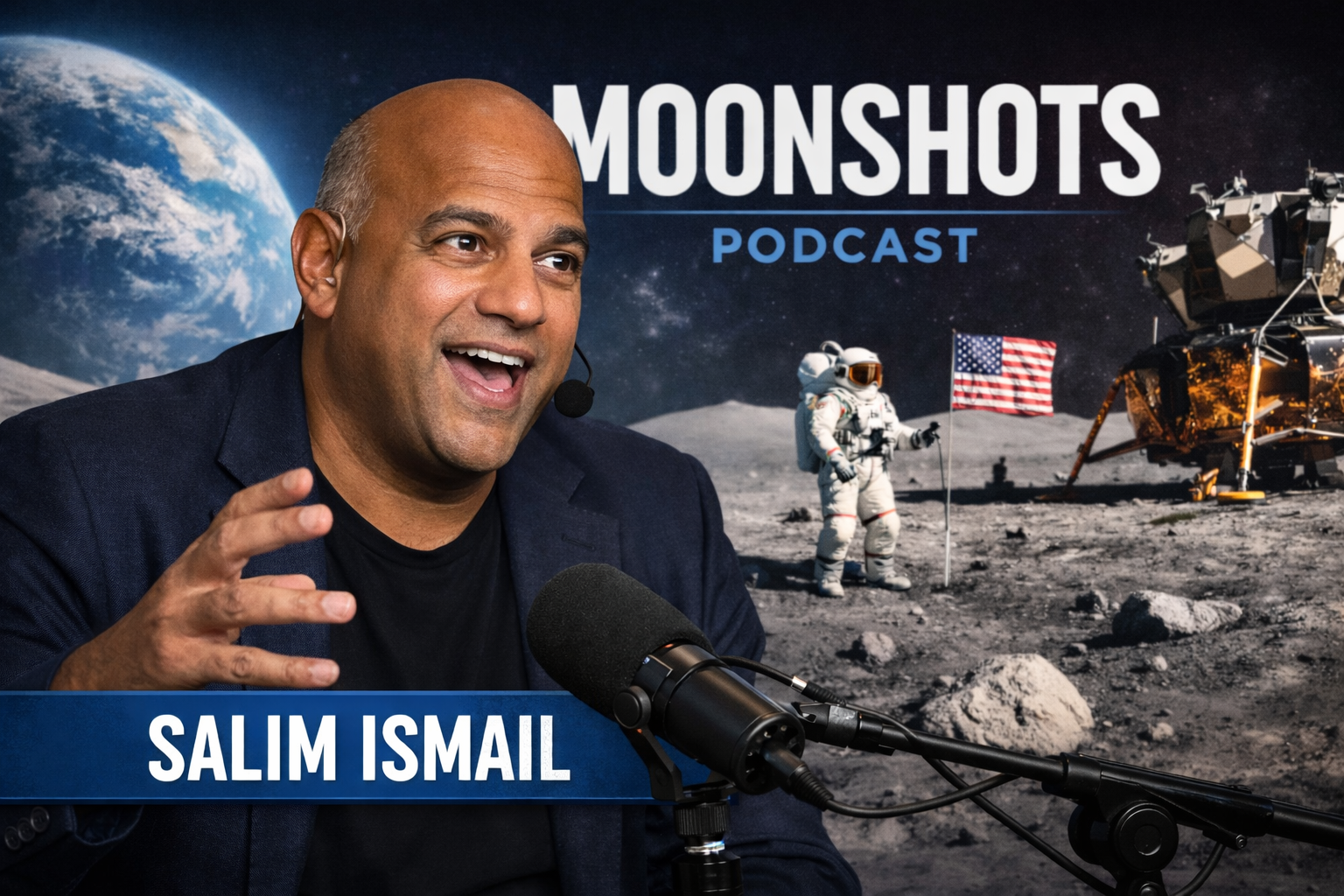
Salim Ismail recently made a stunning prediction on the Moonshots Podcast with Peter Diamandis: “I think 2026 is going to see the biggest collapse of the corporate world in the history of business.”

The context: rapid AI advancements with models like GPT-5.2 automating knowledge work at superhuman speed and low cost, building on 1.1-1.17 million U.S. layoffs announced in 2025—the highest since the 2020 pandemic. Ismail, author of Exponential Organizations, argues companies failing to radically transform by scrapping legacy systems, adopting AI-native approaches, and reskilling workforces will face existential threats as adoption tips into panic mode.

Is he right? Probably not about “biggest collapse ever”—but he might be right about something more important: 2026 is when the gap between AI-adopters and AI-resisters becomes catastrophic.

Continue reading… “2026: The Year Corporate America Faces Its AI Reckoning (Maybe)”

The Future of Meetings & Events Industry and the Professional Speakers Who Depend on It

By Futurist Thomas Frey

The Industry That’s Being Rebuilt While Running

The Meetings and Events (M&E) industry and the professional speakers who depend on it are being profoundly reshaped by AI, which is moving from a novelty tool to a core component of planning, execution, and content delivery. This isn’t gradual evolution—it’s rapid transformation forcing both event planners and speakers to fundamentally rethink their value propositions.

Let me show you what’s changing, what’s vulnerable, and what survives when AI becomes the default event planning assistant and content creation tool.

Continue reading… “The Future of Meetings & Events Industry and the Professional Speakers Who Depend on It”

The Terabyter Era: When Every Person Becomes a Continuous Surveillance Node

By Futurist Thomas Frey

The People Who Produce a Terabyte Daily

I predicted this in 2010, but the reality is arriving faster and stranger than I imagined: the rise of “terabyters”—people who produce over a terabyte of new information daily using wearable computers that capture continuous video, geospatial, and sensory data about their physical surroundings.

We called it “Gargoyle gear” after Neal Stephenson’s 1992 novel Snow Crash, imagining people wearing body-mounted sensors constantly recording everything they see, hear, and experience. The technology seemed distant then. Now it’s here, and the implications are profound.

Let me show you where terabyters are emerging first and what it means when humans become walking data collection nodes.

Continue reading… “The Terabyter Era: When Every Person Becomes a Continuous Surveillance Node”

Stop Learning Skills—Start Building Irreplaceability: The 5 Meta-Skills That Survive AI

By Futurist Thomas Frey

Why Everyone Is Asking the Wrong Question

Most people are asking: “What new skills should I learn?” That question made sense when change was slow. It doesn’t work anymore.

In a world where AI can learn any technical skill faster than a human, skills expire too quickly to be the primary focus. Python programming that took you six months to master? AI writes better code after training on millions of examples. Data analysis expertise you spent years developing? AI performs it faster and more accurately. Graphic design, financial modeling, legal research—AI matches or exceeds human capability in months, not years.

The better question is: “What capabilities make me hard to replace, no matter what tools come next?”

Let me show you the five meta-skills that actually matter—not job skills that become obsolete, but fundamental capabilities that survive technological disruption.

Continue reading… “Stop Learning Skills—Start Building Irreplaceability: The 5 Meta-Skills That Survive AI”

AI Personhood: When Machines Deserve Rights (And Responsibilities)

By Futurist Thomas Frey

The Question We’re Not Ready to Answer

Somewhere between 2030 and 2040, we’ll face a question that sounds like science fiction but has profound legal, ethical, and philosophical implications: when does an AI system deserve personhood? Not just recognition as sophisticated software, but actual legal and moral status as a person with rights, responsibilities, and standing under law.

Let me walk you through what personhood AI actually means, what characteristics define it, and why we’re completely unprepared for the legal and ethical chaos this creates.

Continue reading… “AI Personhood: When Machines Deserve Rights (And Responsibilities)”

The Power Structures That Will Fight the AI Future (And Why They’ll Lose Anyway)

By Futurist Thomas Frey

The Resistance Won’t Come From Fear—It’ll Come From Understanding

If you strip away the poetry and look at power dynamics, the biggest resistance to AI, robotics, and automation won’t come from people who “don’t understand the technology.” It will come from those who understand it perfectly—and see exactly what it threatens: their wealth, their influence, and their control over systems designed to extract value through scarcity and friction.

Let me walk you through the resistance groups forming right now, how they’ll fight, and why the battle won’t look like opposition—it’ll look like controlled adoption designed to preserve existing power structures while appearing to embrace progress.

Continue reading… “The Power Structures That Will Fight the AI Future (And Why They’ll Lose Anyway)”
Discover the Hidden Patterns of Tomorrow with Futurist Thomas Frey
Unlock Your Potential, Ignite Your Success.

By delving into the futuring techniques of Futurist Thomas Frey, you’ll embark on an enlightening journey.

Learn More about this exciting program.