Lee Yangang and his wife, Wang Lu, emigrated to Sydney, Australia, from Beijing.
Chen Kuo, at 30 years old, had what many Chinese dream of: her own apartment and a well-paying job at a multinational corporation. But Ms. Chen, in mid-October, boarded a midnight flight for Australia to begin a new life with no sure prospects.
“The data comes from 200,000 students at 2000 college campuses.”
What companies top the list of the top 10 places students want to work after college? Would it surprise you to learn that the NSA and AT&T top that list?
There have always been part-time workers, especially at restaurants and retailers but employers today rely on them far more than before.
The Fresh & Easy grocery store chain has opened up 150 stores in California since it was founded five years ago. It has positioned itself as a hip and socially responsible company.
Airbnb is a social website that connects people who have space to spare with those who are looking for a place to stay.
We have gotten pretty used to the disruption that the rise of the social web has created in the media industry, where it has upended traditional business models and allowed creators of content to connect directly with their audience. But that same wave of socially-driven disruption is now moving through the rest of the economy too — particularly in services that can be easily socialized, such as the hotel business, the taxi industry or the education market. As that wave progresses, we’re seeing companies like Airbnb and Uber and Coursera run into more and more regulatory hurdles, but the writing is already on the wall: service businesses that don’t use social features to lower barriers and increase efficiency will likely not survive long.
Study reveals gender bias with female job applicants.
A new study in the U.S. has found that researchers assessing the employability of early-career scientists subconsciously favour male students over females. The bias, which was seen to exist in both male and female physicists and was also exhibited by chemists and biologists, is thought to be a contributing factor towards the underrepresentation of women in physics.
A lot of time is spent looking at country rankings–everything from the best places in the world to be a woman to the worst countries for food security. These realities on the ground all feed into overall perception–or branding–of countries. If perception is favorable, that can translate into investments as well as commercial and economic development. And that, if done right, can lead to better lives for all citizens.
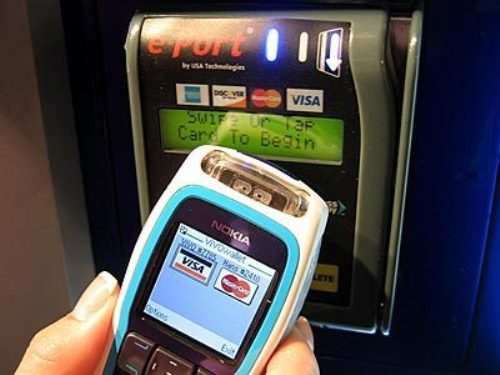
In the U.S. proximity mobile payments are not yet very popular. It is estimated that such point-of-sale payments using a mobile phone as a payment device, whether via near-field communications or other contactless technology, will total just $640 million this year. But that’s an increase of 283% over last year’s even smaller base, and a number that will rise a further 234% by the end of next year.
One in seven of the world’s population owns a smartphone.
Worldwide, the number of smartphones in use has passed the 1 billion mark for the first time, according to analyst firm Strategy Analytics, which estimates the landmark was surpassed during the third quarter of 2012.
Online courses will revolutionize higher education and cut the cost to near zero for most students over the next decade.
In as little as ten years a quality higher education couldl be largely free—unless, of course, nothing much has changed. It all depends on whom you believe. But one thing is clear: The debate about financing education grows louder by the day.
More jobs now have specific technical requirements and need a higher level of education.
This is not a for-or-against argument about a college degree. This is an argument for how to boost your chances of getting hired in the next three to five years.
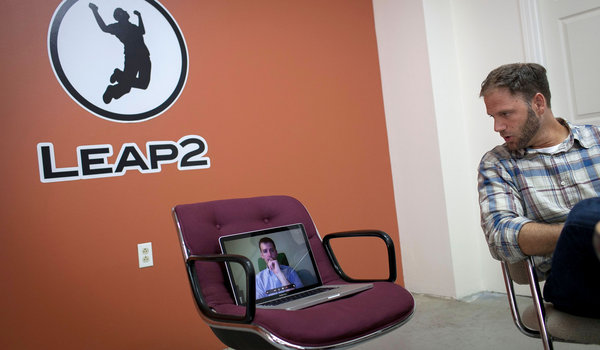
Mike Farmer is C.E.O. of the start-up Leap2. He has one employee: himself, aided by seven contractors.
Mike Farmer had a staff of ten when he started a digital search company in 2004. He is now on his third start-up and he has one employee: himself, aided by seven contractors working more or less part time. His budget, like his head count, is smaller, and by his account the new model is much more sustainable.