Forty years ago, Portland, the largest city in Oregon, pioneered five-cent deposits on beverage container. Now they are advocating a new approach to garbage collection that has some U.S. communities taking notice.
During Jordan Golson’s best three-month stretch last year, he sold bout $750,000 worth of computers and gadgets at the Apple Store in Salem, N.H. It was a performance that might have called for a bottle of Champagne — if that were a luxury Mr. Golson could have afforded.
“Social-Mobile-Local” is an overused buzz phrase and most of the attention has been placed on the “social” and “mobile” parts of the phrase. In social, the spectacular rise of Facebook and Twitter is clearly a disruptive and critical trend. In mobile, the adoption of the smartphone (led by Apple’s iPhone and now catapulted forward by Android) is also a fundamentally important platform transition. Much less attention has been paid to the third concept, “local,” which is ironic since it may be a much larger real business opportunity than either social media or Smartphone application revenue. Over the next five years, this massive opportunity will come into focus as local businesses embrace the Internet and adopt new interactive technologies that increasingly automate the connections between their customers and themselves.
What is the correlation between intelligence and income? Razib Khan, Gene Expression, used the GSS’s WORDSUM variable to indicate intelligence, which has a ~0.70 correlation with IQ. He used REALINC for income, which is indexed to 1986 values (so it is inflation adjusted) and aggregates the household income. and then Razib limited his sample to non-Hispanic whites over the age of 30 ( this also limited the data set to respondents from the year 2000 and later).
Growing startups in the digital babysitting space allow parents to book, review, and often pay babysitters online.
There are few areas of life that haven’t been changed by the mobile and Internet revolutions for the young, urban smartphone owner. We can book restaurant reservations through OpenTable, take a cab without swiping a credit card on Uber, or crash at someone’s house in a foreign city through AirBnB. Life has moved online, and commerce is moving with it.
Bob Grinnell, the owner of the building where a former furniture factory once occupied in North Downtown Omaha, Nebraska explains to Eric Markowitz of Inc.com, how this factory, The Mastercraft, takes its name from the furniture brand that had originally inhabited the space. The furniture company opened in 1941 and manufactured furniture for the better part of the 20th century. But 10 years ago, the furniture business failed and investors in Iowa bought the company. The building was abandoned.
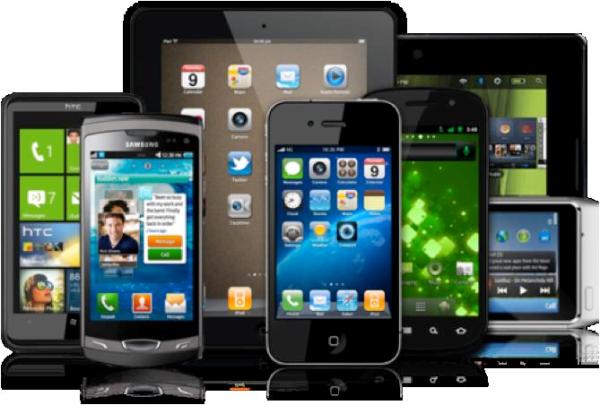
Feature phones are not the future. Of course that verges on tautology; of course everyone will have a smartphone, until everyone has something smaller and better and even more integrated into the fabric of our lives, like Google Glasses or cybernetic jawbone/retinal implants or whatever Charles Stross dreams up next. But when, exactly?
41% of young adults between age 19 and 29 failed to get medical care in a recent 12-month period because of cost.
There are millions of young adults who are skipping necessary care and treatment because of rising health care costs in the U.S., according to a new report released on Friday.
Banks have imposed other harsh penalties on consumers for minor lapses.
Despite efforts by regulators to to rein in aggressive practices by banks checking account overdraft fees have jumped during the past two years, according to new reports by two nonprofit groups.
Unlike traditional apartment renters, this breed of American tenants are older and have kids.
The Jacobson family bought their “dream home” in 2005 in the Phoenix area. They built flagstone steps to the front door. They tiled the kitchen and bathroom. They entertained often, enjoying their mountain views. “We put our soul into that house,” says Steve Jacobson, 37.
Inner-city Minneapolis teens who screen-print shirts.
Just ten years ago the term “inner city” meant “dead city” and people would picture a city of destruction, dereliction and despair. But, today inner cities are now a hip hotbed of convenient culture, commerce and connection. Scholars such as Richard Florida and Edward Glaeser, among others, are showing that although increasing problems accompany increasing density, urban access to the good things of life increases even faster. The centripetal force of today’s cities is pulling the ambitious and educated back in, and increasing cities’ innovative capacity, without sacrificing (at least some would argue) their inclusiveness.
Twitter and other tech start-ups are gravitating toward San Francisco.
Twitter will be moving into its new headquarters in downtown San Francisco this month. It will occupy three floors of an 11-story 1937 Art Deco building that has sat shuttered for five years. Outside, its blue bird logo will replace the former main tenant’s sign, whose analog clocks remain frozen at 9:18, 4:33 and other times past.