The Shared Body Era: When One Mind Controls Another’s Hands

By Futurist Thomas Frey

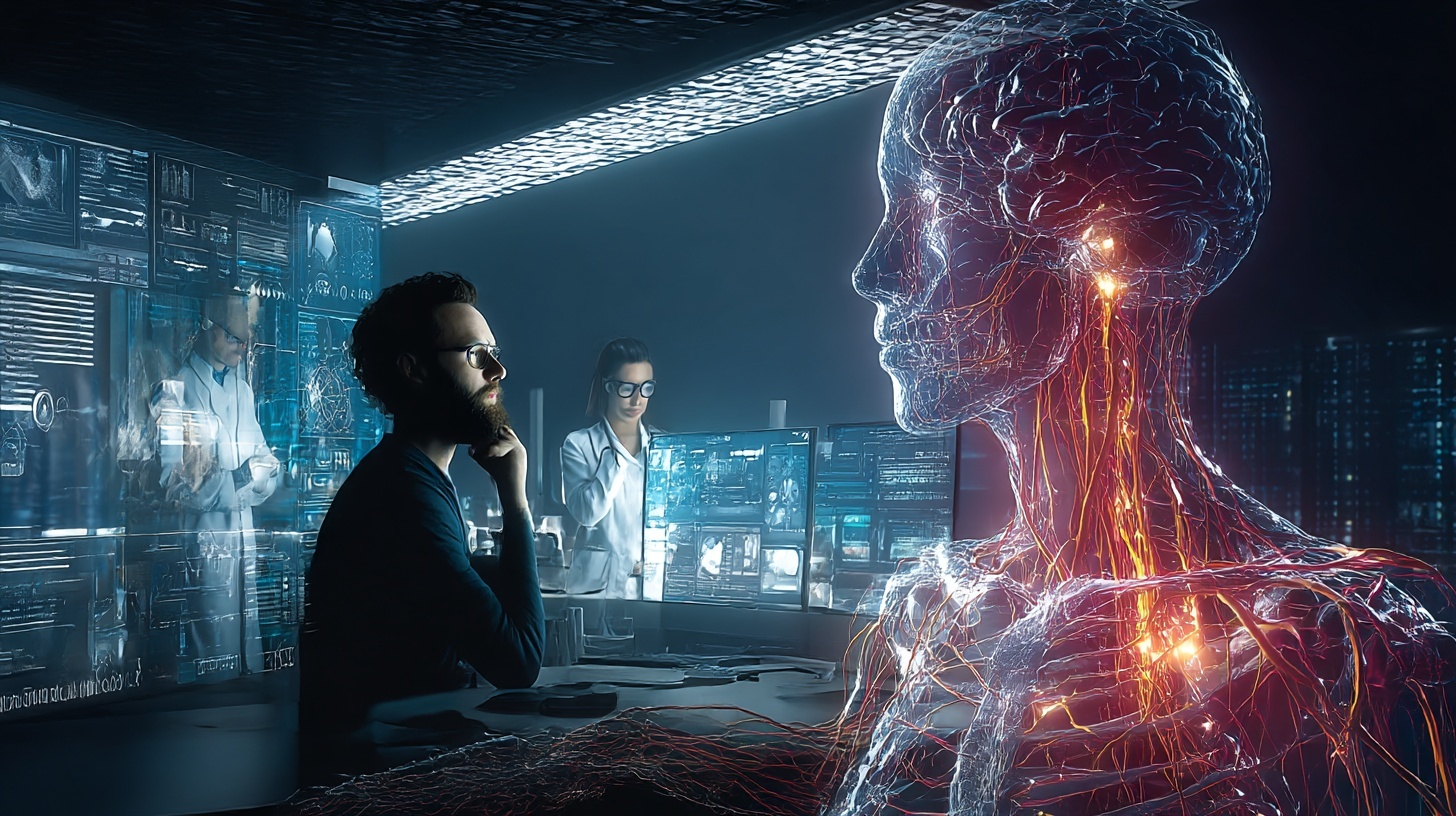
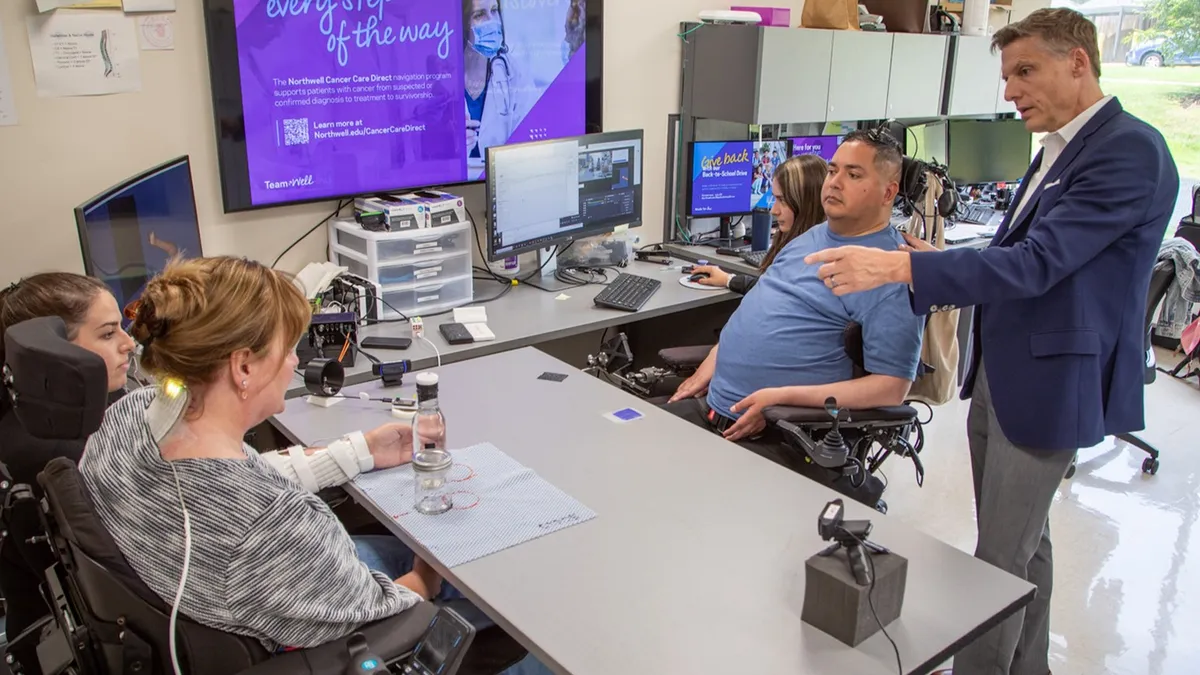
In 2040, medicine and robotics no longer focus solely on restoring independence—they’re reinventing the concept of embodiment itself. The line between “my body” and “your body” is starting to blur. The latest breakthrough came from the Feinstein Institutes for Medical Research, where a paralyzed man named Keith Thomas, who lost all sensation and movement after a spinal cord injury, regained not only touch and control of his own hands—but the ability to feel and move through someone else’s.

When Thomas dives into thought, his brain implant translates neural intention into electrical commands that travel wirelessly into electrodes placed on another person’s limbs. The result? He can move another person’s hands with the same precision as his own—and even feel what they touch.

Continue reading… “The Shared Body Era: When One Mind Controls Another’s Hands”

The Restaurant Reservation Collapse

By Futurist Thomas Frey

In 2025, the first hints of a culinary revolution appeared in a few elite dining rooms in New York and Tokyo. About 1% of restaurants—mostly Michelin-starred or concept-driven establishments—quietly abandoned the centuries-old ritual of reservations. Instead, they embraced what became known as “dynamic dining.” Guests no longer booked tables weeks in advance or endured hold music to secure a spot. Instead, they arrived whenever they pleased, and AI systems handled the rest. Predictive algorithms assessed arrival patterns, optimized seating, and projected wait times to the exact minute. Diners could shop, stroll, or grab a cocktail nearby, receiving real-time updates as the system orchestrated the flow of guests like air traffic controllers manage incoming planes. When your table was ready, your phone buzzed. You walked in without friction. The results were staggering—no-shows dropped from 20% to less than 0.3%, table turnover jumped by 35%, and overall satisfaction reached record highs. The earliest adopters realized something profound: the reservation wasn’t a customer service—it was a bottleneck.

By 2040, that insight has rewritten global dining culture. The reservation system, once a symbol of order and prestige, is dead. “Continuous flow dining” is now standard across developed nations.

Continue reading… “The Restaurant Reservation Collapse”

Children Who’ve Never Owned Toys

By Futurist Thomas Frey

In 2025, a small but striking cultural signal emerged from the wealthiest neighborhoods of San Francisco and Singapore: about 1% of families stopped buying toys altogether. Instead, they subscribed to “toy libraries”—services that deliver rotating collections of educational play objects every two weeks, then retrieve them for cleaning, sorting, and redistribution. Parents described the change as liberating. The clutter vanished. The guilt of overconsumption disappeared. Most surprisingly, the kids played more. With each new rotation came novelty, curiosity, and renewed engagement. It was the first hint that permanent ownership—a core feature of 20th-century childhood—might be on its way out.

By 2040, that fringe experiment has become the norm. Only about 12% of households now own toys outright, and those that do are mostly collectors, nostalgists, or families in remote regions beyond logistics networks.

Continue reading… “Children Who’ve Never Owned Toys”

Researchers created extremely realistic voice clones with just four minutes of recordings

By Futurist Thomas Frey

We once believed our voices were bulletproof identifiers—unique, infallible, deeply personal. But that belief is collapsing. A new study shows that people can no longer reliably distinguish AI-cloned voices from real human voices, even when the clones are made from just a few minutes of audio.

This isn’t a quirk of tech—it’s a fundamental shift in how identity, trust, and authenticity will play out in the decades ahead. Soon, hearing someone’s voice won’t guarantee that it’s them.

Continue reading… “Researchers created extremely realistic voice clones with just four minutes of recordings”

The House That Prints Itself: Australia’s Robot Home Heralds the End of Building as We Know It

By Futurist Thomas Frey

A silent revolution is unfolding on the suburban fringes of Australia—one that may rewrite not just architecture, but home, belonging, and what it means to shelter a life. A new autonomous robot prototype is 3D-printing a full-sized home, layer by layer, with minimal human intervention. If successful, it’s not just a novelty—it’s the blueprint for a future where houses build themselves.

This robot-printed home isn’t science fiction. It promises to reduce construction time from months to days, drastically cut labor costs, and enable tailored designs that adapt to local context. Imagine giving the command—“build me a three-bedroom home with this layout, these light wells, this insulation—and robots execute it.”

Continue reading… “The House That Prints Itself: Australia’s Robot Home Heralds the End of Building as We Know It”

All Information, Ever Created, Is Still In Existence

By Futurist Thomas Frey

What if nothing is ever truly lost—not a word, not a moment, not even a thought? What if every experience that has ever happened, every sound ever uttered, and every heartbeat ever felt still exists somewhere, encoded in the fabric of the universe?

This bold assertion—“all information, ever created, is still in existence”—isn’t just poetic speculation. It forms the philosophical and scientific backbone of one of the most provocative emerging ideas in future science: quantum archaeology.

If true, it implies that death, decay, and disappearance are not final—only temporary states in a cosmos that forgets nothing.

Continue reading… “All Information, Ever Created, Is Still In Existence”

Three Laws of Exponential Capabilities: Why the Future Is Sweeter Than We Think

By Futurist Thomas Frey

In the swirl of now, we too often talk about disruption, acceleration, and obsolescence as though they’re disasters to endure. But there’s a far more powerful narrative writ into the bones of our age: the laws of exponential capabilities. These aren’t wishful thinking or poetic hyperbole—they are the invisible rules animating every leap in technology, industry, and human possibility.

Years ago I introduced three such laws. They may feel familiar now, but their force is only growing stronger:

Continue reading… “Three Laws of Exponential Capabilities: Why the Future Is Sweeter Than We Think”

The Factory of the Future: China’s 3D-Printed Drugs Signal a New Pharma Era

By Futurist Thomas Frey

In Nanjing, China, a factory is rising—not built from conveyor belts, tanks, and mixing vats, but from rows and rows of printers. A new pharmaceutical facility is poised to produce up to 300 million tablets per year, using additive manufacturing techniques to craft each pill layer by layer. This is no laboratory experiment—it’s being billed as the world’s largest 3D-printed drug factory.

Triastek, the company behind this facility, is cutting out many of the steps traditional pharma companies cling to: no mixers, no complex coating lines, no separate granulation or compression machines. Instead, they rely on a digitized, traceable, printer-based process that leverages hundreds of thousands of monitoring points to “draw” internal structures, dissolution pathways, and timed-release mechanisms.

Continue reading… “The Factory of the Future: China’s 3D-Printed Drugs Signal a New Pharma Era”

The Dinner That Rewired a City: How 3,400 Strangers in Littleton Point to the Future of Local Civilization

By Futurist Thomas Frey

On an ordinary late-summer evening in Littleton, Colorado—a quiet suburb of 42,000 people—something extraordinary happened. Seven percent of the city showed up to dinner. (Photo Credit: Steve Slocomb Photography)

No protests, no politics, no speeches. Just tables stretching down Main Street, hundreds of conversations, and thousands of people rediscovering something that once defined communities but has all but vanished from modern life: the simple act of breaking bread together.

It may sound quaint, but this is how revolutions begin—not with hashtags or global summits, but with neighbors deciding to show up, sit down, and talk like human beings again.

Continue reading… “The Dinner That Rewired a City: How 3,400 Strangers in Littleton Point to the Future of Local Civilization”

Traffic Tickets Become Museum Pieces

By Futurist Thomas Frey

For over a century, the flashing lights of a police cruiser pulling someone over were a dreaded and familiar sight. Speeding tickets, parking fines, and traffic violations funded entire municipal budgets, quietly pulling in over $14 billion annually in the U.S. circa 2020. For many local governments, this revenue stream was less about public safety and more about predatory dependence.

By 2040, that entire system has collapsed. Traffic tickets haven’t just declined—they’ve become museum pieces.

Continue reading… “Traffic Tickets Become Museum Pieces”

The Ocean Renaissance: Marine Life Rebounds 300% as Ghost Ships Eliminate Human Disruption

By Futurist Thomas Frey

By 2040, the world’s oceans are experiencing a rebirth unlike anything seen in modern history. The catalyst wasn’t a new conservation treaty or a sudden change in human behavior. It was the arrival of a new fleet of ghost ships—fully autonomous cargo vessels that now carry 68% of global trade.

The intended goal of these ships was efficiency. The unintended consequence has been nothing short of an oceanic renaissance. For the first time in two centuries, marine ecosystems are rebounding on a massive scale.

Continue reading… “The Ocean Renaissance: Marine Life Rebounds 300% as Ghost Ships Eliminate Human Disruption”

The Housing Dream Is Dead for Young Americans

By Futurist Thomas Frey

For more than half a century, homeownership has been the beating heart of the American Dream. A house with a yard, a white picket fence, and the stability of ownership symbolized progress, security, and belonging. But for a growing share of young Americans, that dream is no longer attainable. It’s not just slipping away—it’s collapsing into something unrecognizable.

The numbers paint a stark picture. The median U.S. renter is now 42 years old, up from 36 in 2000. Nearly half of Americans in 2025 cannot afford to buy a home. Among them, 51% are Millennials and 18% are Gen Z. Perhaps even more telling: 1 in 3 Americans no longer see homeownership as part of the American Dream. For the first time in history, a cultural ideal once seen as universal is fading in real time.

Continue reading… “The Housing Dream Is Dead for Young Americans”
Discover the Hidden Patterns of Tomorrow with Futurist Thomas Frey
Unlock Your Potential, Ignite Your Success.

By delving into the futuring techniques of Futurist Thomas Frey, you’ll embark on an enlightening journey.

Learn More about this exciting program.