The World’s First Flying Car Race Just Happened (And Changed Everything)

By Futurist Thomas Frey

The Moment Personal Aviation Became Sport

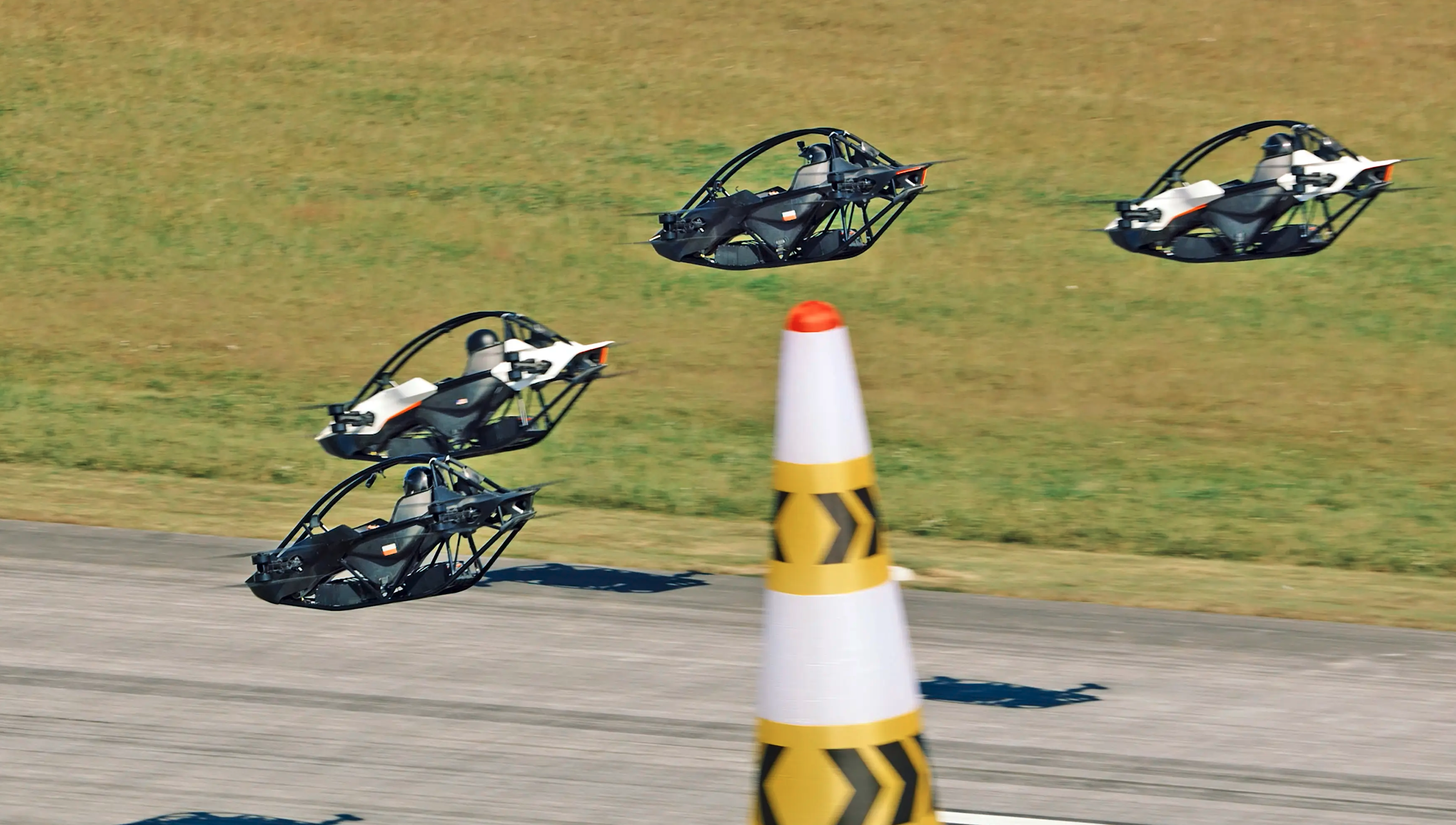
Four electric vertical take-off aircraft screaming through a pylon course in formation flight. Pilots banking hard around checkpoints. The crowd roaring as Jetson’s founder Tomasz Patan pulls a solo aerial display that looks like something from a science fiction movie. This wasn’t a concept demonstration or computer simulation—it was the world’s first competitive flying car race, held at UP.Summit 2025, and it marks the exact moment personal aviation stopped being experimental technology and became legitimate sport.

The “Jetson Air Games” concept unveiled at UP.Summit represents more than clever marketing for Jetson’s ONE personal electric aircraft. It’s the declaration that we’ve crossed a threshold: the technology works reliably enough, the pilots are skilled enough, and the aircraft are safe enough to race competitively. And once you can race something, once you can turn it into spectacle and competition, mass adoption accelerates exponentially.

Let me walk you through why this demonstration matters far beyond the impressive aerial acrobatics, and what it signals about the timeline for personal aviation becoming accessible reality rather than futuristic fantasy.

Continue reading… “The World’s First Flying Car Race Just Happened (And Changed Everything)”
CES 2026: The Year Robots Finally Leave the Lab and Enter Your Kitchen

By Futurist Thomas Frey

The Conversation Everyone Will Be Having

Walk the CES 2026 floor in Las Vegas this January and you’ll witness something remarkable: robots that actually do your laundry. Displays running at 720Hz—faster than human eyes can perceive. AI so deeply embedded in everyday devices it becomes invisible infrastructure rather than feature to market. But one exhibit will dominate every conversation, every social media feed, every “you have to see this” moment: LG’s CLOiD robot with human-like articulated arms performing actual household chores.

This isn’t another cute rolling assistant that plays music and tells jokes. This is a machine that folds your clothes, loads your dishwasher, and handles the mundane physical tasks that consume hours of your life. And it represents something bigger than one company’s product—it’s the moment home robotics crosses from novelty to necessity.

Let me walk you through the standout technologies that will define CES 2026 and why this year marks the inflection point where consumer tech stops being about screens and starts being about systems that think, see, and act autonomously in physical space.

Continue reading… “CES 2026: The Year Robots Finally Leave the Lab and Enter Your Kitchen”

Edge Computing Is Creating a New Industrial Nervous System

By Futurist Thomas Frey

Factories once ran on muscle, then on machines, and eventually on automation. Today, they are evolving into something entirely different—organisms with their own nervous systems. At the heart of this transformation is edge computing, a shift that allows industries to process data in real time, right where it’s generated.

The global edge computing market was valued at $16.45 billion in 2023 and is projected to skyrocket to $155.90 billion by 2030, growing at an annual rate of 36.9%. Meanwhile, connected IoT devices worldwide are expected to generate 79.4 zettabytes of data by 2025. This tidal wave of information would overwhelm centralized systems, but edge computing ensures decisions can be made instantly, without waiting for distant servers or cloud providers.

This is more than an efficiency play. It is the quiet construction of a new industrial nervous system.

Continue reading… “Edge Computing Is Creating a New Industrial Nervous System”

The Catalyst That Could Rewrite the Future of Plastic

Plastic is one of humanity’s greatest paradoxes. It is cheap, durable, and useful in almost every aspect of modern life. Yet those same qualities have made it one of our greatest burdens. Billions of tons of single-use plastics accumulate each year, and only a fraction ever gets recycled. The rest is burned, buried, or scattered across the planet in forms that linger for centuries.

Now, researchers at Northwestern University may have found a game-changing way forward. Their discovery—a nickel-based catalyst that can break down mixed plastics, even those contaminated with the notoriously difficult PVC—could dramatically simplify recycling. This breakthrough has the potential to transform one of the world’s most intractable waste problems into a renewable source of valuable products.

Continue reading… “The Catalyst That Could Rewrite the Future of Plastic”

The Rise of Drone Mailboxes: Redefining the Last Mile of Delivery

By Futurist Thomas Frey

For over a century, the humble mailbox has barely changed. A metal box by the curb or a slot in the door has served as the final checkpoint of global commerce. Letters, bills, and eventually Amazon packages all end up in the same simple container. But as drones, delivery robots, and autonomous couriers take flight, that old mailbox suddenly looks obsolete.

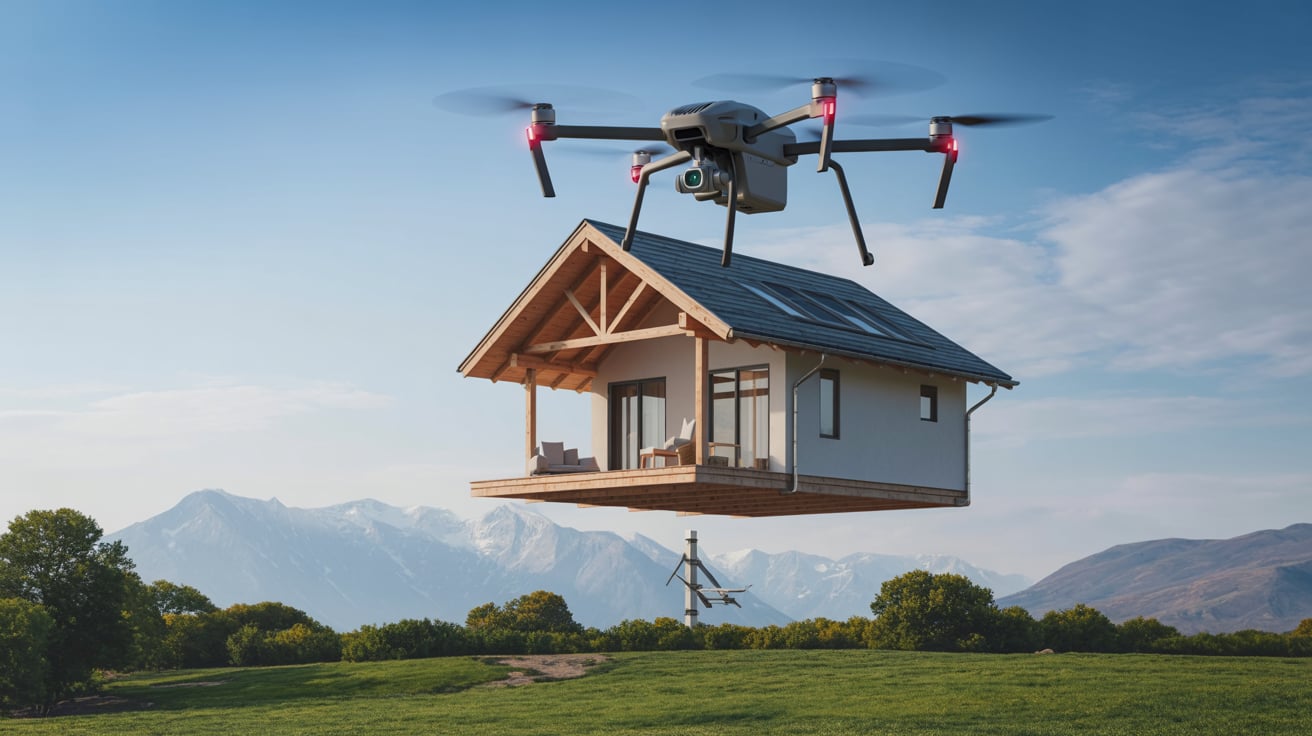
The future of delivery isn’t just about drones. It’s about the infrastructure that supports them—and companies like Arrive AI and Valqari are betting big on a new age of “smart mailboxes” designed to handle packages from air, land, and everything in between.

Continue reading… “The Rise of Drone Mailboxes: Redefining the Last Mile of Delivery”

Meta’s Smart Glasses: The Beginning of AI Worn on Your Face

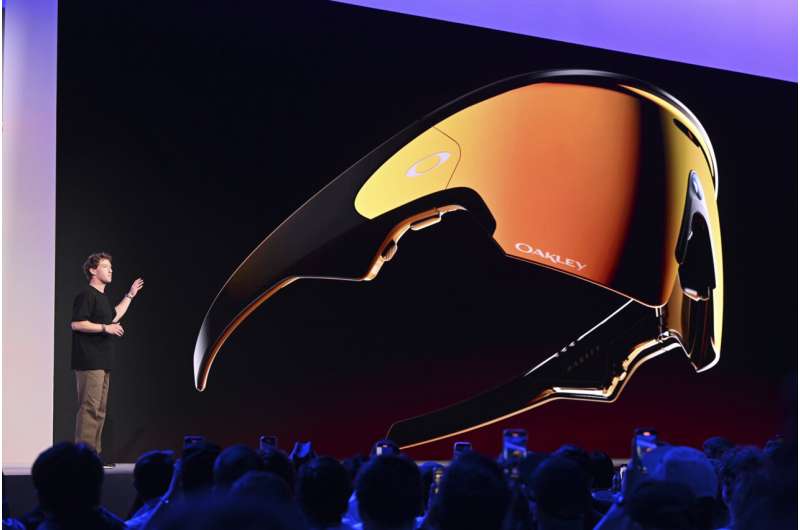
At Meta’s annual Connect conference, Mark Zuckerberg unveiled what could be remembered as a defining step in the evolution of human-computer interaction. Forget keyboards, forget touchscreens, forget even the smartphone—Meta believes the future is something you wear, something that sees what you see, hears what you hear, and responds to the subtlest flicker of a thought.

The newly launched Meta Ray-Ban Display glasses combine a tiny integrated display with an AI-powered neural wristband that reads barely perceptible movements. At $799, they are not a casual purchase, but Zuckerberg is clear about their role: this is the next stage of humanity’s digital interface.

Continue reading… “Meta’s Smart Glasses: The Beginning of AI Worn on Your Face”

Drinking Water from Thin Air: How 3D Printing Could Solve Humanity’s Thirst

More than two billion people across the globe still lack reliable access to clean drinking water. We tend to think of water as a resource found in rivers, lakes, or deep underground, but the atmosphere itself holds more water than all the rivers on Earth combined. What if the very air around us could be tapped like an invisible reservoir?

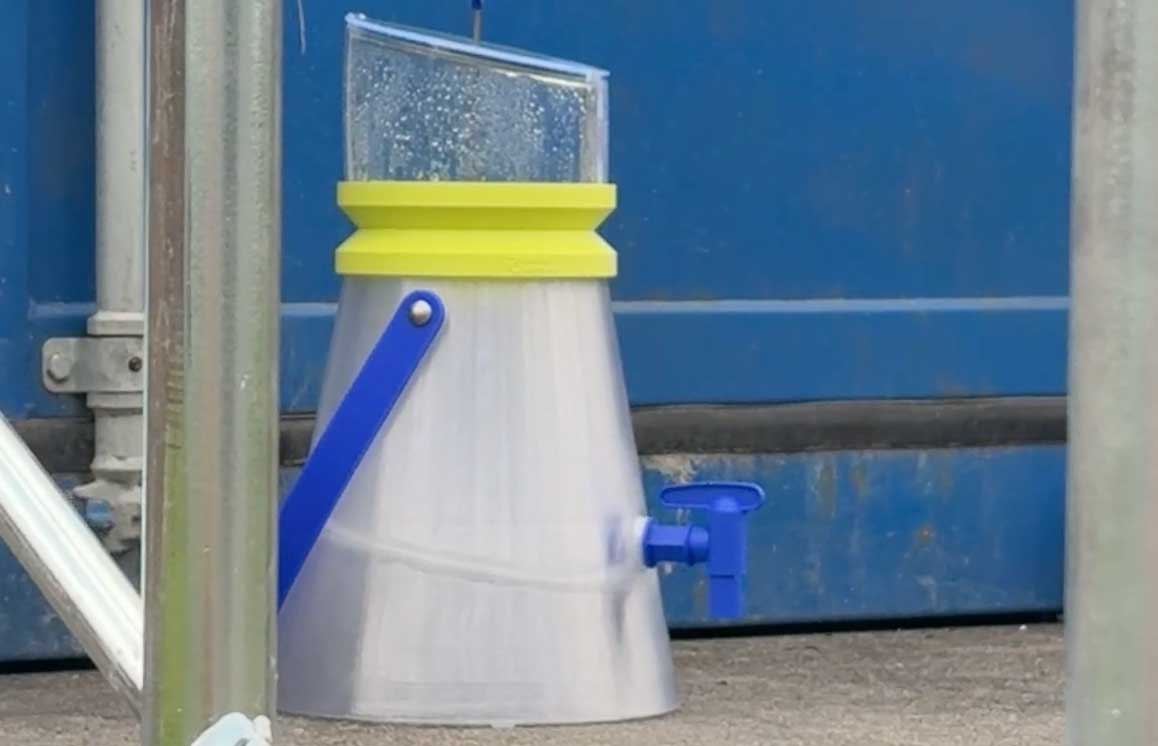
That’s exactly what two students at Münster University of Applied Sciences have set out to do. Their project, Water from Air, takes a futuristic approach to one of humanity’s oldest problems—using 3D printing and advanced materials to harvest water directly from the atmosphere.

Continue reading… “Drinking Water from Thin Air: How 3D Printing Could Solve Humanity’s Thirst”

The Dawn of Light-Powered Computing: Microsoft’s Optical Leap Beyond Silicon

For half a century, computing has been chained to silicon. Chips packed with billions of transistors have carried us from room-sized mainframes to smartphones in our pockets, but Moore’s Law is running out of runway. The next frontier may not be smaller circuits at all—but light itself.

At Microsoft’s Cambridge Research Lab in the U.K., scientists have built a prototype analog optical computer (AOC) that doesn’t rely on electrons but beams of light to perform computations. This radical shift could accelerate artificial intelligence, financial modeling, and medical diagnostics by as much as 100 times, while consuming just a fraction of the energy required by today’s processors.

Continue reading… “The Dawn of Light-Powered Computing: Microsoft’s Optical Leap Beyond Silicon”

BMW’s Vision CE: The Scooter That Wants to Redefine Urban Freedom

Motorcycles and scooters have always lived in the liminal space between convenience and danger. They promise speed, freedom, and agility, but at the cost of helmets, leathers, and the ever-present awareness of risk. BMW Motorrad, however, is reimagining that equation with a new concept that could make the two-wheeled experience safer, more accessible, and infinitely more futuristic: the Vision CE self-balancing scooter.

Continue reading… “BMW’s Vision CE: The Scooter That Wants to Redefine Urban Freedom”

The Drone Revolution: Racing Toward Aviation’s Next Historic Firsts

By Futurist Thomas Frey

How tomorrow’s changemakers will earn their place in history through pioneering achievements in unmanned flight

Few of us remember the second person to circumnavigate the globe or the second company to deliver a package by air. History belongs to the firsts, and the rapidly evolving world of drone technology presents an unprecedented opportunity for visionaries to claim their permanent place in the record books.

Every emerging technology produces a cascade of “firsts” that define its trajectory and potential. From Orville Wright’s 12-second flight to Chuck Yeager breaking the sound barrier, aviation’s pioneers shaped how we understand what’s possible in the skies. Today’s drone technology stands poised to generate its own wave of historic achievements—but which will prove most significant?

Continue reading… “The Drone Revolution: Racing Toward Aviation’s Next Historic Firsts”

Engines Hotter Than the Sun: The Microscopic Machines Redefining Thermodynamics

When most people think of engines, they picture pistons, turbines, or rockets roaring with fire. But the next revolution in engines is happening at a scale so small it’s invisible to the human eye. A team of researchers at King’s College London has just built the hottest engine in the world—not in a power plant or a jet, but in a vacuum chamber using a single glass bead smaller than a red blood cell. The effective temperature of this microscopic engine? Sixteen million kelvin, rivaling the core of the Sun.

Continue reading… “Engines Hotter Than the Sun: The Microscopic Machines Redefining Thermodynamics”

The Future of Meditation Might Be Plugged Into Your Ear

For thousands of years, meditation has promised inner peace, sharper focus, and deeper compassion. But in the modern world, cultivating those benefits is often a struggle. Training the mind requires patience, discipline, and years of practice. What if technology could accelerate that process, rewiring the brain in weeks instead of decades? A new study suggests we may be on the edge of doing just that—with nothing more than a tiny electrical device clipped to your ear.

Continue reading… “The Future of Meditation Might Be Plugged Into Your Ear”
Discover the Hidden Patterns of Tomorrow with Futurist Thomas Frey
Unlock Your Potential, Ignite Your Success.

By delving into the futuring techniques of Futurist Thomas Frey, you’ll embark on an enlightening journey.

Learn More about this exciting program.