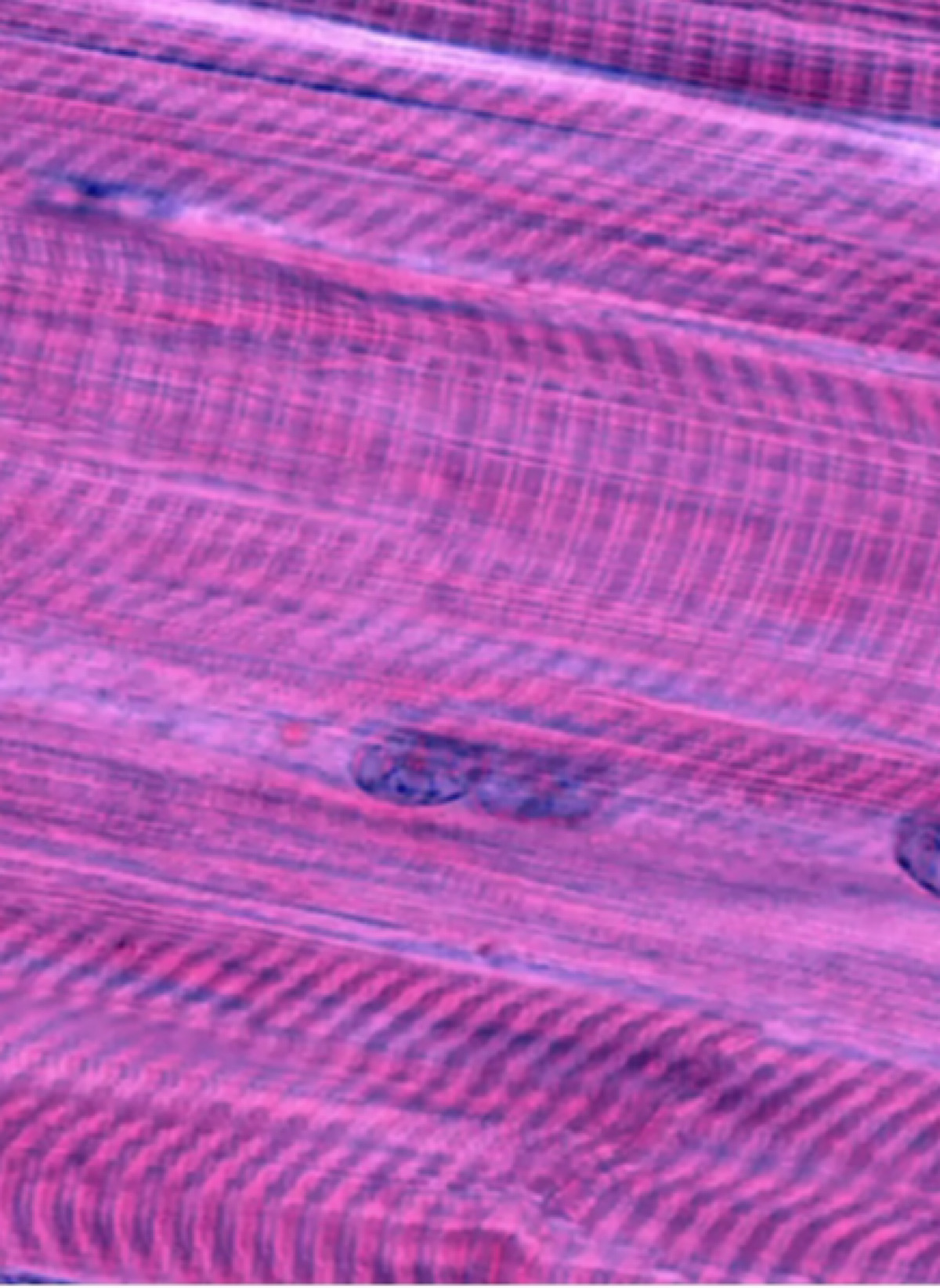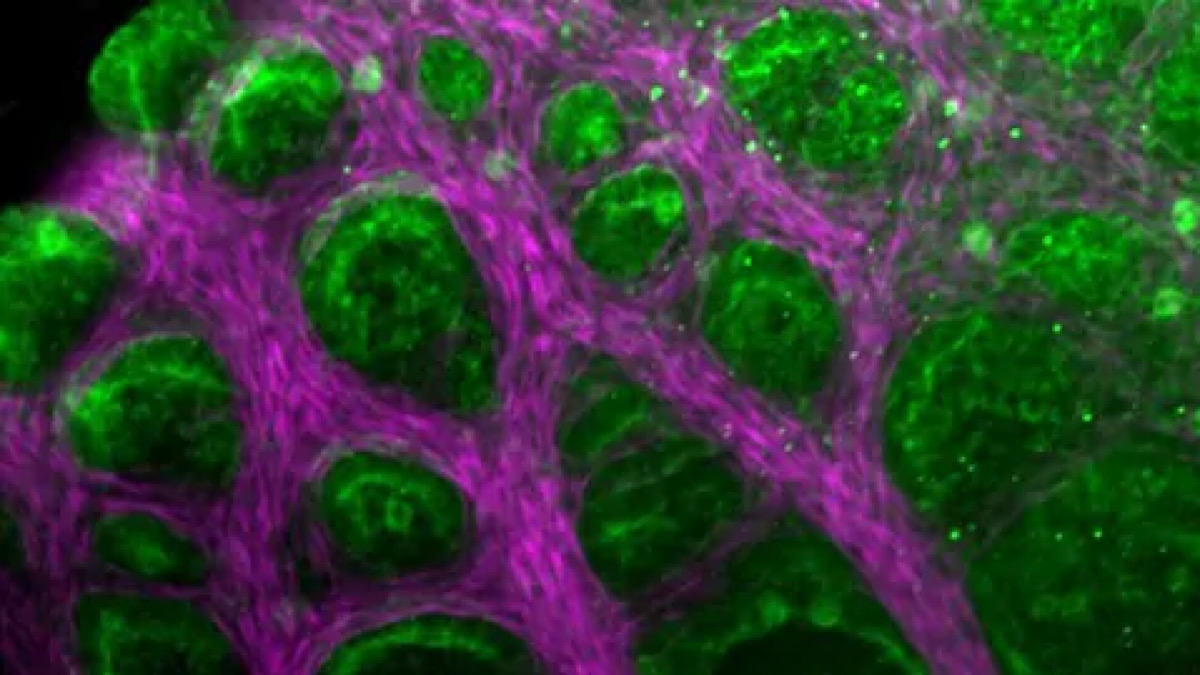
The lizard lung forms quickly by a leveraging simple mechanical process the researchers likened to a mesh stress ball, the common toy. As fluid fills the developing lung, the inner membrane pushes out against smooth muscle tissue. The muscle separates into a honeycomb-shaped mesh and the membrane bulges out through the gaps, creating the surface area needed for gas exchange. Credit: Image courtesy Celeste Nelson and Michael PalmerRead time: 5 minutesGet PDF Version
When it comes to studying lungs, humans take up all the air, but it turns out scientists have a lot to learn from lizards.
A new study from Princeton University shows how the brown anole lizard solves one of nature’s most complex problems — breathing — with ultimate simplicity. Whereas human lungs develop over months and years into baroque tree-like structures, the anole lung develops in just a few days into crude lobes covered with bulbous protuberances. These gourd-like structures, while far less refined, allow the lizard to exchange oxygen for waste gases just as human lungs do. And because they grow quickly by leveraging simple mechanical processes, anole lungs provide new inspiration for engineers designing advanced biotechnologies.
Continue reading… “Engineering Artificial Lungs With Help From Lizards”