New Compact And Dexterous Robotic Finger That Can Withstand Physical Impacts

A sectional view of the CAD model of the finger (top) and the prototype antagonistic variable stiffness finger mechanism (bottom).

By Amelia Podder

For decades researchers have worked to design robotic hands that mimic the dexterity of human hands in the ways they grasp and manipulate objects. However, these earlier robotic hands have not been able to withstand the physical impacts that can occur in unstructured environments. A research team has now developed a compact robotic finger for dexterous hands, while also being capable of withstanding physical impacts in its working environment.

The team of researchers from Harbin University of Technology (China) published their work in the journal Frontiers of Mechanical Engineering on October 14, 2022.

Robots often work in environments that are unpredictable and sometimes unsafe. Physical collisions cannot be avoided when multi-fingered robotic hands are required to work in unstructured environments, such as settings where obstacles move quickly or the robot is required to interact with humans or other robots. 

The energy generated by these impacts can damage the hardware systems of the robotic hands. The current dexterous hands are rigid and therefore can be easily damaged by physical impacts and collisions. There is a need for robots equipped with sturdy, dexterous hands that can withstand physical impacts. The research team worked to create a robotic finger that could mimic the human finger in dexterity and also in its ability to absorb and withstand physical impacts.

Continue reading… “New Compact And Dexterous Robotic Finger That Can Withstand Physical Impacts”
Battery-free smart devices to harvest ambient energy for IoT

The Internet of Things allows our smart gadgets in the home and wearable technologies like our smart watches to communicate and operate together.

Tiny internet-connected electronic devices are becoming ubiquitous. The so-called Internet of Things (IoT) allows our smart gadgets in the home and wearable technologies like our smart watches to communicate and operate together. IoT devices are increasingly used across all sorts of industries to drive interconnectivity and smart automation as part of the ‘fourth industrial revolution’.

The fourth industrial revolution builds on already widespread digital technology such as connected devices, artificial intelligence, robotics and 3D printing. It is expected to be a significant factor in revolutionising society, the economy and culture.

These small, autonomous, interconnected and often wireless devices are already playing a key role in our everyday lives by helping to make us more resource and energy-efficient, organised, safe, secure and healthy.

There is a key challenge, however – how to power these tiny devices. The obvious answer is “batteries”. But it is not quite that simple.

Continue reading… “Battery-free smart devices to harvest ambient energy for IoT”

Jellyfish-Like Robot Can Carefully Grasp Fragile Objects

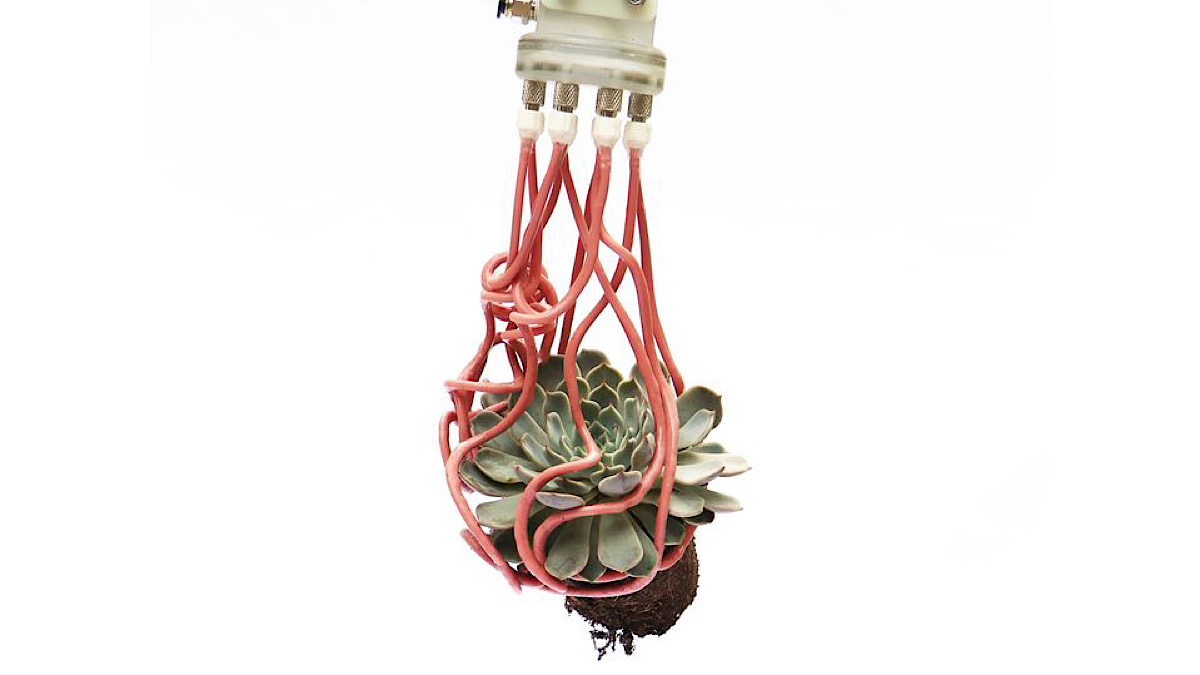
Soft gripper grasps succulent.

If you’ve ever played the claw game at an arcade, you know how hard it is to grab and hold onto objects using robotics grippers. Imagine how much more nerve-wracking that game would be if, instead of plush stuffed animals, you were trying to grab a fragile piece of endangered coral or a priceless artifact from a sunken ship. 

Most of today’s robotic grippers rely on embedded sensors, complex feedback loops, or advanced machine learning algorithms, combined with the skill of the operator, to grasp fragile or irregularly shaped objects. But researchers from the Harvard John A. Paulson School of Engineering and Applied Sciences (SEAS) have demonstrated an easier way.

Taking inspiration from nature, they designed a new type of soft, robotic gripper that uses a collection of thin tentacles to entangle and ensnare objects, similar to how jellyfish collect stunned prey. Alone, individual tentacles, or filaments, are weak. But together, the collection of filaments can grasp and securely hold heavy and oddly shaped objects. The gripper relies on simple inflation to wrap around objects and doesn’t require sensing, planning, or feedback control. 

Continue reading… “Jellyfish-Like Robot Can Carefully Grasp Fragile Objects”

Would YOU try a ‘human washing machine’? Japanese scientists are developing a futuristic AI bath that washes you with tiny bubbles while blasting out soothing music and videos

By FIONA JACKSON

  • A ‘human washing machine’ is being developed that can ‘wash the mind’ 
  • High-speed water containing microbubbles is used to clean the user’s body
  • At the same time, their heart rate is measured to gauge their level of relaxation
  • An artificial intelligence uses this data to choose the best video for them

If the bubbles, rose petals and scented candles aren’t enough to soothe you after a long day, your dream bath may be just around the corner.

Scientists in Japan are developing a ‘human washing machine’ that cleans your body while playing a relaxing video chosen for you by artificial intelligence (AI).

The ultrasonic bath will blast users with high-speed water containing extremely fine air bubbles which remove dirt from the pores.

Continue reading… “Would YOU try a ‘human washing machine’? Japanese scientists are developing a futuristic AI bath that washes you with tiny bubbles while blasting out soothing music and videos”

SpaceX announces Starlink Internet service on airplanes

SpaceX announced that its satellite internet service Starlink will be available on select airplanes beginning next year.Starlink Aviation will offer Internet speeds of up to 350 Mbps to each plane that is equipped with its Aero Terminal, which it says is fast enough for video calls, online gaming, “and other high data rate activities.”

“With Starlink, passengers will be able to access high-speed, low-latency internet from the moment they walk on their plane,” SpaceX said in a tweet.According to The Verge, most flights offer speeds that max out around 10 Mbps per flight. Some satellite systems offer between 30Mbps and 100Mbps.

According to Starlink Aviation’s website, the new service will have global coverage, with deliveries expected in mid-2023.”Since the satellites are moving in low-Earth orbit, there are always satellites overhead or nearby to provide a strong signal at high latitudes and in polar regions — unlike with geo-stationary satellites,” Starlink Aviation’s website said.

Continue reading… “SpaceX announces Starlink Internet service on airplanes”

10,000 Times Quicker: New Breakthrough Could Change the Field of Medical Microrobots

The breakthrough is expected to help improve the efficiency of regenerative medicine, such as stem cell delivery.

Scientists have developed a mass-production method for biodegradable microrobots that can dissolve into the body after delivering cells and medications.

In order to create a technology that can produce more than 100 microrobots per minute that can be disintegrated in the body, Professor Hongsoo Choi’s team at the Department of Robotics and Mechatronics Engineering at the Daegu Gyeongbuk Institute of Science & Technology (DGIST)worked with Professor Sung-Won Kim’s team at Seoul St. Mary’s Hospital, Catholic University of Korea, and Professor Bradley J. Nelson’s team at ETH Zurich.

There are many approaches to building microrobots with the goal of minimally invasive targeted precision treatment. The most popular of them is the ultra-fine 3D printing process known as the two-photon polymerization method, which triggers polymerization in synthetic resin by intersecting two lasers.

This technique has the ability to create structures with nanometer-level accuracy. The drawback is that it takes a lot of time to create a single microrobot since voxels, the pixels realized by 3D printing, must be successively cured. In addition, during the two-photon polymerization process, the magnetic nanoparticles in the robot may block the light path. When utilizing highly concentrated magnetic nanoparticles, the process result may not be uniform.

Continue reading… “10,000 Times Quicker: New Breakthrough Could Change the Field of Medical Microrobots”

World’s first ‘Electromagnetic Sled’ begins operation in China

The world’s first electromagnetic ultra-high-speed propulsion ground testing facility “Electromagnetic Sled” has begun operation in Jinan City, east China’s Shandong Province.

The facility has a maximum propulsion speed of 1,030 kilometers per hour for objects of a tonne or more, setting the world’s highest speed record for high-mass ultra-high-speed electromagnetic propulsion technology.

It is a major project of strategic cooperation between the Chinese Academy of Sciences and the governments of Shandong Province and Jinan City.

Continue reading… “World’s first ‘Electromagnetic Sled’ begins operation in China”

TEAM USES LIVE PLANT CELLS IN 3D PRINTING

Above, Arabidopsis thaliana leaf protoplasts.

BY MICK KULIKOWSKI

Researchers have developed a reproducible way of studying cellular communication among varied types of plant cells by “bioprinting” those cells with a 3D printer.

Learning more about how plant cells communicate with each other—and with their environment—is key to understanding more about plant cell functions and could ultimately lead to creating better crop varieties and optimal growing environments.

The researchers bioprinted cells from the model plant Arabidopsis thaliana and from soybeans to study not just whether plant cells would live after being bioprinted—and for how long—but also how they acquire and change their identity and function.

“A plant root has a lot of different cell types with specialized functions,” says Lisa Van den Broeck, a postdoctoral researcher at North Carolina State University and first author of a paper describing the work. “There are also different sets of genes being expressed; some are cell-specific. We wanted to know what happens after you bioprint live cells and place them into an environment that you design. Are they alive and doing what they should be doing?”

The process of 3D bioprinting plant cells is mechanically similar to printing ink or plastics, with a few necessary tweaks.

Continue reading… “TEAM USES LIVE PLANT CELLS IN 3D PRINTING”

Synthetic data for AI fills gaps in edge cases

Movie magic: computer generated images of automotive scenarios provide valuable synthetic data for AI.

By James Tyrrell

Self-driving car developers safely explore extreme scenarios during autonomous vehicle training thanks to the rise of synthetic data for AI. 

Deep learning has pushed the capabilities of artificial intelligence to new levels, but there are still some kinks to straighten out. Particularly in safety-critical applications such as self-driving cars. If an artificial intelligence (AI) recommendation engine gets its predictions wrong and puts a strange advert in your browser window, you might raise an eyebrow. But no long-term damage would have been done. Things are very different of course when algorithms get behind the wheel and encounter something they’ve never seen before. Rare events, or edge cases, present a tricky problem for developers of autonomous vehicles. Fortunately, synthetic data for AI – based on lifelike simulations of real-world events – could help to fill in the gaps.

Continue reading… “Synthetic data for AI fills gaps in edge cases”

A.I.-driven robots are cooking your dinner

Your next Friday night pizza may be made by robot hands.

BY STEPHANIE CAINE

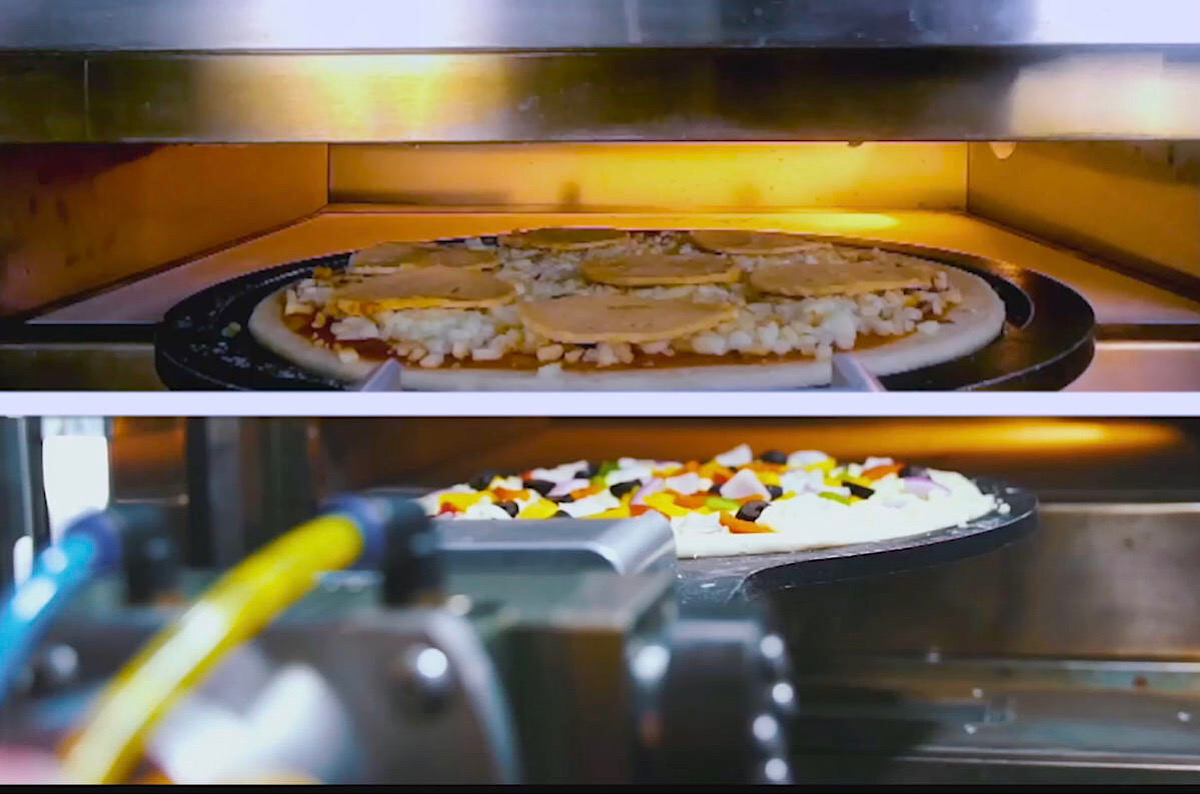
That’s the vision of Ajay Sunkara, who launched the Pizzaiola autonomous chef, an A.I.-driven, voice-controlled pizza maker that’s making its way to Chicago-based regional pizza chain, Slice Factory. The robotic chef monitors more than 1,200 parameters every microsecond, from managing food quality to the point-of-sales machine.

When a customer places a pizza order, Pizzaiola will select, press, and stretch the dough; add the sauce, cheese, and toppings; then cook, slice, and box the pizza all to the customer’s specified preferences. It’s fulfilled in real time and can even have an individual jumbo slice ready to go through the Slice Factory drive-thru in minutes.

Not a single human touch is involved.

“There are robotics in the food industry, but in factories, meat-processing centers, and packaged food processing,” Sunkara tells Fortune. “We reduced the scale of it from industrial to something that can fit in a normal commercial kitchen.”

Continue reading… “A.I.-driven robots are cooking your dinner”

New Zealand: Superconducting Magnet Tech Demonstrator in Space

The University of Wellington’s Paihau-Robinson Research Institute and an astronautics company based in Texas have announced a partnership to launch a new superconducting magnet technology demonstrator to test a novel type of space propulsion.

By Samaya Dharmaraj

Paihau-Robinson selected the Houston-based hosted-payload provider to launch a superconducting magnet technology demonstrator to the International Space Station (ISS). According to a statement, the Institute is undertaking a five-year research programme into the application of its proprietary magnet technology to a type of electric space thruster, applied-field magneto plasma dynamic (AF-MPD) thrusters. There is currently only one example of a similar thruster being flown in space, with the mass and power requirements of magnetic components being a key technological barrier.  The Institute intends to leverage its advancements in high-temperature superconducting (HTS) magnet development to overcome these obstacles.

The Primary Investigator and Institute Director, Nick Long, stated that the research leverages Paihau-Robinson’s twenty-year track record in HTS magnet technology to drastically reduce the mass and power consumption of these thrusters, demonstrating a viable pathway to commercial applications. The researchers believe they could provide propulsion solutions for large spacecraft instead of electric thrusters.

The payload will launch to the ISS where it will be installed into the private player’s external platform by astronauts onboard the station. Engineers on the ground will then operate the magnet over several months-demonstrating the ability to generate a core magnetic field thousands of times stronger than that of the Earth, along with shielding to ensure the safety and stability of surrounding equipment.

Continue reading… “New Zealand: Superconducting Magnet Tech Demonstrator in Space”

Boffins propose Slinky-like robot that can build stuff in space

E-Walker is a ‘seven degrees-of-freedom fully dexterous end-over-end walking robot’

By Richard Currie 

Although large in-space construction projects are the stuff of science fiction, they will have to become science fact as missions grow ever more ambitious. Researchers at the University of Lincoln have decided to get a head start.

Introducing the design for an “End-over-end Walking Robot” (or E-Walker) in the Frontiers in Robotics and AI journal, study authors Manu Harikrishnan Nair, Mini Chakravarthini Rai, and Mithun Poozhiyil describe “an innovative dexterous walking robotic system for in-orbit assembly missions.”

They say that simulated results “prove the dual E-Walker robotic system’s efficacy for accomplishing complex in-situ assembly operations through task-sharing,” using a Large Aperture Space Telescope (LAST) as an example.

“We need to introduce sustainable, futuristic technology to support the current and growing orbital ecosystem,” said lead author Nair, PhD candidate at the University of Lincoln.

“As the scale of space missions grows, there is a need for more extensive infrastructures in orbit. Assembly missions in space would hold one of the key responsibilities in meeting the increasing demand.”

Continue reading… “Boffins propose Slinky-like robot that can build stuff in space”
Discover the Hidden Patterns of Tomorrow with Futurist Thomas Frey
Unlock Your Potential, Ignite Your Success.

By delving into the futuring techniques of Futurist Thomas Frey, you’ll embark on an enlightening journey.

Learn More about this exciting program.