Company That 3D-Prints Houses on Earth Lands Lunar Construction Contract

In a conceptual rendering, astronauts watch robots 3D-print structures out of processed lunar dirt.

By Rob Pegoraro

NASA awards Icon a $57.2 million contract to develop a system to build structures on the Moon out of mined lunar dirt.

NASA’s plans to return astronauts to the Moon include giving them someplace roomier to stay than their own spacecraft. So the space agency is paying a company that 3D prints home structures on Earth to develop the same technology for lunar use. 

Under a $57.2 million contract announced Tuesday under NASA’s Small Business Innovation Research program, Austin-based Icon Technology, Inc., will continue previous collaborations with NASA to develop its Project Olympus additive-construction concept into a system to build structures on the moon.

The raw material for the first such structure is already on the Moon: the surface layer of soil, or regolith to geologists. NASA’s plans for long-term exploration of the Moon and, eventually, Mars rely heavily on generating needed materials and supplies from what’s on the ground there—what it calls “In situ resource utilization”—instead of shipping everything from Earth. 

In Icon’s idea, robots will mine regolith for processing by Olympus machines into a material that can then be extruded to create structures that you might think of as exceptionally sci-fi sand castles. 

Continue reading… “Company That 3D-Prints Houses on Earth Lands Lunar Construction Contract”

MIT Is Working on Self-Assembling Robots

Today, humans build robots, but in the future, robots could be programmed to build more of themselves. Researchers at MIT’s Center for Bits and Atoms (CBA) have created robotic subunits called “voxels” that can self-assemble into a rudimentary robot, and then collect more voxels to assemble larger structures or even more robots.

The researchers, led by CBA Director Neil Gershenfeld, concede that we’re still years away from a true self-replicating robot, but the work with voxels is answering some vital questions that will help us get there. For one, the team has shown that it’s feasible to make the assembler bot and the structural components of whatever you’re building can be made of the same subunits — in this case, voxels.

Each robot consists of several voxels connected end-to-end. They use small but powerful magnets to latch onto additional subunits, which they can use to assemble new objects or make themselves larger. Eventually, a human operator might simply be able to tell these self-assembling robots what they want to be built, allowing the machines to figure out the specifics.

For example, if one robot isn’t enough to build the required structure, it can make a copy of itself from the same voxel components to split the work. When building something large, the robots could also decide to make themselves bigger and thus more efficient for the task. It could also be necessary for large robots to split into smaller ones for more detailed work.

Continue reading… “MIT Is Working on Self-Assembling Robots”

SpaceChain Paves the Way for High-speed Blockchain Processing in Space with Seventh Payload Launch

SpaceChain announced it has successfully launched its second Ethereum Virtual Machine (EVM) payload into space aboard a SpaceX Falcon 9 rocket, which is on its way to the International Space Station (ISS) for installation via the SpaceX Dragon 2 spacecraft. The mission marks SpaceChain’s seventh successful blockchain payload launch into space, and the second integration of its payload with Velas, the world’s fastest EVM blockchain and open-source platform for decentralized applications.

Once installed and tested on the ISS via Nanoracks, the space node will be capable of processing Velas blockchain on the ISS and sending Velas digital assets from space, such as VLX, tokens and NFTs, in addition to performing complete high-speed transaction services across the Velas platform, including smart contract deployment and coin minting.

Today’s mission not only reaffirms SpaceChain’s commitment in empowering blockchain companies to harness space as a platform for business innovation, and the high customizability of blockchain-enabled space nodes in meeting diverse industry needs, it also validates the possibility and feasibility of performing high-speed blockchain processing in space, and serves as a successful scientific demonstration of SpaceChain’s highly integrative space-as-a-service solutions with EVM compatible blockchain technology.

Continue reading… “SpaceChain Paves the Way for High-speed Blockchain Processing in Space with Seventh Payload Launch”

Additive Manufacturing is Propelling the Next Generation of Space Exploration

Figure 1: Turbomachinery components like those shown here are typically produced using laser metal fusion.

By Eliana Fu

The next frontier includes 3D-printed materials and antennas.

What do I think about space exploration? If you ask me that question and get me started on that topic, I probably won’t be able to stop. Since the new space race has begun, we are starting to see “new space” companies pop up that are basically tech startups: highly motivated, enthusiastic, driven individuals who are committed to their mission and will do “what’s right” to achieve their goals. Additive manufacturing (AM), or 3D printing, is a tool they can use to help achieve their goals. For metallic components on spacecraft or even on the launch pad, AM is, simply put, propelling the next generation of space exploration.

In the last few years, we have seen tremendous success in the public and private space exploration industry. The legendary William Shatner (Captain Kirk of “Star Trek” fame) took a ride on Blue Origin’s New Shepard vehicle when he was 90, becoming the oldest person to go to space. SpaceX’s Starship has a new tentative launch date for late 2022. Virgin Orbit launched satellites from the Mohave Air and Space Port, and they are on target to launch from the U.K. in coming months. Firefly had its first successful flight, and Astra also returned to launching from its Alaska facility. NASA’s Artemis mission got underway and, though pushed back, will resume when it is safe to do so. Many others continued making progress, including Rocketlab, ABL Space, Stoke Space, Venus Aerospace, and Firehawk.

The conversation of using AM for space exploration has continued unabated. For example, Relativity Space announced its intention to launch in late October 2022. This is significant, given that a large proportion of its vehicle is produced using AM processes, such as wire-arc additive manufacturing (WAAM) and laser-powder-bed fusion—also called laser metal fusion (LMF).

Many other space flight companies—old and new—are using AM processes for structural components, fuel tanks, barrels, and propulsion devices. The classic rocket engine lends itself well to 3D printing, and laser metal fusion is appropriate to produce turbo machinery, injectors, combustion chambers, and nozzles.

Continue reading… “Additive Manufacturing is Propelling the Next Generation of Space Exploration”

3D Organs Soon? This Indian Start-up is Breathing Life Into Science, Printing One Layer of Human Tissue at a Time

While the world has already seen the success of 3D dental and orthopedic implants, the next big challenge has been to develop whole new 3D human organs.

By:  Srishti Choudhary

Bioprinting can revolutionise the healthcare market and holds promise for millions of patients stuck in an endless wait for organ transplants — a list that gets longer every minute with a new name added to it.

What comes to your mind when you think of 3D human organ? A computer-generated structure? What if scientists could actually inject life into this structure and help patients get a new lease of life?

Born in the aftermath of the pandemic, a Bengaluru-based deep tech start-up — Avay Biosciences — is attempting to do their bit to transform this long-held dream into a reality, printing one layer of live human tissues at a time. The team of young entrepreneurs has just launched their first product — the indigenous advanced 3D Bioprinter ‘Mito Plus’ — which has been successfully tested at Indian Institute of Science (IISc) Bangalore, and is ready to print human tissues.

Continue reading… “3D Organs Soon? This Indian Start-up is Breathing Life Into Science, Printing One Layer of Human Tissue at a Time”

Bionaut Labs Develop Robots to Deliver Drugs Directly into the Brain

By Disha Chopra

The team of researchers behind Apple’s Face ID, from Bionaut Labs, has developed robots that deliver drugs directly into the brain. The trials aim to deliver drugs with the help of tiny robots to treat certain types of brain tumors at complex locations and a rare neurological disorder called Dandy-Walker Syndrome. The robots will poke holes in the located cyst and eventually release a drug to the targeted area.  

Bionaut Labs is an LA-based research lab that revolutionizes treatments requiring medical professionals to reach deep locations in the human body safely and precisely. The company has raised approximately US$43.2mn in a funding round led by Khosla Ventures to fund its latest clinical trials. 

Continue reading… “Bionaut Labs Develop Robots to Deliver Drugs Directly into the Brain”

South Korean capital launches self-driving bus experiment

South Korea’s capital launched its first self-driving bus route on Friday, part of an experiment which engineers said aims to make people feel more comfortable with driverless vehicles on the roads.


By Kang Jin-kyu

The new vehicle does not look like a regular bus and has rounded edges along with large windows that make it appear more like a toy than a technological breakthrough.

This design is intentional, said Jeong Seong-gyun, head of autonomous driving at 42dot, the start-up responsible for the self-driving technology that is now owned by auto giant Hyundai.

“This is the future,” he told AFP, adding that the bus required “a considerable new type of design”.

The bus looks a bit “like Lego” and is made of composite parts to help keep costs down and make it easy to replicate, he said.

It uses cameras and lasers to navigate the way instead of expensive sensors, Seong-gyun added.

Continue reading… “South Korean capital launches self-driving bus experiment”

China Space Program Plans to Build a Nuclear-powered Moon Base by 2028

China Space Program Plans to Build a Nuclear-powered Moon Base by 2028

John Lopez

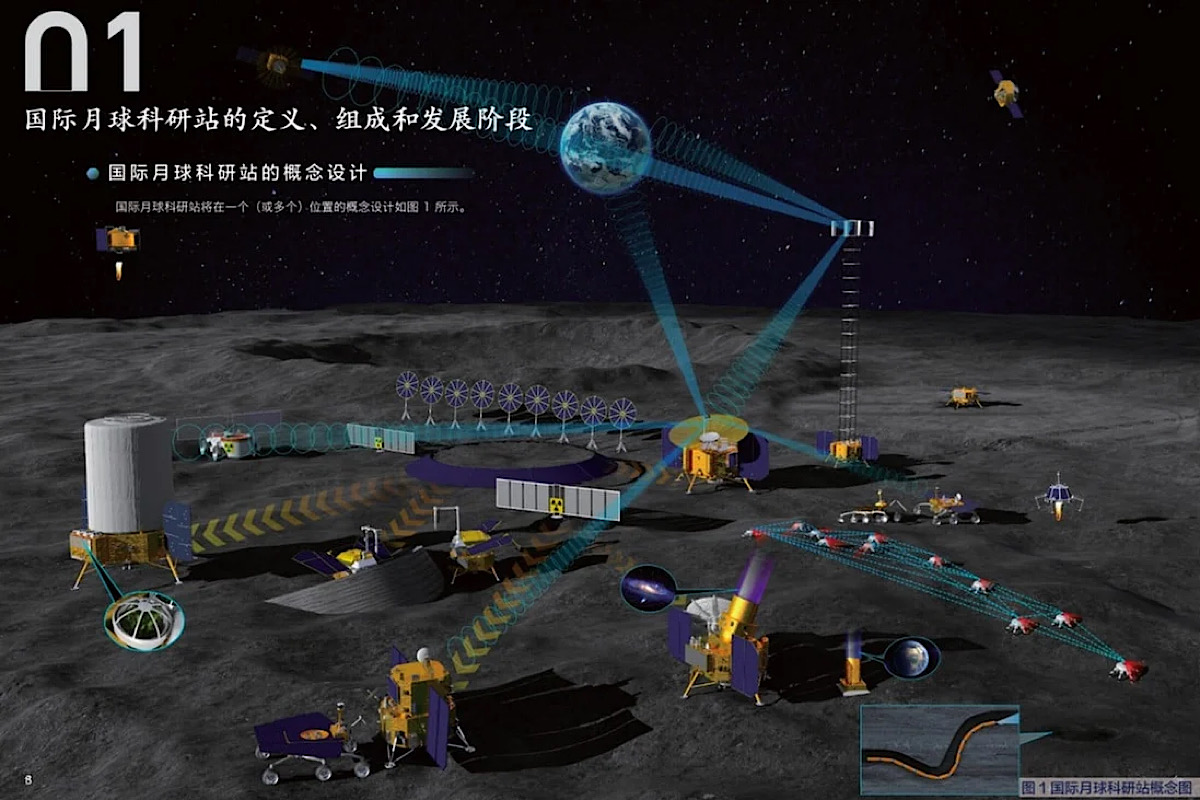
China is looking to establish its first base on the lunar surface by 2028. This is part of the country’s plans to send its astronauts to the moon in subsequent years, a challenge to NASA’s revived space supremacy.

Local news outlets report that China’s planned moon station will be built on the moon’s south pole, and it will be completely nuclear-powered.

Continue reading… “China Space Program Plans to Build a Nuclear-powered Moon Base by 2028”

Google Research Proposes an Artificial Intelligence (AI) Model to Utilize Vision Transformers on Videos

By Ekrem Çetinkaya

Transformers have played a crucial role in natural language processing tasks in the last decade. Their success attributes mainly to their ability to extract and exploit temporal information. 

When a certain method works well in a domain, it is normal to expect to see studies that try to bring that method to other domains. This was the case with transformers as well, and the domain was computer vision. Introducing transformers to vision tasks was a huge success, bringing numerous similar studies afterward. 

The vision transformer (ViT) was proposed in 2020, outperforming its convolutional neural network (CNN) counterpart in the image classification tasks. Its main benefits were at a large scale since they require more data or stronger regularisation. 

ViT inspired many researchers to dive deeper into the rabbit hole of transformers to see how further they can go in different tasks. Most of them focused on image-related tasks, and they obtained really promising results. However, the application of ViTs into the video domain remained an open problem, more or less.

When you think of it, transformers, more importantly, attention-based architectures, look like the perfect structure to be used with videos. They are the intuitive choice for modeling the dependency in natural languages and extracting contextual relationships between the words. A video also contains these properties, so why not use the transformer to process videos? This is the question the authors of ViViT asked, and they came up with an answer. 

Most state-of-the-art video-related solutions use 3D-convolutional networks, but their complexity makes it challenging to achieve proper performance on commodity devices. Some studies focused on adding the self-attention property of transformers into the 3D-CNNs to better capture long-term dependencies within the video. 

Continue reading… “Google Research Proposes an Artificial Intelligence (AI) Model to Utilize Vision Transformers on Videos”

Designing a 3D-printed EMG bionic hand as a low-cost alternative to prosthetic limbs

The cost of a new prosthetic arm can range from several thousand dollars to tens of thousands, putting them out of reach for many people. Ahmad Ikram recognized this need and decided to design and build a far cheaper, open source version that has myoelectric capabilities.

To begin this project, Ikram decided upon using the InMoov 3D-printed arm design from French sculptor Gael Langevin due to it being easy to construct. The hand itself contains a single wire connected to each finger, while the other end gets wrapped around a servo motor horn so that the finger can bend whenever the serv moves. A Myoware muscle sensor is responsible for reading the electrical signals generated by muscle contractions and converting them into a readable analog voltage, which is read by an Arduino Nano’s analog pin.

Continue reading… “Designing a 3D-printed EMG bionic hand as a low-cost alternative to prosthetic limbs”

Robotic capsule could replace injected biologics

MIT researchers have developed a robotic capsule that tunnels through mucus in the GI tract to deliver large oral protein-based drugs like insulin.

Scientists at MIT have demonstrated that a novel robotic capsule could potentially replace conventional biologic injection methods by tunnelling through the intestinal mucus barrier to deliver insulin.

The research, published in the journal Science Robotics described how the new drug delivery system can transport large protein and small-molecule drugs, like vancomycin, an antibiotic peptide.

Traditionally, delivering protein drugs orally has been challenging. The mucosal lining of the small intestine prevents large molecules passing into cells. The acidic nature of the digestive tract also presents a barrier by breaking down drugs before they can be absorbed.

To solve this problem, the team at MIT developed a multivitamin-sized capsule that tunnels through mucus.

The RoboCap capsule carries its drug payload in a small reservoir at one end and carries the tunnelling features in its main body and surface. The capsule is coated with gelatine that can be tuned to dissolve at a specific pH.

Once dissolved, the change in pH triggers a motor to start spinning inside the capsule. This motion helps the capsule to tunnel into the mucus and displace it.  The capsule is also coated with small studs that brush mucus away. The spinning action helps to erode the compartment that carries the drug, so the drug can be gradually released into the digestive tract.

Continue reading… “Robotic capsule could replace injected biologics”

A wave-powered prototype device is aiming to produce drinking water from the ocean

Ocean Oasis’ Gaia system has been designed to use wave power to desalinate water.

By Anmar Frangoul

KEY POINTS

  • Ocean Oasis says its technology will enable “the production of fresh water from ocean waters by harnessing the energy of the waves to carry out a desalination process.” 
  • Development of the prototype has received financial backing from a range of organizations including Innovation Norway and the Gran Canaria Economic Promotion Society.
  • The Canary Islands are a Spanish archipelago in the Atlantic Ocean. 

Plans to use marine energy to desalinate water received a further boost this week, after a Norwegian firm presented a system that will be put through its paces in waters off Gran Canaria.

In a statement Monday, Oslo-headquartered Ocean Oasis said its wave-powered prototype device, which it described as being an “offshore floating desalination plant,” was called Gaia.

The plant — which has a height of 10 meters, a diameter of 7 meters and weighs roughly 100 tons — was put together in Las Palmas and will undergo testing at the Oceanic Platform of the Canary Islands.

Ocean Oasis said its technology would enable “the production of fresh water from ocean waters by harnessing the energy of the waves to carry out a desalination process and pump potable water to coastal users.”

Continue reading… “A wave-powered prototype device is aiming to produce drinking water from the ocean”
Discover the Hidden Patterns of Tomorrow with Futurist Thomas Frey
Unlock Your Potential, Ignite Your Success.

By delving into the futuring techniques of Futurist Thomas Frey, you’ll embark on an enlightening journey.

Learn More about this exciting program.