Take a look inside a robot fast-food kitchen with fully autonomous ovens, freezers, and cleaning systems that don’t require any staff

Hyper Robotics’ kitchens. 

By Kate Duffy

  • Hyper Robotics’ kitchens can make fast-food using autonomous robotic machines.
  • The 40-feet kitchens have ovens, freezers, and metal detectors that don’t need human help.
  • The first kitchen was built for a Pizza Hut location in Israel, which can make 50 pizzas an hour.

Hyper Robotics is building 40-feet robotic fast-food kitchens filled with fully autonomous machines which don’t require human staff.

Continue reading… “Take a look inside a robot fast-food kitchen with fully autonomous ovens, freezers, and cleaning systems that don’t require any staff”

This Hyperspeed Space Sail Could Take Us to Next-Door Star Systems

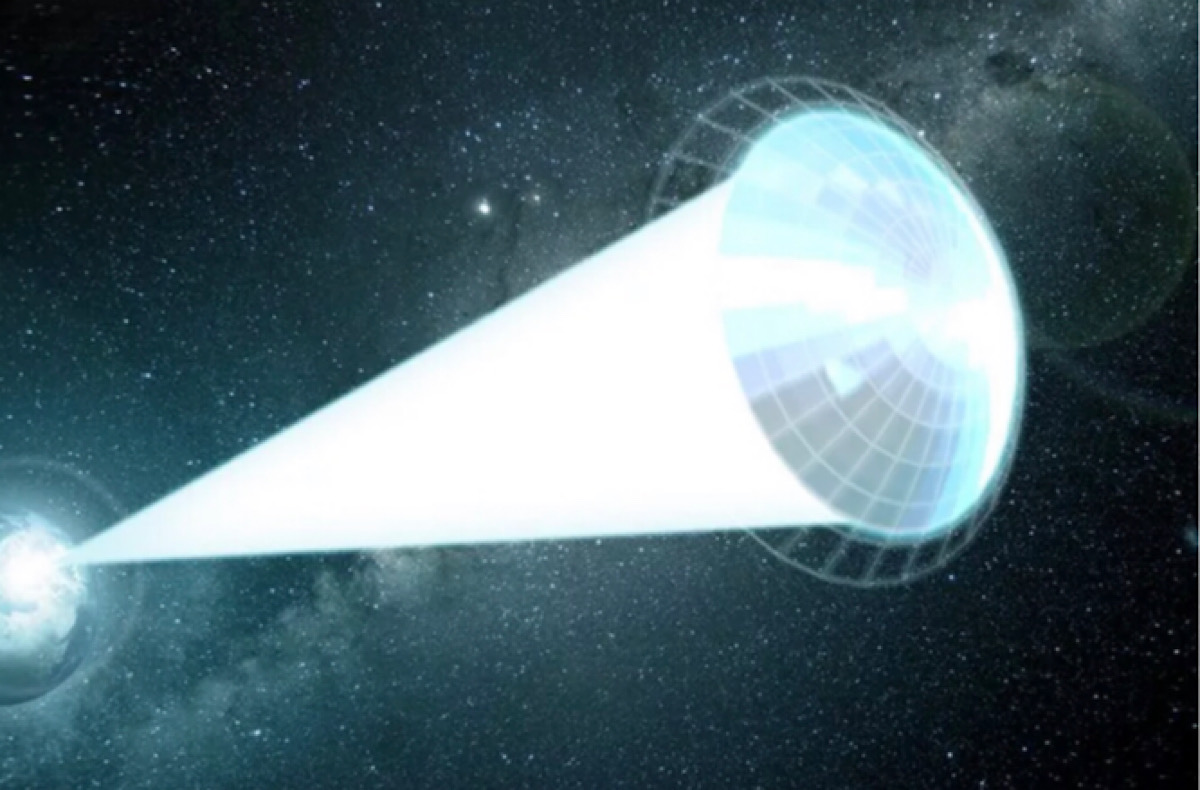
An artist’s conception of the Starshot Lightsail spacecraft during acceleration by a ground-based laser array.

By Monisha Ravisetti

For years, physicists have been trying to perfect a way to catapult space probes at a fifth the speed of light. One team is flagging an important section of the blueprint.

Only about 4 light-years away from our solar system lies Alpha Centauri, another bustling space neighborhood. It’s anchored by three stars with the same job as our sun, holds planets analogous to our eight famous orbs and may even have an Earth twin hanging out in the habitable zone.Almost like an alternate reality, the star system is a tantalizing region for space explorers.

There’s just one, glaring issue. With our present technology, spacecraft sent toward Alpha Centauri wouldn’t arrive until somewhere around the year 82022. That’s why, in 2016, late astrophysicist Stephen Hawking and investor Yuri Milner launched Breakthrough Starshot — an initiative to send microchip-size space probes over to Alpha Centauri at 20% the speed of light, reducing the whopping travel time to a mere 20 years. 

Continue reading… “This Hyperspeed Space Sail Could Take Us to Next-Door Star Systems”

Stanford University uses AI computing to cut DNA sequencing down to five hours

Speeding up the genome sequencing process has earned the project a Guinness World Record title.

By Aimee Chanthadavong

A Stanford University-led research team has set a new Guinness World Record for the fastest DNA sequencing technique using AI computing to accelerate workflow speed. 

The research, led by Dr Euan Ashley, professor of medicine, genetics and biomedical data science at Stanford School of Medicine, in collaboration with Nvidia, Oxford Nanopore Technologies, Google, Baylor College of Medicine, and the University of California, achieved sequencing in just five hours and two minutes. 

The study, published in The New England Journal of Medicine, involved speeding up every step of genome sequencing workflow by relying on new technology. This included using nanopore sequencing on Oxford Nanopore’s PromethION Flow Cells to generate more than 100 gigabases of data per hour, and Nvidia GPUs on Google Cloud to speed up the base calling and variant calling processes. 

Continue reading… “Stanford University uses AI computing to cut DNA sequencing down to five hours”

JPMORGAN UNVEILS RESEARCH ON QUANTUM RESISTANT BLOCKCHAIN NETWORK

“QKD is the only solution that has been mathematically proven to defend against a potential quantum computing-based attack,” JPMorgan emphasized in its announcement. 

United States banking giant JPMorgan Chase has unveiled research on a quantum key distribution (QKD) blockchain network that is resistant to quantum computing attacks.

QKD utilizes quantum mechanics and cryptography to enable two parties to exchange secure data and detect and defend against third parties attempting to eavesdrop on the exchange. The technology is seen as a viable defense against potential blockchain hacks that could be conducted by quantum computers in the future. 

According to a Thursday announcement, JPMorgan collaborated with Toshiba and Ciena to deploy and test the QKD blockchain. 

“At this time, QKD is the only solution that has been mathematically proven to defend against a potential quantum computing-based attack, with security guarantees based on the laws of quantum physics,” the announcement read. 

Continue reading… “JPMORGAN UNVEILS RESEARCH ON QUANTUM RESISTANT BLOCKCHAIN NETWORK”

Egyptian researcher develops brainwave-controlled wheelchair for those with paralysis: All you need to know

An electric wheelchair for people with tetraplegia, a condition when patients are unable to move their upper or lower body, was designed by an Egyptian researcher

By Abdelrahman Omran

Egyptian researcher Abdelrahman Omran designed a wheelchair for people with tetraplegia which operates by receiving users’ brainwaves. Reuters

An electric wheelchair for people with tetraplegia, a condition when patients are unable to move their upper or lower body, has been designed by an Egyptian researcher Abdelrahman Omran, reported Reuters.

The device will help those with paralysis by using head movements or brainwaves to operate the chair.

Continue reading… “Egyptian researcher develops brainwave-controlled wheelchair for those with paralysis: All you need to know”

Space balloon company to fly from Kennedy Space Center now accepts cryptocurrency

The Spaceship Neptune space balloon is seen in this rendering from Space Perspective, which looks to make its first flight with customers in late 2024 from Brevard County.

By RICHARD TRIBOU

A commercial spaceflight company that plans to fly a massive balloon from the Space Coast will let you pay with cryptocurrency.

Space Perspective, which aims to fly its first passengers on board its space balloon from the old Kennedy Space Center shuttle landing facility by late 2024 announced it is accepting Bitcoin, Ethereum and several other cryptocurrencies for deposits on the future flights.

The full price for the flights is $125,000, but deposits starting at $1,000 per person can be made with transactions that will go through coinbase.com.

“Space Perspective is revolutionizing space tourism, and that includes offering our customers the ability to reserve their once-in-a-lifetime journeys to space via crypto,” said company cofounder and co-CEO Taber MacCallum in a press release. “The flexibility to pay with crypto is another opportunity for us to differentiate the Space Perspective experience, and we are proud to lead the industry by accepting Coinbase.”

Continue reading… “Space balloon company to fly from Kennedy Space Center now accepts cryptocurrency”

Inside the U.K. lab that connects brains to quantum computers


By Luke Dormehl

In a room at the United Kingdom’s University of Plymouth, a Ph.D. student is sitting at a computer, eyes closed as if he’s meditating. On his head is what looks like a black swimming cap, but is actually an electroencephalogram (EEG) reader that’s sensing the electrical activity passing over his scalp. In front of him, on the monitor, there’s an image of a wireframe globe with two points marked “1” and “0.” In the center of the globe, like a clock with a single hand, is an arrow that oscillates between the two points. As the student changes his expression from one of relaxation to one of wide-eyed agitation, the arrow twitches and moves. Every several seconds, he enters a new digit.

It might not look like much (and right now, it’s still very early days for this work), but it’s nonetheless fascinating stuff. As the student changes his brain patterns from calm to energized and back again, he produces alpha and beta waves that are then used to manipulate simulated qubits – the elemental unit in quantum computing, reflecting the math of quantum physics – using nothing more than the power of thought.

“If you train yourself to produce these two kinds of waves, then you can send some sort of Morse code to the computer,” professor Eduardo Miranda of the University of Plymouth told Digital Trends. “The problem is that it takes eight seconds to generate one command at the moment because the EEG is very slow. We need a lot of processing to analyze it. And this analysis is not so accurate, so we need to keep checking many times to see if the code really is what the person wants to produce.”

Welcome to the somewhat shaky, tentative steps of the world of quantum programming by way of brain-computer interface. According to its creators, it’s the start of construction of what the team calls the Quantum Brain Network (abbreviated to QBraiN). And it’s got the potential to do a bunch of things that are worth getting excited about.

Continue reading… “Inside the U.K. lab that connects brains to quantum computers”

HERE’S WHY AI-EQUIPPED NFTS COULD BE THE REAL GATEWAY TO THE METAVERSE

NFIs could be the next step for NFTs and ASM’s

By ALYSSA EXPOSITO

Nonfungible tokens (NFTs) have been largely acquired as proof-of-profile pictures (PFPs) that represent a brand, embody culture or ultimately, reflect as a static status symbol. Blue-chip NFTs like the Bored Ape Yacht Club or Cool Cats were not originally backed by any tangible utility other than speculative value and hype, along with the promise of an illustrative roadmap, but in 2022, investors are looking for a little bit “more.” 

However, nonfungible tokens are finding their use beyond branding and status symbols by attempting to build out an existence in the Metaverse and some are ambitious enough to start within it. 

The Altered State Machine (ASM) Artificial Intelligence Football Association (AIFA) has introduced a novel concept to NFTs called nonfungible intelligence or NFI. By tokenizing artificial intelligence, the ASM AIFA has captured the attention of investors who are thinking long-term about the future of the Metaverse and decentralized play-to-earn (P2E) economies. 

In fusing AI features to the three growing markets of gaming, decentralized finance (DeFi) and NFTs, the ASM AIFA has the potential to be a lucrative long-term bet. 

As an investor, these are the strategies I’ve considered when thinking about investing in the ASM AIFA, while also factoring in the impending tokenomics that will be integrated into the nascent blockchain P2E game. 

Continue reading… “HERE’S WHY AI-EQUIPPED NFTS COULD BE THE REAL GATEWAY TO THE METAVERSE”

JPMorgan Launches A Virtual Lounge, Says Metaverse A $1 Trillion Market Opportunity

By Vaibhav Yadav

KEY POINTS

  • JPMorgan has released a report outlining several prospects associated with the Metaverse
  • According to the study, there is a $1 trillion market opportunity
  • In addition, JPMorgan has opened a lounge in Decentraland

JPMorgan took its first step into the Metaverse, becoming the first bank to open a virtual lounge in the popular blockchain-based realm, Decentraland.

The bank launched the “Onyx lounge” alongside a report explaining Metaverse-related corporate development potential and reasons for the bank’s “explosive interest.” Onyx lounge is the name for the bank’s suite of Ethereum-based services.

In the report published by the American investment bank, “Opportunities in the Metaverse: How businesses can explore the Metaverse and navigate the hype vs. reality,” managing directors Christine Moy and Adit Gadgil have sketched up a theoretical Metaverse future. They said in it that the Metaverse might be a $1 trillion yearly market potential as “it will likely infiltrate every sector in some way in the coming years.” 

According to JPMorgan, the Metaverse offers a $1 trillion annual revenue market opportunity as artists use Web3 to commercialize their work innovatively.

According to the research, “This democratic ownership economy coupled with the possibility of interoperability, could unlock immense economic opportunities, whereby digital goods and services are no longer captive to a singular gaming platform or brand.” 

According to statistics gained from four prominent Metaverse sites, the average price of virtual land increased from $6,000 to $12,000 in six months last year. According to the bank, in-game advertising spending will reach $18.4 billion by 2027.

Continue reading… “JPMorgan Launches A Virtual Lounge, Says Metaverse A $1 Trillion Market Opportunity”

Cryobioprinting could make off-the-shelf tissue-engineered structures a reality

A new cryogenic 3D printing technique could one day enable fabrication of off-the-shelf artificial muscle fibres, according to research published in Advanced Materials.

By Katie Fegan

Printing synthetic tissue that mimics the structure of muscle remains a major challenge in tissue engineering. Muscle fibres are anisotropic, meaning that their physical properties, including the ability to transmit mechanical forces, are direction dependent. Introducing a temperature gradient during the fabrication process, from sub-zero temperatures upwards, is a simple way of creating tissue scaffolds with anisotropic microscale pores. However, the freezing process is harmful to cells encapsulated within the scaffold.

Enter cryobioprinting: an all-in-one fabrication and preservation technique developed by scientists at Brigham and Women’s Hospital and Harvard Medical School. Cryobioprinting combines a customized freezing plate with cryoprotected bioinks to produce cell-laden structures with anisotropic microchannels. The scaffolds can be stored in liquid nitrogen for several months and revived on demand, a feature that would allow pre-made products to be used in a clinical setting.

“Cryobioprinting can give bioprinted tissue an extended shelf life and allows convenient transport of tissue between sites, which is something conventional bioprinting methods do not readily enable,” says senior author Y Shrike Zhang. “[Cryobioprinting] may have broad application in tissue engineering, regenerative medicine, drug discovery and personalized therapeutics.”

Continue reading… “Cryobioprinting could make off-the-shelf tissue-engineered structures a reality”

MARSHALL ISLANDS OFFICIALLY RECOGNIZES DAOS AS LEGAL ENTITIES


The Pacific island state, long keen to adopt blockchain technology, recognizes decentralized autonomous organizations

The Republic of the Marshall Islands has moved to formally recognize decentralized autonomous organizations, better known as DAOs, as legal entities — a move that gives collectively owned and managed blockchain projects formal recognition on the global stage. 

DAOs, which are blockchain-based entities governed by self-organizing communities, have attained legal recognition in the Marshall Islands after the country passed the amended Non-Profit Entities Act 2021. The amendment allowed cryptocurrency trading infrastructure platform Shipyard Software to incorporate the island country’s first DAO, Admiralty LLC. The incorporation was aided by MIDAO Directory Services Inc., a domestic organization that was established to help DAOs register within the Marshall Islands. 

As it currently stands, the new legislation allows any DAO to register and establish operations in the Marshall Islands. 

Continue reading… “MARSHALL ISLANDS OFFICIALLY RECOGNIZES DAOS AS LEGAL ENTITIES”

DeepMind Has Trained an AI to Control Nuclear Fusion

The Google-backed firm taught a reinforcement learning algorithm to control the fiery plasma inside a tokamak nuclear fusion reactor.

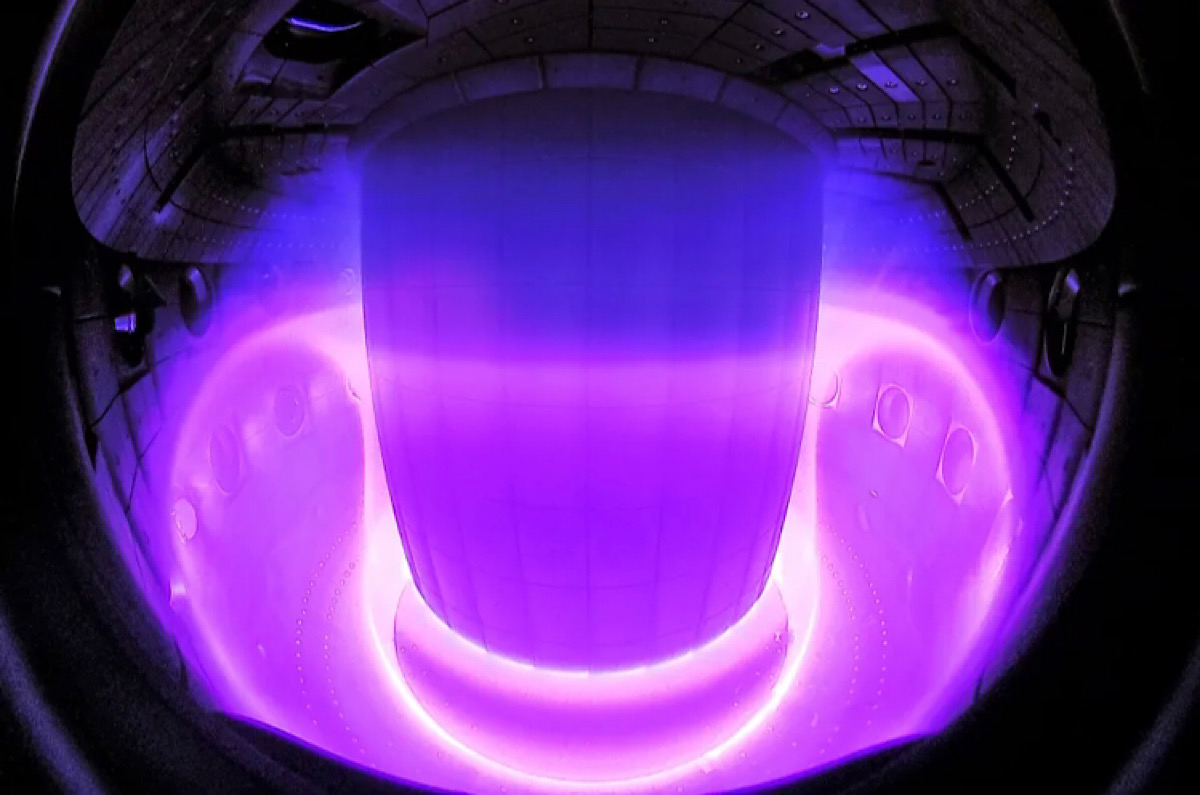
THE INSIDE OF a tokamak—the doughnut-shaped vessel designed to contain a nuclear fusion reaction—presents a special kind of chaos. Hydrogen atoms are smashed together at unfathomably high temperatures, creating a whirling, roiling plasma that’s hotter than the surface of the sun. Finding smart ways to control and confine that plasma will be key to unlocking the potential of nuclear fusion, which has been mooted as the clean energy source of the future for decades. At this point, the science underlying fusion seems sound, so what remains is an engineering challenge. “We need to be able to heat this matter up and hold it together for long enough for us to take energy out of it,” says Ambrogio Fasoli, director of the Swiss Plasma Center at École Polytechnique Fédérale de Lausanne in Switzerland.

That’s where DeepMind comes in. The artificial intelligence firm, backed by Google parent company Alphabet, has previously turned its hand to video games and protein folding, and has been working on a joint research project with the Swiss Plasma Center to develop an AI for controlling a nuclear fusion reaction.

Continue reading… “DeepMind Has Trained an AI to Control Nuclear Fusion”
Discover the Hidden Patterns of Tomorrow with Futurist Thomas Frey
Unlock Your Potential, Ignite Your Success.

By delving into the futuring techniques of Futurist Thomas Frey, you’ll embark on an enlightening journey.

Learn More about this exciting program.