Revolutionizing Home Energy: The Wind Fence Solution

Energy self-consumption has made a significant leap forward by addressing a major challenge for homeowners: insufficient roof space for solar panels. A team of scientists has developed the first wind fence capable of producing up to 1,000 kWh of electricity, a groundbreaking innovation that could transform home energy production.

Wind energy can now be harnessed using wind electricity fences, a novel approach to generating power. These structures, designed for urban environments, utilize wind as a renewable energy source to provide electricity for homes and businesses. Unlike traditional wind turbines that require large open spaces, wind fences are built for urban settings, making them accessible for both residential and commercial use.

Continue reading… “Revolutionizing Home Energy: The Wind Fence Solution”
Innovative Iron-Based Battery Design Paves the Way for Large-Scale Energy Storage

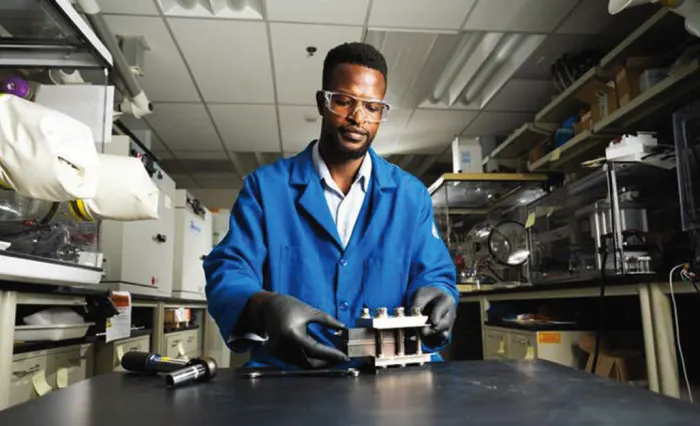
Researchers at the Department of Energy’s Pacific Northwest National Laboratory (PNNL) have repurposed a commonplace chemical used in water treatment facilities to create a new, large-scale energy storage solution. This innovative battery design, which utilizes Earth-abundant materials, offers a safe, economical, water-based flow battery that could significantly enhance the integration of intermittent energy sources like wind and solar into the nation’s electric grid.

Published in Nature Communications, the study reports that the iron-based battery demonstrated exceptional cycling stability, maintaining 98.7 percent of its maximum capacity over 1,000 consecutive charging cycles. This performance marks a substantial improvement over previous iron-based batteries, which exhibited significantly higher charge capacity degradation over fewer cycles.

Continue reading… “Innovative Iron-Based Battery Design Paves the Way for Large-Scale Energy Storage”

Innovative AI Technique Revolutionizes Data Reconstruction Across Various Fields

An innovative approach to artificial intelligence (AI) now enables the reconstruction of extensive datasets, such as overall ocean temperature, from a small number of field-deployable sensors using low-powered edge computing. This method holds broad applications across industry, science, and medicine.

“We developed a neural network that allows us to represent a large system in a very compact way,” said Javier Santos, a researcher at Los Alamos National Laboratory. “That compactness means it requires fewer computing resources compared to state-of-the-art convolutional neural network architectures, making it well-suited to field deployment on drones, sensor arrays, and other edge-computing applications that put computation closer to its end use.”

Continue reading… “Innovative AI Technique Revolutionizes Data Reconstruction Across Various Fields”

UK’s First Intercity Battery Train Trial Paves the Way for Sustainable Rail Travel

A groundbreaking collaboration between Angel Trains, TransPennine Express (TPE), Turntide Technologies, and Hitachi Rail has led to the retrofitting of a TransPennine Express ‘Nova 1’ Class 802 train with a cutting-edge battery system. Developed by Turntide Technologies in Sunderland, the battery unit boasts a peak power of over 700 kilowatts and is designed to replace one of the train’s three diesel engines. Impressively, the battery matches the acceleration and performance levels of the diesel engine it replaces, without adding extra weight to the train.

Hitachi Rail projects that this battery technology could reduce emissions and fuel costs by up to 30%. This substantial reduction in environmental impact and operational expenses marks a significant advancement in the rail industry’s efforts to combat climate change and enhance sustainability.

Continue reading… “UK’s First Intercity Battery Train Trial Paves the Way for Sustainable Rail Travel”

Self-Powering Wireless Health Monitoring Patches Revolutionize Wearable Technology

Scientists at Osaka University, in collaboration with Joanneum Research in Weiz, Austria, have unveiled wireless health monitoring patches that utilize embedded piezoelectric nanogenerators to self-power using harvested biomechanical energy. This breakthrough could pave the way for new autonomous health sensors and battery-less wearable electronic devices.

As wearable technology and smart sensors become increasingly prevalent, powering these devices remains a significant challenge. Despite the modest energy requirements of individual components, the reliance on wires or batteries can be cumbersome and inconvenient. Hence, innovative energy harvesting methods are essential. Additionally, health monitors that can power and activate sensors using ambient motion will likely see faster adoption in medical settings.

Continue reading… “Self-Powering Wireless Health Monitoring Patches Revolutionize Wearable Technology”

Pioneering Brain-to-Brain Interaction Enhances Brain-Computer Interface Systems

Researchers from Tsinghua University and Imperial College London have introduced a groundbreaking technique that leverages brain-to-brain interactions to enhance brain-computer interface (BCI) systems. This innovative approach, which capitalizes on the power of social connections, shows promise for improving BCI performance in applications such as rehabilitation and multitasking devices.

Dr. Tianyu Jia and their interdisciplinary team investigated the impact of social interactions on BCI performance during motor imagery tasks. The study, involving groups of friends and strangers, aimed to understand how familiar social connections influence neural synchronization and BCI efficiency. Their findings highlight the potential for social engagement to significantly optimize BCI functionality.

Continue reading… “Pioneering Brain-to-Brain Interaction Enhances Brain-Computer Interface Systems”

Innovative Sticker Enables Non-Invasive Monitoring of Internal Health

Researchers from Northwestern University and Washington University School of Medicine in St. Louis have developed a groundbreaking sticker that allows clinicians to monitor patients’ organs and deep tissues using a simple ultrasound device. This first-of-its-kind sticker can detect health changes in real-time, potentially revolutionizing post-surgery care.

When attached to an organ, the soft, tiny sticker changes shape in response to the body’s fluctuating pH levels, serving as an early warning system for complications such as anastomotic leaks. These leaks occur when gastrointestinal fluids escape the digestive system, posing a life-threatening risk. Currently, no reliable non-invasive methods exist to detect these leaks.

Continue reading… “Innovative Sticker Enables Non-Invasive Monitoring of Internal Health”

Triple-A Report Reveals Explosive Growth in Global Cryptocurrency Ownership

Triple-A, a fintech company specializing in digital currency payment processing, has released an insightful report titled “The State of Global Cryptocurrency Ownership in 2024.” This report provides an in-depth analysis of cryptocurrency ownership trends worldwide and their evolving role in the financial ecosystem.

“Asia is leading this surge, with crypto ownership rising from 268.2 million to 326.8 million, a 21.8% increase. This growth highlights Asia’s significant role in shaping the digital currency landscape,” stated Eric Barbier, founder and CEO of Triple-A.

Continue reading… “Triple-A Report Reveals Explosive Growth in Global Cryptocurrency Ownership”

World’s Thinnest Lens Created by Scientists

Contact lenses have become remarkably thin, but they pale in comparison to a groundbreaking new lens developed by scientists at Stanford University and the University of Amsterdam. This revolutionary lens measures just three atoms thick, making it the thinnest lens ever created.

Lenses function by collecting light, bending it, and focusing it towards a specific point. This process magnifies objects to correct vision, allows us to observe minute details through microscopes, and lets us see distant objects through telescopes. Typically, lenses are made of curved glass or other transparent materials such as hydrogels for contact lenses. However, these traditional designs can result in large, thick, and heavy lenses, especially when made of glass.

Continue reading… “World’s Thinnest Lens Created by Scientists”

Breakthrough in Cryogenic Cooling: Faster and More Energy-Efficient

Researchers have discovered a remarkably simple method to significantly enhance the efficiency of cryogenic coolers, achieving near-absolute zero temperatures up to 3.5 times faster and using about 71% less energy than current technologies. This advancement holds immense potential for various applications that require extremely low temperatures.

Cryogenic cooling is essential for preserving biological materials such as tissues, eggs, sperm, and embryos. It enables the functioning of CAT scanners, CERN’s massive particle accelerators, and certain mag-lev systems. Moreover, it has numerous engineering applications, powers the James Webb Space Telescope’s deep-space observations, and could be crucial for future breakthroughs in fusion power and quantum computing.

Continue reading… “Breakthrough in Cryogenic Cooling: Faster and More Energy-Efficient”

Revolutionary Eco-Friendly Sensors Inspired by Spider Silk

Researchers at the University of Cambridge have pioneered a method to create adaptive and eco-friendly sensors that can be imperceptibly printed onto a variety of biological surfaces, from human skin to delicate flower petals. Inspired by the conforming and adhesive properties of spider silk, these sensors, referred to as “spider silks,” incorporate bioelectronics to provide versatile sensing capabilities.

The fibers, which are at least 50 times thinner than a human hair, are exceptionally lightweight. This allows them to be printed directly onto delicate structures like a dandelion seedhead without causing damage. When applied to human skin, the fiber sensors adapt to the skin’s surface and expose sweat pores, rendering them virtually undetectable to the wearer. Tests on human fingers indicate their potential use as continuous health monitors. This innovative, low-waste, and low-emission method for augmenting living structures could revolutionize fields such as healthcare, virtual reality, electronic textiles, and environmental monitoring. The findings are detailed in the journal Nature Electronics.

Continue reading… “Revolutionary Eco-Friendly Sensors Inspired by Spider Silk”

AI-Powered Headphones Revolutionize Noise Isolation and Transparency

When considering a pair of premium headphones or earbuds, two critical factors often come to mind: noise isolation and transparency. Active Noise Cancellation (ANC) blocks all external noise, allowing you to hear only the audio from your device. Transparency mode lets some ambient sound through while still playing your music. Apple and Sony have excelled in these technologies, but no current audio gear can focus on a single external sound source.

Imagine wanting to hear only one person’s voice in a crowded room. Researchers at the University of Washington have developed an AI-driven headphone kit that allows you to focus on a specific person’s speech. This technology, called “Target Speech Hearing,” uses a brief visual cue—looking at the person for three to five seconds—to isolate their voice. Remarkably, it works even if you’re moving around and not directly facing the speaker.

Continue reading… “AI-Powered Headphones Revolutionize Noise Isolation and Transparency”
Discover the Hidden Patterns of Tomorrow with Futurist Thomas Frey
Unlock Your Potential, Ignite Your Success.

By delving into the futuring techniques of Futurist Thomas Frey, you’ll embark on an enlightening journey.

Learn More about this exciting program.