
As artificial intelligence drives exponential growth in data demand, nuclear power is emerging as a key player in revolutionizing energy supply for data centers. Tech giants like Oracle and Microsoft, alongside influential figures such as Bill Gates, have begun exploring nuclear energy solutions. In a notable move, Microsoft has secured an agreement to purchase power from the Three Mile Island reactor, signaling a shift toward clean, reliable energy sources for its data operations.
One of the most promising developments in this field is the advent of micro nuclear reactors. These compact reactors offer a safe, sustainable, and efficient way to meet the growing energy needs of data centers and other industries. Companies like Nano Nuclear Energy are making strides in this area, aiming to deliver commercial microreactors by the early 2030s, with prototypes expected as soon as 2027.
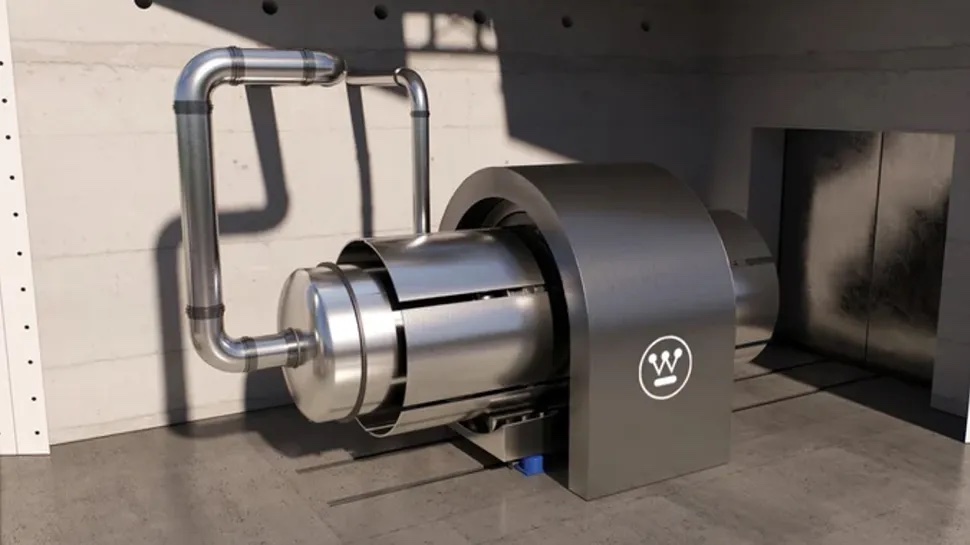
Westinghouse, a leader in nuclear technology, has also taken significant steps forward with its eVinci microreactor. The company recently submitted its Preliminary Safety Design Report (PSDR) to the Department of Energy’s National Reactor Innovation Center (NRIC), becoming the first reactor developer to reach this critical milestone. Brad Tomer, acting director of NRIC, emphasized the importance of this achievement: “The completion of the PSDR for the eVinci test reactor is an important step toward enabling a microreactor developer to perform a test in our DOME facility.”
NRIC, part of the DOE’s broader mission to accelerate nuclear innovation, is working closely with private companies like Westinghouse to test and advance nuclear technologies that will provide clean energy solutions across the U.S. The initiative aims to establish four new experimental facilities and two large-scale reactor test beds by 2028, with plans to complete two advanced technology experiments by 2030.
Westinghouse’s eVinci microreactor stands out for its simplicity and versatility. Described as functioning “essentially like a battery” with very few moving parts, it could power remote communities, industrial operations, universities, mining sites, and defense facilities. It also holds potential for use in data centers, providing a steady and sustainable energy source, and could even support future space missions, including lunar exploration.
With these advancements, nuclear power, particularly in the form of microreactors, is poised to play a critical role in shaping the future of energy for data centers and beyond.
By Impact Lab
