Powering the Future: New Nanotechnology Converts Everyday Motion into Electricity

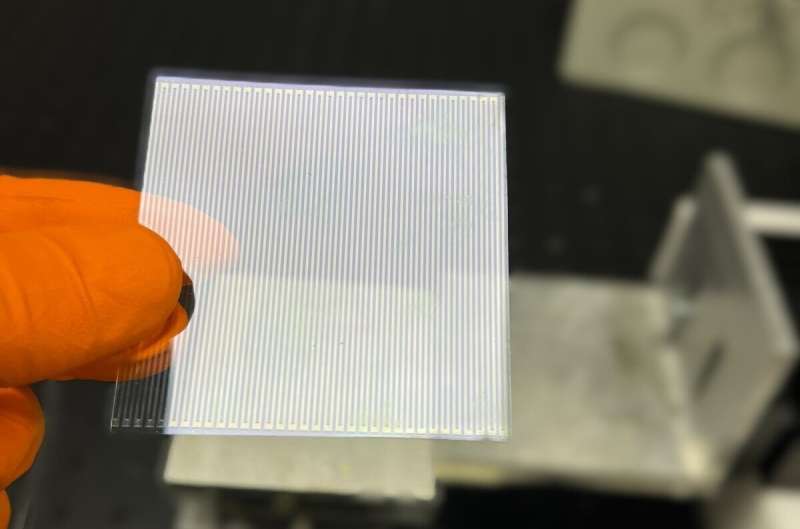
Your early morning run might soon do more than just boost your health—it could also help power your wearable devices, thanks to groundbreaking nanotechnology developed at the University of Surrey. The Advanced Technology Institute (ATI) at Surrey has created highly energy-efficient, flexible nanogenerators that boast a 140-fold increase in power density compared to conventional models. This innovation could lead to nano-devices with efficiency levels comparable to today’s solar cells.

Published in the journal Nano Energy, the research highlights how Surrey’s devices can convert small amounts of everyday mechanical energy, such as motion, into significantly higher electrical power. This process is akin to how an amplifier boosts sound in an electronic system. For example, if a traditional nanogenerator produces 10 milliwatts of power, this new technology could enhance that output to over 1,000 milliwatts, making it highly suitable for various energy-harvesting applications.

Continue reading… “Powering the Future: New Nanotechnology Converts Everyday Motion into Electricity”


Robots Gain an Innate Sense of Touch Through Advanced Sensor Integration

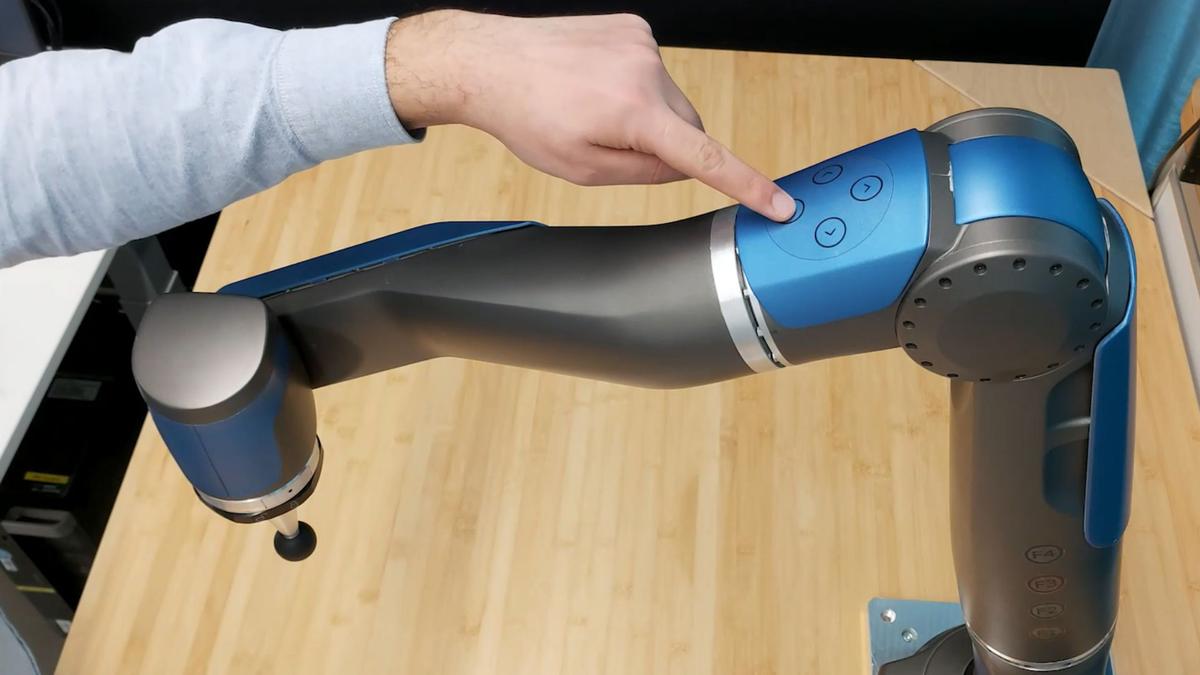
Researchers in Germany have developed a groundbreaking method that equips robots with an innate sense of touch by integrating their existing internal force-torque sensors with machine learning algorithms. This innovative approach, developed by a team at the Deutschen Zentrums für Luft- und Raumfahrt (DLR), allows robots to sense and interpret human touch without the need for expensive synthetic skins or additional external sensors.

“The intrinsic sense of touch we proposed in this work can serve as the basis for an advanced category of physical human-robot interaction that has not been possible yet, enabling a shift from conventional modalities towards adaptability, flexibility, and intuitive handling,” the researchers stated.

Continue reading… “Robots Gain an Innate Sense of Touch Through Advanced Sensor Integration”

Hydrogel Shows Potential to Learn: A Simple Material Plays and Improves at Pong

A small blob of squishy, transparent gel has recently demonstrated an impressive feat: it can play the classic video game Pong, and with practice, it even gets better at it. When connected to an adapted version of the game via an electrode array, this simple polymer hydrogel showed a marked improvement in accuracy, leading to longer rallies. This discovery reveals that even a basic material like hydrogel can exhibit a form of memory—a finding that could open new avenues for research and development.

Although the gel is far from being an artificial brain, its newfound ability hints at exciting possibilities. “Our research shows that even very simple materials can exhibit complex, adaptive behaviors typically associated with living systems or sophisticated AI,” said biomedical engineer Yoshikatsu Hayashi of the University of Reading in the UK. “This opens up exciting possibilities for developing new types of ‘smart’ materials that can learn and adapt to their environment.”

Continue reading… “Hydrogel Shows Potential to Learn: A Simple Material Plays and Improves at Pong”

Elon Musk’s Vision for the Tesla RoboTaxi: A Glimpse into the Future of Transportation

Elon Musk’s ambitious vision for Tesla’s RoboTaxi is set to revolutionize transportation as we know it. The RoboTaxi concept reimagines cars from the ground up, eliminating the need for human intervention, steering wheels, or pedals. Musk has emphasized that the goal is not just to enhance existing automotive technology but to redefine it entirely. “We make a car that has no steering wheels or pedals, and if we need to accelerate that time, we can always just delete parts—easy,” Musk said, underscoring Tesla’s commitment to building vehicles designed for full autonomy.

The RoboTaxi, as envisioned by Musk, will have a futuristic design that reflects the advanced technology behind it. “It’s going to look pretty,” Musk remarked, indicating that the design will be unlike anything currently on the road. This aesthetic leap isn’t just about appearances; it symbolizes the technological revolution that Tesla is leading. The RoboTaxi will embody the future of transportation, where autonomous vehicles become the norm.

Continue reading… “Elon Musk’s Vision for the Tesla RoboTaxi: A Glimpse into the Future of Transportation”

Unveiling iRonCub: The World’s First Jet-Powered Humanoid Robot

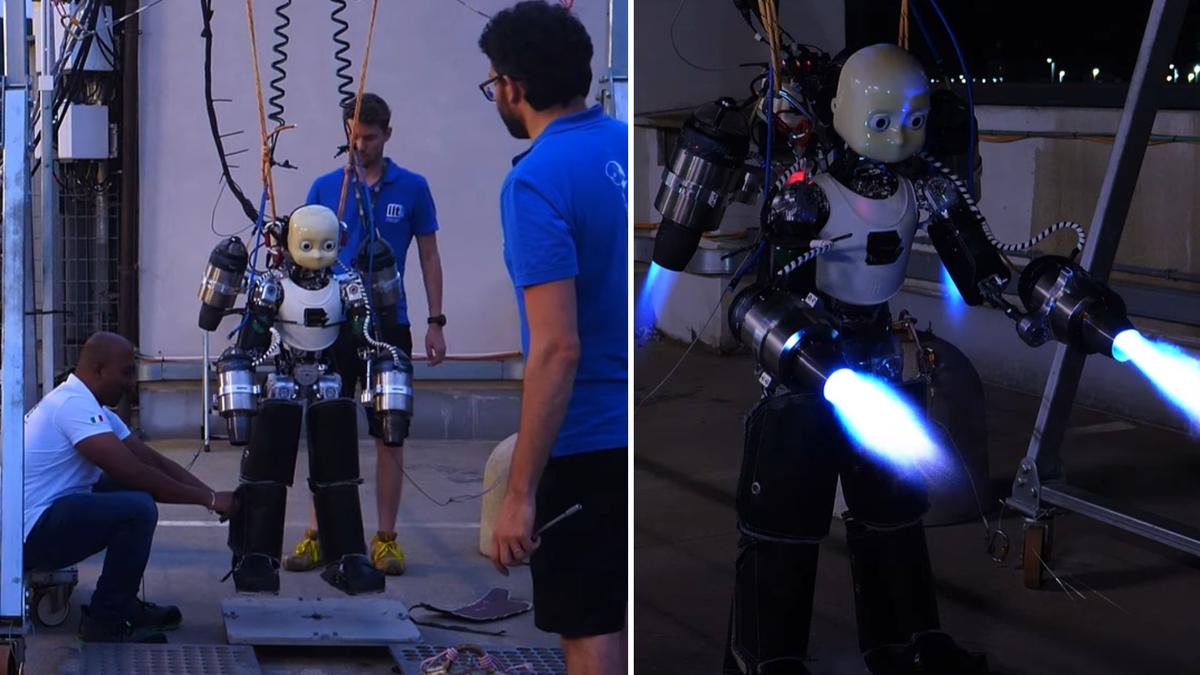
Roboticists at the Italian Institute of Technology (IIT) have revealed groundbreaking developments in the world of humanoid robotics, showcasing the experimental progress and preliminary validations of the iRonCub, the first jet-powered humanoid robot.

Equipped with four compact jet engines, iRonCub has the unique ability to fly, positioning it as a potential game-changer in advanced mission scenarios, particularly in disaster relief where aerial capabilities in humanoids remain largely unexplored.

Continue reading… “Unveiling iRonCub: The World’s First Jet-Powered Humanoid Robot”

Researchers Develop Shape-Shifting Nanoparticles for Smart Adaptive Materials

In a significant advancement toward creating smart coatings that can dynamically change their properties, researchers from the University of Michigan (U-M) and Indiana University (IU) have successfully manipulated nanoparticles to reconfigure themselves on command. This breakthrough paves the way for developing materials and coatings capable of transitioning between different optical, mechanical, and electronic states.

The collaborative study utilized an electron microscope combined with a specialized sample holder containing microscopic channels and sophisticated computer simulations. This setup allowed scientists to observe, in real-time, how nanoscale building blocks reorganize into various structures when prompted by external stimuli.

Continue reading… “Researchers Develop Shape-Shifting Nanoparticles for Smart Adaptive Materials”

Breakthrough in Parkinson’s Treatment: Adaptive Deep Brain Stimulation Offers Personalized Relief

Healthcare professionals have long sought effective ways to alleviate the symptoms of Parkinson’s disease. Now, researchers from the University of California, San Francisco (UCSF), as part of the National Institutes of Health (NIH) BRAIN Initiative, have developed a promising new treatment called adaptive deep brain stimulation (aDBS). This innovative approach uses an implantable device driven by the patient’s brain activity, potentially revolutionizing the treatment of Parkinson’s disease (PD).

Known as a “closed loop” system, aDBS aims to improve upon existing deep brain stimulation (DBS) techniques used for Parkinson’s and other neurological disorders. The study reveals that aDBS significantly outperforms traditional DBS in controlling Parkinson’s symptoms.

Continue reading… “Breakthrough in Parkinson’s Treatment: Adaptive Deep Brain Stimulation Offers Personalized Relief”

New Electric Bandage Accelerates Healing of Chronic Wounds at Low Cost

Chronic wounds, such as those associated with diabetes, are persistent open wounds that heal slowly, if at all, and pose significant health risks, including increased chances of amputation and death. These wounds are notoriously difficult and costly to treat, creating additional burdens for patients. However, researchers have developed an innovative, cost-effective bandage that uses an electric field to promote faster healing in chronic wounds.

In animal tests, wounds treated with this new electric bandage healed 30% faster compared to those treated with conventional bandages.

“Our goal was to create an affordable technology that accelerates healing in chronic wounds,” explained Amay Bandodkar, co-corresponding author of the study and an assistant professor of electrical and computer engineering at North Carolina State University. “We also wanted it to be simple enough for patients to use at home, not just in clinical settings.”

Continue reading… “New Electric Bandage Accelerates Healing of Chronic Wounds at Low Cost”

University of Maine’s 3D-Printed Wooden Cabins Could Revolutionize Housing in the State

At the University of Maine, a groundbreaking solution to the housing crisis is taking shape—literally. One of the world’s largest 3D printers is now using sawdust from the state’s lumber industry to create cozy, sustainable wooden cabins. This innovative approach aims to address Maine’s pressing need for affordable housing while promoting faster and more environmentally friendly construction methods.

The housing shortage in Maine mirrors a nationwide crisis, with an estimated 80,000 new homes needed over the next five years to meet growing demand. While traditional construction methods struggle to keep up, the technicians at the University of Maine’s Advanced Structures & Composites Center (ASCC) believe their cutting-edge technology can make a significant impact. The ASCC’s 3D printer, recognized by Guinness World Records as the world’s largest prototype polymer 3D printer, can produce a 600-square-foot house—96 feet long, 36 feet wide, and 18 feet tall—entirely out of bio-based materials at an astonishing rate of 500 pounds per hour.

Continue reading… “University of Maine’s 3D-Printed Wooden Cabins Could Revolutionize Housing in the State”

Reinventing Mobility: Korean Researchers Develop Adaptive Wheels for Off-Road Navigation

Wheels are essential for cars, trucks, bikes, and wheelchairs, yet their limitations on uneven surfaces often confine wheelchair users to smooth, flat terrain. The same challenge applies to mobile robots. Recognizing this, a team of Korean researchers has developed a groundbreaking adaptive wheel that changes shape in real-time, allowing for smoother travel over obstacles and rough terrains, revolutionizing off-road mobility.

Reimagining the Wheel

While the idea of “reinventing the wheel” might seem like an exaggeration, this innovation builds on a history of transformative wheel designs. Years ago, Hankook, in collaboration with Seoul National University and Harvard, created origami-inspired wheels that could change shape. Earlier still, graduate student Ackeem Ngwenya developed the “Roadless” wheel system, where the tread adjusted from narrow to wide with a simple screw turn. Even NASA contributed with its nickel-titanium alloy tires, which could deform under pressure and return to their original shape.

Continue reading… “Reinventing Mobility: Korean Researchers Develop Adaptive Wheels for Off-Road Navigation”

Norway Pioneers the Future of Engines with 100% Hydrogen Fuel Technology

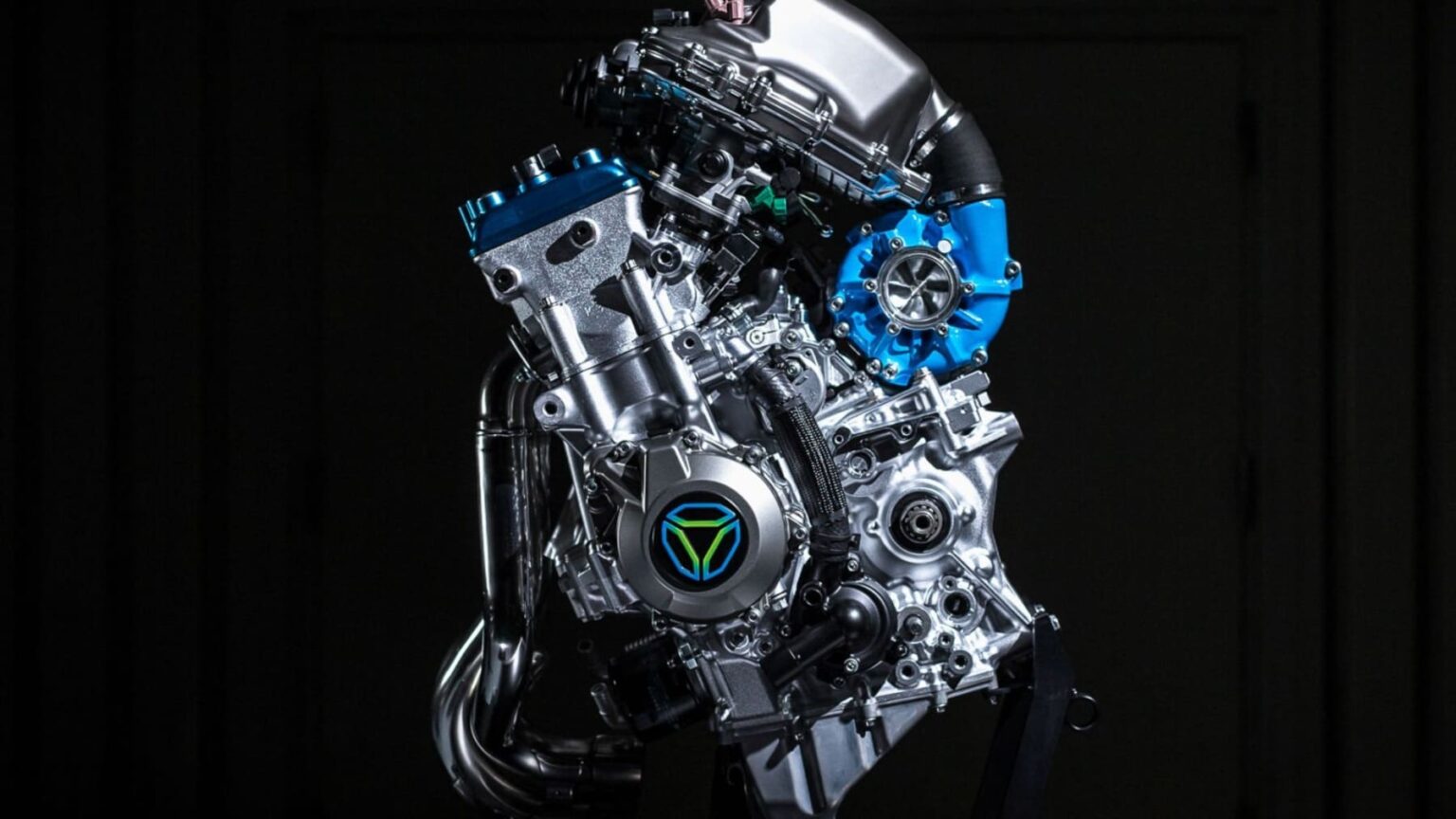
For decades, manufacturers have sought to create an environmentally sustainable, functional, and cost-effective engine. While electric engines have dominated the market, Norway is now leading the charge with a groundbreaking engine that runs on 100% pure hydrogen, potentially revolutionizing the future of sustainable energy.

Advances in Hydrogen-Powered Engines

Norway, through Bergen Engines—a leading researcher, developer, and manufacturer of engines for both land and marine vehicles—has made significant strides in hydrogen fuel technology. Their natural gas-powered engines are already capable of operating with a mixture that includes 25% hydrogen at full load, marking a crucial step towards cleaner and more energy-efficient machinery. This innovation builds on their earlier success in commercializing a 15% hydrogen blend in 2022.

Continue reading… “Norway Pioneers the Future of Engines with 100% Hydrogen Fuel Technology”

Revolutionary Microwave Technique Accelerates Membrane Production for Water Purification

Researchers at NYU Abu Dhabi (NYUAD) have introduced a groundbreaking method that significantly improves the speed and efficiency of membrane production, offering promising solutions for global water purification challenges. By leveraging microwave technology, the team has developed a rapid approach to synthesize and fine-tune a new type of membrane that effectively purifies water from a wide range of contaminants. This innovative technique, which takes just minutes, represents one of the fastest methods for creating covalent organic framework (COF) membranes.

These COF membranes function as advanced filters, capable of removing specific contaminants from polluted water, thereby enabling its reuse across various applications—a crucial development as efficient wastewater treatment becomes increasingly vital in a world facing water scarcity.

Continue reading… “Revolutionary Microwave Technique Accelerates Membrane Production for Water Purification”
Discover the Hidden Patterns of Tomorrow with Futurist Thomas Frey
Unlock Your Potential, Ignite Your Success.

By delving into the futuring techniques of Futurist Thomas Frey, you’ll embark on an enlightening journey.

Learn More about this exciting program.