Neuromorphic Computing: The Future of AI Hardware

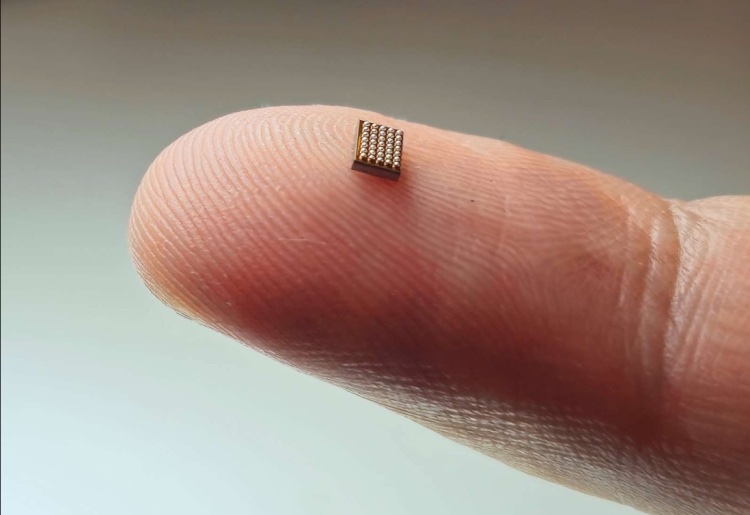
While much of the tech world remains fixated on the latest large language models (LLMs) powered by Nvidia GPUs, a quieter revolution is brewing in AI hardware. As the limitations and energy demands of traditional deep learning architectures become increasingly apparent, a new paradigm called neuromorphic computing is emerging – one that promises to slash the computational and power requirements of AI by orders of magnitude. To delve into this promising technology, VentureBeat spoke with Sumeet Kumar, CEO and founder of Innatera, a leading startup in the neuromorphic chip space.

“Neuromorphic processors are designed to mimic the way biological brains process information,” Kumar explained. “Rather than performing sequential operations on data stored in memory, neuromorphic chips use networks of artificial neurons that communicate through spikes, much like real neurons.” This brain-inspired architecture gives neuromorphic systems distinct advantages, particularly for edge computing applications in consumer devices and industrial IoT.

Continue reading… “Neuromorphic Computing: The Future of AI Hardware”


The Tragic Reality of Child Mortality in the U.S.: 20,000 Excess Deaths Annually

Children in the U.S. are dying at higher rates than in other wealthy, developed countries. Research published in the journal JAMA Pediatrics highlights these “excess deaths” — the number of additional deaths among children under age 19 in the U.S. compared to similar countries. The estimate is a staggering 20,000 excess deaths per year, painting a grim picture of pediatric health in the country.

Dr. Steven Woolf, the study’s co-author and a professor of family medicine and population health at Virginia Commonwealth University School of Medicine, remarked, “The chances of a child surviving to age 20 are now decreasing after decades of progress.” This study calculated the median mortality rates for children in 16 countries outside the U.S., including Australia, Canada, Japan, and 13 European countries, from 1999 to 2019. By comparing these rates to those in the U.S. and multiplying the difference by the U.S. population size each year, the researchers identified significant disparities.

Continue reading… “The Tragic Reality of Child Mortality in the U.S.: 20,000 Excess Deaths Annually”

MIT’s New Water Harvester Extracts Fresh Water from Air

In a world where many regions struggle to secure enough water, MIT researchers have developed a new water harvester capable of extracting sufficient fresh water from the air to meet the daily needs of several people.

Water harvesters typically use adsorbent materials to collect water on their surfaces. This new device from MIT maximizes exposure to air with a series of vertical fins spaced 2 mm (0.08 in) apart. These fins are constructed from copper sheets sandwiched in copper foams and coated with a specialized zeolite material, renowned for its water adsorption properties. After an hour, the fins become saturated with water, at which point the copper sheets are heated to release the collected water. Repeating this cycle 24 times a day in air with 30% humidity (considered arid), the harvester can produce up to 1.3 L (0.3 gal) of drinkable water per day per liter of the adsorbent coating. When scaled up, this equates to 5.8 L (1.5 gal) per kilogram (2.2 lb) of material used per day, enough to meet the daily water needs of several people.

Continue reading… “MIT’s New Water Harvester Extracts Fresh Water from Air”

Revolutionizing Software Engineering: The Impact of Large Language Models

The rapid advancement of large language models (LLMs) is transforming various fields, including software engineering. In just a few years, LLMs have evolved from advanced code autocomplete tools to AI agents capable of designing software, implementing and correcting entire modules, and enhancing software engineers’ productivity.

While some excitement around AI-powered software engineering agents is overhyped, there is undeniable value for developers who harness these new AI tools to accomplish more in less time. There are three main ways that LLMs are changing the coding experience:

Continue reading… “Revolutionizing Software Engineering: The Impact of Large Language Models”

World’s First Super-Sized Nano Transparent Screen Developed and Commercialized

A groundbreaking Nano Transparent Screen (NTS) has been developed and commercialized for the first time in the world. This innovative screen can adjust its transparency according to the environment and can be produced at a low cost, paving the way for the widespread adoption of large transparent screens, which until now have been prohibitively expensive. The newly developed screen is expected to find applications across various products, such as transparent displays in department stores and supermarkets, smart windows for buildings, and versatile transparent displays suitable for both indoor and outdoor promotional uses.

The research team, led by Principal Researcher Jun-Ho Jeong of the Nano-lithography and Manufacturing Research Center at the Korea Institute of Machinery and Materials (KIMM), in collaboration with Meta2People, has successfully commercialized a 100-inch large-sized NTS. This screen’s transparency can be freely adjusted depending on the surrounding lighting and images. The NTS was installed in the outdoor space of the “Youth Mall” located in Chungju in June and will be showcased at the International Nano Technology Exhibition, known as “Nano Korea 2024,” from July 3 to July 5, 2024, at KINTEX in Ilsan.

Continue reading… “World’s First Super-Sized Nano Transparent Screen Developed and Commercialized”

West Japan Railway Unveils Humanoid Robot for Maintenance Tasks

It resembles a malevolent robot from 1980s sci-fi, but West Japan Railway’s new humanoid employee was designed with nothing more sinister in mind than a spot of painting and gardening. Starting this month, the machine, which features a crude head and coke-bottle eyes mounted on a truck that can drive on rails, will be put to use for maintenance work on the firm’s network.

The operator sits in a cockpit on the truck, “seeing” through the robot’s eyes via cameras and operating its powerful limbs and hands remotely. With a vertical reach of 12 meters (40 feet), the machine can use various attachments for its arms to carry objects as heavy as 40 kilograms (88 pounds), hold a brush to paint, or use a chainsaw. Initially, the robot’s primary tasks will focus on trimming tree branches along rails and painting metal frames that hold cables above trains, according to the company.

Continue reading… “West Japan Railway Unveils Humanoid Robot for Maintenance Tasks”

World’s First Anode-Free Sodium Solid-State Battery Revolutionizes Energy Storage

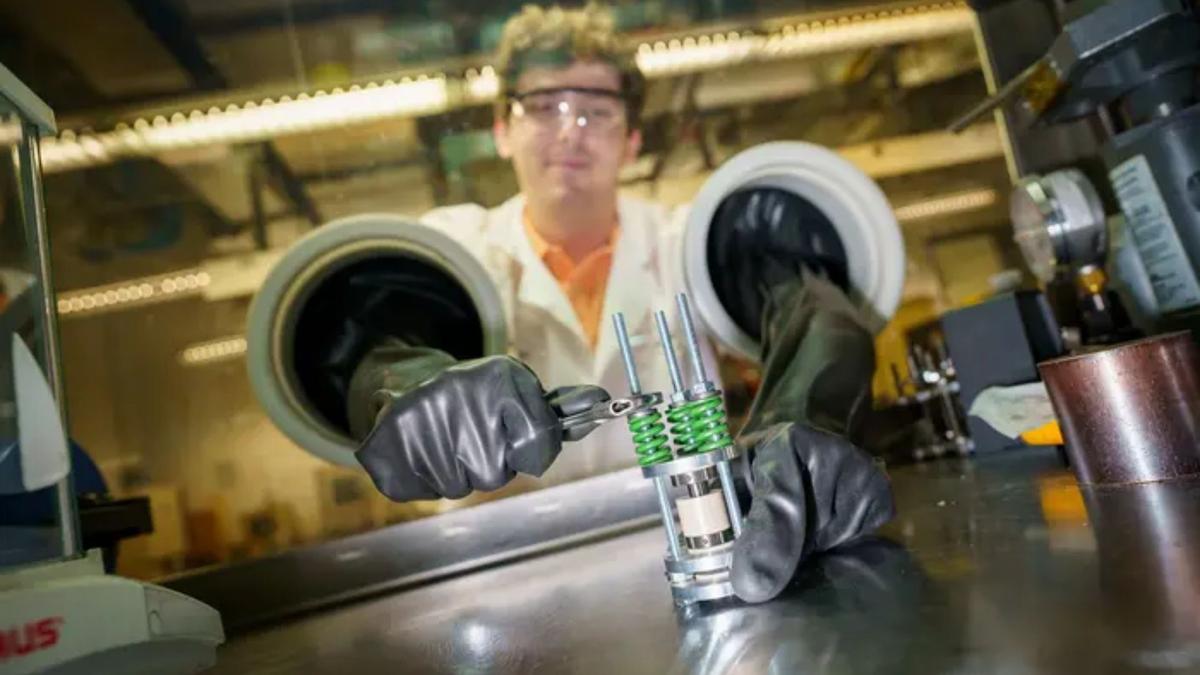
A team of researchers has combined the best battery technologies to create the world’s first anode-free sodium solid-state battery. This innovative design uses a stable solid electrolyte and pressure to form dense sodium metal. An aluminum current collector ensures efficient, repeatable sodium plating and stripping at high capacities and speeds.

This new type of battery will be less expensive and less harmful to the environment since the anode is removed, and sodium, which is cheap and plentiful, is used instead of lithium. “Although there have been previous sodium, solid-state, and anode-free batteries, no one has been able to successfully combine these three ideas until now,” said Grayson Deysher, a Ph.D. candidate at UC San Diego and first author of the study.

Continue reading… “World’s First Anode-Free Sodium Solid-State Battery Revolutionizes Energy Storage”

Revolutionary NTNU Technology Harnesses Industrial Waste Heat for Clean Water Production

Researchers at the Norwegian University of Science and Technology (NTNU) have developed an innovative technology that addresses two significant environmental challenges: utilizing industrial waste heat and generating clean water. This breakthrough was highlighted in a recent university press release.

Industrial heat is a major component of global energy consumption. After being used in industrial processes, a significant portion of this heat is typically wasted, released into oceans or the atmosphere. In Norway alone, it is estimated that 20 TWh of heat is wasted annually—equivalent to half the energy demand of Norwegian households or the energy used for heating homes. Kim Kristiansen, a doctoral researcher in NTNU’s Department of Chemistry, sought a more efficient way to repurpose this wasted energy.

Continue reading… “Revolutionary NTNU Technology Harnesses Industrial Waste Heat for Clean Water Production”

Unveiling Stem Cell Secrets: A New Non-Invasive Method Using Machine Learning

Stem cells are like the emergency tool kit of the human body, possessing the unique ability to transform into various specialized cells, from immune cells to brain cells. They can divide and regenerate indefinitely to repair and replenish our system on command. The ability to culture stem cells in the lab and grow them into any cell type needed is the Holy Grail of medicine. This capability could enable clinicians to create an endless supply of new cells for repairing damaged tissues and organs. However, achieving this requires a comprehensive understanding of how stem cells replicate and transition into different cell types.

New research from USC’s Alfred E. Mann Department of Biomedical Engineering brings us closer to unraveling the mysteries of these essential cells. Associate Professor Keyue Shen and his team have harnessed machine learning to develop a non-invasive system that offers unprecedented insight into how stem cells proliferate and regenerate into specialized cells. Their work, published in Science Advances, represents a significant breakthrough.

Continue reading… “Unveiling Stem Cell Secrets: A New Non-Invasive Method Using Machine Learning”

Revolutionizing Space Missions: The Promise of CAL 3D Printing Technology

NASA’s Flight Opportunities Program, alongside Berkeley Engineering and the Berkeley Space Center, has funded a groundbreaking mission to develop Computed Axial Lithography (CAL) technology. This innovative 3D printing method holds the potential to revolutionize space missions by producing everything from spare parts and tools for spacecraft to new contact lenses and dental crowns for astronauts.

3D printing, also known as additive manufacturing, has significantly evolved since its inception in the 1980s. In 2017, Hayden Taylor, Associate Professor of Mechanical Engineering, led a team of researchers at UC Berkeley and Lawrence Livermore National Laboratory to invent CAL technology. This advanced additive manufacturing technique uses light to form solid objects from a viscous liquid, enabling faster and more versatile production of 3D parts.

Continue reading… “Revolutionizing Space Missions: The Promise of CAL 3D Printing Technology”

Pushing the Boundaries of Time: The Most Precise Atomic Clock Ever Created

In humankind’s relentless pursuit of perfection, scientists have developed an atomic clock that is more precise and accurate than any clock previously created. This groundbreaking clock was built by researchers at JILA, a joint institution of the National Institute of Standards and Technology (NIST) and the University of Colorado Boulder.

Enabling pinpoint navigation in the vast expanse of space as well as searches for new particles, this clock transcends mere timekeeping. With their increased precision, these next-generation timekeepers could reveal hidden underground mineral deposits and test fundamental theories such as general relativity with unprecedented rigor. For atomic clock architects, it’s not just about building a better clock; it’s about unraveling the secrets of the universe and paving the way for technologies that will shape our world for generations to come.

Continue reading… “Pushing the Boundaries of Time: The Most Precise Atomic Clock Ever Created”

Breakthrough in Liquid Metal Conductors for Wearable Technology

Traditional liquid metal-based conductors often require complex secondary activation processes, which can lead to device failure due to leakage. A research team led by Tao Zhou has developed a novel method combining liquid metal, the conductive polymer PEDOT, and hydrophilic polyurethane to address these challenges.

This innovative composition allows the material to self-assemble during the printing and heating process. The liquid metal particles form a conductive pathway on the material’s bottom surface while oxidizing to create an insulated top layer. This dual-layer structure ensures accurate data collection by preventing signal leakage.

Continue reading… “Breakthrough in Liquid Metal Conductors for Wearable Technology”
Discover the Hidden Patterns of Tomorrow with Futurist Thomas Frey
Unlock Your Potential, Ignite Your Success.

By delving into the futuring techniques of Futurist Thomas Frey, you’ll embark on an enlightening journey.

Learn More about this exciting program.