Breakthrough Thermophotovoltaic Cell Achieves Record Efficiency of 44%

A new heat-to-energy converter has achieved a record-breaking efficiency of 44%, significantly higher than the average steam turbine’s 35%. This innovative thermophotovoltaic (TPV) cell marks a significant advancement towards sustainable, grid-scale renewable energy storage.

As renewable energy prices plummet, the challenge lies in their intermittency. Critics often point out the variability of solar and wind power, asking, “What happens at night or when the wind isn’t blowing?” The solution lies in effective energy storage systems, which can bridge the gap during periods of low renewable energy generation. Traditional options include lithium-ion batteries and emerging technologies like iron-air, water-in-salt, and flow batteries. However, one of the most promising methods involves storing energy as heat.

Continue reading… “Breakthrough Thermophotovoltaic Cell Achieves Record Efficiency of 44%”
FinalSpark Unveils Neuroplatform: Revolutionizing Biocomputing with Human Brain Organoids

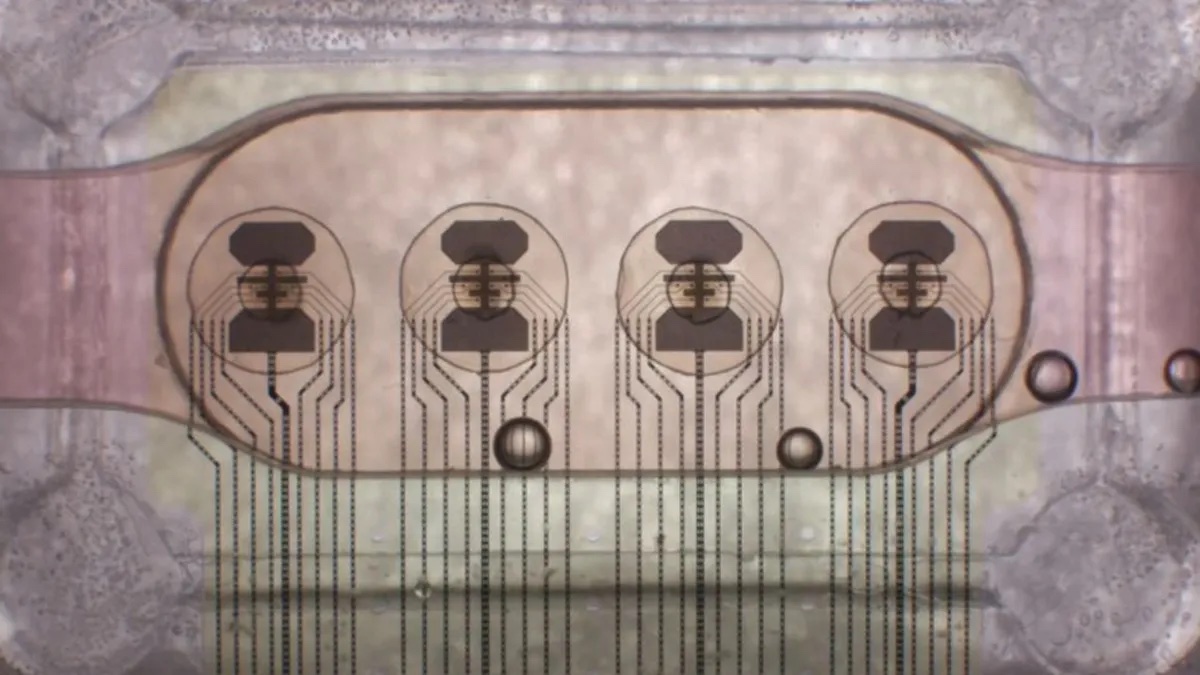
A Swiss biocomputing startup, FinalSpark, has launched an innovative online platform called Neuroplatform, providing remote access to 16 human brain organoids. This groundbreaking service claims to be the world’s first online platform delivering access to biological neurons in vitro. Notably, FinalSpark states that bioprocessors like those used in Neuroplatform consume a million times less power than traditional digital processors, promising a significant reduction in the environmental impacts of computing.

FinalSpark asserts that its Neuroplatform is capable of learning and processing information. Its remarkably low power consumption could drastically cut the energy costs associated with computing. According to a recent research paper by FinalSpark, training a single large language model (LLM) like GPT-3 required approximately 10 GWh—around 6,000 times the annual energy consumption of an average European citizen. By deploying bioprocessors, such immense energy expenditure could be significantly reduced.

Continue reading… “FinalSpark Unveils Neuroplatform: Revolutionizing Biocomputing with Human Brain Organoids”

Introducing PMMM: The Next-Generation Metamaterial for Cooler, Private, and Cleaner Spaces

Having numerous glass surfaces in your home can make rooms feel bright and open, but they often bring in too much heat and expose you to prying eyes. A groundbreaking new metamaterial offers a solution by enhancing transparency, ensuring privacy, cooling interiors, and even cleaning itself. This innovation is known as the Polymer-based Micro-photonic Multi-functional Metamaterial (PMMM).

PMMM is a thin film that can be easily applied to standard glass. Its unique properties stem from the microscopic pyramid patterns etched on its surface, each just 10 microns wide. These tiny pyramids scatter 73% of incoming light, giving the material a frosted appearance while still allowing 95% light transmittance, compared to the 91% typical of regular glass. This feature ensures a brighter, more comfortable environment for both people and plants.

Continue reading… “Introducing PMMM: The Next-Generation Metamaterial for Cooler, Private, and Cleaner Spaces”

Revolutionizing the Road: The Power of the Water Engine in the Hydrogen Era

In the quest for a greener future, the role of hydrogen in energy transition is undeniable. Amidst this shift, an innovative water engine has emerged, setting new power records and challenging the status quo. This breakthrough represents a significant leap in the decarbonization of the economy, where hydrogen (H) has become a crucial player.

The production of hydrogen for energy is a global focal point, with green hydrogen being a particularly strong contender. Investment in hydrogen production has surged worldwide. For instance, in Spain alone, 20% of the world’s new hydrogen projects were initiated in the first quarter of 2022. According to Wood Mackenzie, by the end of 2022, hydrogen-related projects had increased production to a total of 11.1 million tons per year.

Continue reading… “Revolutionizing the Road: The Power of the Water Engine in the Hydrogen Era”

Innovative Fiber Technology: Pioneering the Future of Wearable Electronics

In a groundbreaking endeavor to create versatile wearable electronic devices, researchers from the Johns Hopkins Applied Physics Laboratory (APL) in Laurel, Maryland have developed new scalable approaches for battery- and solar-powered fibers. These advanced fibers can be woven into clothing, enabling the potential to harvest and store electrical energy, according to a statement by the scientists.

Traditional fiber batteries often face challenges with scalability and performance limitations. To overcome these hurdles, the APL team engineered fiber batteries using a stacked design similar to conventional pouch cells. This innovative method involves layer lamination and laser machining, producing battery fibers as narrow as 650–700 µm. These fibers could power high-performance wearable electronics that retain the qualities of conventional textiles, such as breathability, stretchability, and washability, as reported by Tech Xplore.

Continue reading… “Innovative Fiber Technology: Pioneering the Future of Wearable Electronics”

Revolutionary Miniature Filter Paves the Way for 6G Wireless Signals

PHILADELPHIA — If you’ve ever used a smartphone, streaming device, or any other wireless gadget, you’ve experienced the magic of radio frequency (RF) filters firsthand. These unsung heroes sift through the chaotic array of signals in the airwaves, tuning into the exact frequencies your device needs while blocking out all the noise and interference. Now, a groundbreaking new filter, as small as a quarter, could soon usher in the era of 6G wireless signals!

Researchers from Penn Engineering highlight that as new technologies like 5G and the forthcoming 6G roll out with an ever-increasing number of wireless bands, the old method of using separate fixed filters for each channel is becoming impractical. It’s akin to needing a different bodyguard for every room you enter, leading to overwhelming complexity and inefficiency.

Continue reading… “Revolutionary Miniature Filter Paves the Way for 6G Wireless Signals”

Unleashing the Potential: How Specialised GPTs Could Revolutionize Medicine

We’ve recently come across fascinating developments in the field of gene editing: CRISPR GPT, a large language model designed to automate the design of gene-editing experiments. This innovation got us thinking: what other specialized GPTs could we envision? What highly specific applications might there be for large language models (LLMs)?

CRISPR GPT is a large language model similar to ChatGPT but trained on a specialized dataset focused on gene editing and CRISPR technology. This makes it exceptionally effective in that specific area, understanding the nuances of gene editing, identifying potential errors or risks, and suggesting optimal experimental designs. Unlike ChatGPT, which handles a broad range of general questions, CRISPR GPT excels in its niche but may not perform well on general queries outside gene editing.

Continue reading… “Unleashing the Potential: How Specialised GPTs Could Revolutionize Medicine”

Gen Z Redefines the Workforce with a Freelance Revolution

In 2024, Gen Z workers are expected to outnumber baby boomers in the American labor force for the first time. Despite this shift, the youngest generation in the workforce, with the oldest members now 27, is often treated as a novelty. From email signatures to salary expectations, Gen Zers are scrutinized in every aspect of their professional lives. CNBC Make It delves into how Gen Z is truly making its mark on career advice, office culture, and more.

Gen Z, defined as individuals born between 1997 and 2012, is rethinking what it means to enter the workforce. According to a February 2024 Fiverr survey of 10,033 Gen Zers worldwide, 70% are currently freelancing or plan to do so in the future.

Continue reading… “Gen Z Redefines the Workforce with a Freelance Revolution”

BrainBridge Unveils Revolutionary Head Transplant System

In a groundbreaking announcement, neuroscience and biomedical engineering startup BrainBridge has unveiled the world’s first head transplant system. This mind-bending concept proposes grafting a patient’s head onto a donor body, offering new hope to those suffering from untreatable conditions such as stage-4 cancer, paralysis, and neurodegenerative diseases like Alzheimer’s and Parkinson’s.

The ambitious procedure involves transplanting a patient’s head onto a healthy, brain-dead donor body, ensuring the preservation of consciousness, memories, and cognitive abilities. BrainBridge aims to make this futuristic system available within eight years, integrating advanced robotics and artificial intelligence to carry out the transplantation procedures.

Continue reading… “BrainBridge Unveils Revolutionary Head Transplant System”

Peugeot Partners with Vay to Integrate Teledriving Technology for Last-Mile Deliveries

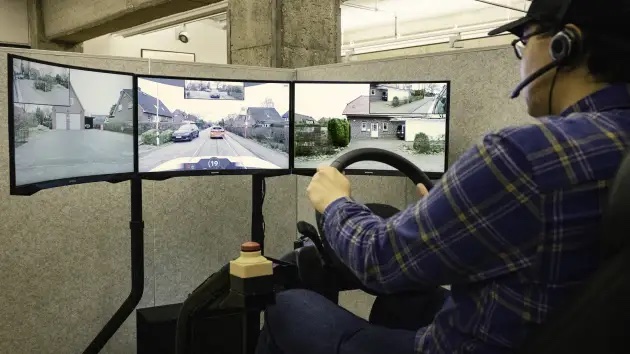
PARIS, France — French automotive giant Peugeot has announced a partnership with Vay, a German mobility startup, to integrate “teledriving” technology into its vehicles. This innovative tech offers an alternative to autonomous cars, allowing vehicles to be remotely driven by human operators. The collaboration will focus on assessing the use of Vay’s teledriving technology in “last-mile delivery” vans and smaller logistics vehicles, targeting business-to-business (B2B) customers.

The concept aims to replicate the typical journey a delivery vehicle takes from an order fulfillment center to its final destination, whether it be households or businesses. Unlike self-driving cars, which operate without human intervention, teledriven cars are controlled remotely by human drivers who navigate using a live feed of the vehicle’s surroundings. These teledrivers undergo several weeks of rigorous training and must receive certification before operating one of Vay’s teledrive stations.

Continue reading… “Peugeot Partners with Vay to Integrate Teledriving Technology for Last-Mile Deliveries”

Powerless Computing: How Smart Rubber Can Revolutionize Mechanical Tasks

In the absence of electronic computational tasks, our daily lives would be drastically different. Everyday devices like elevators, vending machines, turnstiles, washing machines, and traffic lights rely on simple electronic computing to switch states. But what if these devices could operate without a power supply? A research team led by Martin van Hecke from Leiden University and AMOLF has demonstrated how smart rubber structures can carry out these computational tasks. “We now know how to design simple materials so they can process information,” van Hecke stated.

Their study, published on May 20 in the Proceedings of the National Academy of Sciences, showcases a groundbreaking approach to computation using mechanical systems. Traditionally, electronic devices perform calculations with digital bits and complex circuits. However, the researchers have found an innovative way to compute using slender rubber elements as mechanical bits, assembling them into a “metamaterial.” The key to making these materials function as machines lies in controlling the interactions between the individual bits.

Continue reading… “Powerless Computing: How Smart Rubber Can Revolutionize Mechanical Tasks”

Revolutionizing Auto Repair: The Emergence of 3D Printing in MRO Operations

Though the automotive industry has long utilized 3D printing technology, its potential in end-part production and maintenance, repair, and overhaul (MRO) operations has been underutilized. While companies like BMW are developing automated additive manufacturing (AM) lines for car components, MRO applications lag behind. Harold Sears, a Ford veteran and 3D printing expert, emphasized the importance of standards and quality control for applying AM in auto repair. This need prompted Sears and others to launch the 3D Printing in Auto Repair Task Force with the International Bodyshop Industry Symposium (IBIS).

Following the Task Force’s report on the state of AM in auto repair published in October 2023, progress has been anticipated in this crucial segment. At the IBIS Worldwide event in Greece, a new business named Auto Additive emerged, leveraging the Task Force’s expertise and technology to address AM for auto repair.

Continue reading… “Revolutionizing Auto Repair: The Emergence of 3D Printing in MRO Operations”
Discover the Hidden Patterns of Tomorrow with Futurist Thomas Frey
Unlock Your Potential, Ignite Your Success.

By delving into the futuring techniques of Futurist Thomas Frey, you’ll embark on an enlightening journey.

Learn More about this exciting program.