Revolutionizing Solar Energy: Near-Invisible Transparent Solar Cells Could Power the Future

Traditional solar technology has often been limited by its need for dedicated space, such as rooftops or open fields. However, recent breakthroughs in transparent solar cells (TSCs) promise to change the game, allowing solar energy harvesting from surfaces previously considered unsuitable, such as windows, vehicles, and even human skin. The emergence of near-invisible solar cells (NISCs), which blend seamlessly into their surroundings while efficiently generating power, marks a significant leap forward in solar energy technology.

While conventional solar cells are highly efficient, they often compromise aesthetics and functionality. Transparent solar cells address these challenges, offering a solution that can be integrated into everyday structures without disrupting the visual appeal. These latest NISCs, with an average visible transparency (AVT) exceeding 70%—and reaching as high as 79% in some cases—combine both transparency and energy efficiency, two qualities that were once seen as incompatible.

Continue reading… “Revolutionizing Solar Energy: Near-Invisible Transparent Solar Cells Could Power the Future”


New Record Set for Fastest Swimming Soft Robot Inspired by Manta Rays

A team of researchers at North Carolina State University (NC State) has set a new speed record for an aquatic soft robot, doubling its speed from 3.74 to 6.8 body lengths per second. This breakthrough, inspired by the efficient movement of manta rays, also enhances the robot’s energy efficiency and expands its ability to swim throughout the entire water column—an improvement over the previous model, which was limited to surface swimming.

The soft robot features fins designed based on the unique fluid dynamics of manta rays. These fins are made from a material that remains stable when spread wide, and they are attached to a flexible silicone body. The design includes an air-filled chamber connected to the fins, which bend when inflated, mimicking the downward stroke of a manta ray’s fin flap. Once the air is released, the fins snap back to their original position, storing energy and enabling rapid actuation with just one actuator.

Continue reading… “New Record Set for Fastest Swimming Soft Robot Inspired by Manta Rays”

MIT Breakthrough Catalyst Converts Methane into Valuable Polymers, Offering a Dual Solution to Climate Change

In a groundbreaking development that could significantly impact the fight against climate change, chemical engineers at the Massachusetts Institute of Technology (MIT) have created a new catalyst capable of converting methane gas into valuable polymers. Methane, while less abundant than carbon dioxide, is far more potent in trapping heat in the atmosphere, contributing to about 15% of global temperature rise. This makes methane a critical target for greenhouse gas reduction efforts.

Michael Strano, senior author of the study, emphasized the dual challenge of dealing with methane: “It’s a source of carbon, and we want to keep it out of the atmosphere but also turn it into something useful.” Given methane’s potency as a greenhouse gas, developing a method to capture and convert it is essential to mitigating climate change. The new catalyst developed by the MIT team operates at room temperature and atmospheric pressure, making it feasible for deployment in areas with high methane emissions, such as power plants, landfills, and cattle farms.

Continue reading… “MIT Breakthrough Catalyst Converts Methane into Valuable Polymers, Offering a Dual Solution to Climate Change”

Revolutionary Composite Plastic Degrades with Bacteria, Offering a Sustainable Solution to Plastic Pollution

Plastic waste is one of the greatest environmental challenges of our time. Billions of tons of plastic accumulate on land, pollute our oceans, and break down into microplastics, infiltrating ecosystems, water sources, and even the human bloodstream. The growing crisis is compounded by the fact that most plastics are made from durable polymers that resist biodegradation, with biodegradable alternatives accounting for less than 20% of total production. While the processes to break down these plastics remain cumbersome, new advancements are on the horizon.

In a groundbreaking study published in ACS Nano, researchers from the Weizmann Institute of Science have developed a novel biodegradable composite plastic that can degrade easily using bacteria. This new material, which combines a biodegradable polymer with biological crystals, is not only environmentally friendly but also cheap, easy to produce, and exceptionally strong. The research was led by Dr. Angelica Niazov-Elkan, Dr. Haim Weissman, and Professor Boris Rybtchinski, alongside the late Dr. Eyal Shimoni, Dr. XiaoMeng Sui, Dr. Yishay Feldman, and Professor H. Daniel Wagner.

Continue reading… “Revolutionary Composite Plastic Degrades with Bacteria, Offering a Sustainable Solution to Plastic Pollution”

Idemitsu Unveils World’s First Plant-Based Racing Engine Oil with API SP Certification

Idemitsu Kosan, a leading Japanese company, has launched what it claims to be the world’s first racing engine oil made from plant-based raw materials for more than 80% of its base oil. This revolutionary product combines top-tier racing performance with API SP certification, a significant milestone in the automotive industry. According to a recent market survey conducted by Trending Future Research Institute Inc., this oil is the first of its kind for four-wheeled vehicles to combine American Petroleum Institute (API) certification, plant-based oil, and exceptional racing performance.

The survey, conducted between December 2023 and February 2024, highlighted the breakthrough in engine oil technology, confirming that Idemitsu IFG Plantech Racing oil is the only product on the market to offer both environmental benefits and high-level performance in racing conditions.

Continue reading… “Idemitsu Unveils World’s First Plant-Based Racing Engine Oil with API SP Certification”

BHMbot-B: The Agile Microrobot for Precision Navigation in Tight Spaces

Chinese researchers have developed the BHMbot-B, a highly agile 15 mm-long microrobot capable of quick forward and backward movements, making it ideal for navigating tight and confined spaces. This innovative design combines a variety of advanced technologies to offer unprecedented mobility and adaptability, enabling it to perform tasks in environments where larger machines would struggle.

The BHMbot-B achieves its remarkable versatility through a unique control mechanism. The robot’s forward and backward motion is made possible by aligning the vibratory movements of its magnet, cantilever, and linkages using a process known as vibration mode transition control. This allows the robot to switch between motion modes with precision, enabling it to maneuver through challenging environments efficiently.

Continue reading… “BHMbot-B: The Agile Microrobot for Precision Navigation in Tight Spaces”

Groundbreaking CRISPR Advancements: Focused Ultrasound Takes Gene Editing to New Heights in Cancer Treatment

Thanks to revolutionary advancements in CRISPR technology, medical specialists are on the brink of transforming the treatment and prevention of genetic disorders and diseases. CRISPR (Clustered Regularly Interspaced Short Palindromic Repeats) is a Nobel Prize-winning gene-editing tool that allows scientists to cut and modify DNA with unprecedented precision. By using the Cas9 enzyme, CRISPR can activate or deactivate genes and even insert new DNA to correct genetic abnormalities, revolutionizing our ability to address previously untreatable conditions.

Now, researchers from the USC Alfred E. Mann Department of Biomedical Engineering have taken CRISPR to the next level by incorporating focused ultrasound. This new tool enables precise targeting of CRISPR’s gene-editing abilities to specific areas of the body, significantly improving its efficiency and accuracy. The team is currently exploring how this technology can enhance cancer immunotherapy.

Continue reading… “Groundbreaking CRISPR Advancements: Focused Ultrasound Takes Gene Editing to New Heights in Cancer Treatment”

Eco-Friendly Air Purification System Uses Microbubbles for Sustainable Clean Air

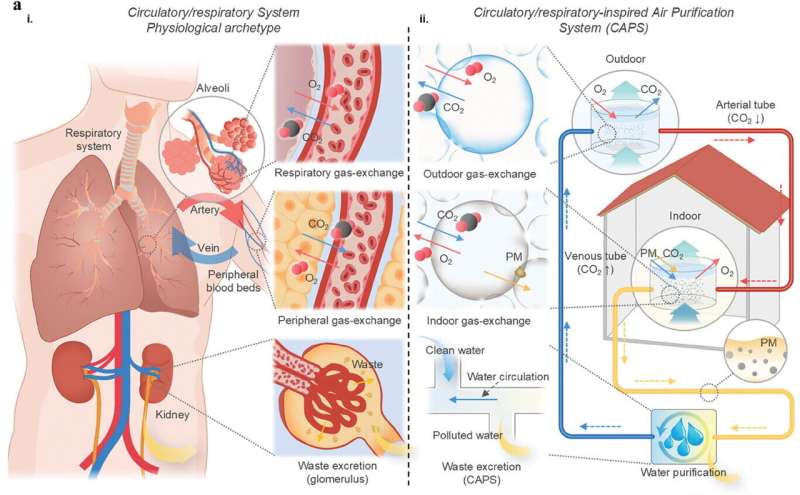
A research team led by Professor Seung Hwan Ko from Seoul National University has developed an innovative, eco-friendly air purification system that utilizes microbubble filters instead of traditional solid filters. This groundbreaking technology addresses the growing need for more sustainable air purification solutions in enclosed spaces, where air quality is often compromised due to factors like reduced oxygen levels, the accumulation of carbon dioxide, fine dust, and volatile organic compounds (VOCs).

In indoor environments, traditional air purifiers often fail to effectively handle the accumulation of fine dust and volatile organic compounds. The conventional filters used in these systems tend to deteriorate over time, especially in sealed spaces, making them less effective. Furthermore, the waste generated from the need for regular filter cleaning and replacement has contributed to environmental pollution, highlighting the urgent demand for more sustainable alternatives.

Continue reading… “Eco-Friendly Air Purification System Uses Microbubbles for Sustainable Clean Air”

Cornell’s Groundbreaking Miniature Walking Robots Could Revolutionize Microscopy and Force Measurement

Researchers at Cornell University have developed the smallest walking robot yet, opening up new possibilities for advanced imaging and force measurements at the microscopic scale. These tiny robots, which are just 5 to 2 microns in size, can maneuver independently, interact with light waves, and perform intricate tasks such as moving across tissue samples to take images and measure forces at a scale previously impossible for conventional microscopes.

Led by Paul McEuen, the John A. Newman Professor of Physical Science Emeritus at Cornell’s College of Arts and Sciences, the team’s work represents a significant leap in both robotics and optical technology. The paper, Magnetically Programmed Diffractive Robotics, was recently published in Science, with McEuen as the corresponding author. Conrad Smart, a researcher at Cornell’s Laboratory of Atomic and Solid State Physics (LASSP), and Tanner Pearson, Ph.D. ’22, are co-first authors.

Continue reading… “Cornell’s Groundbreaking Miniature Walking Robots Could Revolutionize Microscopy and Force Measurement”

UC San Diego Develops Groundbreaking Wearable Ultrasound Patch for Continuous Blood Pressure Monitoring

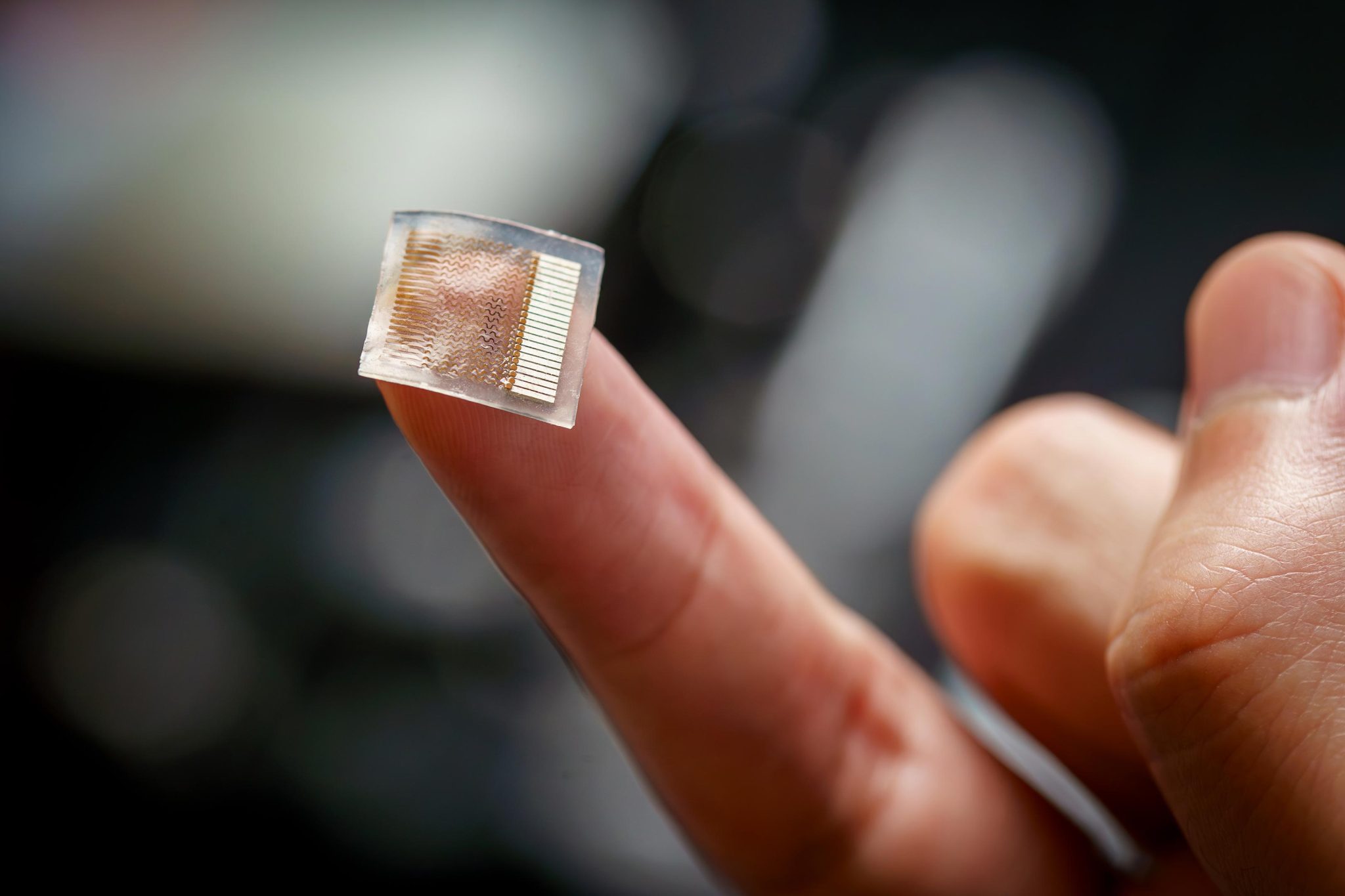
Researchers at the University of California, San Diego (UCSD) have unveiled a groundbreaking wearable ultrasound patch designed for continuous, noninvasive blood pressure monitoring. This innovative device is the first of its kind to undergo extensive clinical validation on over 100 patients, offering a new and potentially transformative method for tracking cardiovascular health both in clinical settings and at home. The results of the study were recently published in Nature Biomedical Engineering.

Traditional blood pressure measurements, such as those taken with a cuff, typically provide only one-time readings, which can miss important trends and fluctuations. In contrast, the UCSD-developed wearable patch continuously monitors blood pressure and provides real-time waveform data, offering detailed insights into changes and trends over time. According to Sai Zhou, co-first author of the study and recent Ph.D. graduate from the UCSD Jacobs School of Engineering, this continuous data stream allows for better monitoring of cardiovascular health.

Continue reading… “UC San Diego Develops Groundbreaking Wearable Ultrasound Patch for Continuous Blood Pressure Monitoring”

The Rise of Interactive AI Video Chatbots: A New Era of Persuasion and Potential Pitfalls

In the past year, artificial intelligence has undergone rapid and unprecedented advancements. While we’ve all been amazed by tools like ChatGPT’s voice capabilities, a new frontier has emerged: interactive video chatbots that not only hear and speak but can also see and engage with you in real time. This next-generation of multimodal AIs is redefining how we interact with technology—and it’s more lifelike than ever.

A couple of years ago, the idea of a video chat with a highly realistic AI might have seemed like something straight out of science fiction. Yet, in 2024, I’ve already spoken to five such AI agents, and what seemed like an outlandish dream is now a familiar reality. The technology is advancing so quickly that it’s beginning to feel completely normal.

Continue reading… “The Rise of Interactive AI Video Chatbots: A New Era of Persuasion and Potential Pitfalls”

Focused Energy: The San Francisco Startup Aiming to Harness the Sun’s Power for Clean, Unlimited Energy

Focused Energy, a German-American energy company, is on a mission to revolutionize the clean energy landscape with its groundbreaking laser fusion technology. Based in the Bay Area, with roots tracing back to Austin, Texas, Focused Energy has unveiled plans to build a cutting-edge $65 million facility dedicated to creating lasers capable of reaching temperatures as hot as the sun. These lasers will be harnessed to generate clean, sustainable power for homes across the United States.

Focused Energy is among a select group of companies working on laser fusion, an advanced form of nuclear fusion. For decades, scientists have dreamed of unlocking the power of fusion energy, often referring to it as the “holy grail” of clean energy. Unlike nuclear fission, which produces harmful radioactive waste, fusion has the potential to provide virtually limitless, clean, and renewable energy.

Continue reading… “Focused Energy: The San Francisco Startup Aiming to Harness the Sun’s Power for Clean, Unlimited Energy”
Discover the Hidden Patterns of Tomorrow with Futurist Thomas Frey
Unlock Your Potential, Ignite Your Success.

By delving into the futuring techniques of Futurist Thomas Frey, you’ll embark on an enlightening journey.

Learn More about this exciting program.