
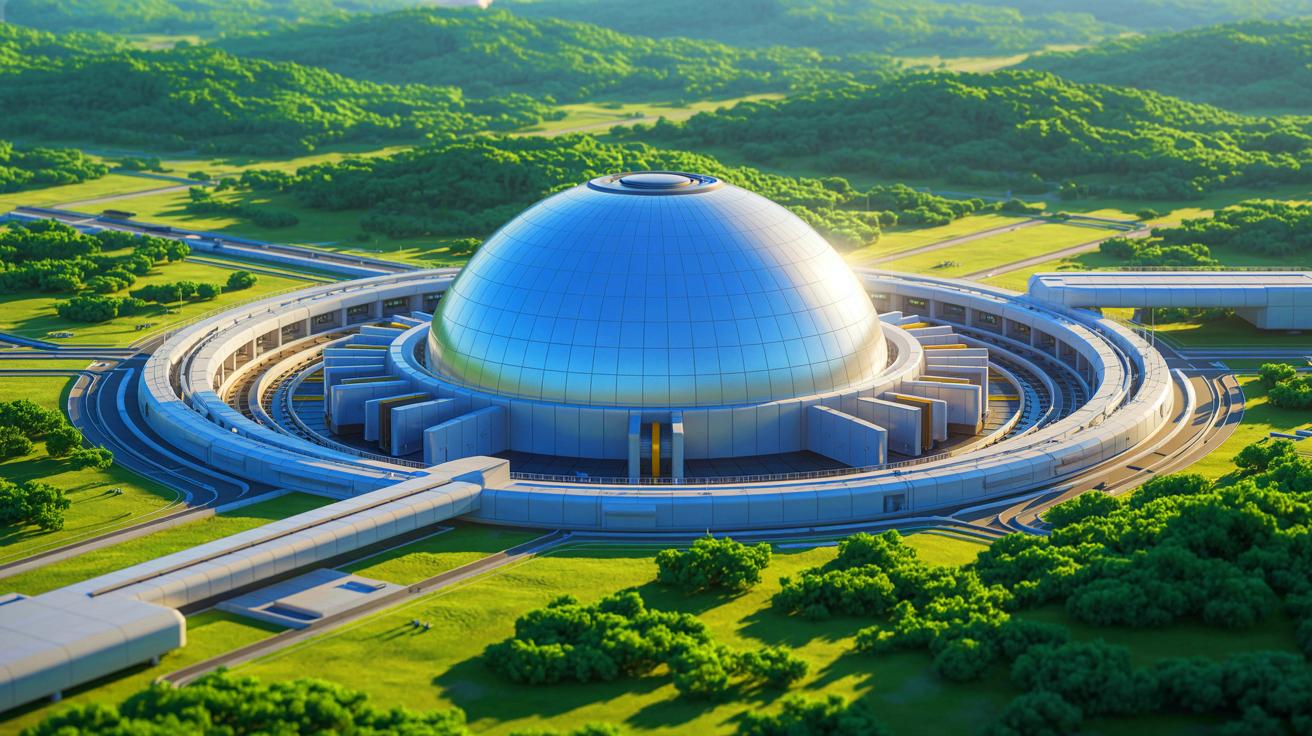
China has taken a significant step in nuclear technology with the development of the CFR-1000 fast neutron reactor, a design capable of generating 1.2 gigawatts of power—enough to supply electricity to around one million homes. While the reactor is still under development and not expected to become operational until 2034, it highlights a broader global trend: the push toward advanced nuclear systems that aim to improve efficiency and reduce waste.
Unlike traditional reactors, which rely on slow neutrons and produce large volumes of long-lived radioactive waste, the CFR-1000 is designed to operate with fast neutrons. This allows it to “breed” new fuel, such as plutonium-239, from non-fissile uranium-238. In practice, this means greater fuel efficiency and the potential to recycle some nuclear waste.
A key feature of the design is its use of liquid sodium coolant instead of water. Sodium conducts heat more efficiently, enabling the reactor to operate at higher temperatures and improving overall energy output. However, sodium also presents unique engineering challenges—it reacts easily with air and water, requiring careful management.
The CFR-1000 still faces regulatory review and technical hurdles, but its scale sets it apart from earlier experimental fast reactors. If successful, it could serve as a model for future commercial deployments, both in China and abroad. Other countries—including Russia, France, and the United States—have explored similar designs, but China’s progress may accelerate interest in this technology worldwide.
The implications extend beyond energy supply. Advanced reactors like the CFR-1000 are reshaping discussions around energy independence, waste management, and the role of nuclear power in long-term planning. Whether this technology becomes widely adopted will depend not only on its technical success, but also on regulatory, economic, and geopolitical factors.
The CFR-1000 may not be a revolution in itself, but it represents an important step toward defining what the future of nuclear energy could look like.
Related stories:
- Russia’s BN-800 Fast Reactor Expands Fuel Recycling
- France’s Astrid Project: The Fast Reactor That Almost Was
