
More than two billion people across the globe still lack reliable access to clean drinking water. We tend to think of water as a resource found in rivers, lakes, or deep underground, but the atmosphere itself holds more water than all the rivers on Earth combined. What if the very air around us could be tapped like an invisible reservoir?
That’s exactly what two students at Münster University of Applied Sciences have set out to do. Their project, Water from Air, takes a futuristic approach to one of humanity’s oldest problems—using 3D printing and advanced materials to harvest water directly from the atmosphere.
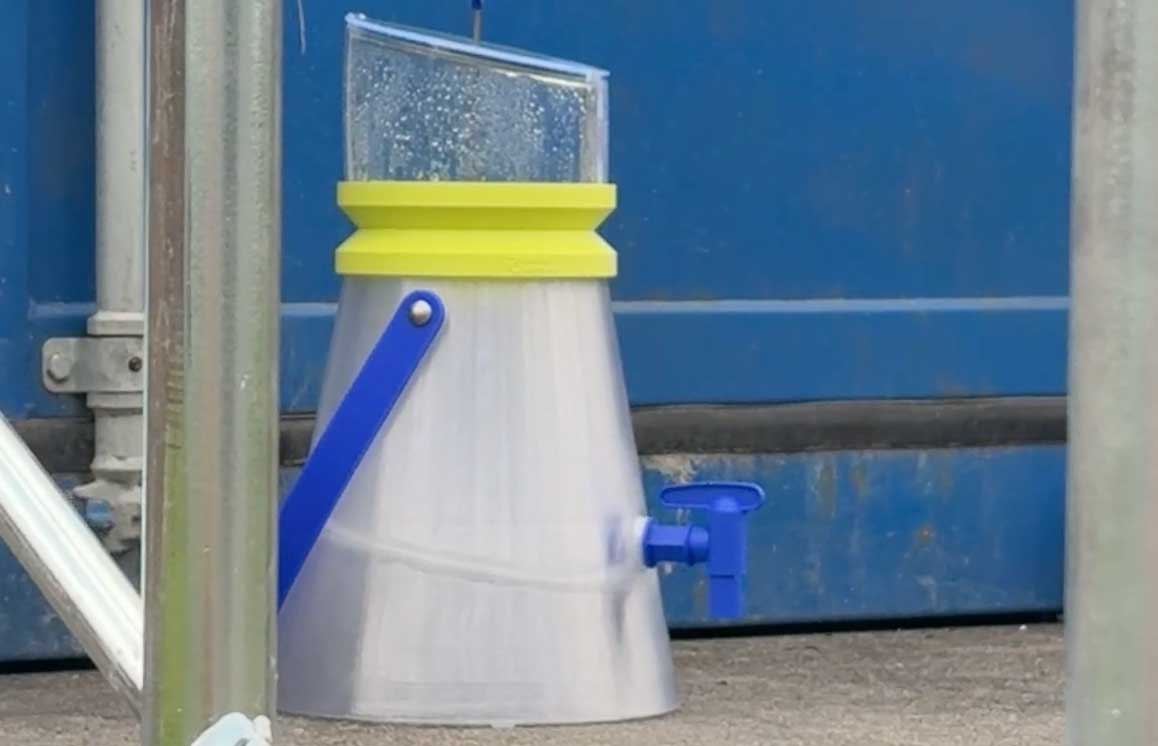
At the heart of their invention is a material called a metal-organic framework, or MOF. Imagine a microscopic sponge made of metal ions and organic molecules, filled with pores that can trap and release enormous amounts of water vapor. In their design, the MOF is placed in the lid of a compact container. With the lid open, the MOF absorbs moisture from the surrounding air. Once sealed, the moisture condenses into droplets that are collected as distilled drinking water.
The prototype is simple but powerful. Under optimal conditions—80 percent humidity and half a kilogram of MOF—it can produce about half a liter of water in just two hours. Scaled up, that’s six liters of fresh water per day, all without the need for additional filtering since MOFs absorb minimal pollutants. For someone living in a drought-prone area or a remote village with no infrastructure, six liters can be the difference between survival and hardship.
What makes this device especially compelling is the way it was built. The students used a mix of 3D printing processes to manufacture each component. The container itself was made with transparent PETG, a food-safe plastic. The lid and housing were printed with higher-resolution SLA methods, while the valves and strap were crafted from silicone. Because of its modular design, the system can be easily repaired, customized, or adapted to different environments.
This is not just a student project—it’s a glimpse of the future of water technology. Imagine families in rural Africa, communities in arid regions of the Middle East, or disaster relief teams arriving after a hurricane, all carrying portable atmospheric water generators. Imagine a time when “water scarcity” becomes a problem of the past because the air itself is recognized as the most abundant source of fresh water available.
The implications go further. Devices like this could one day be scaled up into neighborhood-level infrastructure, capable of supplying entire towns. They could be installed in off-grid homes, schools, or even space habitats, where recycling every molecule of water matters.
The students’ work highlights a profound shift in how we think about resources. Instead of drilling deeper, damming rivers, or diverting entire ecosystems, we are learning to engineer materials that can unlock what has always been around us but inaccessible.
For centuries, civilizations have fought wars over water. The next era may be defined by who can master the science of harvesting it from the air. And thanks to innovations like MOF-powered, 3D-printed harvesters, the answer may no longer lie in geography but in design.
For further reading:
- Metal-Organic Frameworks and the Future of Atmospheric Water Harvesting
- 3D Printing Breakthroughs in Sustainable Water Technology
