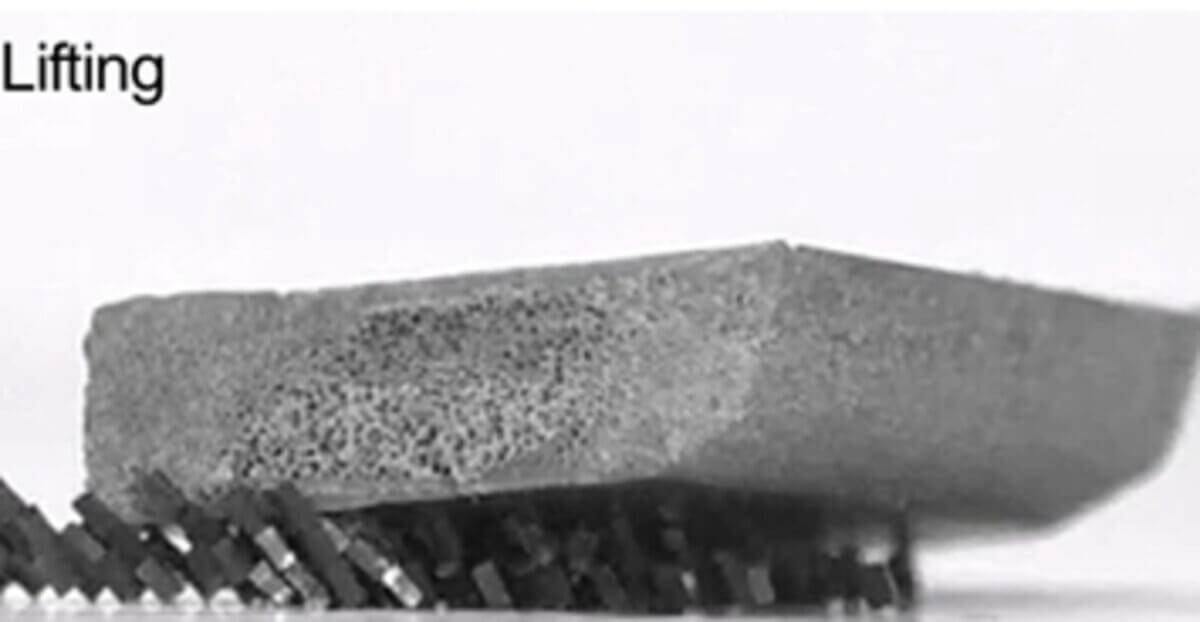
Imagine a future where doctors deploy thousands of microscopic robots to clear blocked arteries or deliver precise treatments. Researchers at Hanyang University have taken a major step toward this possibility by developing microrobots that can self-organize into swarms, tackle obstacles, and even transport heavy loads. In a groundbreaking study published in the journal Device, scientists demonstrated how these robots, each smaller than a grain of salt, can work together like an army of ants to solve complex problems.
Each of these miniature robots, measuring just 600 micrometers tall (about half a millimeter), is made using a process similar to ice cube molding, allowing researchers to create hundreds of these tiny robots cost-effectively. The robots are embedded with magnetic particles called neodymium-iron-boron (NdFeB), enabling them to respond to external magnetic fields and interact with one another. This allows them to form various shapes and structures to adapt to different challenges.
Continue reading… “Tiny Magnetic Robots Could Revolutionize Medicine by Clearing Blocked Arteries”