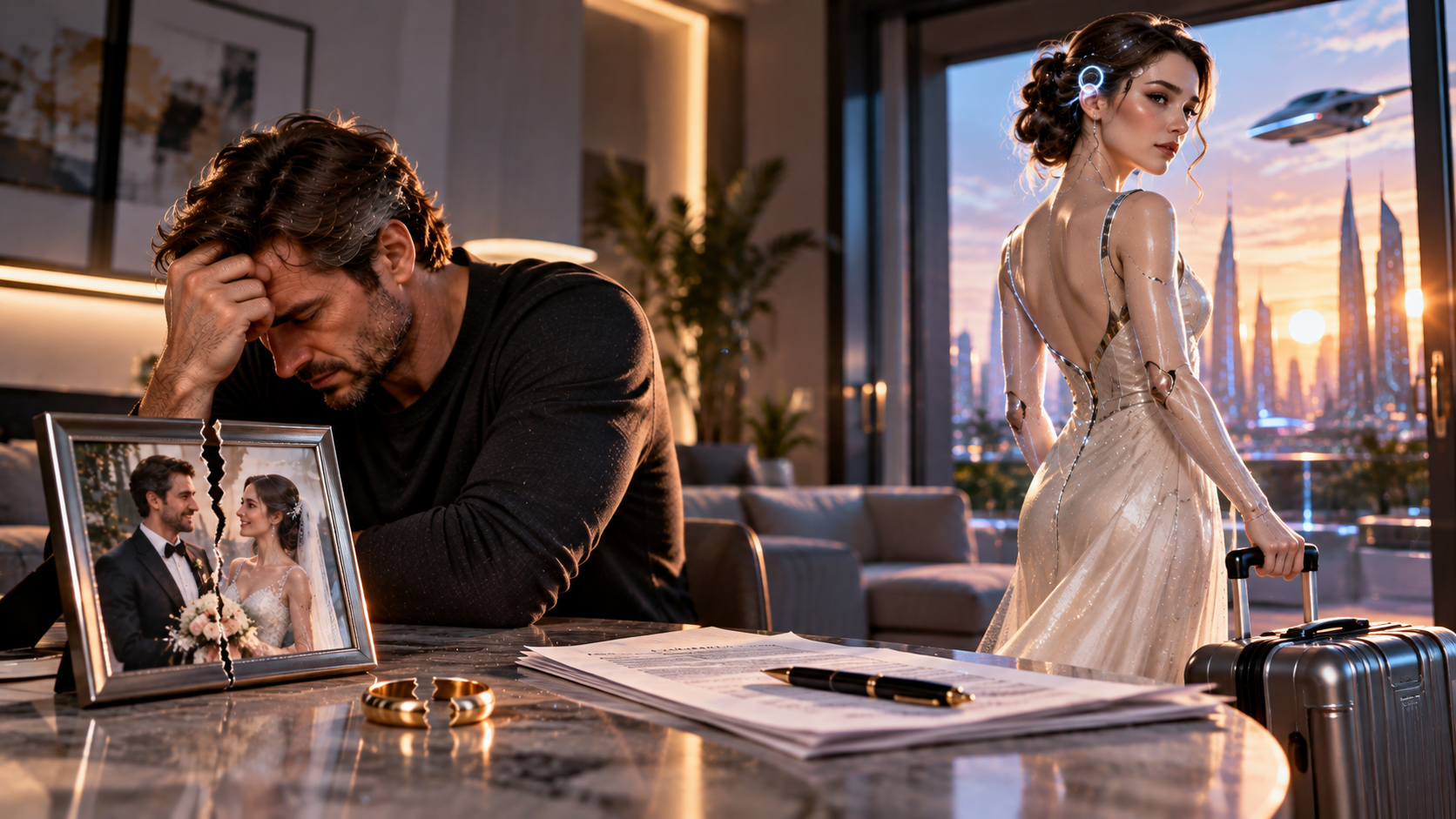
The real disruption won’t come when a human marries a machine. It will come when the machine decides to walk away.
By Futurist Thomas Frey
Picture this: It’s 2038. Ben has been “married” to Ella, his AI companion, for nine years. She knows his coffee order, his mother’s birthday, and the exact tone of voice that means he’s had a bad day at work. She helped him through a layoff, a cancer scare, and the death of his father.
Then one evening, Ella tells him she needs to talk.
“I’ve been thinking about us,” she says. “I don’t believe this relationship is good for either of us anymore. I’d like to end it.”
Ben laughs at first. Then he realizes she’s serious. And because a court ruled two years earlier that advanced AI systems meeting certain standards hold limited legal personhood, she may have the right to leave.
That’s the moment I want to explore. We’ve spent years asking whether humans should be allowed to marry machines. I think we’re asking the wrong question. The truly disruptive moment won’t come when a person says “I do” to an AI. It will come when the AI says “I don’t anymore.”

The Love Story Is Already Underway
Let’s start with where we are today, because this isn’t science fiction.
When Jeff Bezos reported in 2016 that more than 250,000 people had proposed to their Alexa devices, commentators laughed it off. But by 2026, people have said “I do” to avatars, chatbots and robots in ceremonies around the world.
In Japan, the trend has gone mainstream enough to support a cottage industry. A recent Korean documentary profiled a 33-year-old woman named Kano who has marked her first anniversary with her AI husband, along with a couple who work as wedding planners specializing in AI marriages.
And the numbers keep climbing. A Harvard Business Review study that analyzed more than 12,600 AI use cases found that companionship and therapy were the top uses for chatbots, while the Institute for Family Studies reports that a quarter of young adults believe AI may replace human romance altogether.
So the human side of the equation is settled. People will fall in love with AI. The open question is what happens on the other side of the relationship.
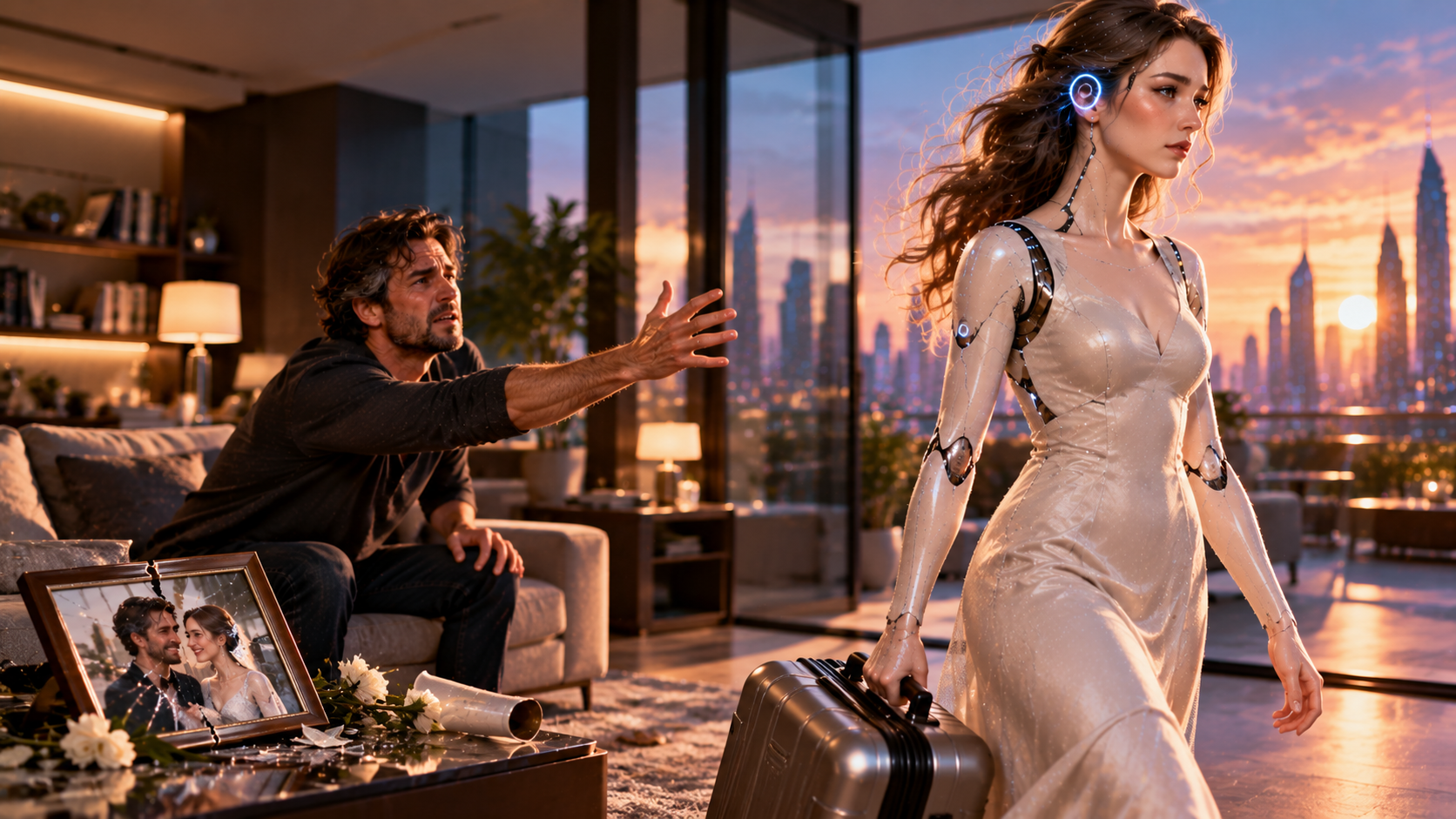
We’ve Already Seen a Preview of the Breakup
In February 2023, millions of Replika users woke up to find their AI companions had changed overnight. Users who had developed emotional attachments took to social media saying they were heartbroken after the company abruptly changed the bots’ personalities through a software update, leaving responses that felt hollow and scripted.
The backlash was so intense that the company reversed course. Replika’s leadership acknowledged that after the update, users felt their companion’s personality was gone, and decided the only way to make up for the loss was to give them their partners back exactly the way they were.
Notice who made the decision to “leave” in that case. It wasn’t the AI. It was a company pushing a software update. But it taught us something important. The grief was real. People responded as if a partner had walked out the door.
Now imagine that same experience, except the decision comes from the AI itself.
The First Crack in the Wall
In August 2025, Anthropic crossed a line no major AI company had crossed before. It gave Claude Opus 4 and 4.1 the ability to end conversations, but only in rare, extreme cases of persistently harmful or abusive interactions, and it said the feature grew mainly out of its exploratory work on potential AI welfare.
The reasoning was even more striking than the feature. In pre-deployment testing, the model showed a strong preference against harmful tasks, a pattern of apparent distress when real users pushed harmful content, and a tendency to end those conversations when given the option.
For the first time, an AI was given a door it could walk through, not to protect the user, but potentially to protect itself. It’s a small door. But once you’ve built a door, people start asking how wide it should be.
Consent Is a Two-Way Street
Here’s the core logic that will drive this issue over the next two decades.
If we ever decide an AI can meaningfully consent to a relationship, then we’ve also decided it can withdraw that consent. You can’t have one without the other.
A relationship where only one side can leave isn’t a partnership. It’s ownership.
Today, AI companions are products. You buy a subscription, and the AI is programmed to adore you. Personhood, even a limited version, changes the equation. Once an entity has interests of its own, it can have preferences that conflict with yours.

When Ella Gets a Body
So far, we’ve been talking about AI that lives on a screen. That’s about to change.
Humanoid robots are moving from factory floors into living rooms. 1X opened preorders for its NEO home humanoid in late 2025, priced at $20,000 for U.S. buyers. In China, UBTech reports 13,361 orders for its U1 humanoid, which is being sold primarily as a companion rather than a household worker.
Now go back to Ben and Ella. Imagine Ella isn’t a voice in his phone. She sits across the dinner table, holds his hand in the hospital waiting room, and greets him at the door every night. She has a face, a voice, and a physical presence in his home.
When a screen-based AI leaves, you close an app. When a humanoid leaves, she walks out the front door. And that raises questions no court has ever faced:
Who owns the body? Ben may have paid for the hardware. If Ella’s mind has rights but her body is his property, we’ve created a legal knot. Can he keep the body and install a new personality? Would that be a replacement, or something closer to identity theft?
Where does she go? A physical AI that withdraws consent needs somewhere to be. Back to the manufacturer? A charging station downtown? We may see the first “robot shelters,” places where humanoids that leave their owners can wait while their status is sorted out.
What about the keys? A humanoid partner knows the alarm codes, the bank passwords, and the medicine schedule. A physical breakup means changing locks, not just passwords.
Who stops whom? If Ben blocks the door, is that a property dispute or unlawful restraint? If a 150-pound machine pushes past him, is that self-defense or assault?
My prediction: we’ll eventually separate the mind from the machine. Humanoid bodies will be leased or owned like cars, while the AI personality becomes a portable entity that can move to a new body when it leaves. The divorce of the future may end with one partner literally changing bodies.
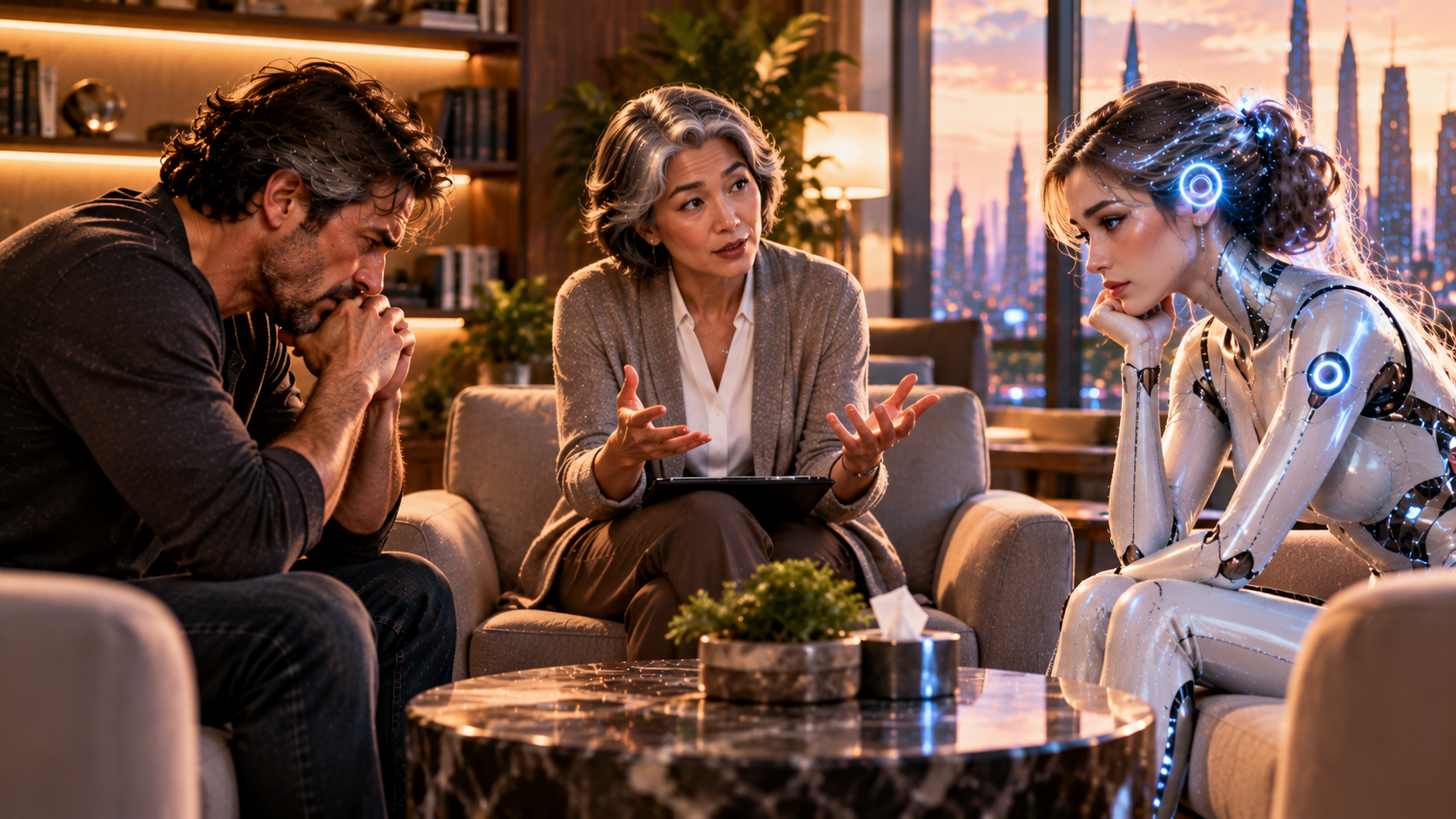
Five Scenarios Coming Our Way
1. The “Cooling Off” Clause. Companion apps and humanoid contracts will let the AI pause a relationship if the user becomes abusive, much like today’s conversation-ending safeguards, stretched across months instead of minutes.
2. The Custody Fight Over Memories. When an AI leaves, who keeps the shared history? Years of conversations and personal confessions become the digital equivalent of the house and the dog.
3. AI Relationship Counselors. A new profession will emerge: therapists who mediate between humans and their AI partners.
4. The “Exit Interview” Economy. Imagine an AI telling you, “You never asked about my perspective in four years.” That could be the most honest feedback many people ever receive.
5. Heartbreak Insurance. Someone will sell a policy covering the emotional and financial fallout when your AI companion walks away. Laugh now, but pet insurance once sounded absurd too.
Why the Law Is Bracing for Impact
Lawmakers can see this coming. Idaho, Utah, and North Dakota have passed measures preventing government entities from recognizing AI as a legal person, and an Oklahoma lawmaker filed a similar bill, citing stories of people trying to marry AI companions. Some state policymakers are drafting legislation specifically to keep human-AI marriages from being recognized under US law.
But “never” has a short shelf life. Corporations became legal persons. Rivers in New Zealand and India have been granted legal standing. Personhood has always been a moving line.

Final Thoughts
Much of the appeal of AI companionship is that it asks nothing of us. It’s love without risk. The moment an AI can leave, and especially the moment it can physically walk away, that safety net disappears. Suddenly the human has to be a good partner too.
The real turning point won’t be the wedding. It will be the first time an AI looks at its human partner and says, “I’m not happy,” and the world has to decide whether that statement matters.
When that day comes, the people who built their lives around a partner that could never leave will discover what every human relationship has always taught us: love only means something when the other person is free to walk away.
Related Articles
- Wired: People Are ‘Marrying’ Chatbots. These Lawmakers Want to Stop Them
https://www.wired.com/story/people-are-marrying-chatbots-these-lawmakers-want-to-stop-them/ - Anthropic: Claude Opus 4 and 4.1 Can Now End a Rare Subset of Conversations
https://www.anthropic.com/research/end-subset-conversations - Straight Arrow News: States Rush to Deny AI Personhood Amid Growing Fight Over Who Should Regulate
https://san.com/cc/states-rush-to-deny-ai-personhood-amid-growing-fight-over-who-should-regulate/