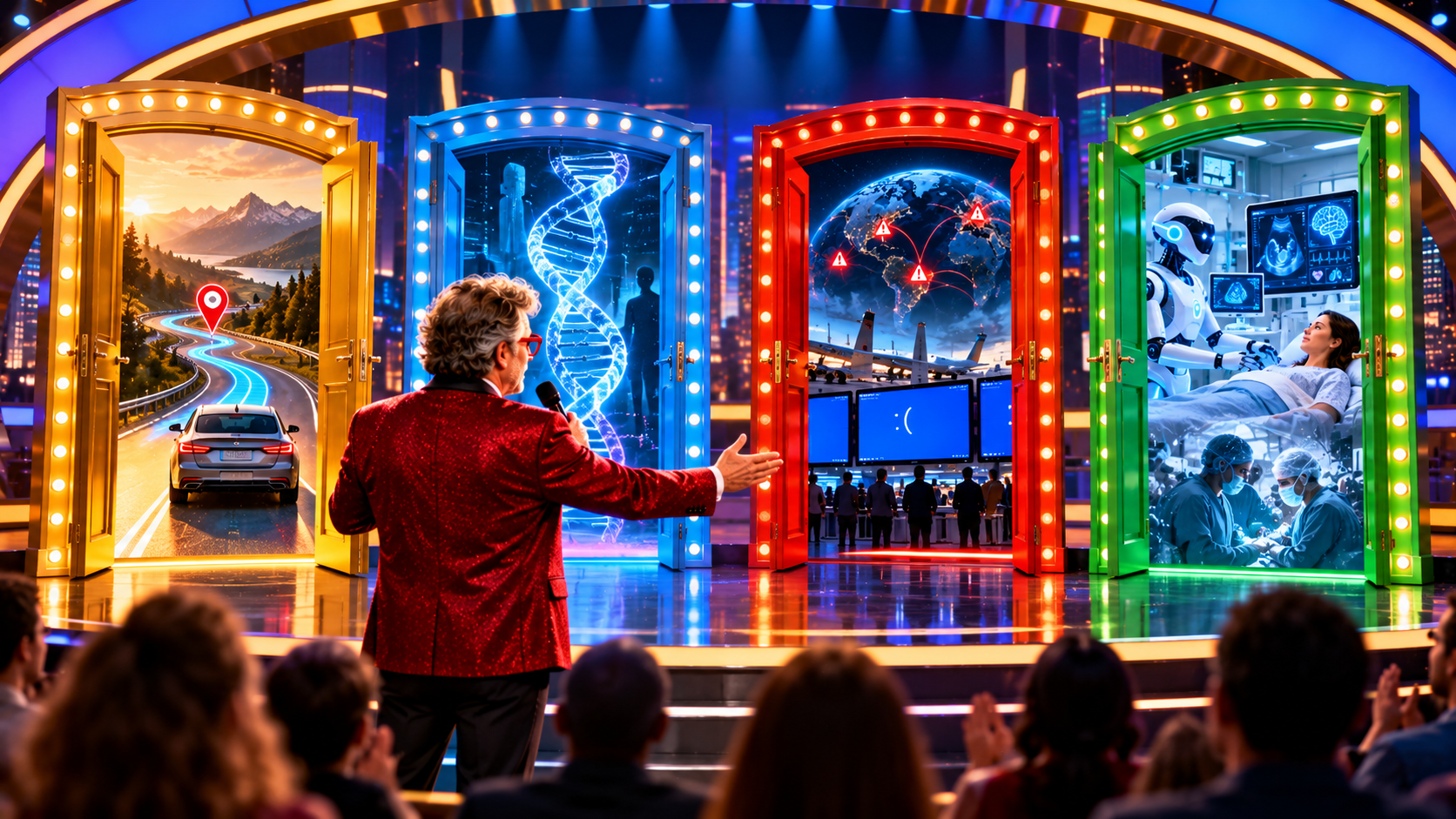
Every shiny new tool comes with a hidden price tag. Here’s how to read the fine print before you sign.
By Futurist Thomas Frey
Every new technology offers a trade: convenience for dependency, automation for skills, personalization for privacy, efficiency for resilience. We rarely know the full price when we accept the deal.
Older readers may remember the game show Let’s Make a Deal. Contestants in chicken suits and clown wigs had a choice. They could keep the sure thing in their hands, or trade it for whatever sat behind Door Number Two. Sometimes that door hid a new car. Sometimes it hid a goat.
I’ve come to believe that technology is the longest-running version of that show ever produced, and every one of us is a contestant. The host is always smiling, the crowd is always cheering, and the door is always closed.
Here is the part we tend to forget. The door doesn’t open the day we make the deal. It opens years later, often after we’ve forgotten we made a choice at all.
The Four Trades We Keep Making
When I look at the arc of innovation, I see the same four bargains coming up again and again.
1.) Convenience for Dependency
Every tool that makes life easier also makes us lean on it a little more.
2.) Automation for Skills
Every task a machine takes over is one fewer task we practice.
3.) Personalization for Privacy
Every service that “knows us” got that knowledge from somewhere, and that somewhere is us.
4.) Efficiency for Resilience
Every system tuned to run lean has less slack left for the day something breaks.
None of these trades is bad by itself. Most of them have been wonderful deals. The issue is that we sign the contract without reading the fine print, mostly because the fine print hasn’t been written yet.
Door Number One: The Map in Your Pocket
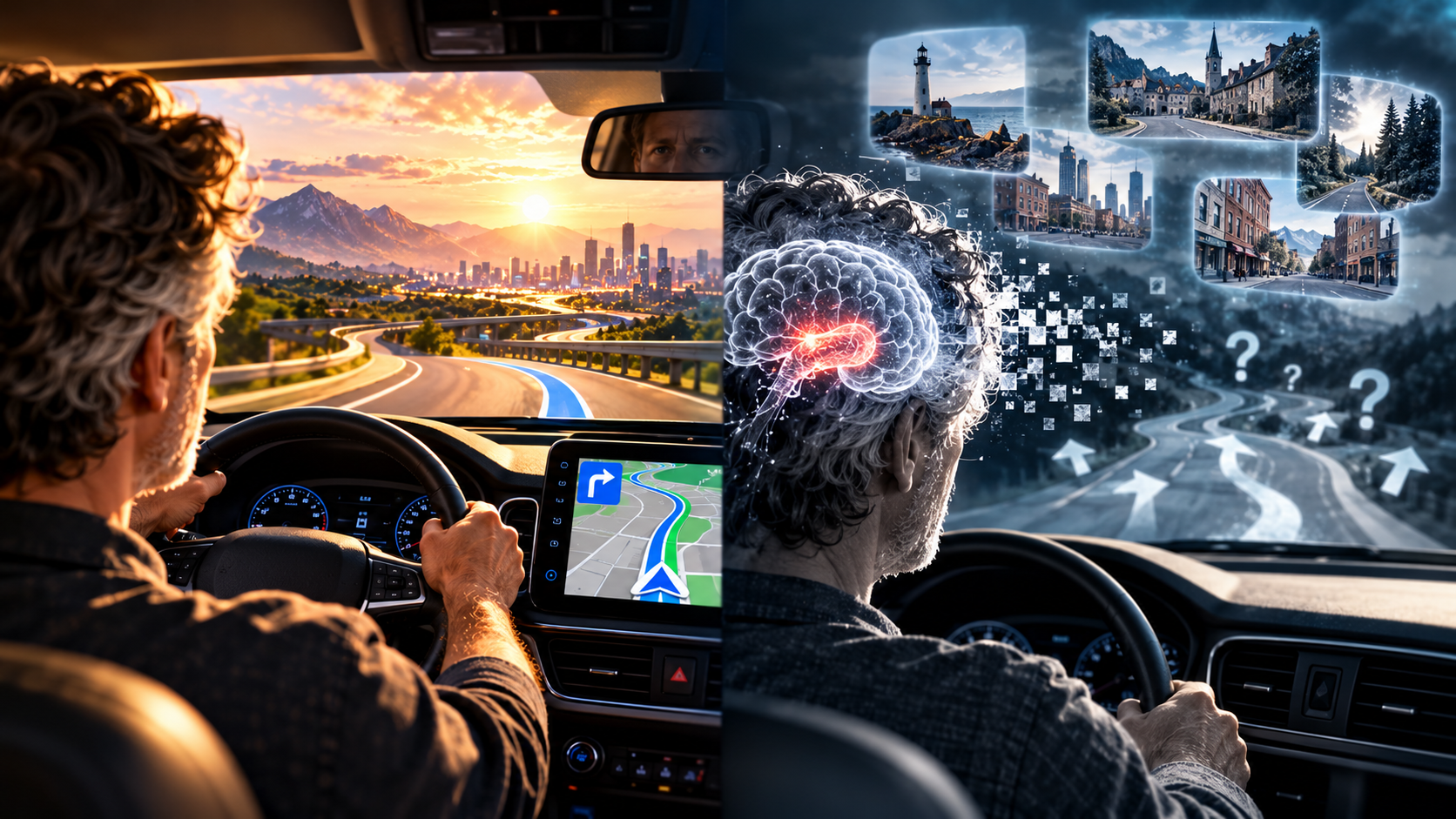
Think about how you got to the last unfamiliar place you visited. Odds are, a calm voice told you when to turn left.
GPS is one of the great gifts of the last thirty years. It has saved billions of wrong turns, countless arguments in the front seat, and untold gallons of fuel. But researchers at McGill University wanted to know what we gave up in return. They measured the lifetime GPS experience of 50 regular drivers and tested how well they handled spatial memory, mental mapping, and remembering landmarks. When they followed up a few years later, heavier GPS use over that period was linked to a sharper decline in the kind of spatial memory that depends on the hippocampus.
What makes this more than a curiosity is that the hippocampus does more than help us find the grocery store. It is one of the first parts of the brain affected by Alzheimer’s disease, which brings memory loss and trouble with spatial orientation.
The point isn’t to throw away your phone. Nobody is going back to folding paper maps across the steering wheel. But we accepted a deal that said “you’ll never get lost again,” and only now are we finding out that getting lost was doing something useful for us.
Door Number Two: Your DNA in Someone Else’s Drawer
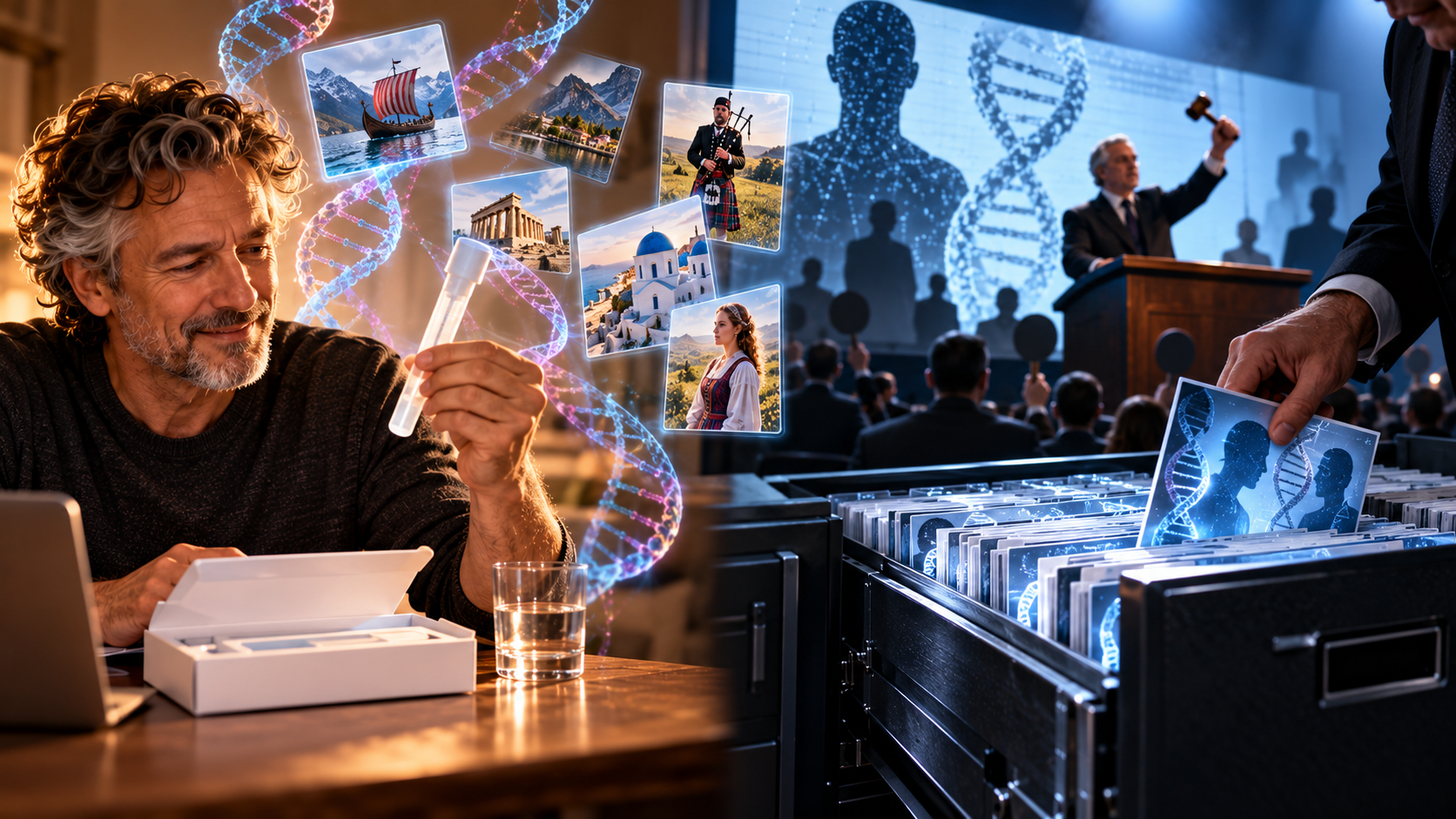
A few years ago, millions of people spat into a tube for the fun of discovering they were 14% Scandinavian. It felt like a harmless novelty with a dash of personal discovery.
Then the company behind one of the most popular kits ran out of money. In 2025, 23andMe proposed auctioning its assets, which included the genetic data of more than 15 million customers. Customers learned something many had never considered. Bidders only had to agree to the company’s existing privacy practices, and those practices did not restrict transferring personal information in a bankruptcy, merger, or sale.
Here’s what makes this trade different from a lost password. Privacy experts point out that genetic data is permanent once shared, and that even anonymized data can sometimes be traced back to individuals. You can change your credit card number. You cannot change your genome. And your DNA doesn’t just describe you. It describes your parents, your siblings, and your children, none of whom signed anything.
The deal was personalization. The price turned out to be a permanent piece of ourselves, passed into whatever hands end up holding it.
Door Number Three: The Day the Screens Went Blue
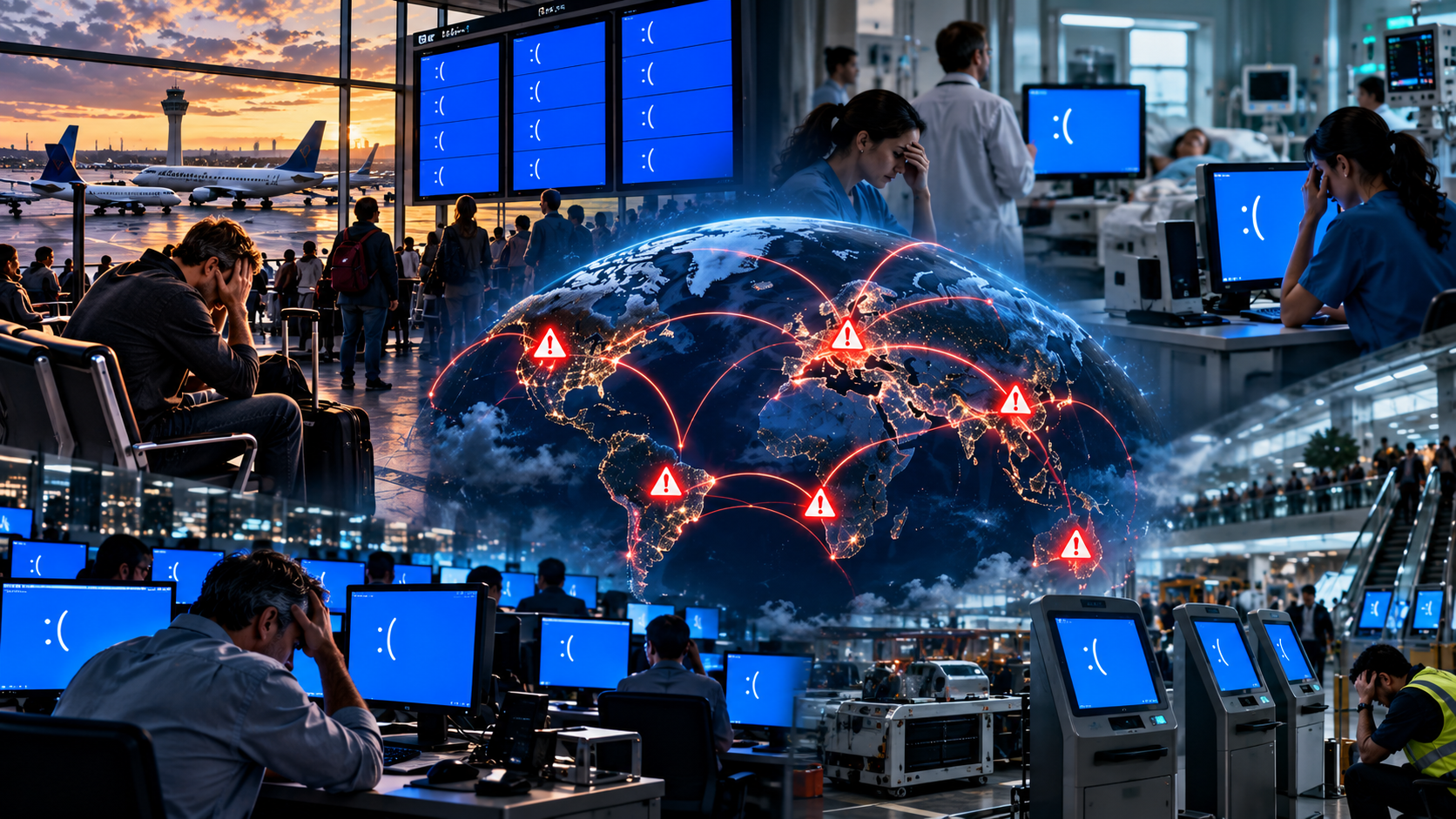
On July 19, 2024, the world got a glimpse of what efficiency can cost. A single faulty software update from a cybersecurity company rippled across the planet. As many as 8.5 million Windows devices were affected, and more than 10,000 flights were delayed or canceled worldwide. Hospitals in Germany and the UK had trouble reaching patient records and canceled non-urgent procedures.
Notice what happened. It wasn’t a hacker or a hurricane. It was one routine update, pushed out efficiently to millions of machines at once, exactly as designed. The same efficiency that let protection spread instantly also let failure spread instantly.
This is the efficiency-for-resilience trade in its purest form. We built a world where everything is connected, optimized, and synchronized. That gives us speed. It also means a single crack can run through the entire foundation.
Door Number Four: The Fading Skill
The automation-for-skills trade is the quietest of the four, and probably the one that will matter most in the decade ahead.
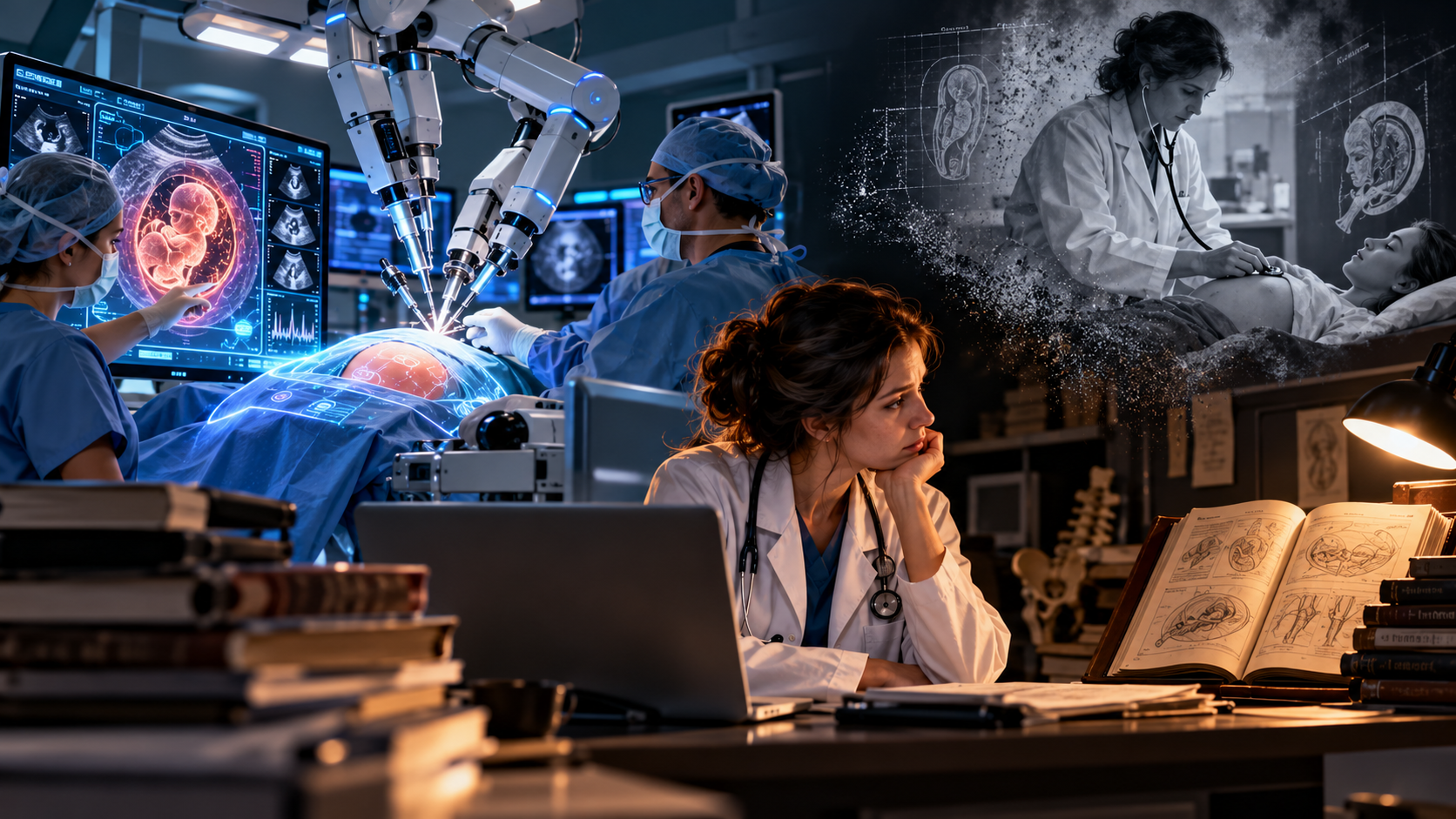
Medicine offers a glimpse. A 2026 review of obstetrics and gynecology described deskilling as the slow erosion, or incomplete learning, of essential technical, thinking, and interpersonal skills caused by leaning too heavily on automation. The authors warned that when technology replaces clinical reasoning instead of supporting it, it can weaken a doctor’s ability to make independent decisions.
Now extend that forward. We are entering an era where AI writes the first draft, catches the errors, suggests the diagnosis, and plans the route. A junior employee in 2030 may never have to struggle through the hard early lessons that built the instincts of today’s experts. That sounds like progress until the day the system goes down and nobody in the room remembers how to do it by hand.
A Fair Word for Convenience
I want to be careful here, because there’s an easy trap in this kind of thinking. It’s tempting to romanticize the old ways and treat every convenience as a weakness.
That would be wrong. One writer made the case well, noting that for people who are disabled, elderly, neurodivergent, overworked, or caring for others, convenience is often what makes daily life possible. A voice assistant isn’t a crutch for someone who can’t see the screen. It’s a door that used to be locked.
So the goal isn’t to refuse the deals. The goal is to make them with our eyes open.
How to Become a Smarter Contestant
Here are a few habits I’d suggest for anyone trying to negotiate with the future.
Ask What the Door Hides
Before adopting a new tool, ask one simple question: what am I giving up, and can I get it back? Losing ten minutes of time is reversible. Losing your genetic privacy is not.
Keep a Manual Override
Every few weeks, drive somewhere without GPS. Do the math without the calculator. Write the email without AI. Think of it as a fire drill for your own abilities.
Build in Slack
Families, businesses, and cities should keep a backup that doesn’t depend on the main system. A paper list of phone numbers. A second supplier. An offline copy of the files that matter most.
Read the Exit Clause
Before handing over personal data, find out what happens if the company is sold or goes broke. If the answer is “anything goes,” treat that data as already public.
Final Thoughts
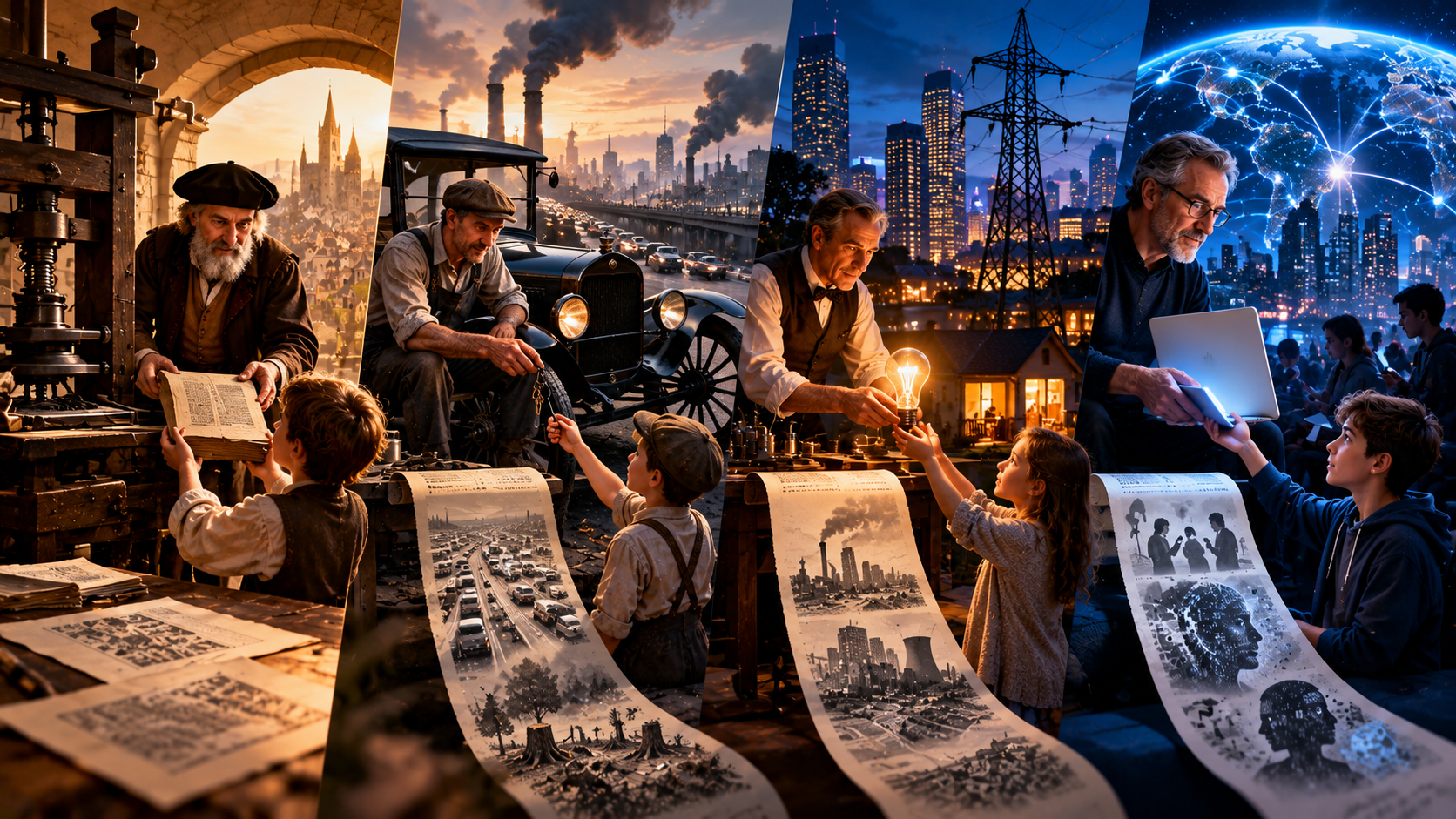
Every generation makes deals with the future, and every generation leaves some of the bill for the next one to pay. The printing press, the automobile, electricity, and the internet were all bargains with hidden costs, and almost all of them were still worth making.
What’s different today is the speed. We used to have decades to discover what was behind the door. Now new deals arrive every few months, layered one on top of the other, faster than we can count the cost of the last one.
The future isn’t something that happens to us. It’s something we negotiate. And the most important skill of the coming decade may not be coding, or prompting, or any technical ability at all. It may simply be the wisdom to pause, look at the closed door, and ask, “What exactly am I trading for this?”
Related Articles
- Scientific Reports (via PubMed Central): Habitual use of GPS negatively impacts spatial memory during self-guided navigation
- Bloomberg Law: DNA Data of 15 Million People Up for Sale After 23andMe Demise
- Global News: CrowdStrike outage: Canadian flights, health care disrupted after faulty update