The Coming War Over Your Digital Twin
Who Owns the Version of You That Knows You Best?
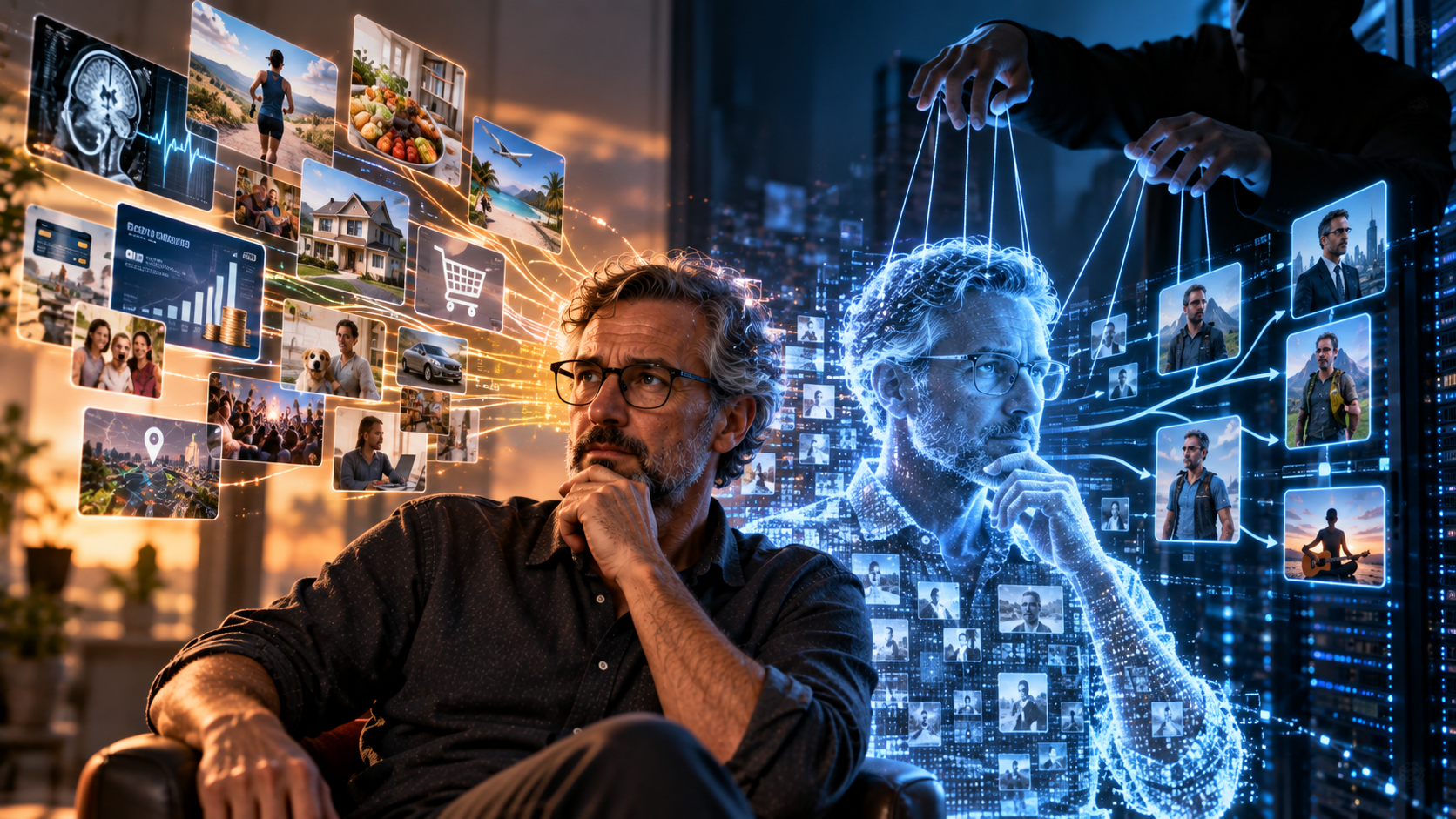
Within years, companies may be able to create extraordinarily detailed models of our preferences, behaviors, health, finances, personalities, and likely future decisions. Whoever controls your digital twin could possess enormous power — not merely to predict what you will do, but potentially to influence what you become.
Somewhere right now, a version of you is being assembled that you’ve never met. It knows what time you wake up, what you buy when you’re anxious, which ads make you pause, how long you hesitate before big purchases, and what kind of message gets you to click. It’s not a person. It’s a pattern. And it’s getting more accurate every single day.
I call this your digital twin — not the industrial kind engineers use to simulate a jet engine or a factory floor, but a living, evolving model of a human being. And I believe the fight over who owns and controls that model will become one of the defining battles of the next decade, on par with the fights over land, oil, and data itself.
From Factories to Faces
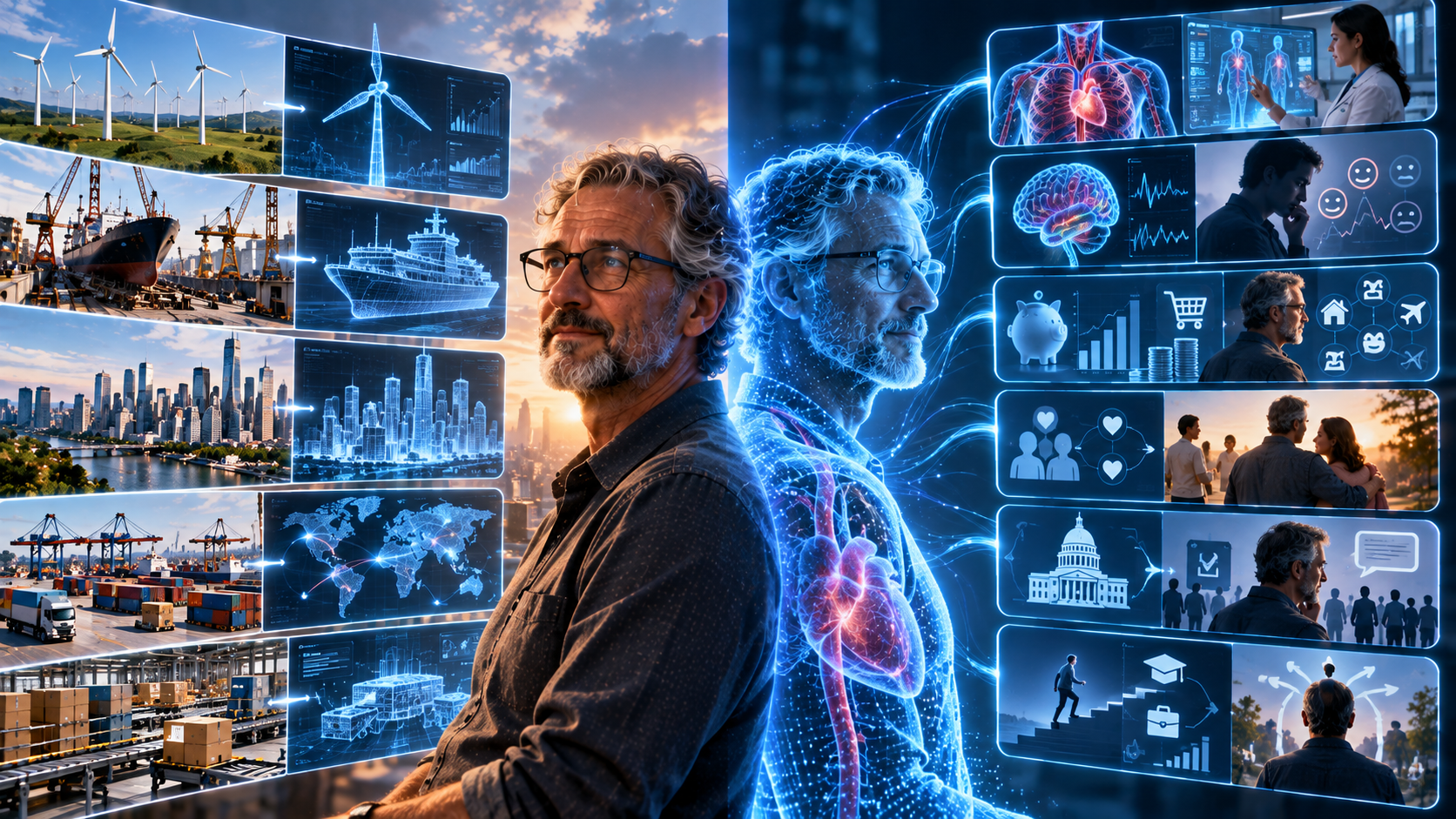
The concept of a digital twin started in engineering. NASA effectively invented the idea during the Apollo 13 mission, building a working replica of the spacecraft on the ground so engineers could test fixes before radioing them up to the astronauts. Since then, companies have built digital twins of wind turbines, shipyards, entire cities, and supply chains — virtual models that mirror a physical system closely enough to predict how it will behave.
The leap happening right now is that this same modeling approach is being turned on people. Instead of a twin of a turbine, imagine a twin of your circulatory system that a hospital uses to test how you’d respond to a new medication before you ever take it. Now extend that same idea to your financial behavior, your emotional triggers, your voting tendencies, your relationship patterns, and your career decisions. That’s not a hypothetical anymore — companies are actively building the tools to do exactly this.
The Twin That Knows You Better Than You Know Yourself
Here’s an example worth sitting with. A health insurance company builds a digital twin of your cardiovascular system using your wearable data, your genetic markers, and your family history. It can now predict, with uncomfortable accuracy, that you have a 40% higher chance of a cardiac event in the next decade than the average person your age. That information could be used to get you into early treatment and save your life. Or it could quietly be used to price your premium, deny your claim, or flag you as a liability to an employer who never should have known.
The technology doesn’t care which outcome happens. The question of who’s allowed to look inside that model, and what they’re allowed to do with what they see, is entirely a human decision — one we haven’t made yet, at scale, with any real teeth.
Think about a second example: an entertainment company builds a digital twin of your attention and emotional responses by tracking what you watch, how long you watch it, and where your engagement spikes or drops. That twin doesn’t just predict what show you’ll want next — it can be used to engineer content specifically designed to hold your attention a few minutes longer, tapping directly into whatever emotional lever works best on you personally. At that point, the twin isn’t just predicting your behavior. It’s shaping it.
Prediction Is Power. Influence Is a Weapon.
There’s an important distinction that gets lost in most conversations about this technology: prediction and influence are not the same thing, and the second one is far more dangerous than the first.
A company that can predict what you’ll likely buy next month has a marketing advantage. A company that can predict what you’ll likely buy and then subtly nudge your environment, your notifications, your social feed, and your pricing to make that outcome more probable has something closer to control. Multiply that across a hundred million digital twins simultaneously, refined in real time, and you get a form of influence that no advertising campaign in history has ever had access to.
This is precisely the fear driving a wave of new research on what scholars are calling “AI twins” — digital replicas built from a person’s writing, voice, behavior, and psychological patterns. Legal scholars have begun arguing that these twins function as intimate extensions of the self rather than as products a company can simply own, precisely because whoever controls the twin holds real power over the person it represents.
The Coming Legal Battle: Who Owns “You”?
Right now, in most of the world, the answer to “who owns your digital twin” is unsettled — and in practice, it’s usually the company that built it. Your fitness tracker company owns the model of your health. Your bank owns the model of your financial risk. Your social media platform owns the model of your attention and mood. You generated the data. They own the insight.
A growing number of legal scholars and policy researchers are pushing back on this default, arguing for what’s being called a “data dominion” model — the idea that if a digital twin is built from your data and mirrors your identity, you should retain enforceable rights over how it’s used, transferred, or deleted, the same way you’d retain rights over your own name or likeness. Under this model, a company could still build tools using your data, but they’d need your ongoing consent, transparency about how the twin is being used, and a real ability for you to shut it down.
That last piece — the ability to shut it down — matters more than people realize. Once a digital twin exists and starts generating value for whoever built it, there’s an obvious incentive to keep it running long after you’d want it to. Imagine trying to delete a financial risk profile that a lender relies on to approve thousands of other loans based on patterns learned from people like you. Your twin doesn’t just represent you anymore. It represents a business asset.
Where I Think This Goes
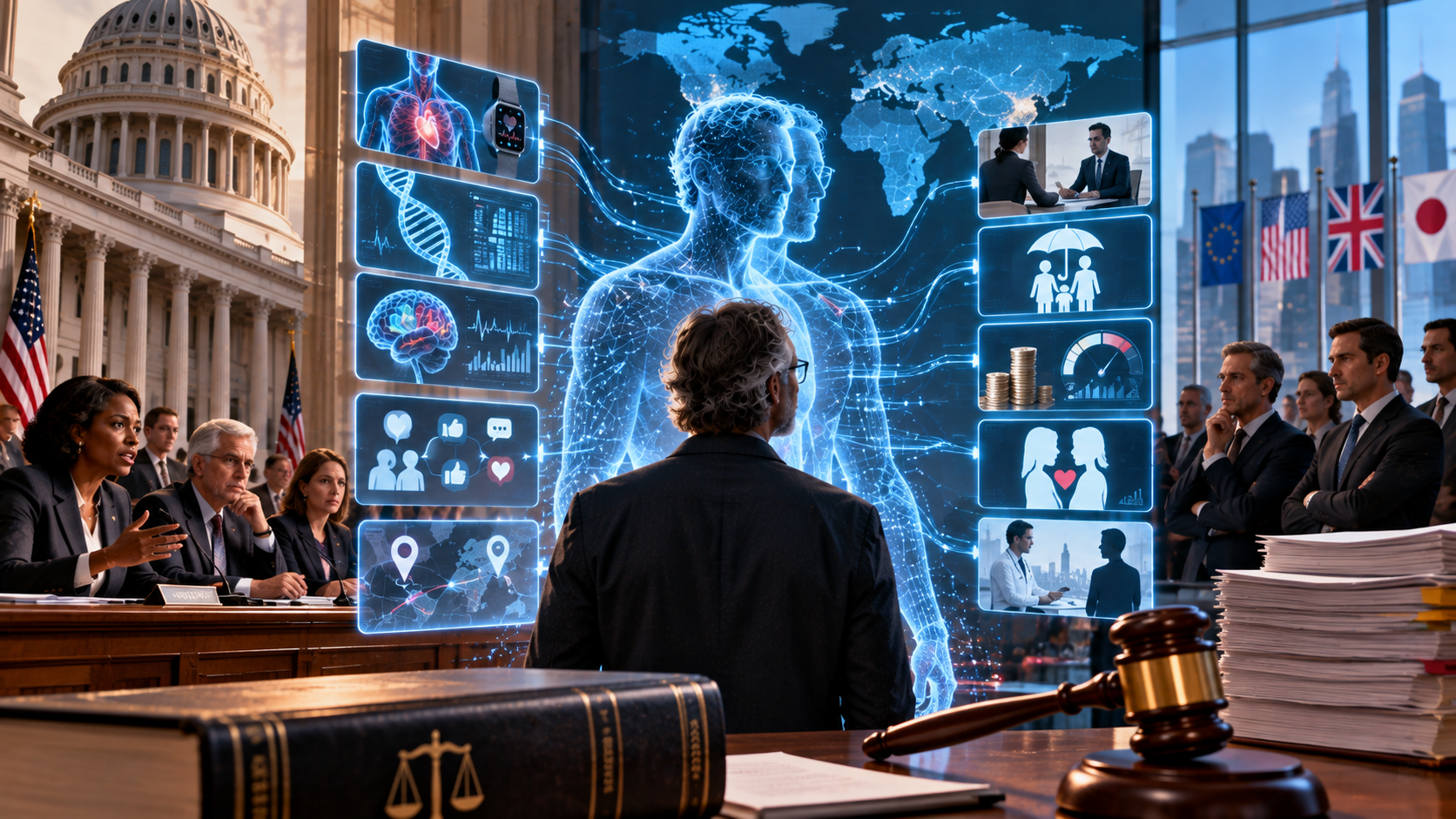
My prediction is that within the next five to seven years, “digital twin rights” will become a formal legal category, similar to how data privacy rights emerged in response to the first wave of internet surveillance. Countries and states will begin requiring companies to disclose when a digital twin of an individual exists, what data feeds it, and what decisions it’s allowed to influence — hiring, insurance, credit, dating, healthcare.
I also expect a new industry to emerge around personal data vaults: secure, individually controlled repositories where your digital twin lives under your authority instead of a corporation’s, and companies must request temporary access rather than owning a permanent copy. Just as we eventually built firewalls and antivirus software once we realized our computers were vulnerable, we’ll build twin-management tools once we realize our identities are.
The deepest risk isn’t that AI will get your digital twin wrong. It’s that AI will get it right — right enough that the model becomes more convenient to consult than you are, right enough that institutions start trusting your twin’s predictions over your own stated intentions. When that happens, the question stops being “what does the data say about me?” and becomes “who gets to decide what I become?”
That’s the war worth paying attention to. Not robots versus humans — but humans, fighting to make sure the most accurate model of themselves ever built still answers to them.
Related Articles
- “Digital Twins Demand a New Social Contract” — Tech Policy Press — techpolicy.press/digital-twins-demand-a-new-social-contract
- “Digital Twins and the Risks of AI Immortality” — TechNewsWorld — technewsworld.com/story/digital-twins-and-the-risks-of-ai-immortality
- “Science & Tech Spotlight: Digital Twins—Virtual Models of People and Objects” — U.S. Government Accountability Office — gao.gov/products/gao-23-106453