The Future of Luck
When Fortune Becomes Something We Can Engineer
By Futurist Thomas Frey
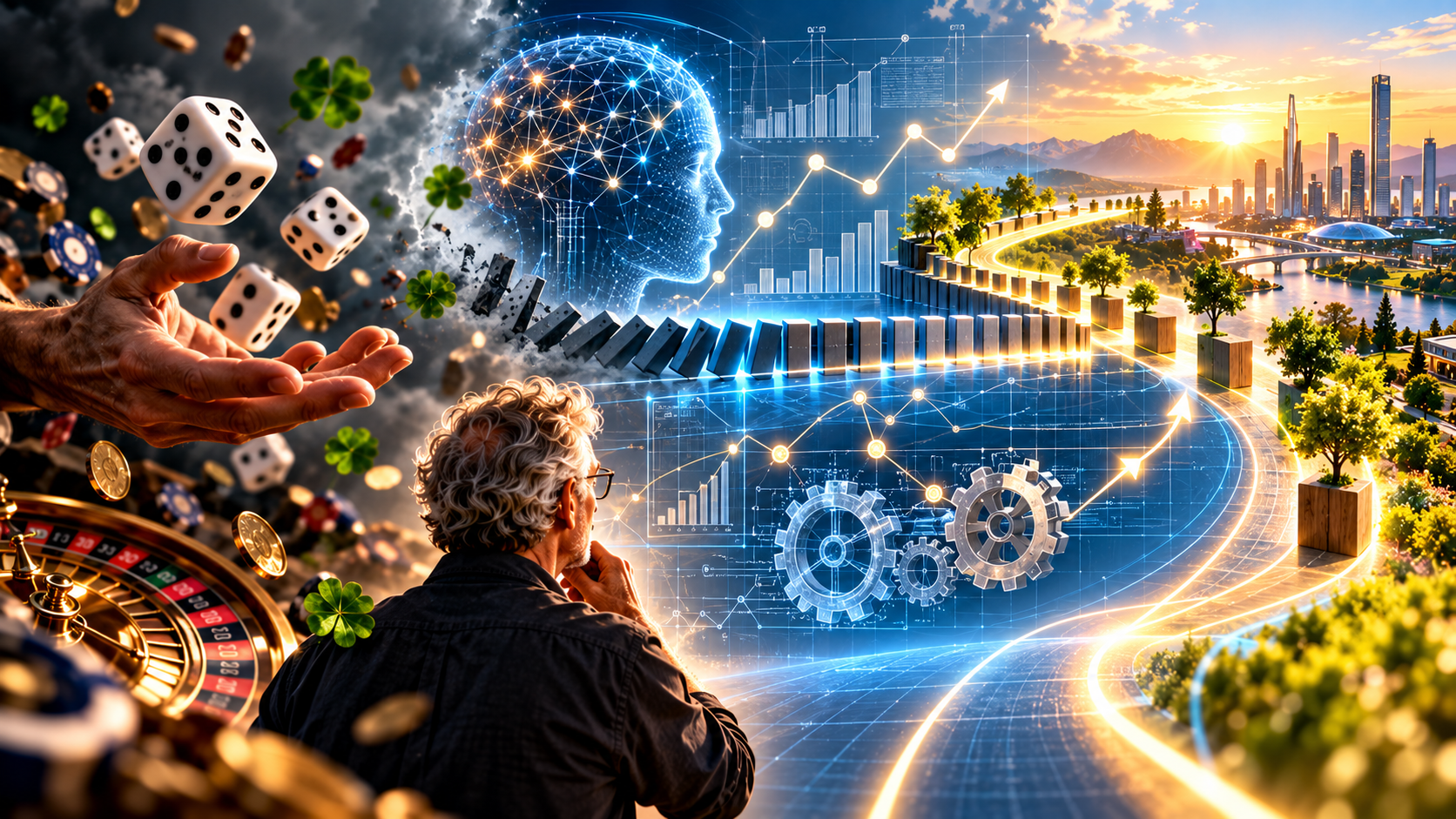
Algorithms are getting better at placing the right opportunity, person, investment, or idea in front of us at exactly the right moment. What happens when luck becomes something technology can manufacture?
Think about the luckiest moment of your career. Maybe it was a chance introduction at a party that led to a job. Maybe it was an offhand recommendation from a casual acquaintance that changed the direction of your business. We tend to tell these stories with a shrug and a smile, as if the universe simply rolled the dice in our favor.
Now imagine that a machine rolled those dice. Not randomly, but deliberately, having calculated that this specific person, at this specific moment, would be the one introduction most likely to change your life.
That’s not a thought experiment anymore. It’s an emerging reality, and I believe it will force us to rethink one of the oldest ideas in human culture: that luck is something that happens to us.
The Experiment That Quietly Measured Luck
The clearest proof that algorithms can manufacture fortune came from an unlikely place: LinkedIn’s “People You May Know” feature. Between 2015 and 2019, researchers from MIT, Harvard, Stanford, and LinkedIn ran a five-year experiment involving around 20 million users, in which the platform’s algorithm was quietly adjusted so that some people saw more suggestions for close contacts while others saw more suggestions for distant acquaintances.
Over those five years, the participants created roughly two billion new connections and accepted about 600,000 new jobs identified through the site. The result confirmed a theory sociologists had debated for nearly half a century: distant acquaintances, not close friends, are the ones most likely to lead you to a new job, because they live in different social circles and know things your inner circle doesn’t. The sweet spot turned out to be what researchers call “moderately weak ties,” people with whom you share roughly ten mutual connections.
Here’s the part that should stop you cold. A small adjustment to a recommendation algorithm measurably changed who got jobs. As MIT’s Sinan Aral put it, the study shows how much “algorithms are guiding fundamental, baseline, important outcomes, like employment and unemployment.” What we’ve always called a lucky break turned out to be something a platform could dial up or down.
Luck Used to Be a Function of Geography
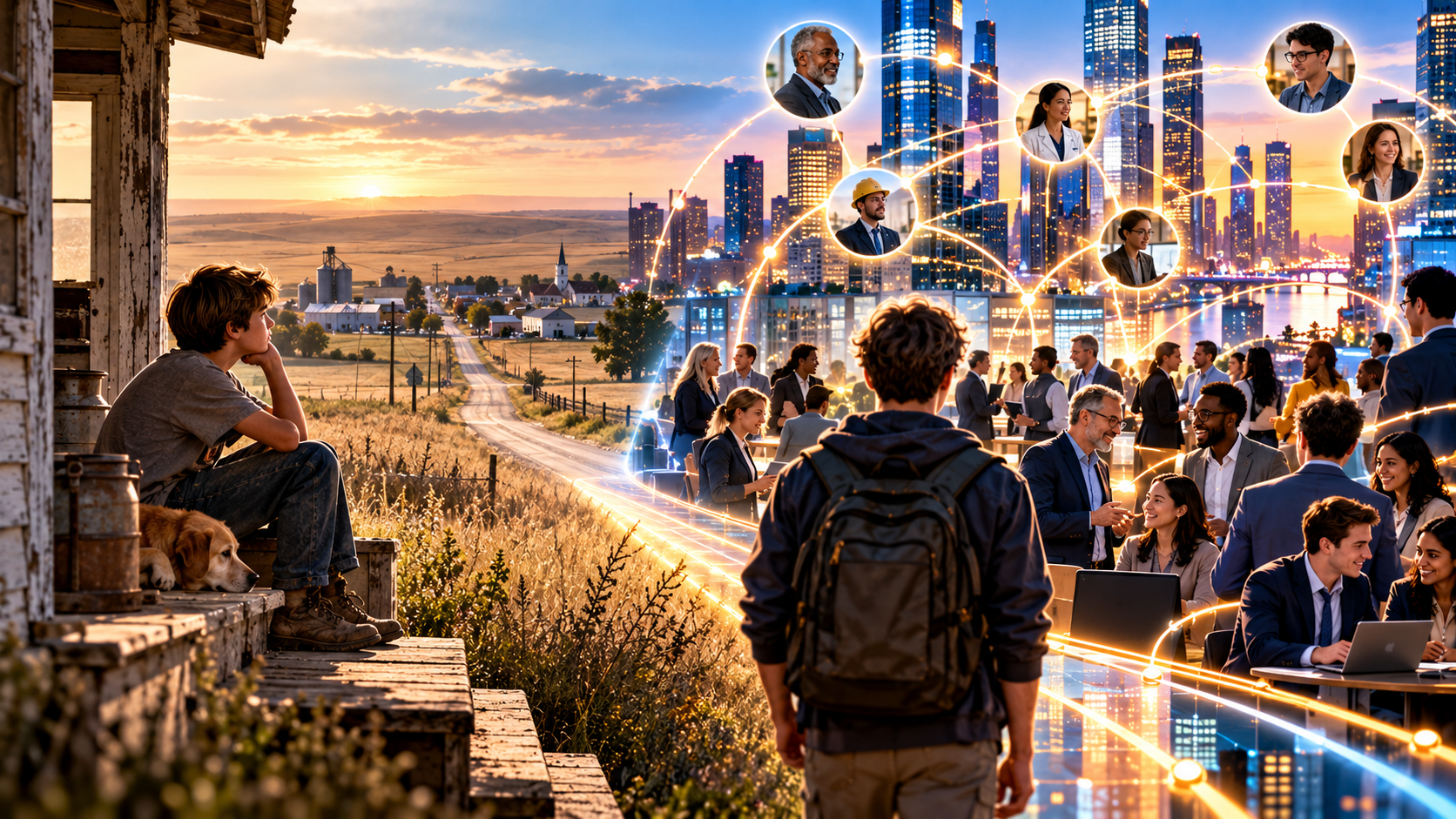
For most of history, your luck was heavily determined by where you were born and who you happened to bump into. A talented kid in a small town had few chances for the right mentor, investor, or collaborator to cross their path. A kid in a major financial center might meet a dozen of them before graduation.
Technology is quietly dismantling that geographic lottery. When an algorithm can scan millions of profiles and surface the one stranger whose skills perfectly complement yours, the old rule that opportunity requires proximity begins to dissolve. Consider a young engineer in a rural community who gets matched, by a recommendation system, with an investor three time zones away who has been quietly searching for exactly that skill set. In the old world, that meeting required a lucky conference seat assignment. In the new one, it requires a well-tuned algorithm.
Investors are already experimenting with this. Venture platforms scan thousands of early-stage companies and surface the handful matching a specific investor’s thesis. Dating apps do something similar for romance. Content platforms do it for ideas. The common thread is that serendipity, once rare and unpredictable, is becoming a service.
The Dark Side of Engineered Fortune
But manufactured luck carries risks that deserve the same attention as its promise, and the first one is the filter bubble. Recommendation systems learn from our past behavior and tend to show us more of what we already know, which narrows our exposure instead of widening it. Researchers have noted that most commercial recommenders do little to counter this, because their incentives point toward maximizing engagement rather than expanding horizons.
The second risk is inequality. The same research that proved weak ties help people find jobs also revealed an uncomfortable wrinkle: groups such as immigrants and other disadvantaged communities often rely on tight-knit networks for support, which can make it harder for them to access the weak-tie opportunities that drive job mobility. If algorithms are the new gatekeepers of luck, then who they choose to introduce us to becomes a question of fairness, not just convenience.
Picture two equally talented job seekers. One lives in a densely connected professional network that the algorithm understands well. The other comes from a community underrepresented in the data. The algorithm, working with what it knows, keeps surfacing great opportunities for the first and mediocre ones for the second. Neither person ever sees the gap. Both just experience what feels like good or bad luck.
Designing Serendipity on Purpose
The encouraging news is that researchers are already working on this problem, and they’ve given it a name: engineered serendipity. The idea is to deliberately design recommendation systems that “poke holes” in our filter bubbles, offering unexpected but relevant suggestions instead of simply echoing what we already like.
One proposal I find especially thoughtful comes from researchers who suggest recommendation systems should occasionally offer deliberately imperfect suggestions, such as “things we think you will hate,” “things we have no clue about,” or “things you’ll be among the first to try.” That’s a radical departure from today’s engagement-maximizing feeds, and it hints at what a healthier version of manufactured luck might look like: a system designed to expand your world instead of shrinking it, and one that gives you control over how much surprise you want in your life.
I’d add one more design principle. Any system that manufactures luck should be transparent about it. If an algorithm connected you to your next job, you deserve to know that the introduction wasn’t random, and why it happened.
My Prediction: Luck Becomes a Skill You Manage
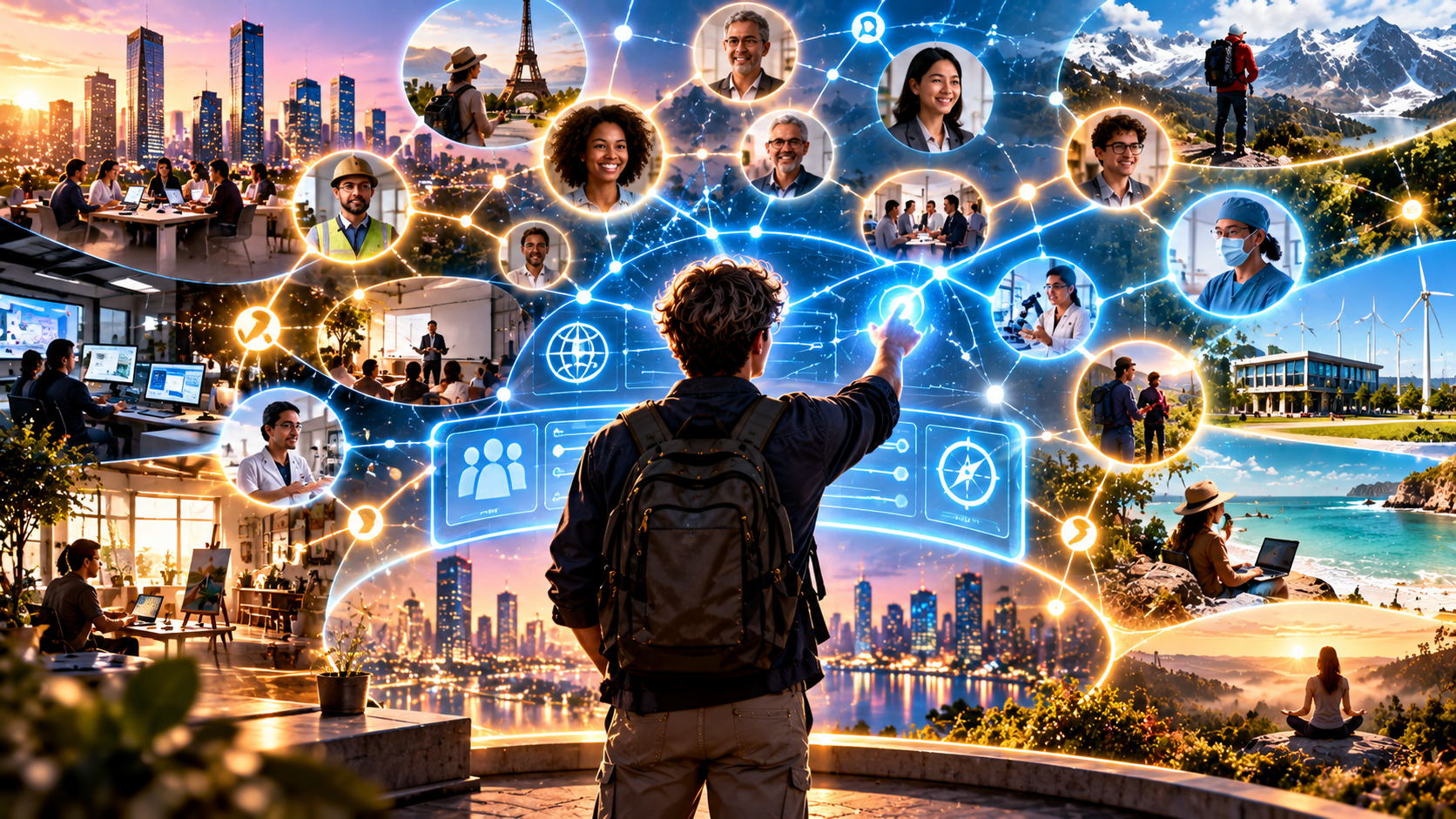
Here’s where I think this all lands. Within a decade, I expect “luck management” to become a recognized personal discipline, in the same way financial planning and health coaching are today. People will learn how to tune their own recommendation exposure, deliberately widening their networks, seeking out the moderately weak ties the research says matter most, and instructing their algorithms to show them things outside their comfort zones.
The people who thrive won’t be the ones who passively wait for the machine to deliver fortune. They’ll be the ones who understand how fortune is being delivered and who actively shape the system that does it. Meanwhile, the great moral and political question of the next generation will be who controls the dials: the platforms, the users, or regulators demanding transparency and fairness in how opportunity gets distributed.
For all of human history, we’ve told ourselves that luck was blind. It never was truly random, of course. It was shaped by geography, family, and chance encounters. What’s changing is that, for the first time, someone can see the dials. The only open question is whether we’ll turn them toward a world where good fortune is available to everyone, or one where it quietly flows to those the algorithm already knows best.
Related Articles
- “The Power of Weak Ties in Gaining New Employment” — MIT News — news.mit.edu/2022/weak-ties-linkedin-employment-0915
- “A Massive LinkedIn Study Reveals Who Actually Helps You Get That Job” — Scientific American — scientificamerican.com/article/a-massive-linkedin-study-reveals-who-actually-helps-you-get-that-job
- “Change Your Perspective, Widen Your Worldview! Societally Beneficial Perceptual Filter Bubbles in Personalized Reality” — arXiv (University of St. Gallen) — arxiv.org/pdf/2504.10271